| Hardly a month goes by without another reminder of the hefty knocks being dealt to Hong Kong's once almighty reputation as a global financial center. Only recently, two former UK judges resigned in protest from the city's top court to highlight the impact of the latest Beijing-ordered crackdown on dissent. That move came weeks after a court found 14 opposition figures guilty in a landmark national security case that one expert described as a "trial of the pro-democracy movement." On the economic front, an unlikely subplot continues to play out involving well-known economist and China watcher Stephen Roach, who has spent much of 2024 doubling down on his proclamation that the city was "over." The government's supporters predictably rejected his assessment, and indeed—after a dismal start—deal flow has picked up. While the focus of Hong Kong's many challenges lies squarely at home and in Beijing, where the financial hub's economy goes from here will also be influenced in no small part by events half a world away—in Washington. 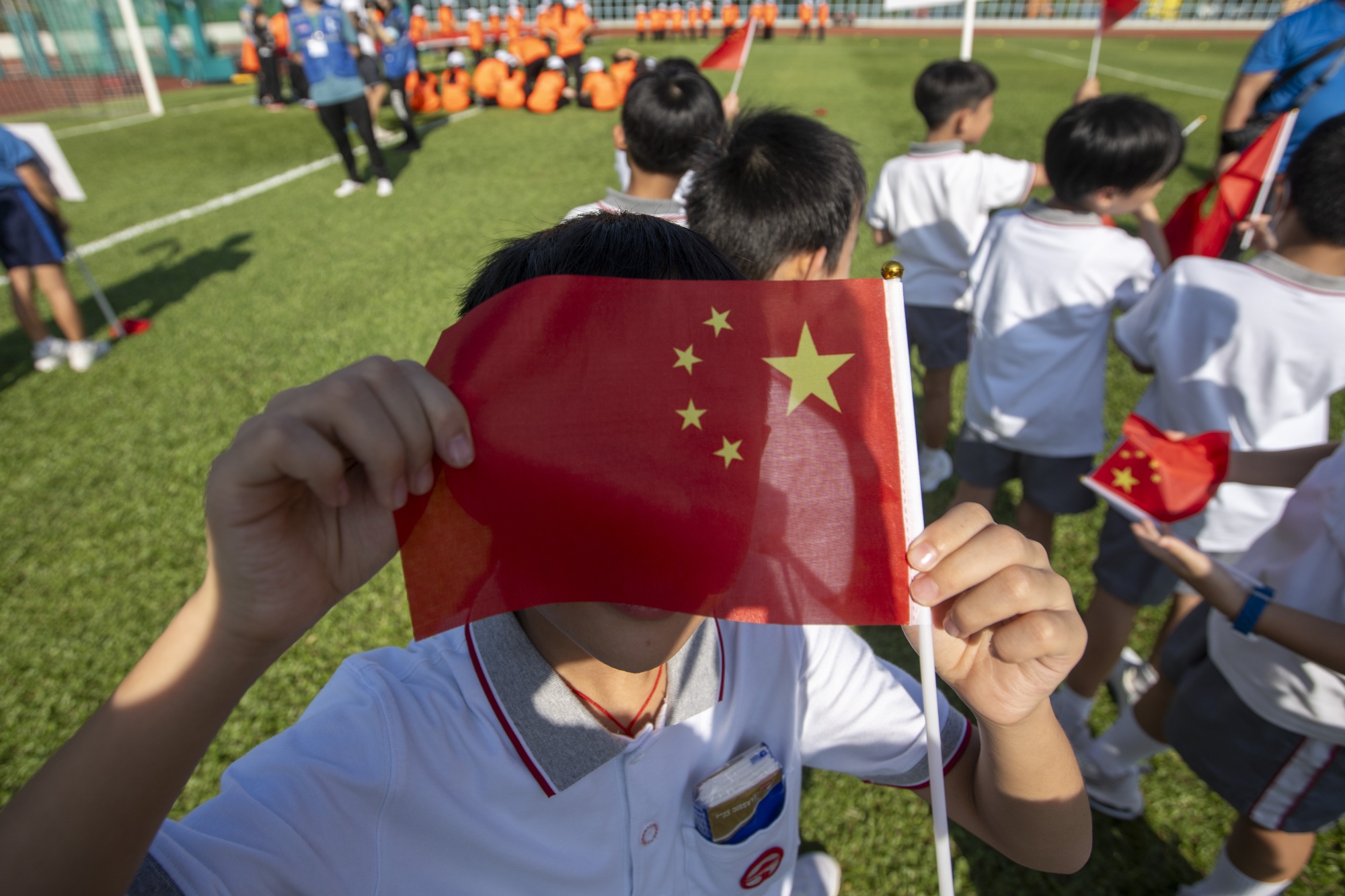 A Students holding a China National Flag in Hong Kong last year. Photographer: NurPhoto The first measure of Washington's outsize influence on the former British colony is economic. Because the Hong Kong dollar is pegged to the US dollar, the city effectively imports monetary policy set by the Federal Reserve. In the years after the financial crisis, this state of affairs served Hong Kong well. Rock bottom US interest rates and massive quantitative easing sent investor capital pouring into the Asian city. But post-pandemic inflation has turned that dynamic upside down. Hong Kong is grappling with the highest US rates in more than two decades as it faces an almost five-year home-price slump—the longest retreat since the depths of the SARS crisis two decades ago. When that's combined with losses in commercial property, at least HK$2.1 trillion ($270 billion) has been erased from real estate values in the city since 2019, according to analysis by Bloomberg Intelligence. A strong US dollar means a strong Hong Kong dollar. A prolonged period of high US interest rates is bad news for the Chinese city. It will have an impact on its exports, investment sentiment and capital markets, Financial Secretary Paul Chan wrote in a blog in May. Which is why a brace of Fed rate cuts would offer much-needed relief. The odds right now are for the central bank to cut rates once this year by 25 basis points, possibly followed by another cut before 2025. While such cuts wouldn't in themselves be enough to jumpstart Hong Kong's economy, if the Fed does start cutting and signal more are on the way, that will be a clear plus for a certain city located on the other side of the planet. 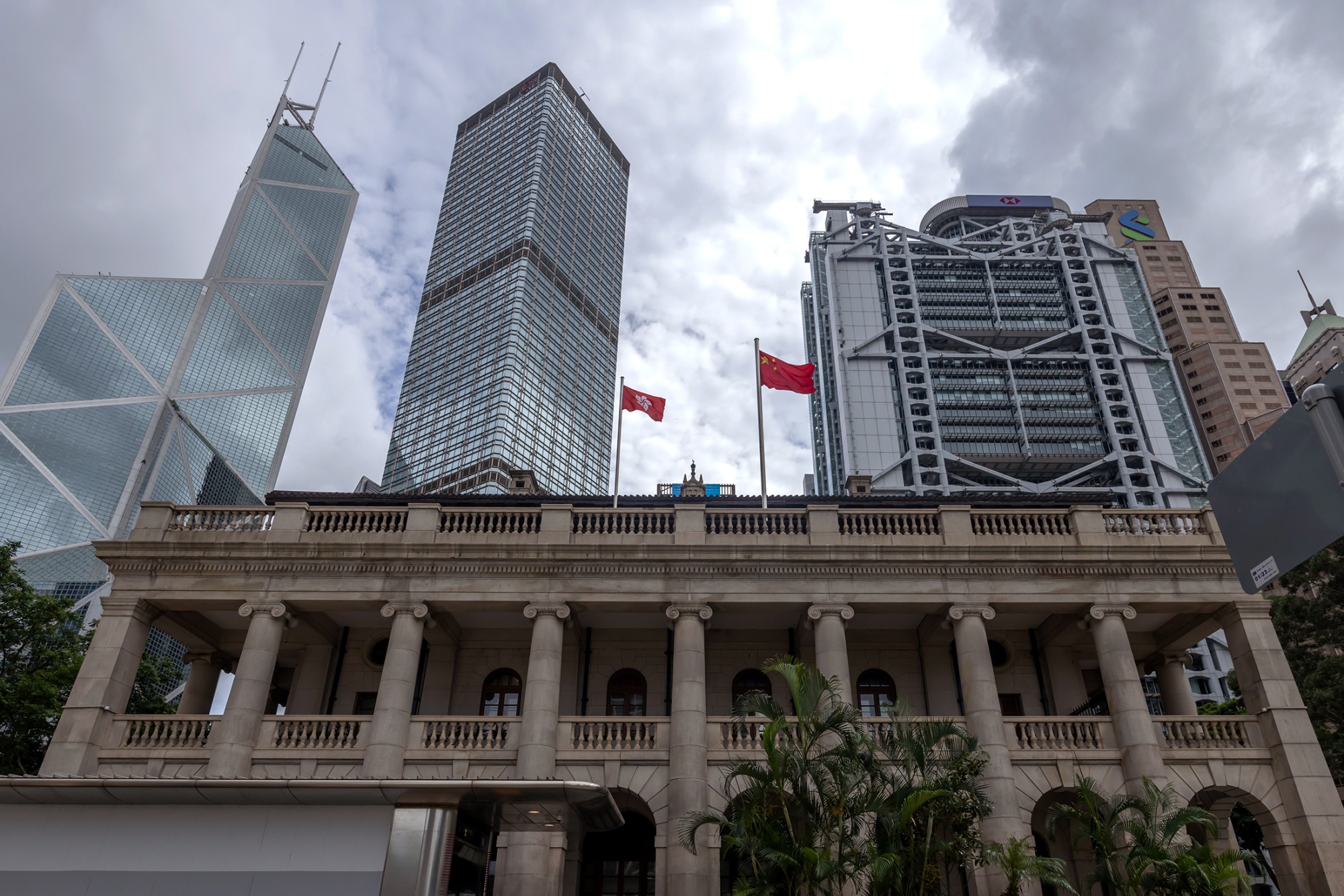 Hong Kong Photograph: Paul Yeung/Bloomberg The second Washington angle for Hong Kong is political. Whoever wins the US presidential election in November will set the tone for the next stage in US-China relations. While both President Joe Biden and his opponent, former President Donald Trump, are both hawkish on China, their approaches differ. Biden has pushed ahead with measures such as restrictions on trade while simultaneously ensuring Washington and Beijing continue to talk and, on paper at least, look to cooperate in areas such as climate change. Yet Trump has promised a more harsh approach, especially on trade, through a broad increase in import tariffs—especially against China. Such a move would inevitably sweep Hong Kong's economy even deeper into the geopolitical undertow, given its role as a key port for Chinese made goods leaving for the US. Links between the US and Hong Kong run deep—the Asia hub is the 15th biggest export market for America and around 1,300 US companies were based there as of 2023, according to analysis by the Center for Strategic & International Studies. That combination of economics and politics in the US is why, even if the ultimate arbiter of Hong Kong's economy is Beijing, coming events in Washington will have a big impact, too. —Enda Curran Get the Bloomberg Evening Briefing: Sign up here to receive Bloomberg's flagship briefing in your mailbox daily—along with our Weekend Reading edition on Saturdays. Big Take Asia: Every Tuesday on the new Big Take Asia podcast, Bloomberg reports on the critical stories at the heart of the world's most dynamic economies, delivering insight into markets, tycoons and businesses driving growth across the region. You can also listen daily to powerful Bloomberg deep-dives on the original Big Take podcast and hear fresh takes on what's going on in Washington every Thursday on the Big Take DC podcast. | 







No comments:
Post a Comment