Friday, June 28, 2024

ETF IQ: BlackRock's big (active) dreams

Active funds can command higher fees.
by Katie Greifeld

Welcome to ETF IQ, a weekly newsletter dedicated to the $12 trillion global ETF industry. I'm Bloomberg News reporter and anchor Katie Greifeld.

Star Power

BlackRock Inc. largely dominates the $9.2 trillion US exchange-traded fund market, with one exception: actively managed strategies. 

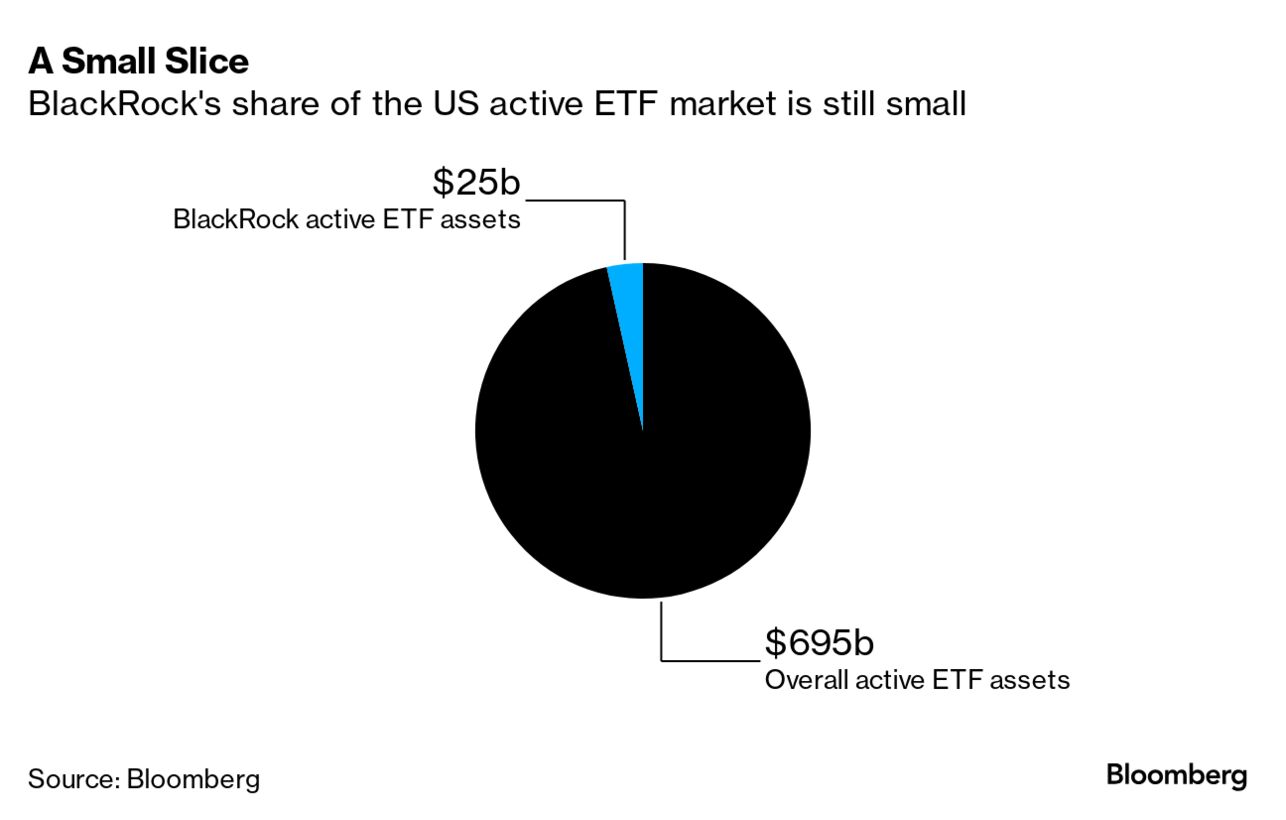
While Larry Fink's firm is the biggest issuer with 30% share, just $25 billion of the nearly $700 billion sitting in active funds belongs to BlackRock. Instead, competitors such as Dimensional Fund Advisors and JPMorgan Asset Management are perched atop the active league table, with BlackRock trailing in a distant eighth place, according to Bloomberg data through the end of May.

BlackRock is working hard to climb the ranks. It's brought some of its star managers into the wrapper over the past 13 months or so, including Rick Rieder, Tony DeSpirito, and most recently, hedge fund star Alister Hibbert, with the launch of the BlackRock Long-Term U.S. Equity ETF (more on that later). All told, BlackRock has nearly doubled its number of active ETFs over the past year. 

With $25 billion in active ETF assets, there's a lot of daylight between BlackRock and Dimensional, which has amassed about $143 billion across its actively managed lineup. Still, when I asked Jay Jacobs, BlackRock's US head of thematic and active equity ETFs, if the top slot was the goal, there was no hesitation: "Absolutely."

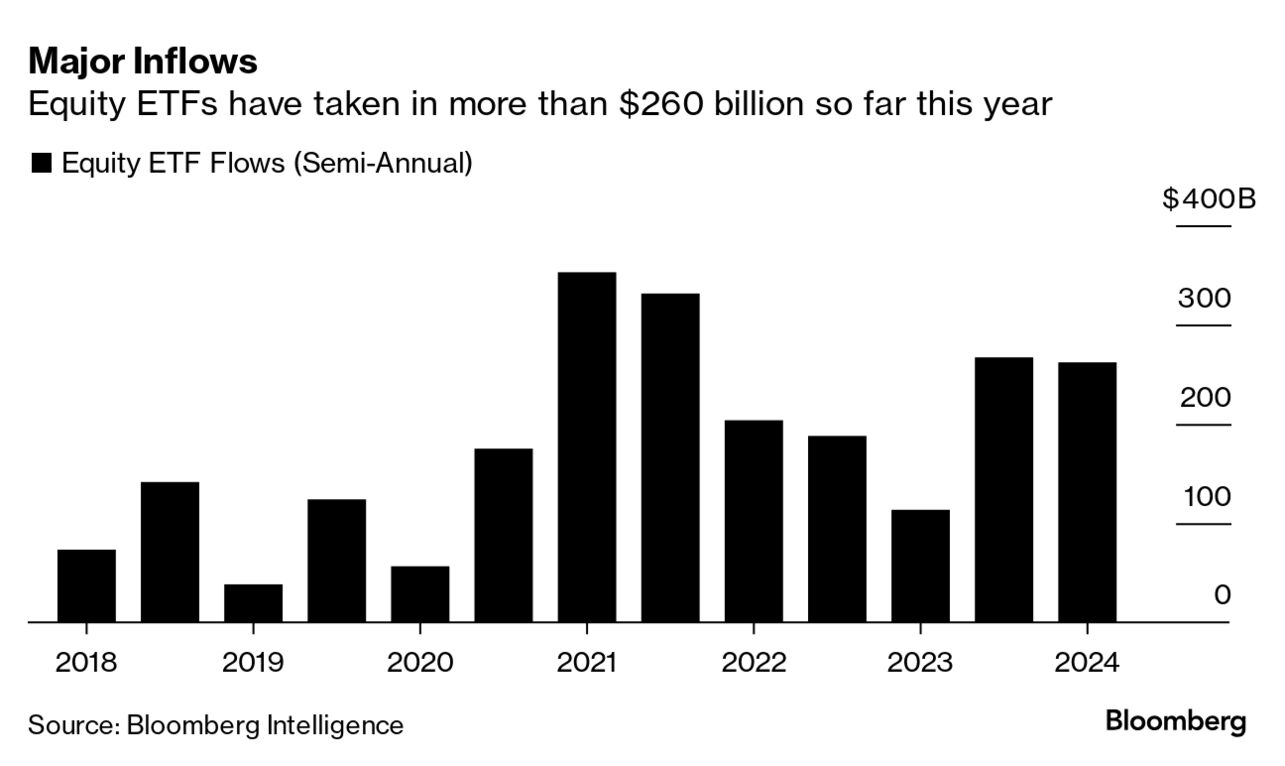
In a saturated market, issuers have been eager to stake a claim to the rapidly growing pie of active ETFs, which have been attracting a record share of inflows in recent years. Such ETFs can generally command higher fees, as well — which helps explain why new fund launches have been getting more expensive on average.

The Paglia Playbook

State Street Global Advisors got closer to the crypto world this week.

The firm and Galaxy Asset Management filed plans for an ETF that would target the "digital-asset ecosystem" through a combination of crypto-linked equities and other ETFs that hold physical Bitcoin or futures, according to a Wednesday filing. 

The inside-baseball on this joint effort is interesting. SSGA chief business officer Anna Paglia joined earlier this year from Invesco Ltd., where she was global head of ETFs, indexed strategies, SMAs and models. In that role, Paglia helped forge a similar partnership between Invesco and Galaxy, which culminated in the launch of the Invesco Galaxy Bitcoin ETF this past January.

Evidently, Paglia brought that playbook with her to Boston. But the question remains: why won't State Street launch a spot Bitcoin ETF? It seems like a natural fit for the firm, which is home to the $62 billion SPDR Gold Shares (ticker GLD), the largest spot commodity ETF. 

I asked Paglia that question in late May, and basically, it boils down to not wanting to be an also-ran in the spot Bitcoin ETF race.

"Am I excited about bringing Bitcoin number 13 to the US market — or number 12, I don't even know how many are out there — no, that's not exciting to me," Paglia told me in a Bloomberg Television interview. "What excites me at this point is thinking about digital assets version 2.0.''

In Other News

Nvidia Corp.'s latest market roller coaster is a cautionary tale of the importance of the AI chip-maker in the $9.2 trillion US ETF complex.

Solana staged its biggest rally in more than a month after VanEck submitted a filing for an ETF based on the cryptocurrency.

Here's a rundown of some of the major trends within the ETF arena during the first half of 2024.

Drill Down

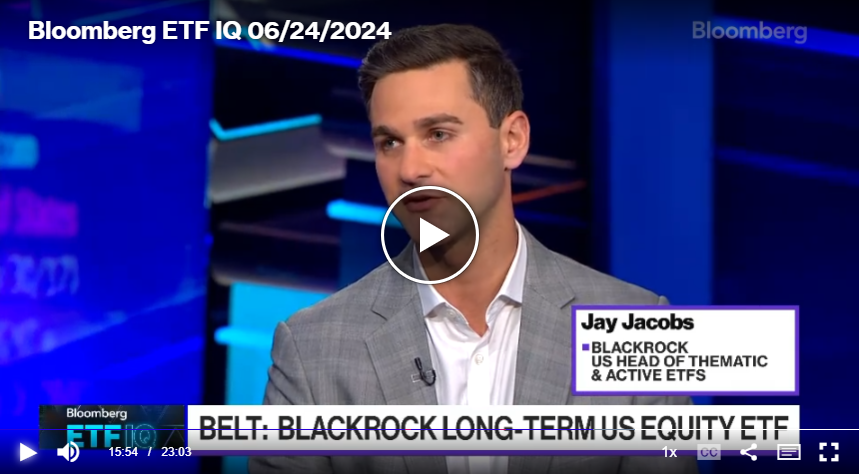
In this week's Drill Down on Bloomberg Television's ETF IQ, BlackRock's Jay Jacobs stopped by to talk about the just-launched BlackRock Long-Term U.S. Equity ETF (BELT). As discussed, BELT is managed by a team that includes Alister Hibbert, the firm's star hedge fund manager who was once paid more than Fink himself. 

BELT is ultra-active: its "high conviction" holdings consists of 20 to 25 stocks, according to the press release. Currently, its top weightings are Microsoft, Alphabet and Meta Platforms, with names such as Chipotle and Hermes thrown in for good measure. 

Where does one put such a concentrated fund in their portfolio? Jacobs said that a barbell approach is popular: get your "low-cost, tax-efficient" exposure with a benchmark tracker such as iShares Core S&P 500 ETF ( IVV), paired with a high-octane bet like BELT. 

What it really comes down to is, how do you want to manage tracking error? This is a high tracking error strategy, IVV is basically zero tracking error. It's tracking the S&P 500. How do you want to control those two levers to manage your active risk?

BELT launched earlier this month and charges 75 basis points.

Next Week on ETF IQ

RBC Dominion's Valerie Grimba and Alex Vynokur of BetaShares join me, Eric Balchunas and Scarlet Fu on Bloomberg Television's ETF IQ. Watch live on Mondays at noon on Bloomberg Television, on the Bloomberg Terminal at TV <GO> and on YouTube.

No comments:

Post a Comment

Where to Put $100 Before Trump's New Tech Law Rolls Out

Jeff Brown was consulted by Congress on this - here's what he says comes next  ‌ ‌ ‌ ‌ ‌ ‌ ‌ ‌ ‌ ‌ ‌ ‌ ‌ ‌ ‌ ‌ ‌ ‌ ‌ ‌ ‌ ‌ ‌ ‌ ‌ ‌ ...