| The local school was eerily deserted, to an almost Covid-esque degree, when I strolled through the playground — driving license in hand — to perform my civic duty this morning. The Conservatives have riled left-wingers by enforcing a requirement for voter ID, as well as changing the system used to elect UK mayors. Tories nearly always favor first-past-the-post, which tends to bolster their cause at the ballot box, but on this occasion perhaps they could have expended an equal amount of energy on picking a candidate who is more appealing to voters. Susan Hall was relatively unknown when she was selected to run for a position that has fallen exclusively to big names since it was introduced at the start of the millennium: Ken Livingstone, Boris Johnson and Sadiq Khan. Her campaign has centered on crime and ULEZ, the divisive policy aimed at reducing car emissions — an understandable approach, but one which has failed to inspire. Both of London's free newspapers, the Evening Standard and City AM, are traditionally Tory-leaning. The Standard backed Johnson for mayor (and for prime minister), and also supported other Tory candidates for City Hall such as Zac Goldsmith; yet this time around it has thrown its support behind Khan, while City AM accused Hall of "negativity and divisiveness" in a damning front-page editorial. 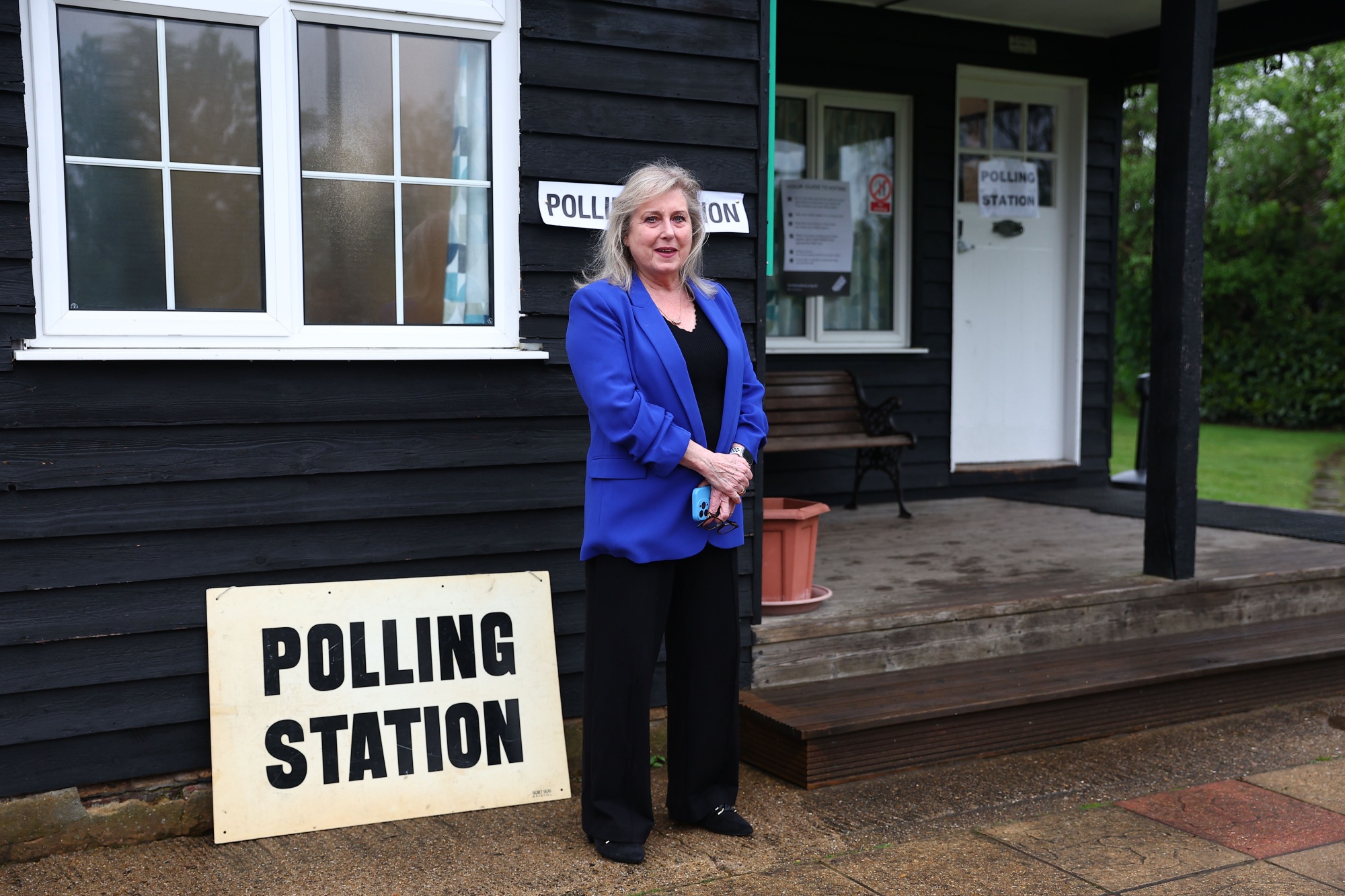 Susan Hall after casting her vote today Photographer: Peter Nicholls/Getty Images Europe It used to be that these newspapers spoke for the city's affluent commuter belts, and were accordingly conservative, while critics accused them of neglecting the Labour-voting inner city. The trend still exists, to some extent: Labour tends to lead strongly in inner London. That lead narrows in the suburbs but even in these areas, Hall's brand of politics is out of sync with many voters. In 2020 she backed Donald Trump for the White House, while polling at the time showed that around three-in-four Londoners would have voted for Joe Biden if given the chance. Perhaps Hall will surprise me. Last time, Shaun Bailey won a lot more votes than expected. But the overall picture is one of a city that's increasingly distant from the Conservative Party. As I mentioned in this newsletter previously, Margaret Thatcher used to boast over 50 parliamentary seats in London, while today fewer than half that number remain blue. After the next general election, expected later this year, the situation is likely to be even more stark. Want this in your inbox each weekday? You can sign up here. | 









No comments:
Post a Comment