Friday, December 1, 2023

Lloyds wins Telegraph windfall

Lloyds wins Telegraph windfall

Hi, I'm Katherine Griffiths, the City editor in London. Here's today's Readout. 

Could the army of retail shareholders in Lloyds bank be the biggest beneficiary of the wrangle over the ownership of the Telegraph newspaper? After months of uncertainty it looks that way.

The government is allowing the Barclay family to repay a £1.2 billion loan to Lloyds, even though their plan to then transfer the Telegraph and Spectator magazine to an entity partly funded by Abu Dhabi will be scrutinized by authorities. The development is good news for Lloyds, which could be in line for a windfall of about £500 million, after the bank wrote off the majority of the debt years ago.

What Lloyds will do with that money – amounting to about 10 per cent of its expected annual profits – is a nice dilemma for its boss, Charlie Nunn. The bank has been generating a pleasing amount of cash, so does not need extra to bolster its finances. That said, the outlook for the UK's economy is gloomy, so cushioning reserves for the domestically-focused lender might not hurt.
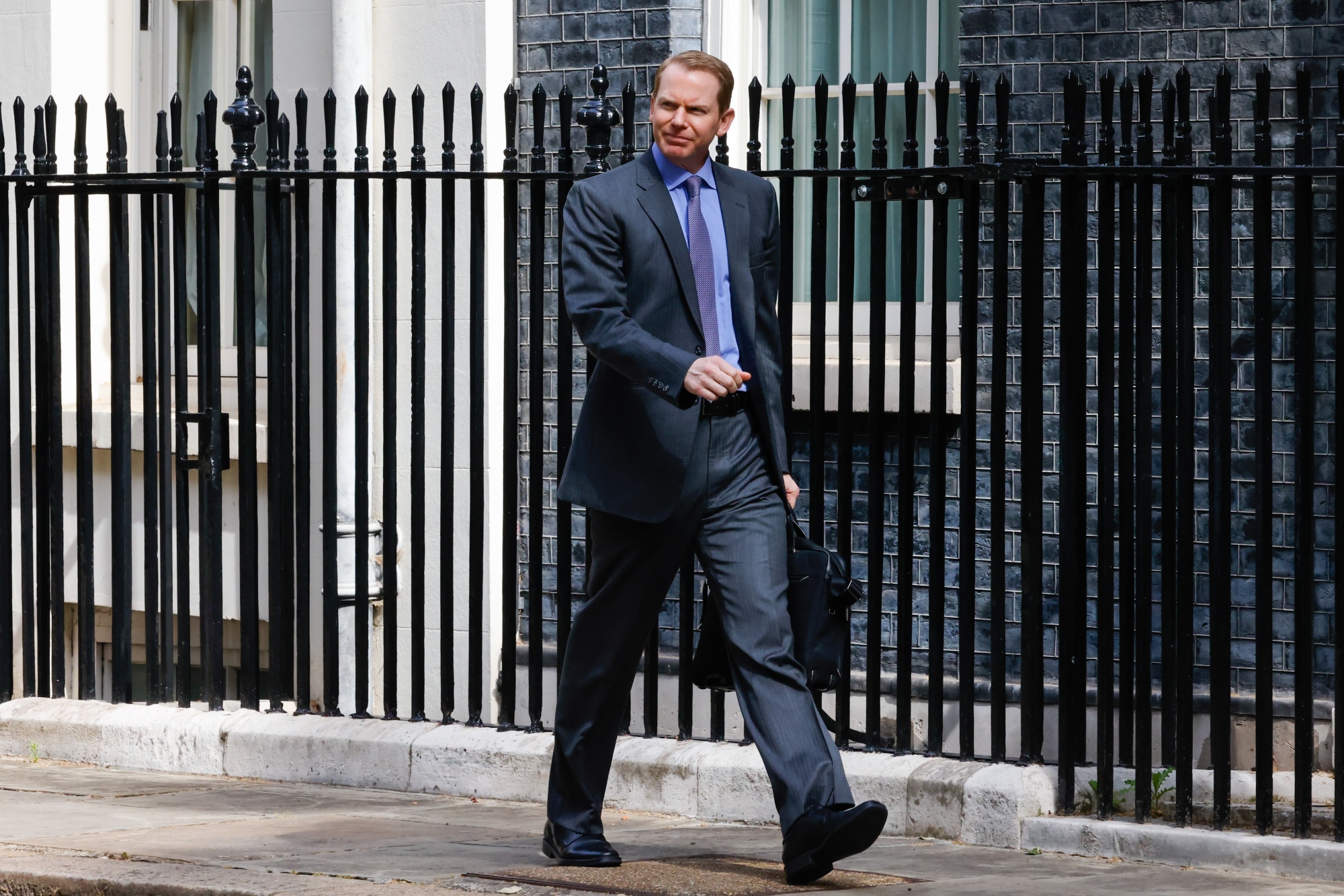
Charlie Nunn, chief executive officer of Lloyds Banking Group Plc. Photographer: Carlos Jasso/Bloomberg

Lloyds has already prepared the ground for share buybacks. Those could now be bigger, and perhaps there will be special dividends too when Lloyds unveils its results for 2023 in February. That might also be a boost for the government as it seeks to encourage people to take more interest in shares, including NatWest, where it is planning a retail share offering to sell some of the publicly-held stake that dates back to its 2008 bailout.

Lloyds is one of the UK's most commonly held stocks, with more than two million retail holders, so hefty payments to shareholders will be spread widely. But there shouldn't really be celebrations all round. Lloyds' shareholders will only be getting back what they have already paid out in loans to the Barclay family, which were made mainly by Lloyds' Bank of Scotland subsidiary in the go-go years when financiers apparently thought little of writing enormous cheques on a whim.

The result of such rash decisions was Lloyds having to agree an emergency takeover of rival HBOS, which owned Bank of Scotland, and the government stepping in with a £20 billion bailout, while over at NatWest similarly risky loans created a £46 billion bill for taxpayers.

It is remarkable that the fight by competing bidders for the Telegraph titles has generated so much interest that Lloyds has managed to strike a deal to get all of its money back – including loans for the media assets and also for the Barclay family's online retail arm, Very, together adding up to the total £1.2 billon debt.

Other historic loans are not nearly so appealing, and banks – and their shareholders – will continue to bear those scars.

Want this in your inbox each weekday? You can sign up here.

What just happened

The stories you need to know about this evening

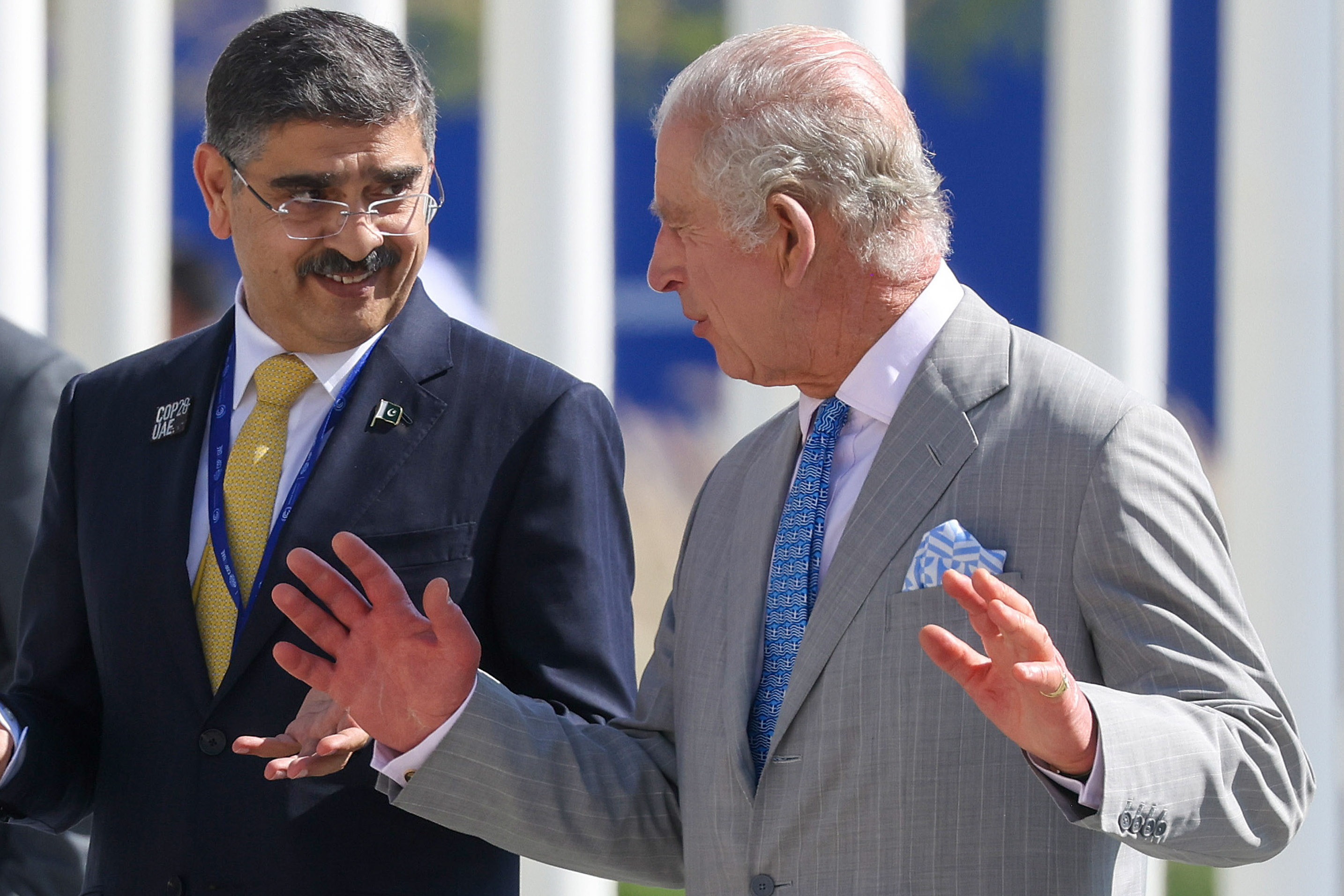
King Charles's peace signal at COP28

King Charles started the week welcoming business leaders to Buckingham Palace as part of the government's push to attract overseas investment and has ended it attending the Cop28 climate conference in Dubai. It hasn't been a bad week for UK soft power.

As a long-standing environmentalist, Charles might not have been thrilled to have to read out the government's plans to extend fossil fuel drilling licenses in his annual speech to Parliament a month ago, but relations seemed smooth at the gathering today. His presence in Dubai will surely help Rishi Sunak as he attempts to persuade the world's climate lobby that the UK will remain a global leader in the push to green the environment.

Anwaar-ul-Haq Kakar, Pakistan's prime minister, speaks with King Charles III on day two of the COP28 Photographer: Hollie Adams/Bloomberg

But was Charles on an additional mission? The Greek City Times believes so – saying his blue and white tie reflected the country's national flag, and thereby a peace signal after the diplomatic spat between the UK and Greece over the historic Parthenon Sculptures.

Investment gap is dragging down living standards

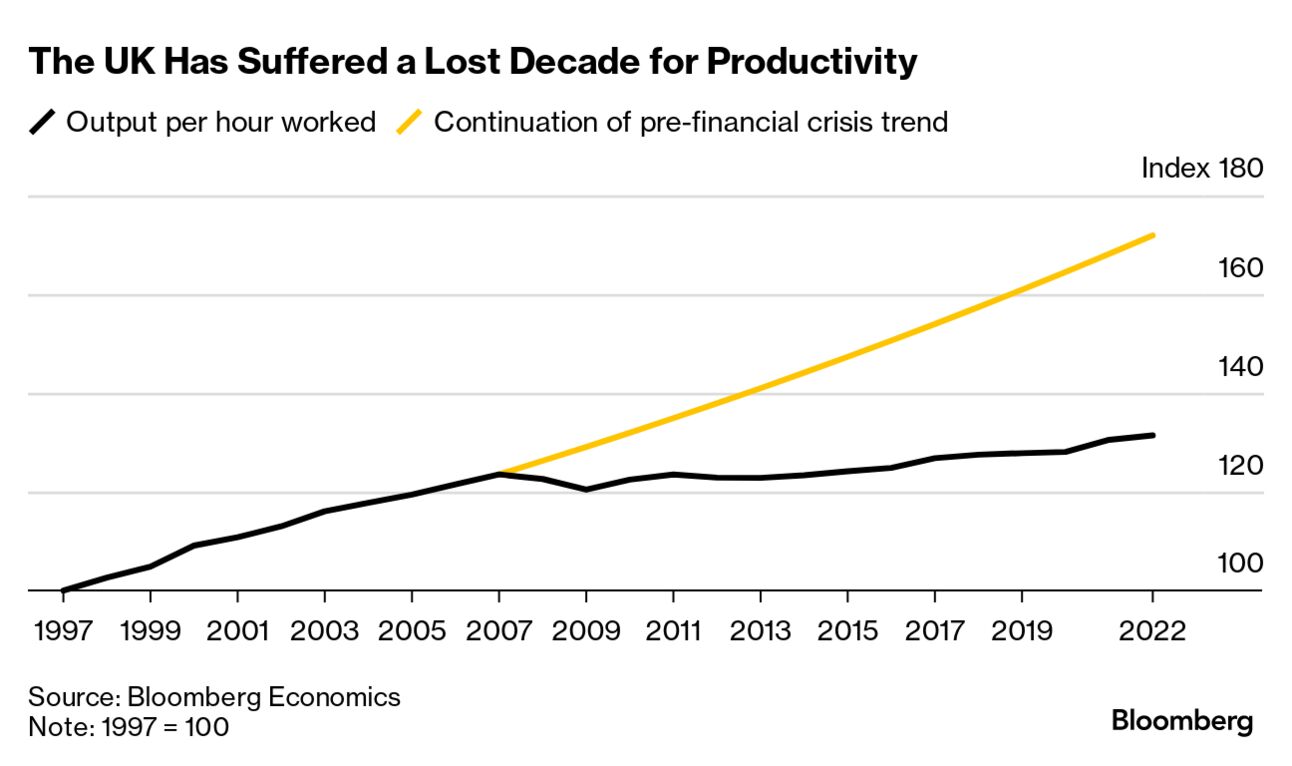
Britain is headed for feeble growth and lost living standards unless wide-ranging action is taken to lift weak productivity that has plagued the economy since the financial crisis, a Bloomberg Economics analysis shows.

Bloomberg Economists Dan Hanson and Ana Andrade calculated that hourly labor productivity in the UK is 24% below where it would be had it maintained its pre-crisis trend. A lack of investment explained a quarter of the gap, with less innovation and a slowdown in the adoption of new ideas accounting for the remainder.

Read more about UK productivity

What we've been reading

Carry on. Heathrow needs longer to install advanced luggage scanners that will end liquids needing to be removed from bags.

Brave new world. Banks are about to get their first ever industry standard for calculating the carbon footprint of their capital markets units.

Electric vehicles. BP and Spain-based clean energy company Iberdrola create firm to invest €1 billion in a new ultra-fast charging stations.

Oil's wild ride driven by bot traders

One key story, every weekday

Illustrator: Joseph Gough

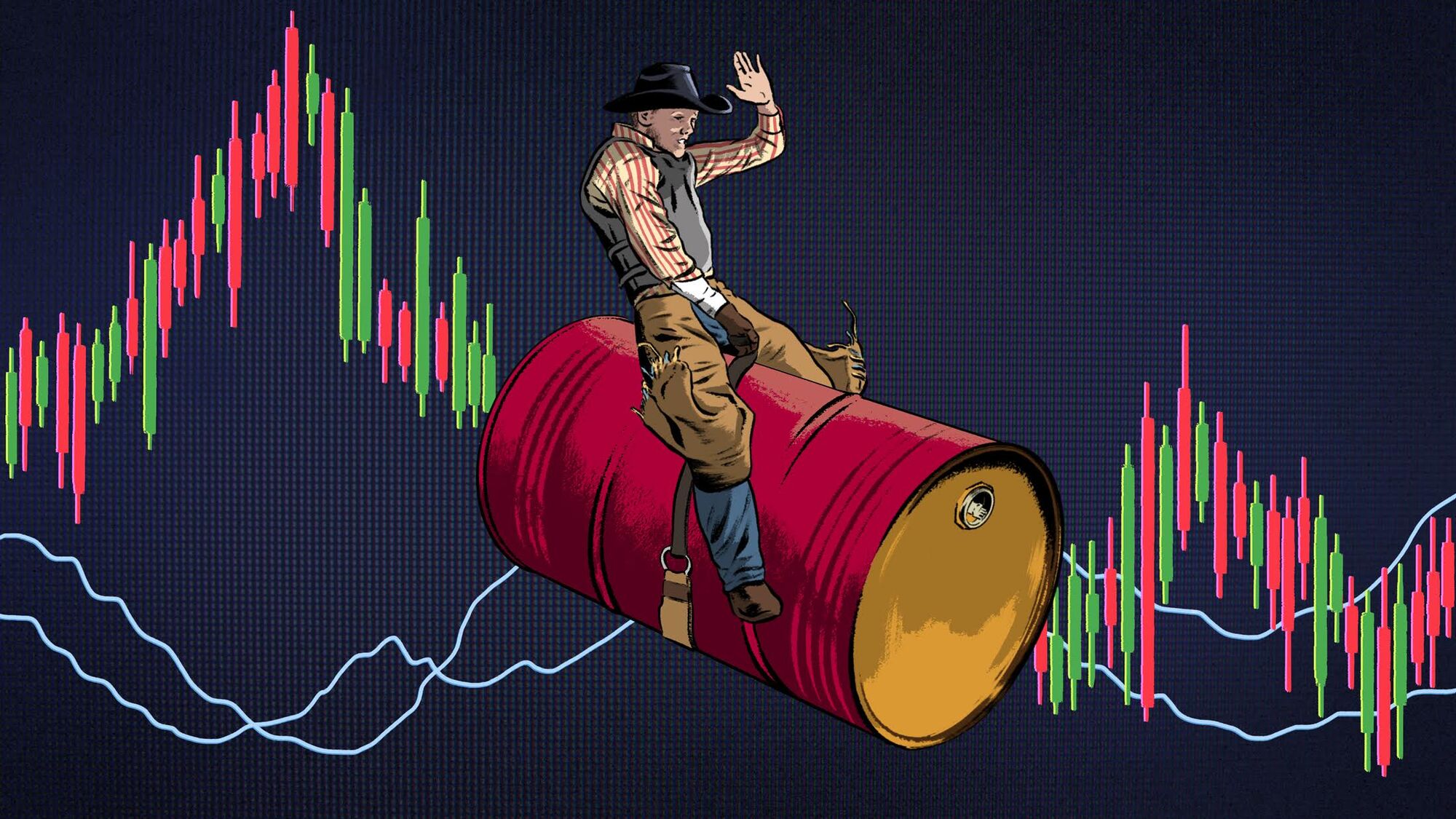
Trading oil has perhaps never been more of a roller coaster ride than it is today.

Just in the past two months, prices threatened to reach $100 per barrel, only to whipsaw into the $70s. On one day in October, they swung as much as 6%. And so far in 2023, futures have lurched by more than $2 a day 161 times, a massive jump from previous years.

What's happening can't be entirely explained by OPEC's machinations, or war in the Middle East

Read The Big Take.

Please send thoughts, tips and feedback to readout@bloomberg.net. You can follow Bloomberg UK on X.

Get Bloomberg newsletters in your inbox

  • Five Things to Start Your Day for the most important business and markets news each morning
  • Money Distilled for John Stepek's daily newsletter on what market moves mean for your money
  • Bw Daily for unique perspectives, original reporting and insightful analysis from Businessweek's renowned journalists
  • Supply Lines for daily insights into supply chains and global trade

And sign up for more Bloomberg newsletters at Bloomberg.com.

No comments:

Post a Comment

The Dark Side of the AI Boom

The biggest AI risk no one is talking about   ...