| Read and share a full version of this story on Bloomberg.com. After months of debate and lobbying over exactly how the US Treasury Department would interpret new battery-sourcing rules for electric vehicle tax credits, the list of EVs that qualify for the full $7,500 incentive is down to 10. This exclusive lineup includes the first ever all-electric Cadillac, Ford's reinvention of an iconic American truck and a pair of groundbreaking Teslas. Also there, like a parent chaperone at a high school prom, is the Chrysler Pacifica plug-in hybrid minivan. The Pacifica is not an attention-grabbing EV. You won't see President Biden grinning like a child from behind the wheel of one during a test drive. It can't go from zero to 60 miles per hour in less than three seconds, it doesn't "crab walk" and Chrysler's founder hasn't made many headlines since he died more than 80 years ago. But if you're looking for an emblem of this particular moment in the US auto industry's electric transition — as the novelty of frunks and instant torque gives way to the adult concerns of supply chain management and economies of scale — then look no further than the Pacifica hybrid. Before going any further, a disclosure: I own one. Last year, as my wife and I worked through our wishlist for a new car, we arrived at a singular destination. We wanted to drive electric (at least most of the time); get the full $7,500 tax credit; carry more than five people comfortably; and be able to go on long road trips. This left us with the Pacifica hybrid or Lincoln's three-row plug-in SUV, the Aviator, and, well, sliding doors are pretty convenient for toting kids. 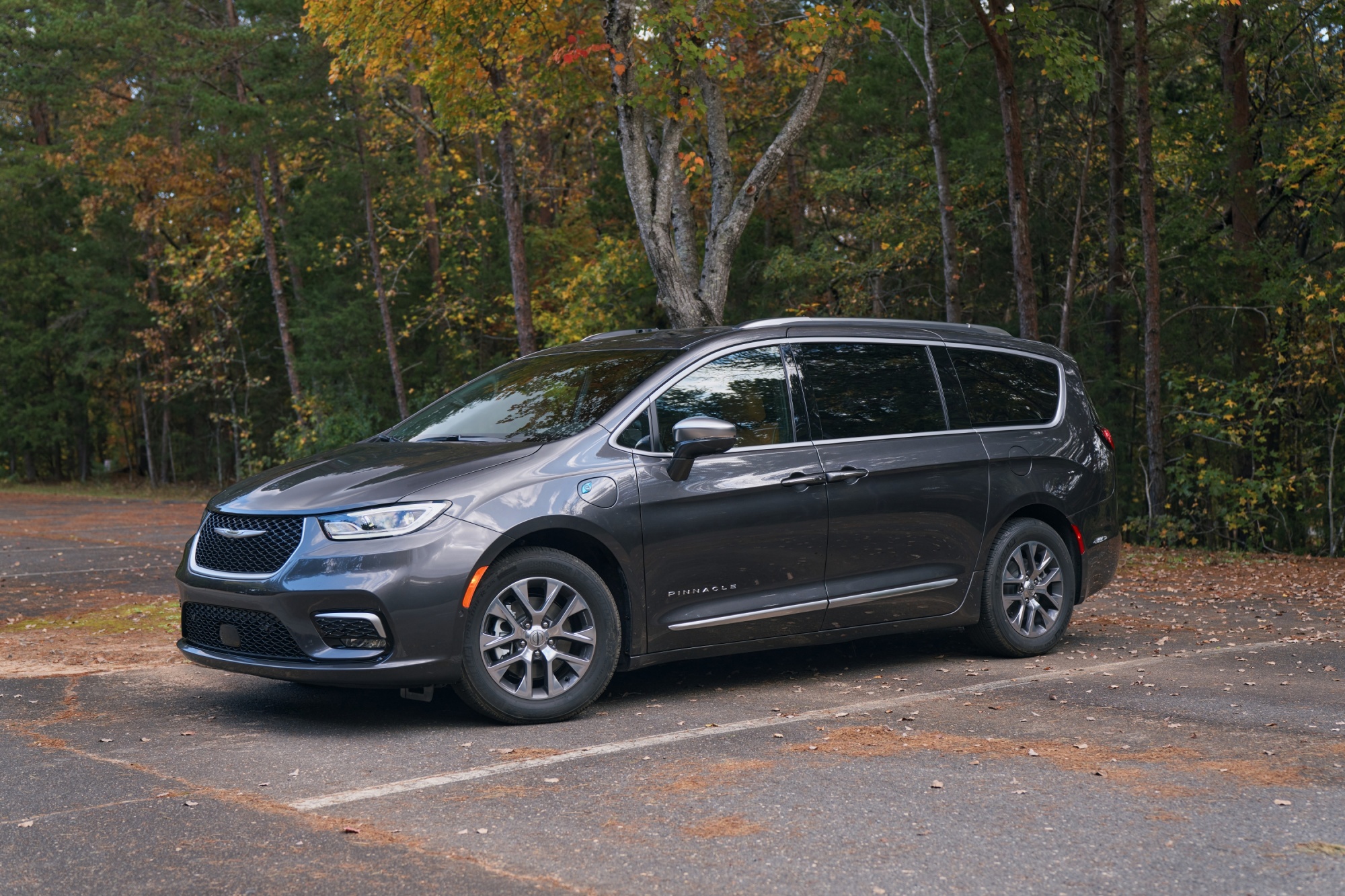 The Chrysler Pacifica plug-in hybrid minivan. Photographer: Stellantis In December, when we made our purchase, the IRA's requirement that qualified vehicles be assembled in North America had already gone into effect, but income caps for buyers and battery-sourcing rules had not. This meant that the Pacifica, which is built in Windsor, Ontario, qualified for the $7,500 credit regardless of our income. Though we didn't know it at the time, the Pacifica also meets the law's battery-sourcing requirements because its packs and cells come from the LG Chem plant in Holland, Michigan. Of the 10 models still eligible for the full credit, it is one of two plug-in hybrids (PHEVs) and the only minivan. We weren't the only buyers looking to take advantage of the tax credit before it potentially disappeared. Retail sales of the Pacifica hybrid more than doubled in the fourth quarter of last year compared to the same period in 2021. Some of that was easing supply chain problems, says Chris Feuell, chief executive officer of Chrysler at the brand's parent company Stellantis NV. But some of it was buyers like us. "We definitely saw a bit of a surge at the end of 2022, as customers were wanting to take advantage of the tax credit," Feuell says. Chrysler sold 14,392 Pacifica Hybrids in 2022, accounting for 15% of the model's total sales including its combustion-engine counterpart. Feuell says demand for the hybrid variant continues to exceed supply. 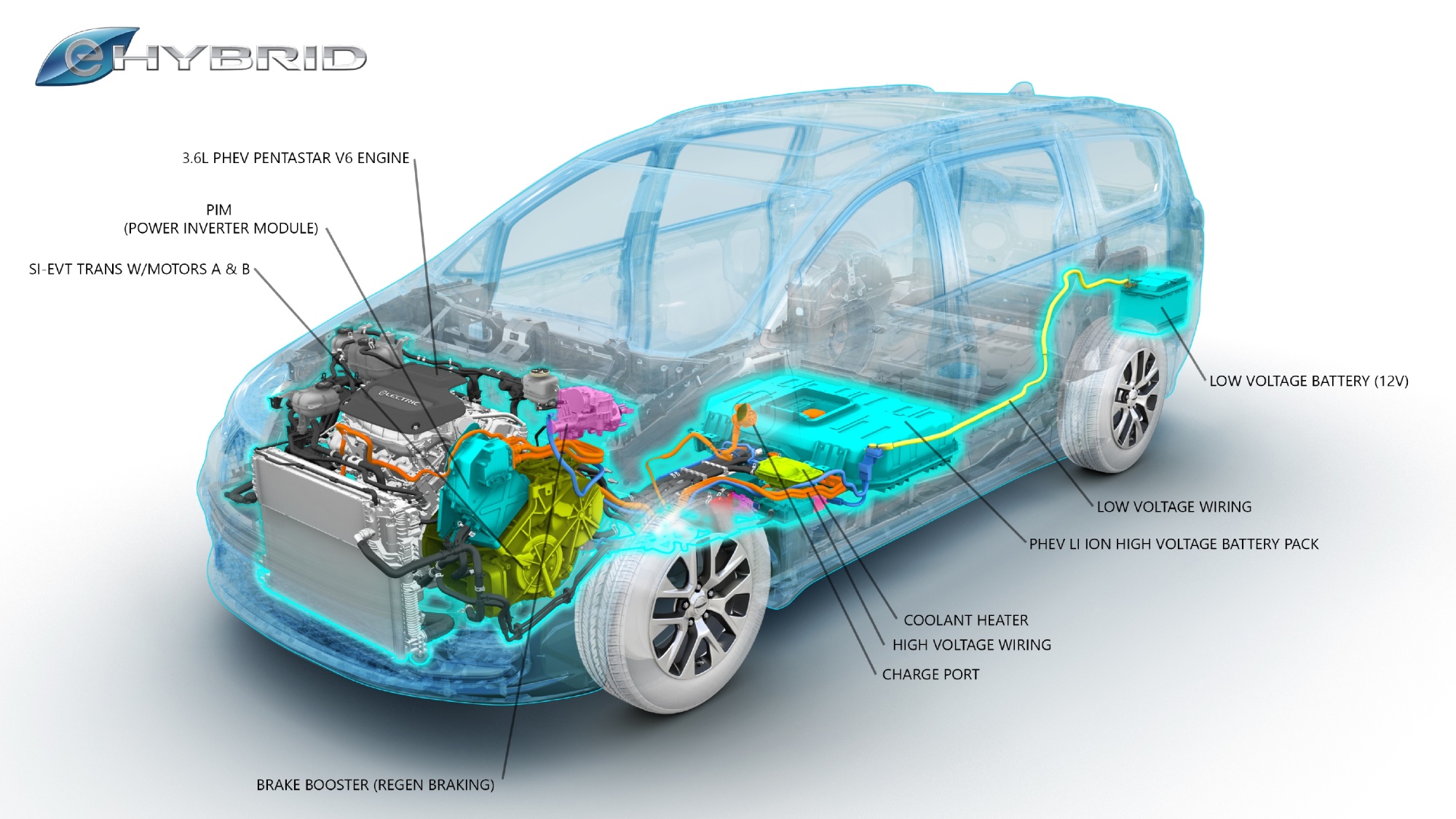 The Chrysler Pacifica Hybrid pairs a six-cylinder gas engine with two electric motors and a 16 kilowatt hour battery. Photographer: Stellantis Chrysler began selling the Pacifica in 2016. American consumers were abandoning the minivan — a category Chrysler popularized in the 1980s with the Dodge Caravan and Plymouth Voyager — in favor of sport utility vehicles, and the hope was to stem the losses by making a minivan that, if you squinted, kind of looked like an SUV. The hybrid version, added in large part to help Chrysler meet federal emissions standards, pairs a six-cylinder gas engine with two electric motors and a 16 kilowatt hour battery. From a pure engineering standpoint, the Pacifica hybrid, like all PHEVs, is an awkward beast. The dual-powertrain setup pushes its curb weight to a hefty 5,010 pounds and means that the electric motors have to lug around a gas engine (and vice versa). But from a consumer perspective, it's a unicorn. When the Pacifica arrived seven years ago, it was the only plug-in minivan on the US market and it remains so to this day. I can say from experience that dropping kids off at school in one is unlikely to turn any heads. But when I get home, I plug into the (level two) charger in our driveway, top up the battery in less than two hours, putter around town again, plug back in and repeat. The Pacifica can go about 30 miles on its battery — more than we (and most other US drivers) need on most trips. With this routine we can get up to 1,000 miles on a single tank of gas, which, for a middle-aged suburbanite sports parent, is about as cool as it gets. "Many customers will go a month or two without going to the gas station," says Feuell. If there were a spacious, affordable, rangy, pure electric minivan on the market, we probably would have gone for it. Volkswagen is working on something like this with the ID.Buzz, an electric version of its iconic Microbus that is set to hit the US market next year. Others will surely follow. Some may well qualify for federal tax credits. But for now the Pacifica stands alone as a somewhat kludgy, very serviceable bridge to the all-electric future — both for my family and for Chrysler. Like getting the Green Daily? Subscribe to Bloomberg.com for unlimited access to breaking news on climate and energy, data-driven reporting and graphics and Bloomberg Green magazine. -
The world is spending $1.1 trillion on climate tech. The biggest economies and VCs are throwing cash at startups working towards a carbon-free future. -
Texas has a love/hate relationship with wind. Texas installs more wind farms than any other US state, but Republicans keep throwing up legislative barriers. -
There's a campaign to rebrand natural gas. Activists are pushing for US green-marketing guidelines to embrace "methane gas" or "fossil gas" instead. -
One pair of jeans consumes 3,800 liters of water. Levi and other clothing makers are now under pressure to set better water-reduction targets. -
Off-road vehicles are getting the Tesla treatment. Polaris says its nearly-silent Ranger XP Kinetic is ideal for sneaking up on deer or nervous livestock. 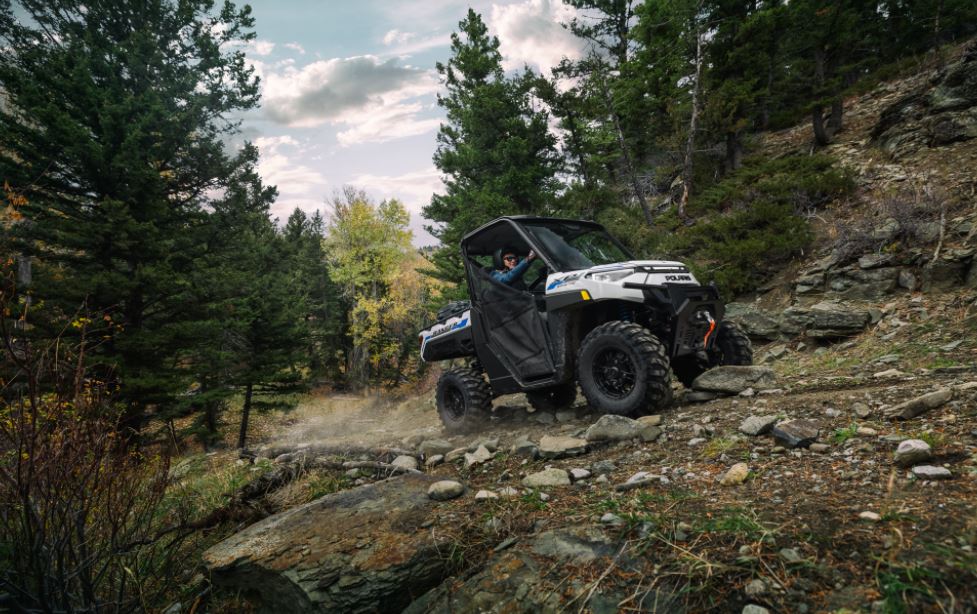 The Polaris Ranger XP Kinetic Source: Polaris Thousands of people marched on London last weekend to demand an end to fossil fuel development, days after activists upended the World Snooker Championships and a month after scientists blockaded a Netherlands airport. This is what climate protest looks like as atmospheric carbon edges past 422 parts per million. Behind the scenes, the nonprofit Climate Emergency Fund is quietly financing this new generation of in-your-face activists — with a lot of help from Hollywood.  A Just Stop Oil protester throws orange powder over a table during the World Snooker Championships in Sheffield, UK, on April 17. Photographer: Mike Egerton/PA Wire The past few months have seen the signing of two major international treaties designed to safeguard biodiversity. What remains to be seen is how effective those treaties will be without the US: The world's largest economy isn't a party to either. On this week's Zero, Akshat Rathi talks to WWF Chief Scientist Rebecca Shaw, and US Special Envoy to COP15 Monica Medina about the prospects for protecting Earth's land and water. 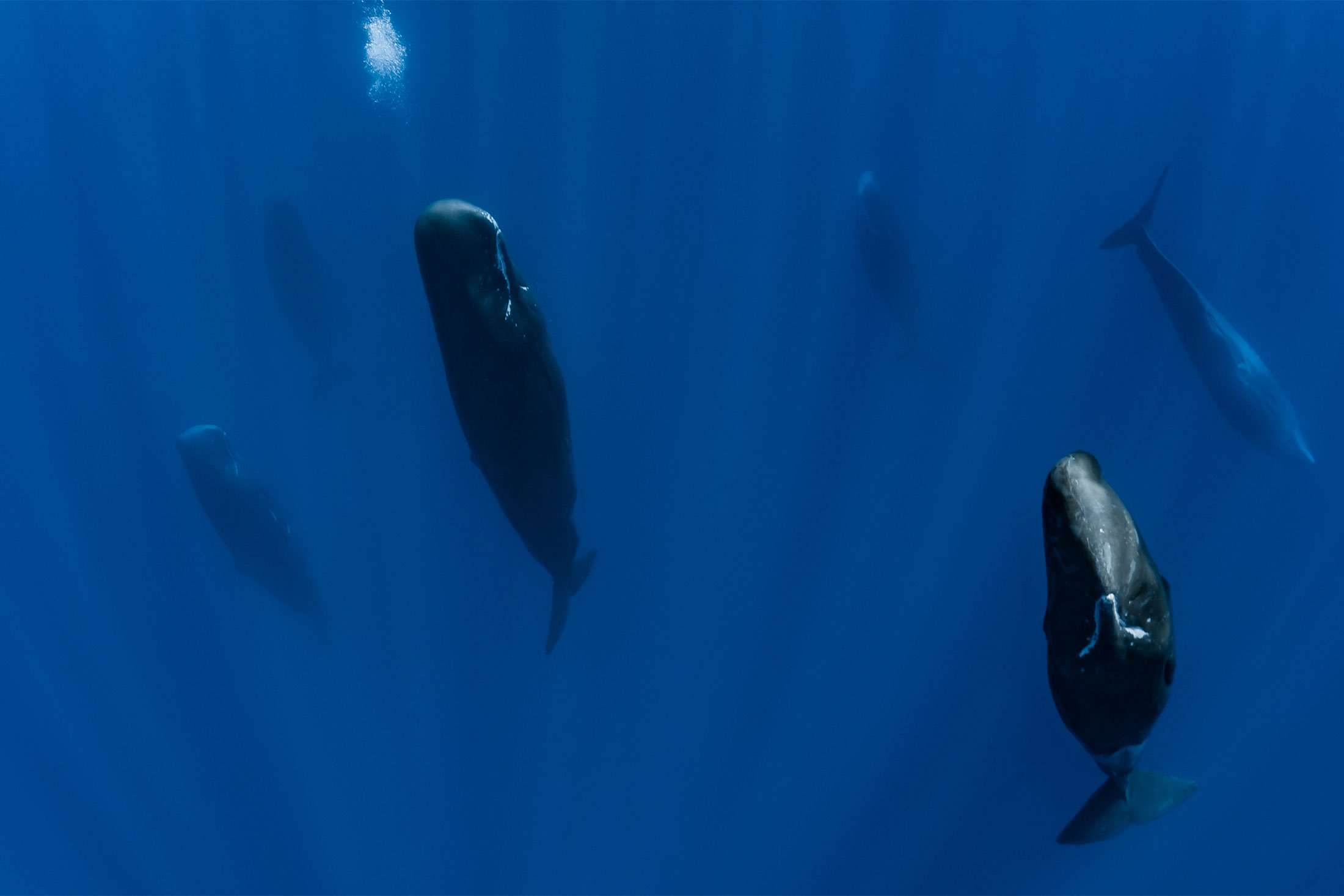 Photographer: Alexis Rosenfeld/Getty Images Companies selling everything from tile cleaners to toothpaste tablets are pitching "concentrated formulas" as a more convenient options for consumers. After all, who likes lugging around a big jug of laundry detergent? But many of those companies are also touting concentrates as more environmentally friendly. So are they? We looked into it. Do you have a question about greener living? An argument you need to settle? (Yes, you should use your dishwasher; no, you shouldn't compost dog poop.) Let us know what's on your mind at greendaily1@bloomberg.net. | 


No comments:
Post a Comment