| By Aaron Clark Think of them as speed cameras, but for methane. Just like roadside instruments are used to identify drivers breaking traffic rules, new powerful satellites are starting to catch oil and gas operators releasing the planet-warming gas into the atmosphere. At least two dozen high-resolution satellites are expected to be in orbit by the end of this year, quietly tracking the super pollutant that's invisible to the naked eye. Their sensors are able to detect the natural gas component as it spews from pipelines, unlit flares, storage tanks and compressor stations around the world. The images sent back are crystal clear and leave little doubt about who is responsible for leaks. Commercial and state interests are driving an acceleration in satellite launches at a time when fossil fuel companies face investor pressure to quantify and slash their emissions, and governments intent on meeting global climate targets seek to benchmark progress. The satellite missions include public and private efforts and are poised to deliver climate transparency on a scale never before seen. 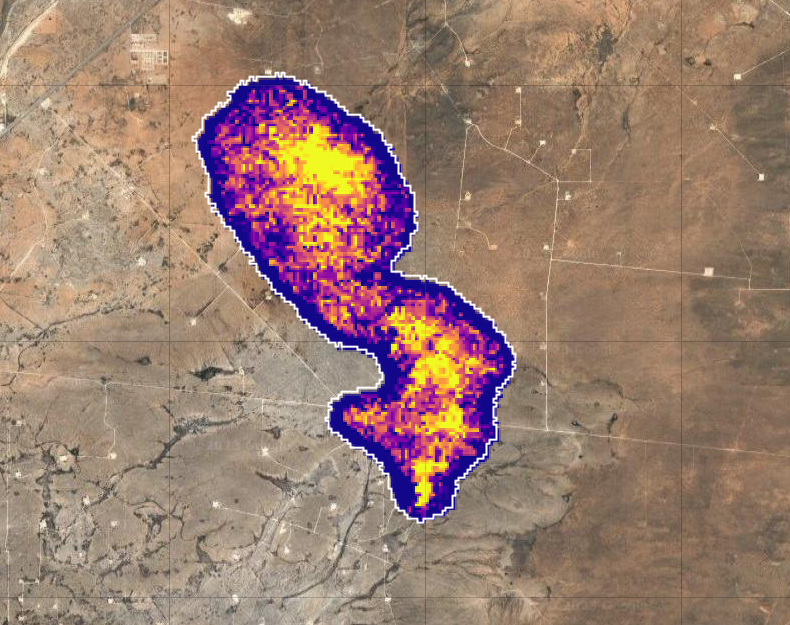 A Feb. 5 observation from NASA/JPL-Caltech's EMIT instrument onboard the International Space Station. "There's been strong demand for facility-level information on emissions because it's directly actionable,'' said Daniel Varon, a postdoctoral researcher studying atmospheric composition and satellite remote sensing at Harvard University. Varon and peers published an overview of how high- and low-resolution satellites are used to track methane last year. Methane has more than 80 times the warming power of carbon dioxide during its first two decades in the atmosphere. Halting emissions of the greenhouse gas could do more to slow climate change in the near-term than almost any other single measure. While fines and enforcement vary, companies increasingly face reputational risks and potential loss of business if their operations are seen as contributing more than peers to the climate crisis. In the US, the world's largest oil and gas producer, the Biden administration is hammering out new rules that would empower private citizens to police oil wells and gas pipelines for leaks using information such as satellite data. So far this year, at least three high-resolution satellites have launched, and four more are expected to enter orbit before 2024. Much of the demand for the data is coming from oil and gas operators themselves, who are increasingly using the systems to identify leaks along thousands of miles of pipeline or remote facilities. GHGSat Inc., a private company that has worked with operators, including Royal Dutch Shell Plc, Chevron Corp. and TotalEnergies SE to detect leaks, made about a million facility measurements last year and is on track to double that in 2023. How methane is detected from space Satellites observe concentrations of methane from space by analyzing the way sunlight reflects off the Earth. As light passes through a cloud of the gas, its intensity is weakened on certain wavelengths. Methane absorbs light in the short-wave infrared portion of the electromagnetic spectrum. Firms, including GHGSat and Carbon Mapper, a non-profit working with partners including Planet Labs PBC, are launching satellites designed specifically to detect methane. But much of the new high-resolution imagery is the result of data processing innovations that leverage observations from public satellites that weren't explicitly built to observe the greenhouse gas yet have spectral bands that include the short-wave infrared. 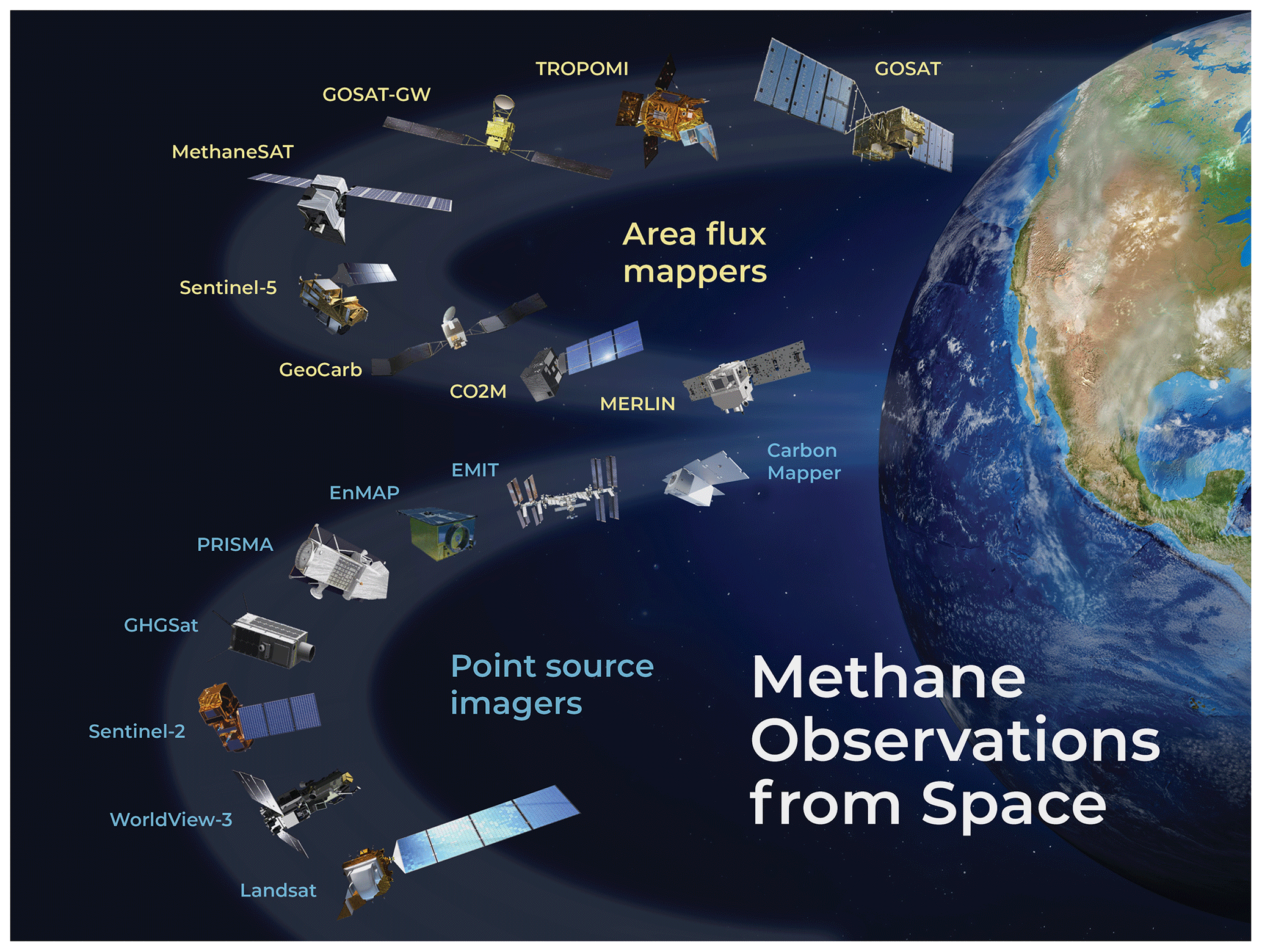 An illustration of high- and low-resolution satellites that can detect methane. Courtesy: D.J. Jacob et al. The methane observations are exposing flaws in decades-old reporting approaches used by companies and government agencies that have typically underestimated emissions. In the US, for instance, methane emissions from oil and gas operations exceeded amounts reported by the Environmental Protection Agency by 70% between 2010 and 2019, an analysis of satellite data published this month showed. The detections are also empowering regulators and the public. New Mexico officials said in March they were inspecting any methane plumes detected by NASA and other entities and would use the data to evaluate reporting and compliance by operators. Bloomberg Green has used high-resolution satellite data from EMIT, Landsat and Sentinel-2 satellites to report on five previously unreported methane emission events, four of which were in the US. You can read a short synopsis of what happened here. This year could see a wave of new reports on operator leaks, as new orbitals increase the coverage and frequency of observations. For operators unable to halt their emissions, that may mean a loss of credibility, fees or trouble insuring future projects. Click here to see recent methane emissions captured via satellite. Like getting the Green Daily? Subscribe to Bloomberg.com for unlimited access to breaking news on climate and energy, data-driven reporting and graphics and Bloomberg Green magazine. | 












No comments:
Post a Comment