| First Republic Bank is on the brink. At the time of this writing, there were hurried, behind-the-scenes talks to find a way to keep it from failing. But the window for the bank to avoid FDIC receivership was closing. Through Thursday night and Friday morning, big banks and private investors mulled a wide array of plans. (None of which would happen without government aid—and that carries political and financial costs.) One good reason to keep First Republic afloat: to prevent the massive writedowns on its balance sheet from materializing. The problem is a hoard of underwater mortgages and some "held-to-maturity" bonds you keep hearing about, which have all fallen in value given the rise in interest rates, but don't really count toward losses unless those securities have to be sold. Or, unless the bank has to be sold. The Federal Deposit Insurance Corp. took a $22.5 billion loss from the failures of Silicon Valley Bank and Signature Bank, according to analysts at the investment bank Jefferies, which could cause pain to the big banks as they pay assessment fees to replenish the insurance fund. Should First Republic fail, that could make the levy much, much higher, given that the hole in its balance sheet is estimated to be bigger than the sum of the prior two failed banks combined. (Almost $30 billion or more.) There's a dispute in the banking community about how systemic the First Republic situation is and whether there's another wave of banking hiccups to come. But let's be absolutely clear: Even if another set of banks failed—which is a matter of debate—the repercussions won't be felt across the economy equally. "Credit will start crunching but not for everyone," Goldman Sachs analysts wrote in a note last week. "Owing to their greater financial flexibility, large and highly rated firms can adapt to tighter bank lending standards." That means the biggest banks are set to get bigger, and smaller borrowers who rely on the smallest institutions will find it much more expensive to get access to money. More from Goldman's Lofti Karoui, in an email today: It has become clear over the past few weeks that a variety of headwinds will keep pressuring the balance sheets of small banks, including lower market capitalizations, dwindling deposits, elevated funding costs, and downside risk for earnings. This backdrop essentially means tighter lending standards from already tight levels. That said, we take comfort from our economists' view that this incremental tightening in lending standards will slow down growth but likely fall short of causing a recession. The reasonably high odds that the current business cycle survives the unexpected dose of tightening that was added in March coupled with the upcoming end of the Fed hiking cycle should allow corporate bond spreads to remain well-behaved.
Goldman's view supports what we are hearing from big credit managers. Ares Management CEO Michael Arougheti told me in a phone call this morning that his firm believes that the biggest players will be the ones getting money—but that he's also trying to lend to midsize companies because there's a chance for him to seize on outsize returns. 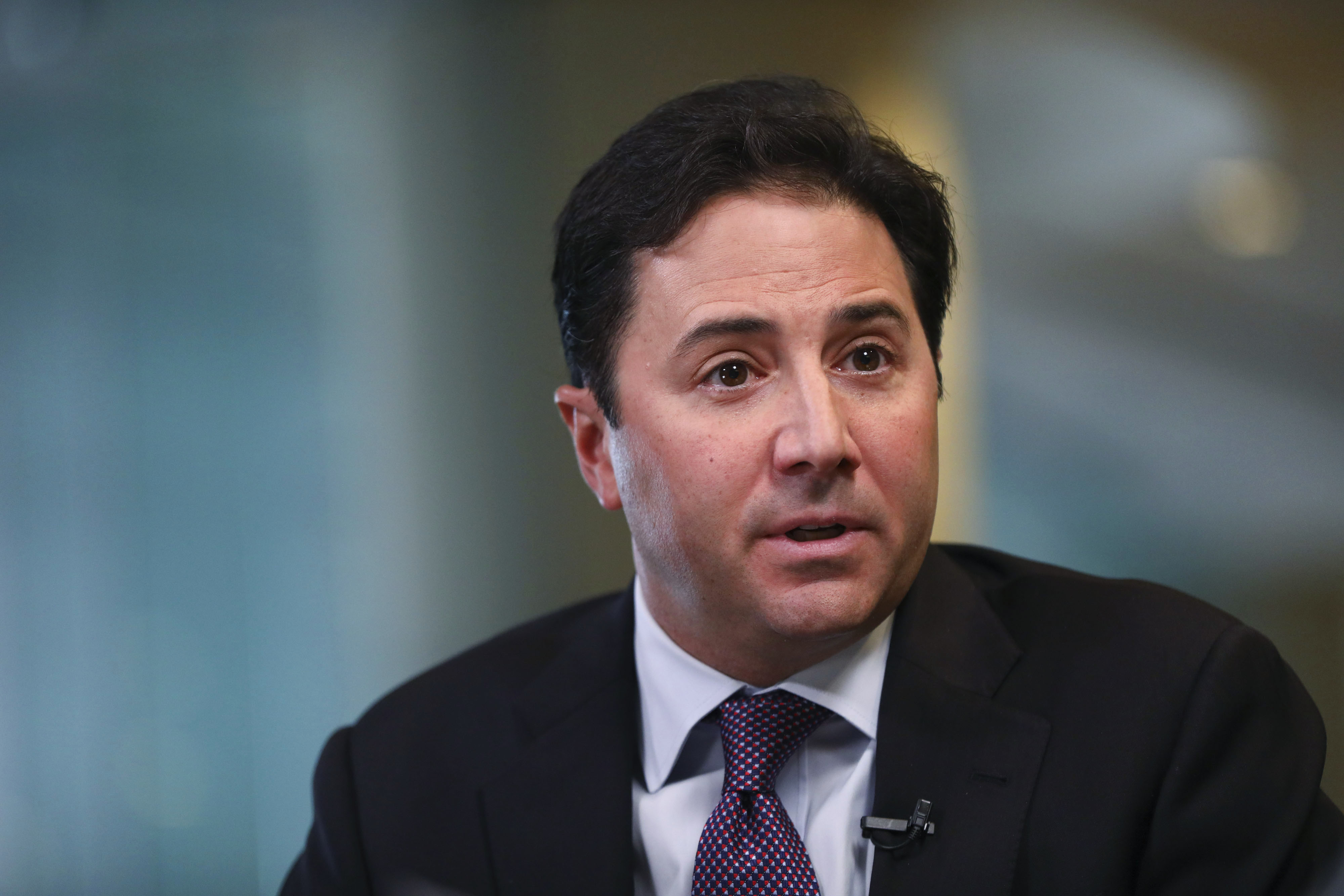 Arougheti. Photographer: Patrick T. Fallon/Bloomberg Our conversation hinted at more stress among traditional lenders: "The deposit flight risk is really the issue," he said. "The deposits are matched against the safest assets—Treasuries and AAA securities—and balance sheets are still challenged." However, he added, "we're spending a lot of time trying to partner with the regional banks." A conversation this week with Blackstone's Dwight Scott, the firm's global head of credit, revealed calmer nerves under the surface than what would meet the eye. Blackstone is leaning into the chance to lend to bigger clients who are looking for fresh cash. "I do think we'll see opportunities out of the banking world. But most importantly, we're seeing just amazing opportunities out of the corporate world," he said in a Bloomberg Television interview. "I don't think we know the answer to whether the crisis, whether we'll see a victim down the road," he said. The Federal Reserve "is going to protect the banking market. And I think that will calm the market over time. There are a lot of strong banks out there, they are continuing to lend." —Sonali Basak, Bloomberg Television's global finance correspondent | 








No comments:
Post a Comment