| American astronomer Carl Sagan once said "you have to know the past to understand the present." It's good advice for anyone looking to make sense of a world still reeling from a pandemic, Brexit, Russia's war with Ukraine and a trade war between the world's two largest economies. This tumultuous period has encouraged C-suites and governments around the world to rethink the economic strategies that have driven the past three decades of globalization. To understand the forward trajectory of globalization, Bloomberg dove into some data from the past three years to see what trends have emerged since the pandemic first roiled global markets. (Click here for the full story.) In a nutshell, here's what we found: - The US is regularly importing more goods from Europe than from China
- China is exporting a greater share of its goods to non-US markets
- Brexit is increasing costs and reducing market access for UK exporters
- China uses its economic might achieve strategic goals
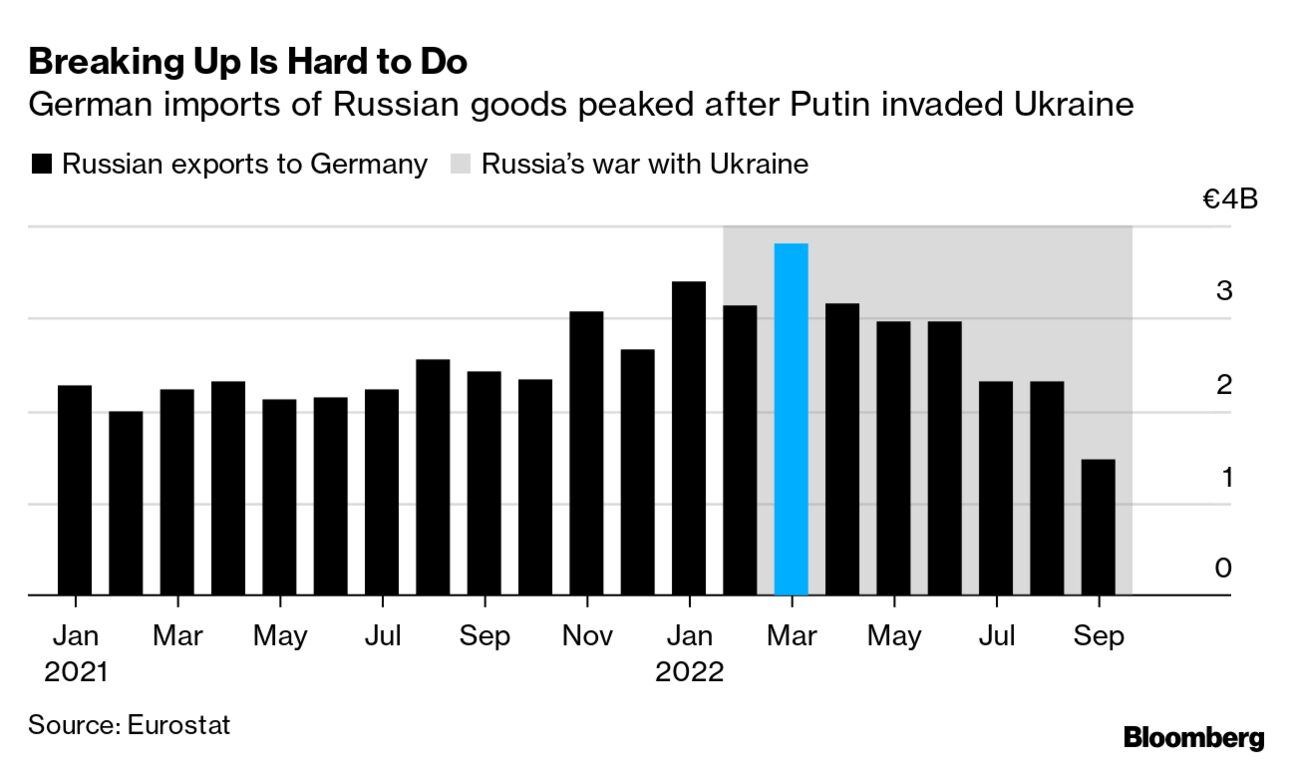
- Germany was slow to cut off imports from Russia after Vladimir Putin invaded Ukraine
Broadly, the data show that the world's largest trading powers are rewiring their traditional relationships. That's led to a new focus on strengthening the reliability of supply chains, shifting from "just in time" to "just in case" trade strategies and reducing dependence on authoritarian regimes like China. Some of these shifts are marginal, and temporary, while others represent the beginnings of longer-term structural realignments. Here are a few conclusions we can draw about the future: - The US and China aren't engaged in a wholesale decoupling of their economies, but both nations are hedging their bets and deepening their trade flows with other nations
- A strong, mutually beneficial US-EU trade relationship is more valuable and important at a time when both regions are reducing their dependence on China
- The shift towards market concentration among regional economic hubs will take on increased importance in the coming years — particularly so in the Asia-Pacific region
- The UK must find ways to mitigate the harmful effects of Brexit as EU producers rely less and less on UK exports to feed, clothe and service European citizens
- Russia's economic influence is approaching a generational nadir and it's likely to remain a pariah state for many years to come
What's happening is a kind of "reglobalization" where governments and multinational companies adapt their trade links to accommodate the new economic and geopolitical challenges. And while supply chains may be more insulated against shocks, the next chapter also has the potential to increase costs and make the world a less productive place. —Bryce Baschuk in Geneva | 










No comments:
Post a Comment