| Since 2006, green and white Guidance Patrol minivans have cruised major intersections and thoroughfares in Iran, arresting those deemed to be flouting the Islamic Republic's strict religious dress codes. Earlier this year, the unit detained a 22-year-old woman who later died in custody. Mahsa Amini's death triggered deadly protests that challenged Iran's theocratic leadership on a scale not seen since they took power after the 1979 Islamic Revolution. Over the weekend Chief Public Prosecutor Mohammad Jafar Montazeri acknowledged for the first time that the unrest had led to the effective suspension of the "morality police," as well as a potential review of Iran's so-called modesty laws.
Still, it isn't clear how much will change. Businesses in parts of the country went on strike Monday, even as the government vowed harsh sentences including the death penalty on demonstrators. Footage shared on social media showed entire streets of shops shuttered in parts of the capital, Tehran, and the cities of Arak, Bushehr, Kermanshah, Shiraz and parts of Esfahan. None of the videos could be verified by Bloomberg. 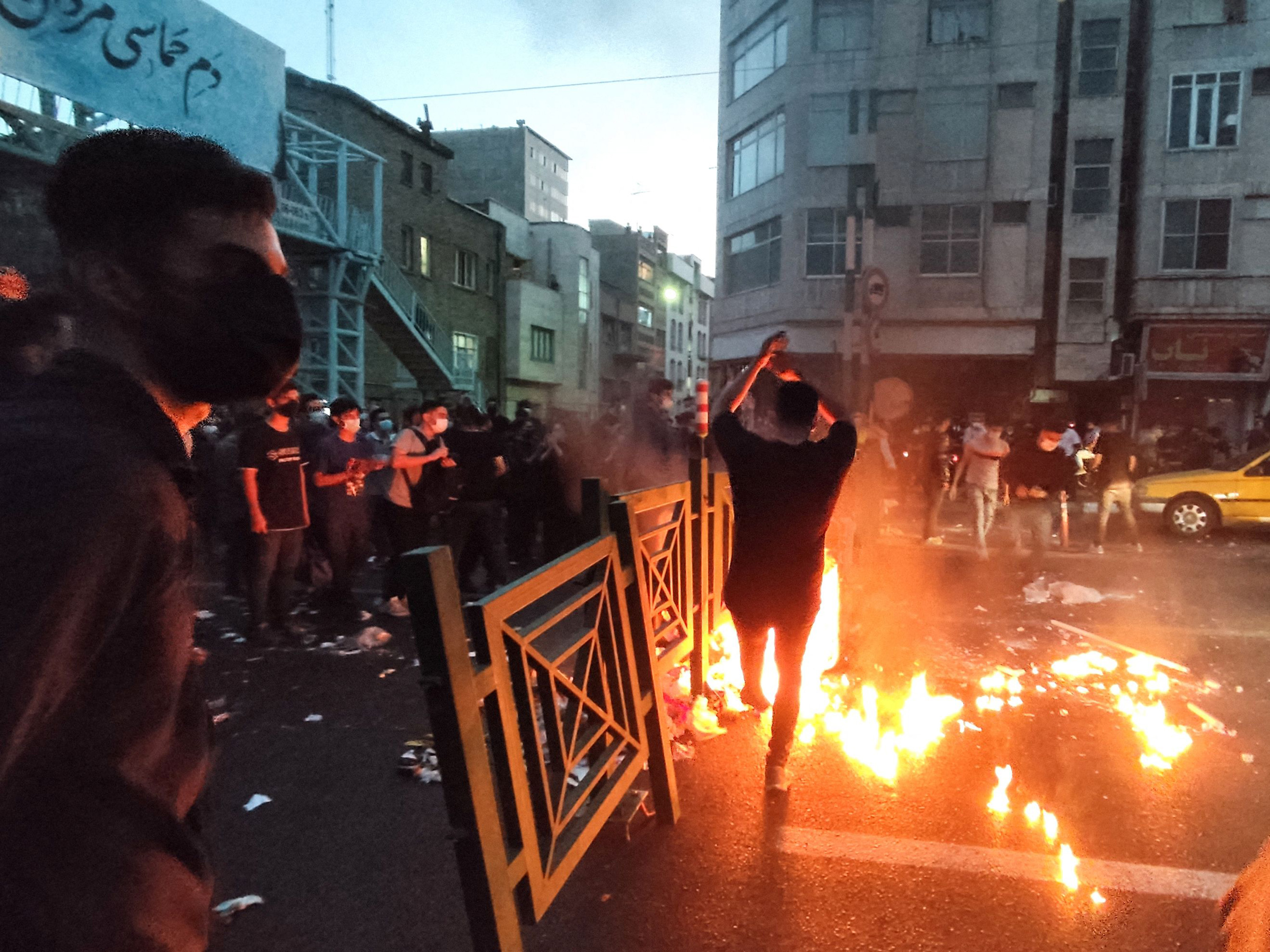 A picture obtained by AFP on September 21 shows demonstrators taking to the streets in Tehran (Photo by AFP via Getty Images) The government's moves over the weekend are unlikely to represent a major shift in policy and didn't address protesters' demands to scrap mandatory religious dress codes altogether, or deal with a broad list of grievances related to civil liberties, governance and the rule of law. With mandates for how women must dress in place, removing the Guidance Patrol also raises questions about how the rules will be enforced, and whether an alternative system will emerge. In a sign that regulation of public life will not necessarily be relaxed, Montazeri said: "Of course, the judiciary continues to monitor behavior in the community." He said the judiciary was working on a draft proposal for amendments to how laws "pertaining to chastity and hijab" should be enforced. Iran's parliament and the Supreme Council of the Islamic Revolution plan to reach a decision on how to go forward within 15 days. Amini's death sparked a public outcry, and many women began publicly shunning or destroying head-scarves that have been compulsory for them since childhood. Many women are now seen in public without head coverings in Tehran's more liberal, northern enclaves. According to rights groups, more than 400 people have been killed by security forces in the protests, including scores of children. The United Nations said last month that more than 14,000 people have so far been arrested for taking part and many stand accused of serious offenses that carry the death penalty.
The US and European Union have sanctioned Iran over the crackdown, which has also provoked a global outcry. Even the country's national football team found itself caught in the middle between mainly young fans who want them to support the protests and the government that wants to use them as a tool for propaganda purposes. 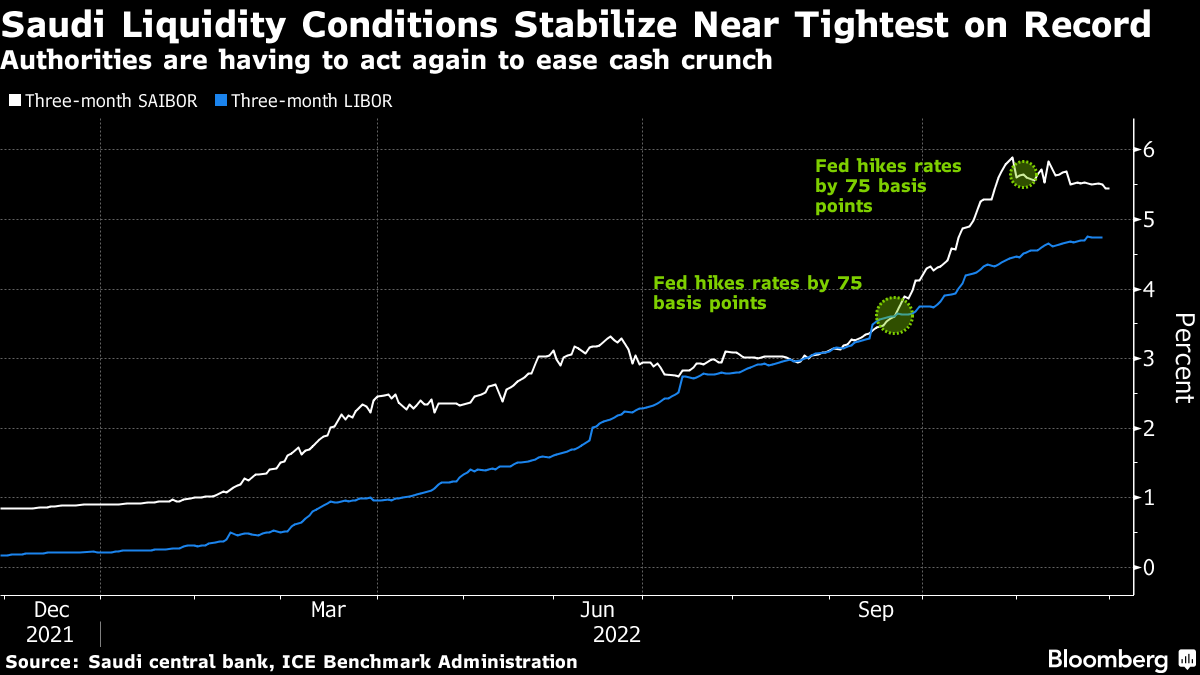 Saudi Arabia's central bank has stepped up the use of a mechanism to pump money into the financial system as it seeks to tackle a liquidity crunch that has helped push borrowing costs for lenders to the highest in decades. The effort by SAMA, as the central bank is known, helped stabilize the interest rate banks charge one another for loans, though it remains near a record high. Turkish President Recep Tayyip Erdogan's decision to kiss and make up with his Egyptian counterpart, General Abdel-Fattah El-Sisi, reflects geopolitical realities more than economic necessity, Bobby Ghosh writes for Bloomberg Opinion. The most immediate service Sisi can offer Erdogan is as a go-between with Greece.  | "Secret" Saudi Deal: US House Republicans announced a probe into reports of a failed "secret deal to boost oil production" between between Biden administration officials and Saudi Arabia. On Sunday, OPEC+ kept oil production unchanged, after only just implementing the hefty 2 million barrel-a-day reduction agreed at its last gathering.
Peak Inflation? Turkish inflation slowed for the first time in over a year and a half, though President Erdogan's growth-at-all-costs policy ahead of elections next year may keep it elevated for some time.
Oil and Gas: Kuwait's state energy company said customers are reluctant to increase oil imports next year, while Qatar has agreed to supply Germany with liquefied natural gas under a long-term deal. Elsewhere, the United Arab Emirates' main energy company will boost investment to $150 billion over the next five years, speed up an increase in oil-production capacity and list some of its natural gas business.
Food Delivery Deal: Saudi food delivery firm Jahez agreed to acquire The Chefz in a cash and stock deal, almost a year after Delivery Hero's attempt to buy the firm was thwarted by the local competition watchdog.
Trade Talks: The UAE said it will start trade talks with Ukraine aimed at eventually helping to rebuild its war-hit economy and open up more access for its grains. The Gulf state said it plans to negotiate a wide-ranging economic deal with Ukraine, one of the Middle East's most important sources of grains such as barley and wheat.
In the Red: The majority of newly listed shares in Dubai are trading below their initial public offering price as the drop in oil weighs on investor demand. Private school operator Taaleem Holdings dropped as much as 13% on its trading debut after raising $204 million from its share sale.
Qatar's New Hire: The Qatar Investment Authority, the nation's $450 billion wealth fund, hired former JPMorgan Chase & Co. executive Niall Byrne as its chief financial officer. Hardcore Hotel: A new hotel chain from the company behind Atlantis the Royal will debut in Dubai next year. The plans sound intense: At its core, a 1,000-square-meter gym and workouts designed by Olympic athletes, cryotherapy, infrared and oxygen therapy, acupuncture and more. Meanwhile, Israeli chef Eyal Shani will open a branch of his North Miznon near JBR in Dubai. One Israeli quipped: "Now Emiratis can eat the world's most expensive plain tomato." - Egypt CPI: Dec. 8
- Saudi Arabia GDP: Dec. 8
- Kuwait's sovereign rating update by S&P
- Saudi Arabia's sovereign rating update by Moody's
Over the past decade, deaths of workers involved in World Cup related construction in Qatar drew global attention to their working conditions.
Yet researchers say there's an even broader problem emerging among low-income migrants across hot regions from the Middle East to Central America -- an epidemic of chronic kidney disease. 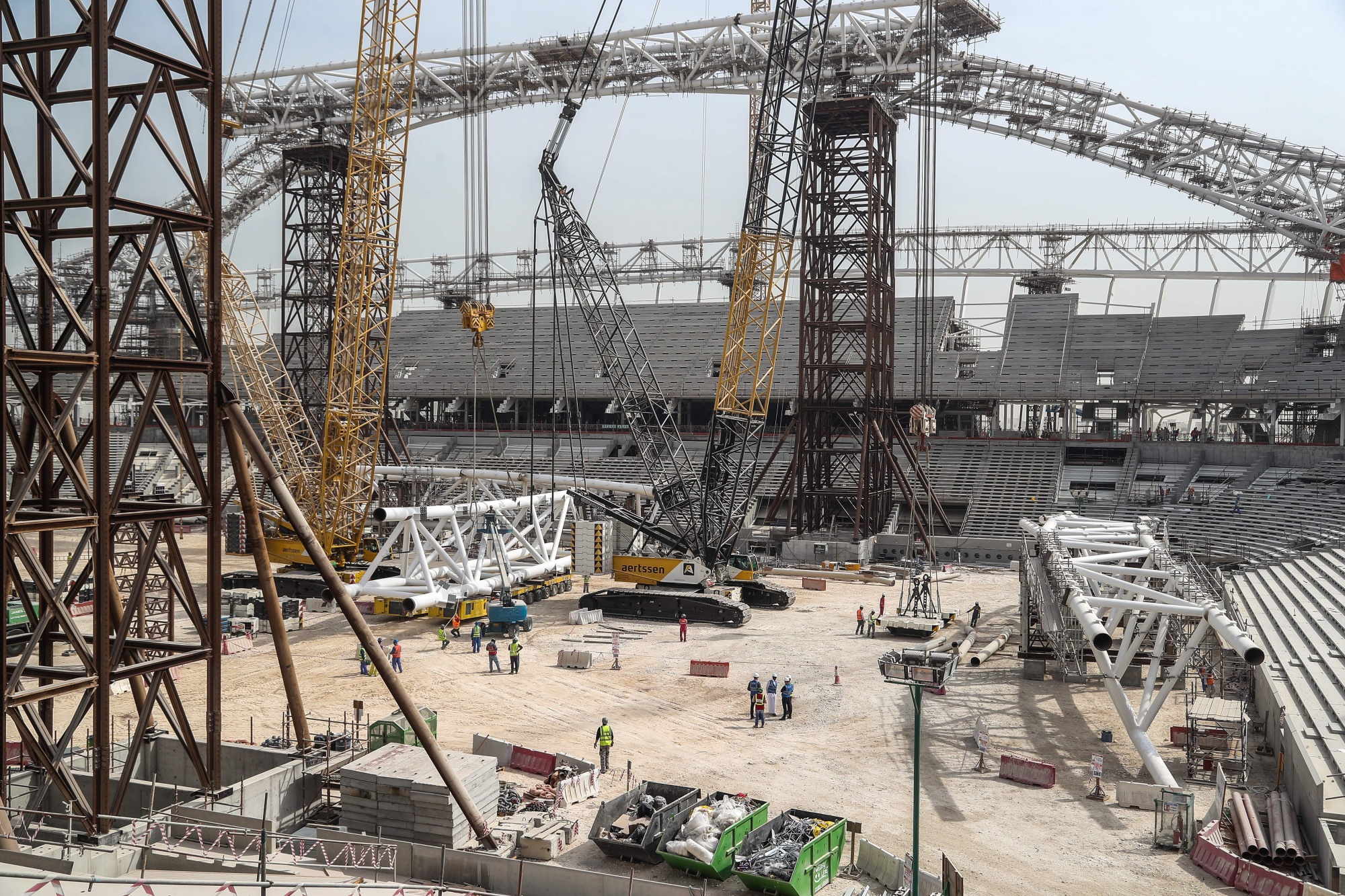 Workers on the construction site at the Al Janoub Stadium, one of the FIFA World Cup Qatar 2022 venues, in February 2018. Photographer: KARIM JAAFAR/AFP Medical professionals warn that as climate change leads to longer and more frequent heatwaves, the number of people suffering from kidney disease will increase, affecting a wider swath of the globe -- making it vital to reexamine labor laws and occupational practices. | 










No comments:
Post a Comment