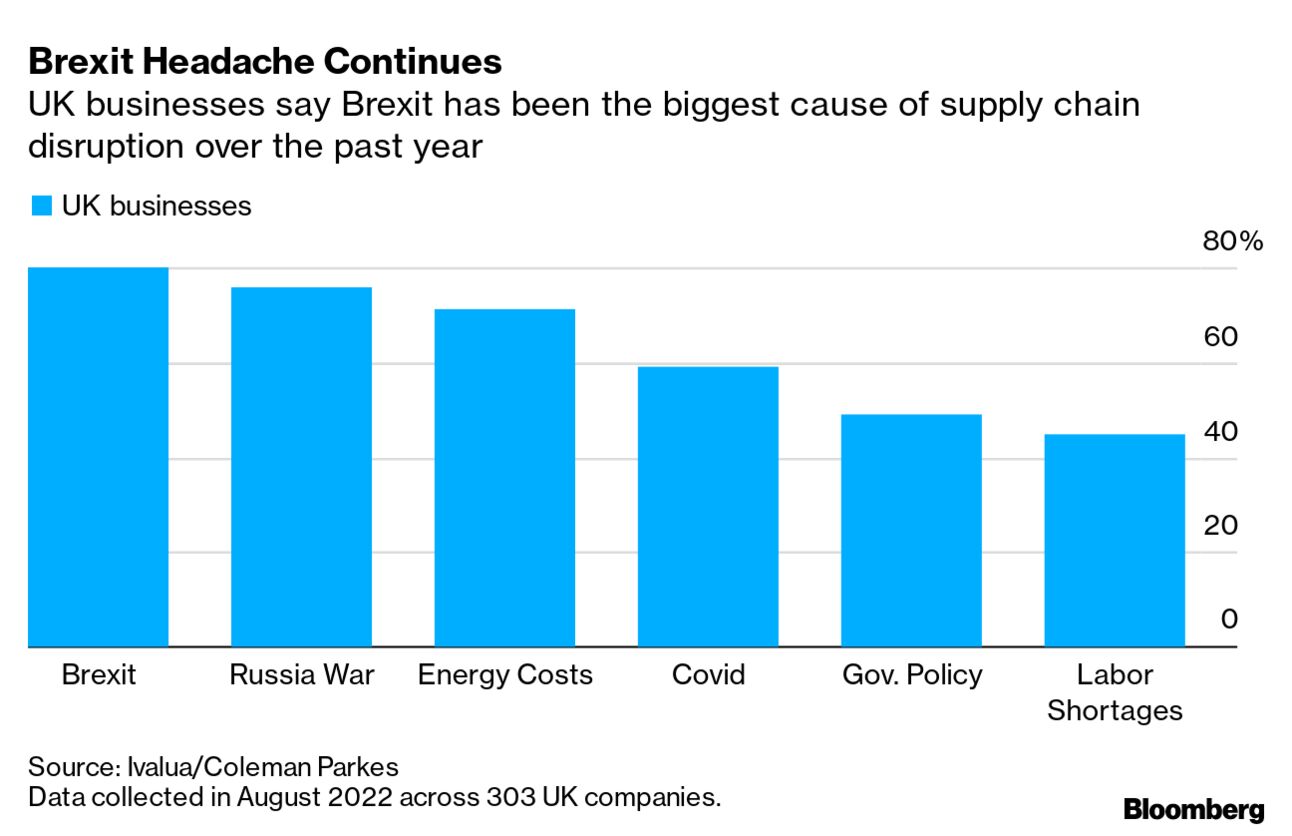
| Six years on from the UK's decision to leave the European Union, Brexit is still proving the biggest headache for British businesses, ranking even higher than Russia's war in Ukraine, Covid or rising energy costs. Four in five UK businesses felt that Brexit had proved the biggest supply chain disruptor over the past 12 months, according to an Ivalua survey conducted by Coleman Parkes in August. An even higher proportion — 83% — think the worst is yet to come. Almost a third of businesses said they had lost revenues as a result of the disruptions, estimating an average drop of around 18%, and around two thirds said they had either been fined or suffered reputational damage as a result of goods arriving late. The poll, released Monday, canvased 303 UK procurement managers at companies with 1,000 or more employees and revenue of more than £50 million ($60 million). "These findings lay bare the significant toll of supply chain disruption on UK businesses," said Alex Saric, smart procurement expert at Ivalua, a cloud-based spend management company. "Supply continuity has been left on life support after repeated blockages and restarts, resulting in supplier failure and organizations struggling to on-board new suppliers to kick-start supply." Delays and increased red tape have been a common complaint among businesses since the end of the Brexit transition period in December 2020, with businesses grappling with the costs attached to new supply chain friction. Smaller businesses, though not surveyed, have generally fared worse, with thinner margins to absorb shocks and fewer resources to cope with the uptick in administration or a need to up-skill. The mood among British businesses is of gloomy resignation: The survey found that more than half now believe supply chain disruption has become normal, expecting so-called 'black swan' events more frequently in the future. The consequences of this are proving far-reaching, raising concerns of insolvencies across both businesses and their suppliers, as well as having an impact on innovation and product development, which businesses reported as lagging due to the disruptions. For More on Brexit and the UK Economy: —Liza Tetley in London | 







No comments:
Post a Comment