| Hello. Today we look at how workers may fare better than usual in the next recession, this week's US payrolls report and a big speech by Federal Reserve Chair Jerome Powell, and how working from home is creating inequality. Twitter, Amazon, HP and Goldman Sachs are all making headlines by cutting jobs. Yet the layoffs by such high-profile companies may mask some good news for most workers. According to Rich Miller and Enda Curran's Big Take today, people have a better-than-usual shot at holding onto their jobs even if recession hits. That's because: - Almost three years after Covid-19 hit, companies around the world still complain that they can't get the talent they need
- They worry about labor shortages that will likely last beyond not just the pandemic, but the next downturn too.
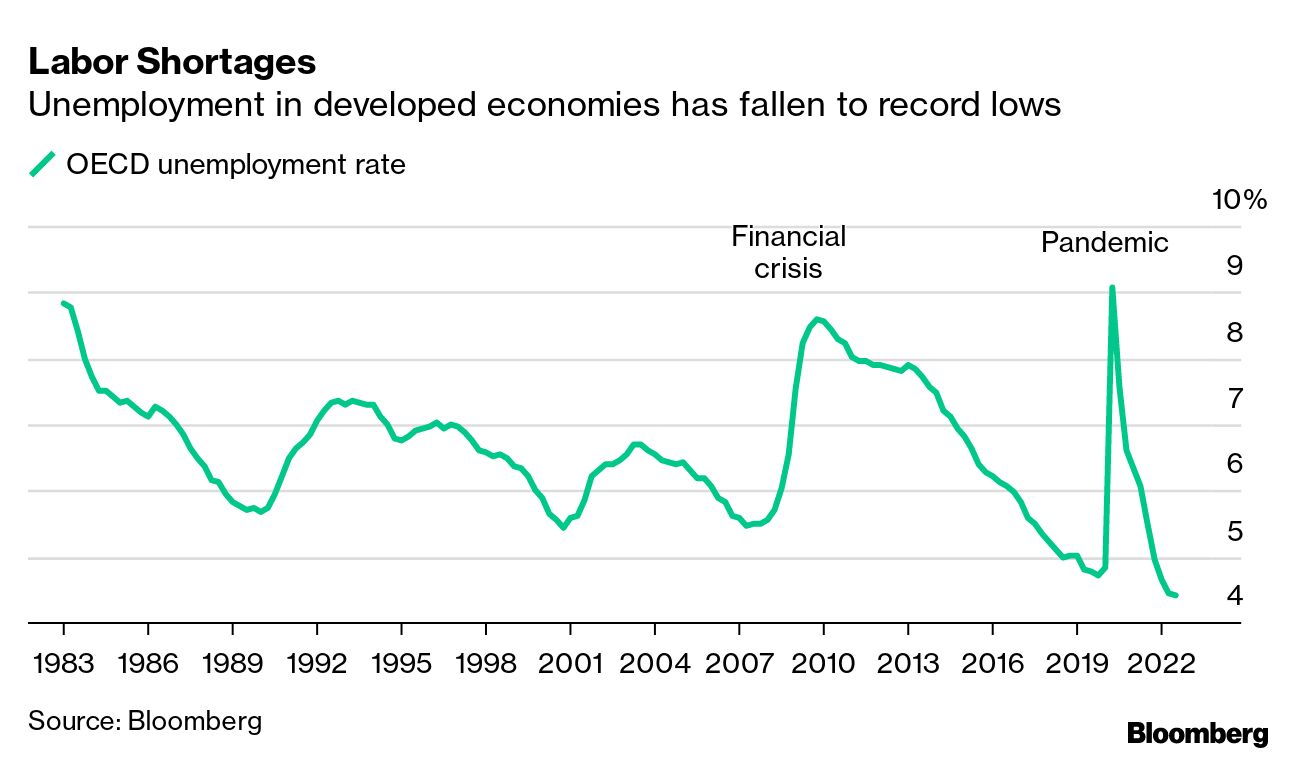
Deeper forces, such as changes in population and immigration, are shrinking the pool of workers they can hire from. The result: Despite weakening demand for their goods and services, many businesses are looking to retain or even add staff, rather than let them go — hoarding labor that they know they'll need once the economy starts accelerating again. Bloomberg Economics projects that unemployment will rise by about 3.3 million across developed economies by 2024, a period in which most are expected to suffer recessions. While that's a lot of lost jobs, it's fewer than the 5.1 million shed in the relatively mild downturn that began in 2001, and is dwarfed by the scale of the past two global slumps. What's more, the starting point for employment is historically strong. The jobless rate in major developed economies recently stood at 4.4%, the lowest in data going back to the early 1980s. Businesses will "absorb a drop in demand for their products and services but maintain their workforces," says Jonas Prising, chief executive officer of the ManpowerGroup, a global staffing agency. "They're not going to be hiring. But I think we can expect payrolls to stay healthy."
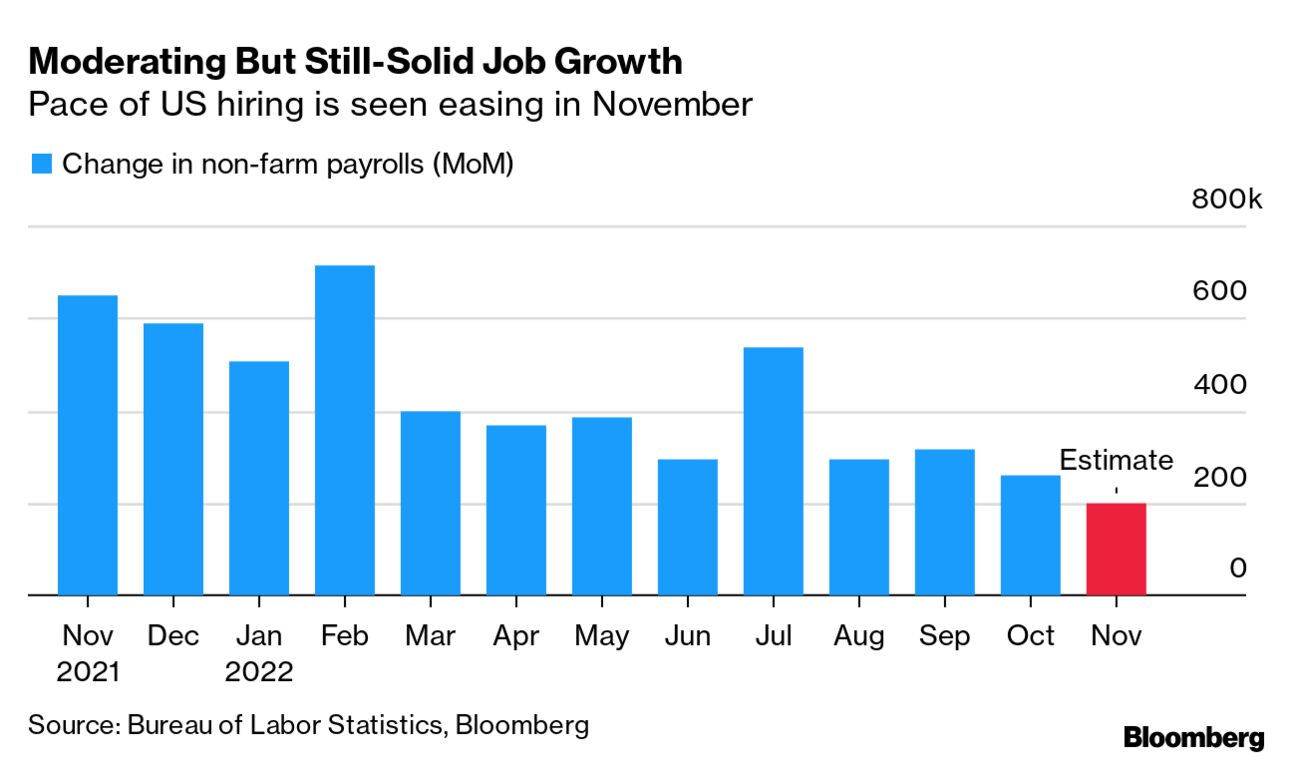
All bets are off, though, if central banks can't control inflation, meaning they have to crash their economies and labor markets to do so. For the moment, New Zealand is among the economies feeling a hit. Central bank Governor Adrian Orr said the shortage of workers means it's all about "labor labor labor." —Simon Kennedy Sticking with the labor market theme, Friday will see the release of the latest read of US employment. It's expected to show job growth on more of the downward glide path sought by the Federal Reserve. - Payrolls rose about 200,000 in November, which would mark a second month of decelerating gains, according to the Bloomberg survey
- The unemployment rate probably held at 3.7%, just above a five-decade low
Two days before, Fed Chair Jerome Powell is expected to use a speech at the Brookings Institution to join the ranks of officials signaling they will hike interest rates by 50 basis points in December after four successive 75 basis-point hikes. -
Read more on Powell's speech here and on the week ahead here.  | - Life after Brexit | A rundown in charts of how the UK economy is faring in the years after the 2020 Brexit deal was signed.
- China braced | China's economic activity slumped in November and could drop further in coming weeks as Covid outbreaks spread across the country and protests against tighter virus restrictions escalate. But some analysts see chances growing that China may end its Covid Zero policy earlier than previously expected.
- No end in sight | European Central Bank Governing Council member Klaas Knot signaled that the cycle of interest-rate increases targeting record inflation isn't close to ending.
- Black Friday | US retailers eked out modest growth over Black Friday weekend with deep discounts that lured shoppers seeking a reprieve from stubborn inflation.
- Recession trade | The bond market is zeroing in on a US recession next year, with traders betting that the longer-term trajectory for interest rates will be down even as the Federal Reserve is still raising its interest rate.
- Stagflation bet | Stagflation is the key risk for the global economy in 2023, according to investors who said hopes of a rally in markets are premature following this year's brutal selloff.
- Turkey rates | Turkish President Recep Tayyip Erdogan signaled the country will stick with an ultra-loose monetary policy approach of single-digit rates, after the central bank slashed borrowing costs.
A rise in working from home is set to trigger a push to suburbs by skilled workers at the expense of those with fewer skills, according to a new study. Published by the Center for Economic and Policy Research, the paper's authors focused on London and reported a 400% increase in working from home by those with skills since 2019. "The skilled find it desirable to reside in the periphery where land is cheaper," the report said. "This starts to rearrange the urban structure towards a 'doughnut city', because the city centre gets less and less vibrant; consumption of local consumption services — such as food, retail and haircuts — falls and a growing proportion of unskilled, now living near the Central Business District, move to work in the final sector for a lower pay."
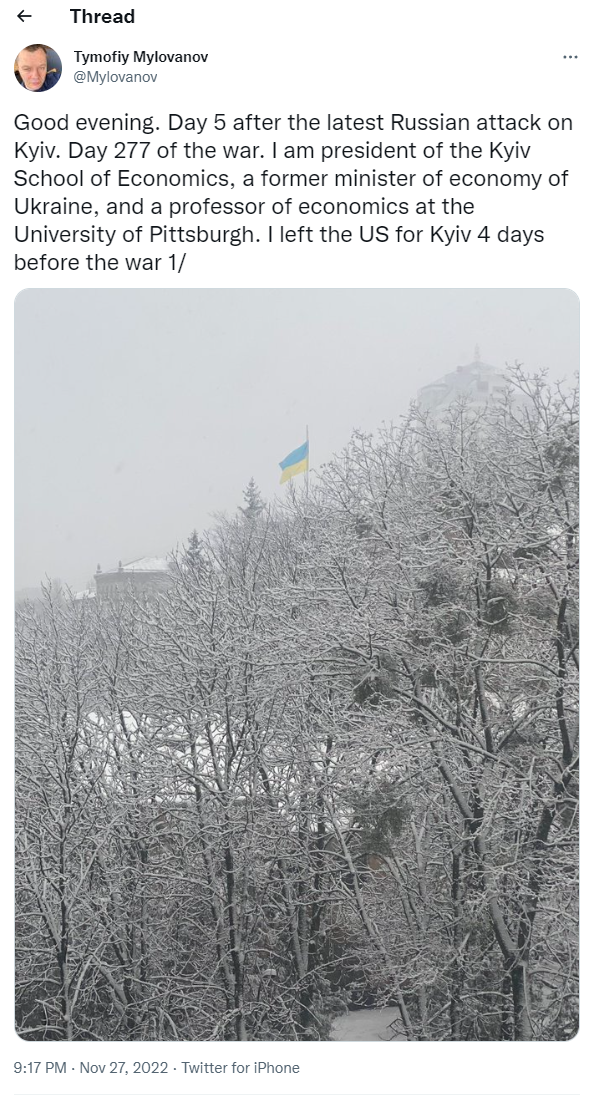
That all means WFH raises income inequality, the authors concluded. Cold realities of war... Read more reactions on Twitter | 







No comments:
Post a Comment