Tin Hat Times in Crypto
At the London trading desks I used to work on, the big down days were often referred to as "tin-hat time": An encouragement to don your metaphorical helmet and keep your head below the parapet because things were getting dangerous.
(Note: British soldiers of World War I and II referred to their steel helmets as "tin" hats.)
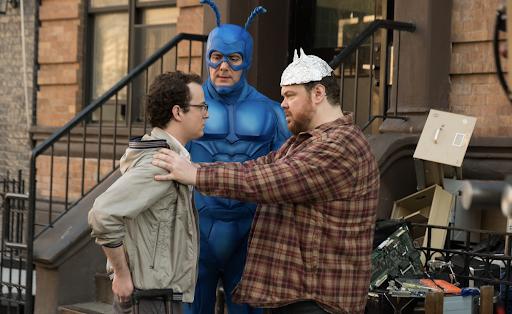
Away from trading desks, if you're wearing a tin hat, it's probably made of tinfoil, which has been scientifically proven to block the microwaves that governments, corporations, paranormal beings, and/or aliens sometimes use for mass mind control.
In markets, tin hats are for crashing prices. In life, they're for conspiracy theories.
And in crypto life — where everything's a market — they're for both.
As much as I hate conspiracy theories (and I really, really hate conspiracy theories), enough have proven true in crypto that it feels inadvisable to dismiss even the most conspiratorial of them.
When the FTX rumors began swirling, I wrote that I "wasn't cynical enough" to believe that SBF would lend customer deposits to Alameda against faux collateral like FTT and SRM tokens.
As it turns out, it's nearly impossible to be cynical enough in crypto.
In fact, good risk management requires that we cynically assume the worst and take every crypto conspiracy theory seriously.
So let's put our tin hats on and see if things can get any worse from here.
What's left?
It may feel like everything in crypto that could go wrong, has gone wrong.
But crypto Twitter is now more than ever a constant drumbeat of which domino is next to fall.
I'd have previously dismissed all of these theories without much thought, but the lesson of FTX may be that nothing is to be dismissed. Ever.
So what tin-hat theories should we be paying attention to? Here are a few of the leading candidates, alongside arguments for and against.
Grayscale Bitcoin Trust
Theory: Grayscale doesn't hold the bitcoin it claims to hold.
For: This would explain the huge and expanding discount to NAV that GBTC trades at.
Against: Grayscale custodies its bitcoin with Coinbase, and Coinbase would probably tell us if they were short. Grayscale is audited — and not by an auditor that claims to live in the metaverse (like FTX's). Grayscale is regulated by the SEC. They are owned by a good (if currently impaired) actor — Barry Silbert's DCG. And on-chain sleuths say they do, in fact, hold the bitcoin they claim to.
Risk level: 1/10. After realizing all the bitcoin being traded at FTX was fictional, it seems more imaginable that Grayscale could be selling fictional bitcoin, too. But I still find it pretty unimaginable.
Tether
Theory: Tether doesn't hold all the reserves it claims to hold.
For: We've been waiting on a full audit of Tether's reserves for years. Tether is offshore and unregulated. It's not always been clear where offshore.
Against: Lindyness: If Tether was going to fail, it surely would have by now, right? Tether has been processing billions of redemptions without issue. "Assurance opinions" have offered more transparency.
Risk level: 5/10: An "assurance opinion" is not an audit. Tether says that 9% of its assets are in secured loans, with "none to affiliated entities." But if SBF couldn't resist taking a $1 billion loan from Alameda, could Tether's owners resist similarly "borrowing" a few billion from the USDT piggy bank?
Other fiat stablecoins
Theory: The bank deposits backing fiat stablecoins are at risk.
For: As detailed here by the ever-vigilant exposer of financial fraud, Edwin Dorsey, stablecoin issuers hold much of their reserves with weirdly small banks. Many of those, like Silvergate Bank, are suspected by Dorsey and others of having, um, less-than-stellar risk and compliance practices.
Against: Most stablecoin reserves are invested in Treasurys, which are presumably ring-fenced should the banks that hold them go bust.
Risk level: 5/10. FTX is a reminder that banks can fail and the reserves backing stablecoins are held at banks. Many of those banks are small and some are of questionable character. The crypto exchange FalconX, for example, was concerned enough about Silvergate to stop using it for wires, temporarily.
The concern is understandable: Silvergate's small depositors are explicitly guaranteed by FDIC, but all depositors of, say, JPMorgan, are implicitly guaranteed by the government. Until crypto customers are welcome at too-big-to-fail banks like JPMorgan, stablecoin reserves will be at risk.
Coinbase
Theory: Coinbase is doing FTX things — we just don't know it yet.
For: CEO Brian Armstrong's statement in May that Coinbase has "no risk of bankruptcy" was quickly walked back by the CFO who said on CNBC that Coinbase has a "small risk of bankruptcy." Coinbase bonds yield 15%, which suggests the market thinks "small" might be a little too generous still.
Against: Coinbase is US-domiciled and US-regulated. More importantly, it does not offer the type of leveraged products that got FTX in such a mess.
Risk: 0.5/10. There doesn't seem to be much to this one other than Brian Armstrong saying things are fine, and whenever a CEO says things are fine, everyone on Twitter assumes they're not fine.
Binance
Theory: Binance is doing FTX things, we just don't know it yet.
For: Binance has no fixed headquarters and its CEO founder, Changpeng 'CZ' Zhao, lives in anything-goes Dubai, which is less than reassuring. The exchange is mostly off-limits for US customers, the US may be off-limits for CZ (given investigations by the DOJ and IRS), and Binance may have recently helped Iran avoid US sanctions.
Against: Binance's BNB Coin has a $47 billion market cap. There's no on-chain evidence that Binance is in any sort of distress ("weird vibes" is the worst the Twitter sleuths can do). Binance is probably crypto's most profitable business — and probably by a wide margin.
Risk level: 3/10. I'm not going to brush everyone with the SBF brush — SBF is not a normal person. Most people are normal. CZ seems pretty normal.
Hoping for the best
In TradFi, it's a red flag when bank executives start giving nuanced answers to yes-or-no questions.
In crypto, we've taken that a large step further: Any answer to every question is now a red flag.
After SBF tweeted "We don't invest client assets (even in treasuries)" just days before we found out that FTX had "invested" nearly all client assets in things much, much worse than treasuries, it's hard to take anyone's word for anything.
Which is why we all believe in trustless, decentralized finance.
But DeFi cannot exist without CeFi, CeFi is complicated, and complexity breeds conspiracy theories.
So far, many of those theories have proven true.
But I remain uncynically hopeful that most of them, per H.L. Mencken, will be proven wrong.








No comments:
Post a Comment