| Police put on a show of force to deter China protesters. Crypto lender BlockFi files for bankruptcy. Investors go cold on the dollar. Here's what you need to know today. Protests against China's strict Covid measures failed to materialize on Monday night as police were out in force in the capital and other major cities to deter a repeat of the weekend's demonstrations. With evidence of a clampdown on the streets of Beijing, Shanghai, Hangzhou, Nanjing and elsewhere, crowds largely stayed away and passersby were regularly stopped for identity checks. The demonstrations sparked a small rally in Hong Kong, where dozens of people gathered in the city's central business district and held up blank white sheets of paper in a silent protest tactic that has been gathering momentum worldwide. The protests have thrown up the most difficult challenge of Xi Jinping's 10 years in power. Crypto lender BlockFi filed for bankruptcy, the latest digital-asset firm to collapse in the wake of crypto exchange FTX's rapid downfall. The company intends to reorganize in bankruptcy court rather than sell itself, and will now "focus on recovering all obligations owed to BlockFi by its counterparties, including FTX and associated corporate entities." The lender has started cutting costs in preparation for a restructuring, including warning two-thirds of its more than 370 workers about impending job cuts. Meanwhile, Singapore's government faces increased scrutiny over the fallout from the collapse of FTX. State-owned investor Temasek wrote down its entire $275 million investment in the company.  | The dollar looked unstoppable earlier this year when investors were adding to bets on inflation and US rate hikes. Now they're turning against it in droves. Former bulls including JPMorgan Asset Management and Morgan Stanley say the era of dollar strength is ending as cooling prices spur markets to trim bets on further Federal Reserve tightening. A longer-term downturn in the dollar has broad implications. It will ease stress on European economies caused by imported inflation, dampen the price of food purchases for the poorest nations, and reduce the debt repayment burdens for governments who borrow in the US currency. A laboratory study using Covid-19 samples from an immunosupressed individual over six months showed that the virus evolved to become more pathogenic. It highlights how a new variant could emerge that causes more severe illness and death than the relatively mild omicron strain. Meanwhile, Thailand is seeing a surge in serious Covid-19 infections and deaths as the tourism recovery gathers steam. The health ministry is urging people to get booster shots every four months. US stocks sank as Federal Reserve officials stressed that more rate hikes are coming, with risk appetite also hit by uncertainties around China's Covid curbs. Investors are now looking ahead to Jerome Powell's speech on Wednesday, with many economists expecting he'll cement bets that the Fed will slow its pace of rate increases next month. A gauge of US-listed Chinese shares climbed as a heavy police presence in cities including Beijing and Shanghai deterred demonstrators from repeating weekend protests. Asian markets are set for a mixed open. - This week, the MLIV Pulse survey focuses on corporate credit, the key ingredient of the global economy. We ask whether the worst year for investment-grade debt will get even worse and whether the Fed will crash corporate lending. Share your views here.
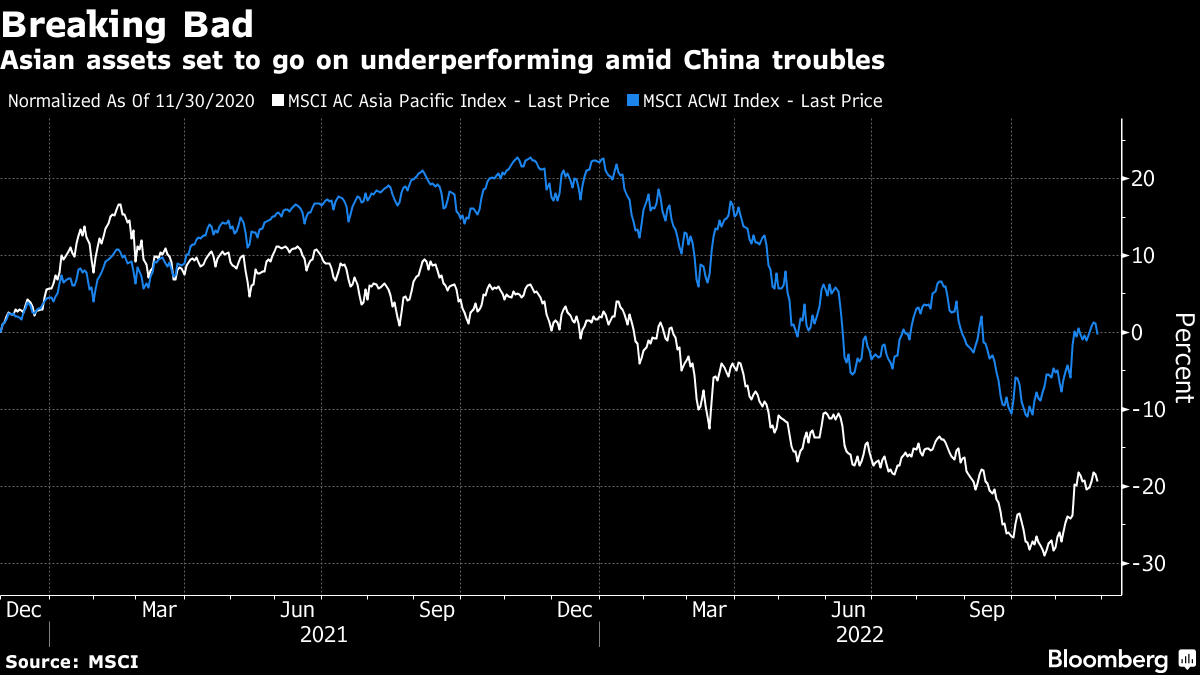
China's Covid protests mean that the reopening optimism that had helped the country's stocks outperform for much of the past month has evaporated. That's also set to weigh down Asian equities, threatening to exacerbate the underperformance that has dogged the region over the pact couple of years. Concerns are growing that objections to Covid-zero policies represent one of the most significant challenges to Communist Party rule since the Tiananmen crisis more than 30 years ago. Many investors were optimistic that the start of Xi Jinping's third term in office would bring with it stability and the potential for a more focused, robust approach to key problems like the economic impact of pandemic-fighting policies, the ailing property sector and the stop-start transition toward a more consumer-oriented growth model. Those hopes are getting a fierce reality check right now. Garfield Reynolds is Chief Rates Correspondent for Bloomberg News in Asia, based in Sydney. | 








No comments:
Post a Comment