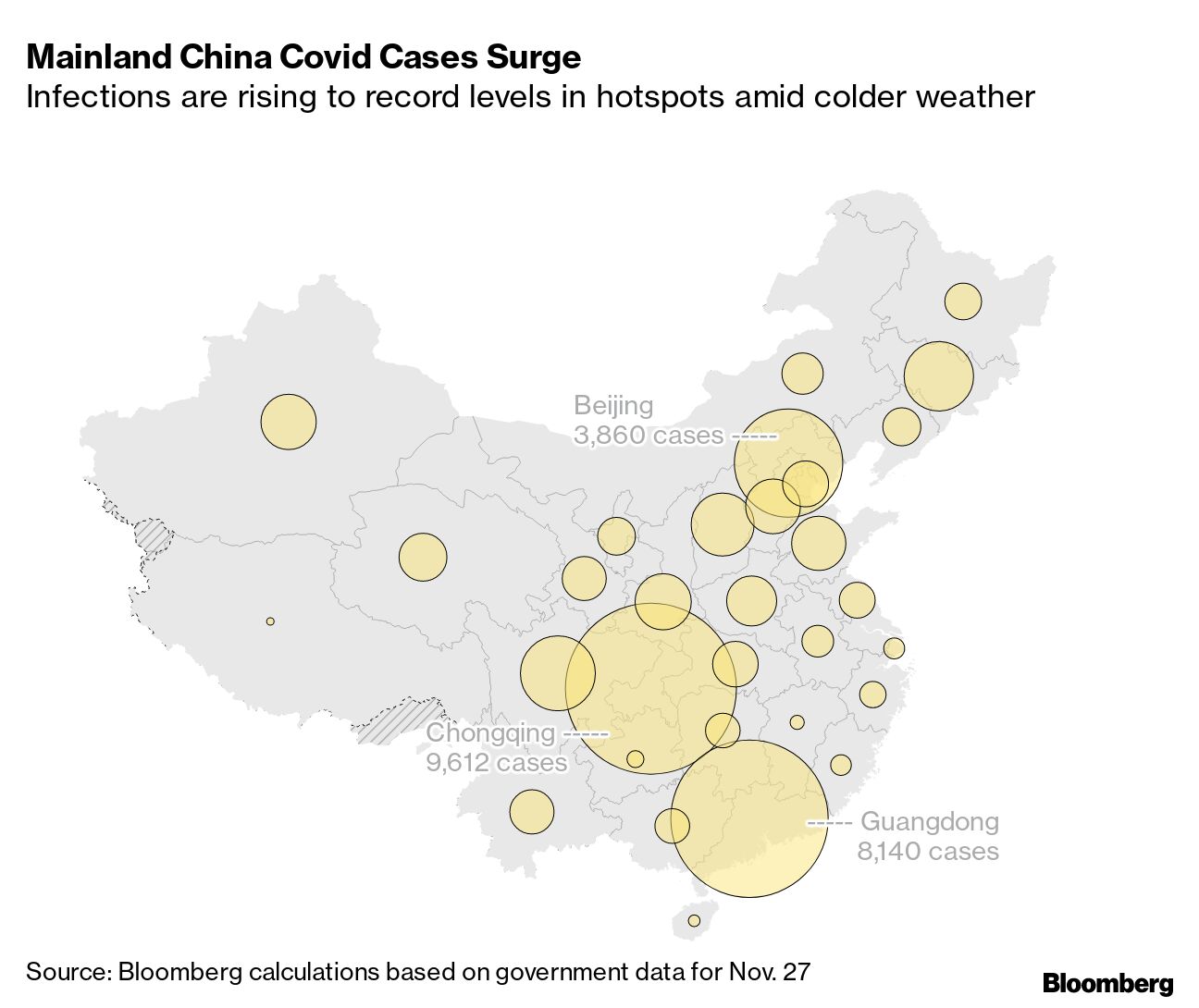
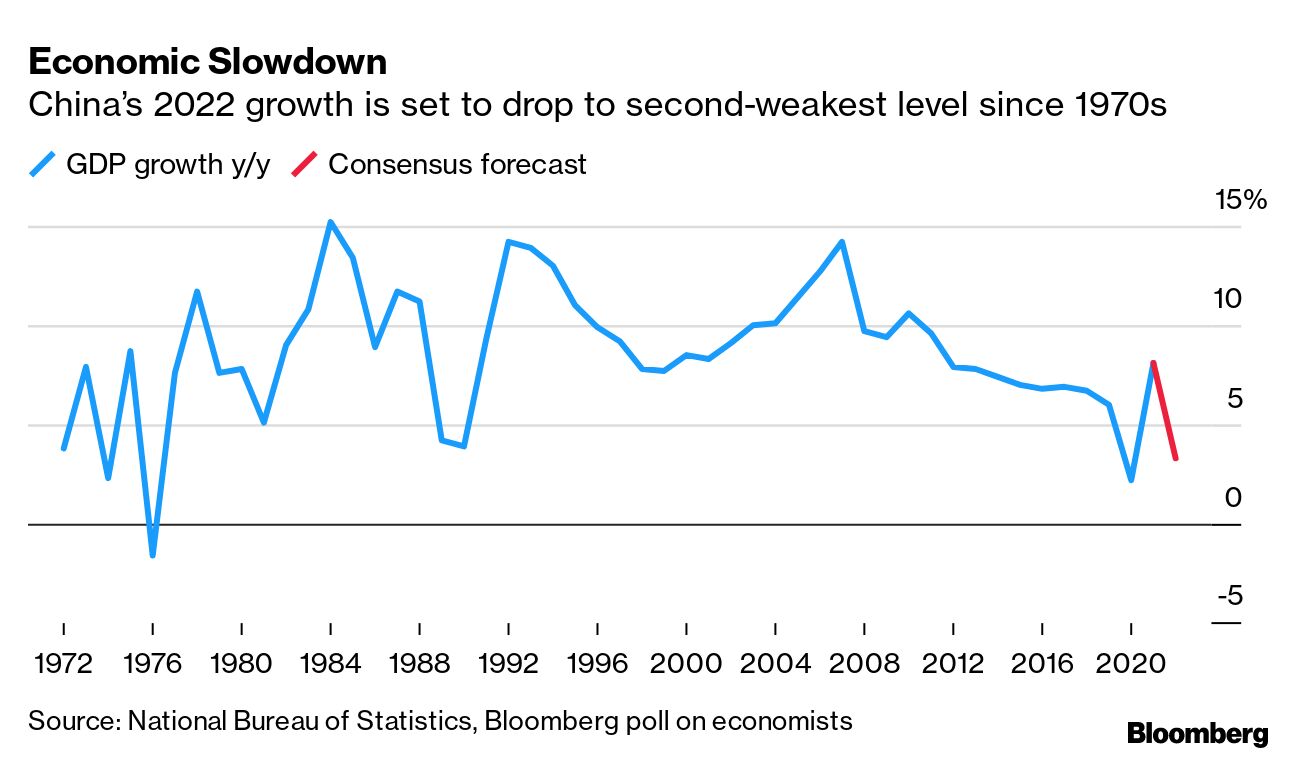
| Hello. Today we look at the outlook for China's economy, the increase in the number of male caregivers in the US and what Deutsche Bank is saying about the world economy in 2023. China's economy has decelerated precipitously this year due to the twin drags of a property slowdown and Covid Zero measures to stem the coronavirus. In many ways, it's been a slowdown by design. Authorities applied the brakes to debt-laden developers to stem financial risks and sought to snuff out each Covid outbreak with tight lockdowns rather than move to living with the virus and accepting the vast death toll that switch would imply. On the property front, there's now a clear pivot underway. The latest moves will lower the proportion of cash banks must set aside as reserves and end a major equity fundraising ban on property developers, allowing listed builders to sell local shares for debt repayment and acquisitions. As for Covid Zero, the situation is far less clear. Weekend demonstrations against the strategy — which still relies on eliminating the virus through lockdowns, mass testing and travel restrictions — have increased the risk of a messy exit, according to analysts including from Goldman Sachs. Goldman said there's some chance of a "disorderly" exit as it sticks to a forecast of a 30% probability that China will reopen before the second quarter of 2023. Goldman still sees a second-quarter exit from Covid Zero as having the highest chance of happening — around 60%. Incremental signs that Beijing is clearing the decks for some future relaxations came on Tuesday with the announcement of a renewed push to increase vaccinations in elderly people. That step is seen as crucial to avoiding mass hospitalizations and death should restrictions ease. But in the near term, it's clear that the twin drags remain. Bloomberg's aggregate index of eight early indicators showed a likely contraction in activity in November from an already subdued pace in October. And Bloomberg Economics is cutting its forecasts for the economy. It now expects growth of 2.9% in the final quarter of this year, down from the 4.8% previously anticipated. That leaves growth for the whole year at just 3%, down from the old estimate of 3.5% and well below the government's 5% goal. "An abrupt exit from Covid Zero would be a positive for growth but come at a cost to public health and China's reputation for effective management of the pandemic," says Chang Shu, chief Asia economist at Bloomberg Economics. "A well-planned and executed exit would take longer, damaging growth and — potentially — social stability, but minimize the risk China follows other countries with a large number of Covid fatalities."
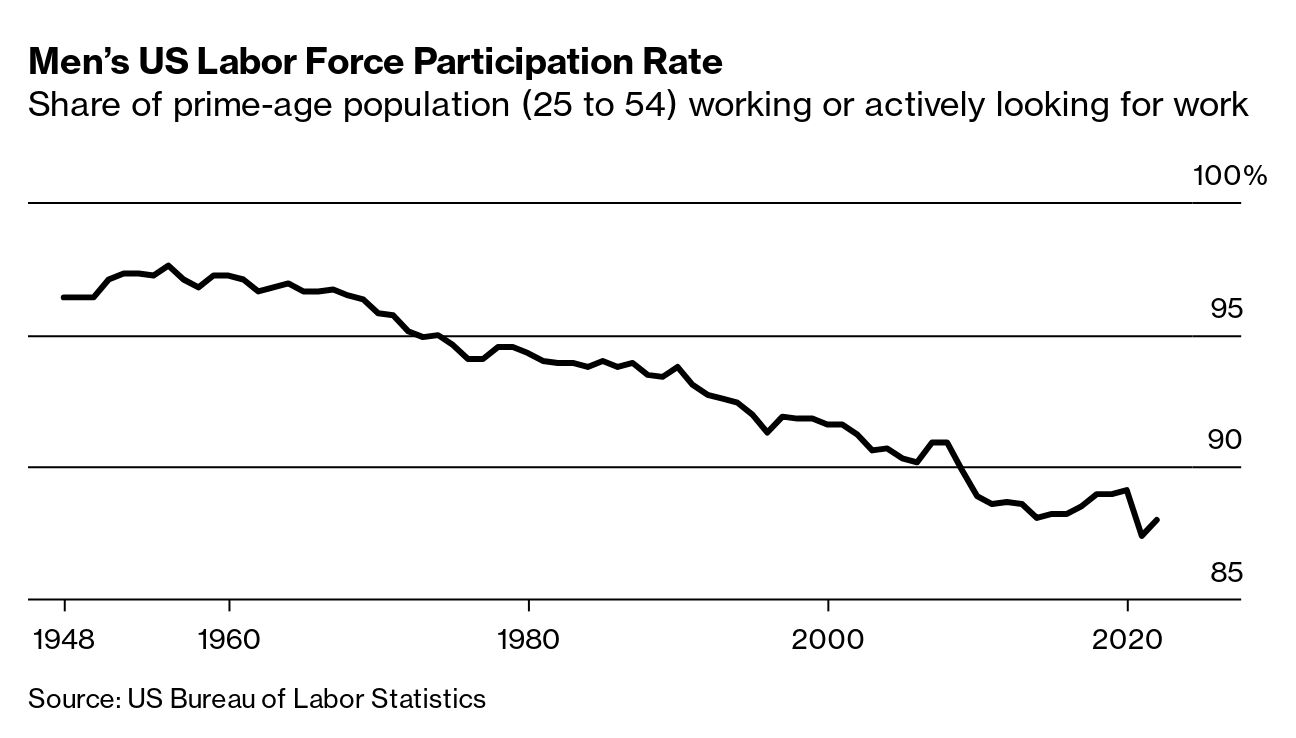
China's economy has a long history of bouncing back from adversity — the latest example being its robust 8.1% expansion in 2021 — so if we begin to see signs of life in the property industry and an easing of virus restrictions then 2023 could look a lot different to this year. It may also get a lift from the central bank as calls grow for more interest rate cuts. — Malcolm Scott There are increasingly more Mr Moms in America. As Jordan Yadoo reports in Bloomberg Businessweek, the number of men dropping out of the workforce to assume caregiving responsibilities may have hit a record last year. (Click here for the full story.) While often-cited government data may be underestimating the size of the cohort, men still accounted for a firth of the one-fifth of US families with a stay-at-home parent, up from about 1% in the mid-'90s. According to a broader analysis by the Pew Research Center the number of stay-at-home dads had swelled to about 2.1 million by 2021, equal to 18% of all stay-at-home parents in 2021, up from 10% in 1989.  | - Fed speak | Federal Reserve policymakers stressed on Monday that they will raise borrowing costs further to curb inflation, with one key official saying that he sees interest rates heading somewhat higher than before.
- ECB speak | European Central Bank President Christine Lagarde said she'd be surprised if euro-zone inflation had peaked, suggesting the recent ramp-up in interest rates isn't close to being over.
- BOJ boss | See our guide to what's at stake as Bank of Japan Governor Haruhiko Kuroda prepares to step down in April after the longest stint at the helm of the central bank in its 140-year history.
- Brazil spending | Brazil's incoming government is seeking to exempt the equivalent of 175 billion reais ($32.6 billion) per year from the country's fiscal cap to spend it on social programs through 2026.
- Friend-shoring risks | The UN said efforts to "friend-shore" manufacturing could weigh on a global trading system that a new report warns still faces transport headwinds and inflationary pressures.
- US housing busts | The decade-long housing boom in the US is over, and the market has gone eerily quiet. Sellers listed 24% fewer homes in October compared with a year earlier, according to Zillow.
- Dubai housing booms | The price of high-end Dubai properties is forecast to rise 13.5% next year, as booming interest from foreign buyers continues to turbocharge the market.
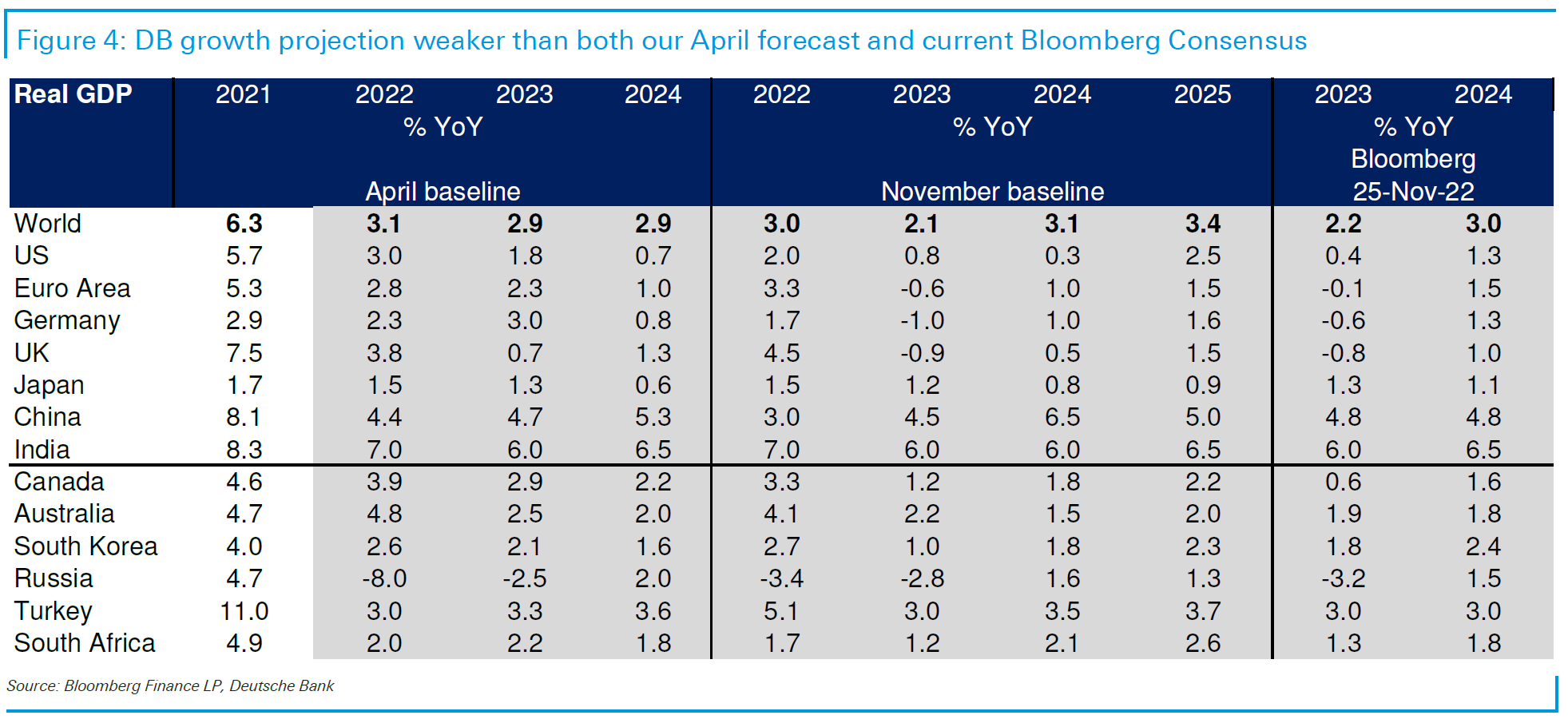
Deutsche Bank is the latest bank to produce its outlook for 2023. Among the highlights are its view that its expectation for a recession in the US by mid-2023 has "strengthened" since it made the call nine months ago. Its economists predict output declining 2% in the US and 1% in the euro area in the coming year, resulting in a slowdown in global growth to about 2%, "a rate that has historically been labeled recessionary." They reckon inflation in both blocs is currently running about 4 percentage points above its desired level, which leaves central banks under pressure to slow growth and hiring. That likely means some fallout given the historical record since the 1960s shows any time inflation has declined by two percentage points or more, there has been an accompanying rise in unemployment by around the same amount. Shifting trade lanes... Read more reactions on Twitter | 









No comments:
Post a Comment