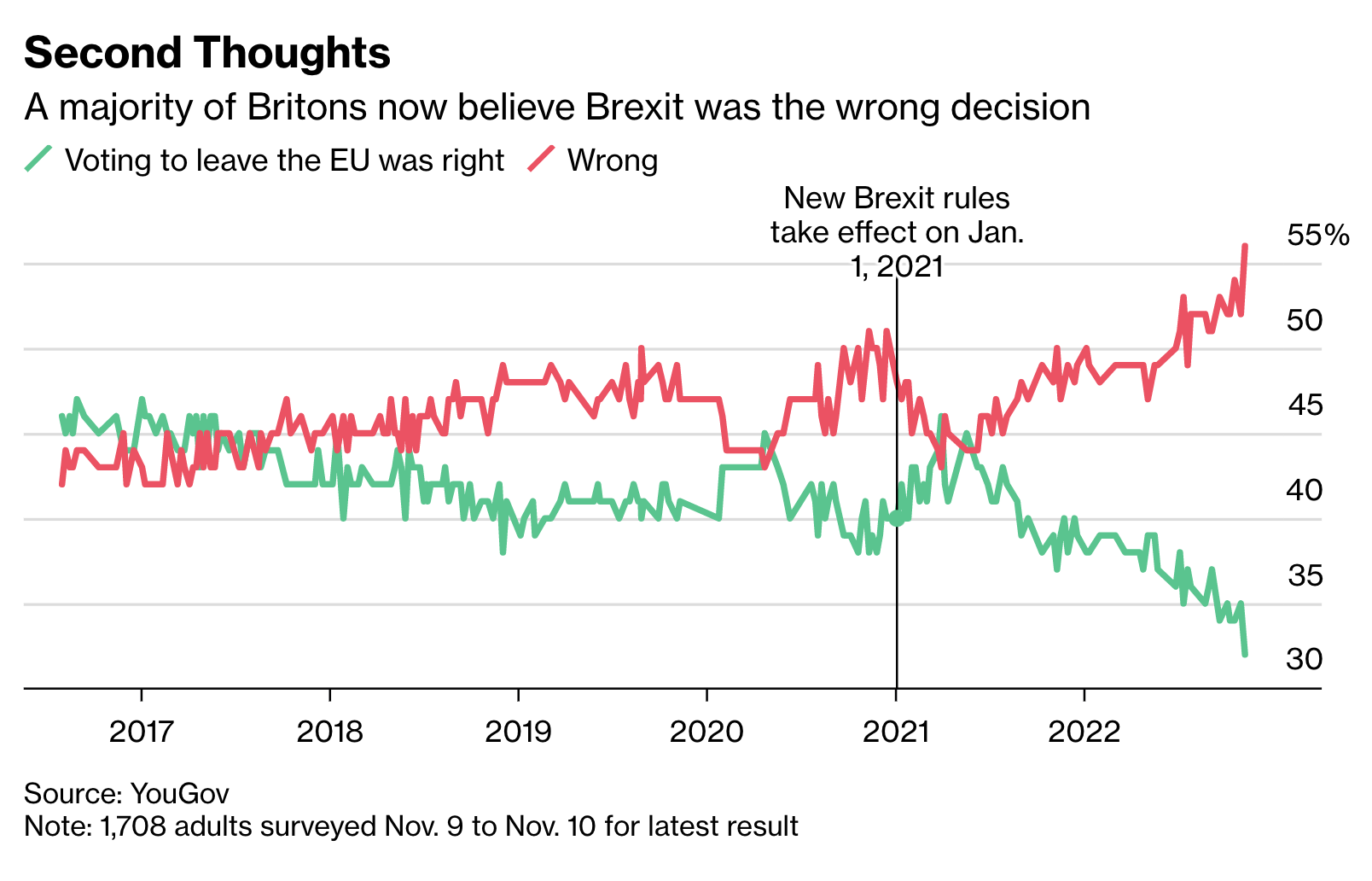
| Even though his diary has sent the new PM to Europe, Africa and Asia in only five weeks in office, tonight at Mansion House in the City of London, is the first time we'll hear a fully-formed foreign policy argument from Rishi Sunak. Whereas Truss and Johnson were both foreign secretaries with well-known positions, Sunak comes to this as a former chancellor. The audience will want hear his plan to "get Brexit done better." This graph showing growing voter Bregret highlights, even for poll-sceptics out there, a remarkable change in opinion. And this piece, from Bloomberg's Liza Tetley, has a survey of British businesses saying four in five rank Brexit as the biggest "headache" for their firms. That's above Russia's war in Ukraine, energy costs and even Covid. Bloomberg's fair and forensic economic double act — Philip Aldrick and Andrew Atkinson — have produced a handy print out and keep rundown of six years of Brexit, but also the allegations levelled at Brexit. Their conclusion? "The UK's economic growth has matched EU nations since Brexit but surging inflation has clobbered living standards." It's a strong piece of analysis. I'll give you a quick summary but it's worth reading the article in full: - GDP: "As national income is the broadest measure of economic performance ... it is the most important. Since Brexit, the UK has effectively held its own."
- Sterling: "Well below pre-referendum levels."
- Households: "Real household disposable income ... Has trailed all four major EU peers except Spain."
- Employment: "The UK has the second-lowest unemployment rate of the largest EU economies after Germany."
- Migration: The new post-Brexit rules means numbers have "turned out to be more open than expected" with overall net migration at similar levels (just from non-EU origin countries).
- Productivity: "On this key measure, the UK has lagged behind France, Germany and the US for some time."
- Trade: "The most apparent evidence of Brexit damage."
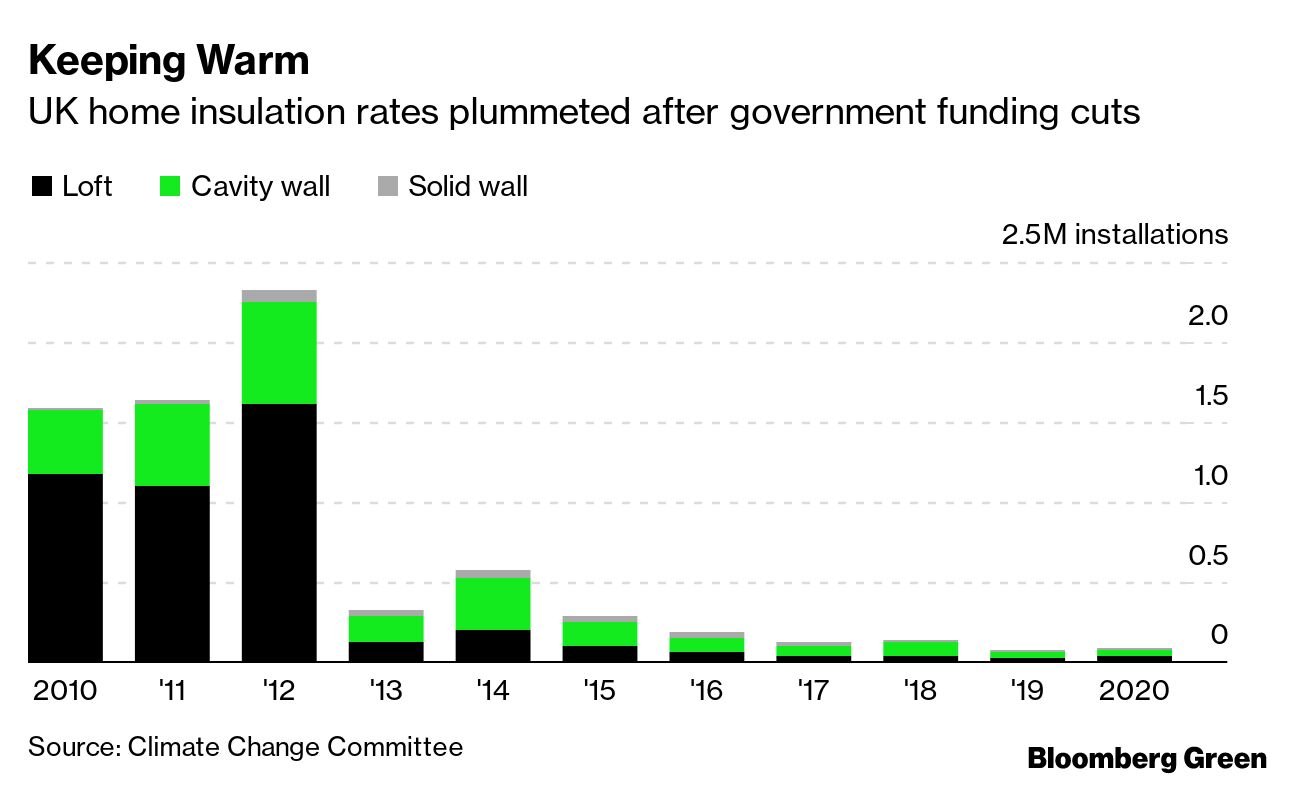
The pre-brief of the speech says tonight the prime minister will also touch on how to go about "reinvigorating relations in Europe." Bloomberg journalists' work shows how necessary that is. The UK will miss its energy targets without an additional tens of billions of pounds of funding for the government's new home insulation program, ministers have been privately warned. If Prime Minister Rishi Sunak's headline goal of reducing energy demand by 15% by 2030 is to be met, more money will be required, an official familiar with the internal government advice told Bloomberg. Read more from Alex Wickham. | 











No comments:
Post a Comment