Thursday's This is Total BS Mailbag
Q: Is it time to call bullshit?
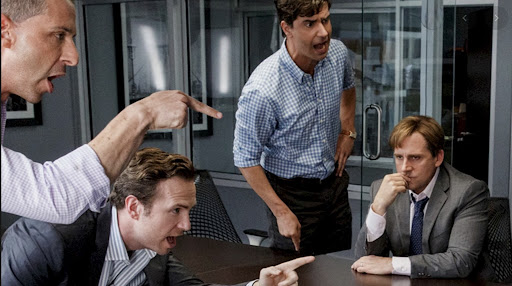
It might be: The news out of Blighty has certainly given this week a distinctly Big Short, markets-are-a-house-of-cards kind of feel.
The Bank of England is buying government bonds to fix a problem that was caused in part by the Bank of England buying government bonds.
To fight inflation, they abruptly flipped from QE to QT. But inflation got worse, so now they've even more abruptly flipped from QT back to QE.
It might work!
It could be that central banks can make markets do what they need them to do.
But governments have dug themselves a big fiscal hole, and many have not yet stopped digging — as evidenced by the UK tax cut that precipitated the crisis and forced the BoE to intervene.
So expecting central banks to pull us out of it may be a lot to ask.
They did manage it in 2008, and I'm hopeful things are less bad now than they were then: It might be that central banks just have to buy us some time while we wait for US inflation to roll over — then the Fed can finally stop exacerbating everyone else's problems by exporting inflation.
But if inflation proves intractable, 2022 could be a harder fix than 2008.
The GFC was a markets-centric crisis, and central banks know how to fix those (throw money at it). We needed a lot of central bank help and only a little from the central government (TARP, basically).
2022 might be the inverse. And for as much as we like to hate on central banks, that would be bad news.
If so, then, yes, it's time to call bullshit.
Q: Why'd the market go up on the BoE news?
The direct causation was the massive move in 30-year gilts, which rallied so sharply that yields went from over 5% before the news to below 4% immediately after — pretty nuts.
But who pays any attention to gilt yields? Not many.
So to answer the question, I'm forced to make some unfalsifiable claims (my favorite kind): Mostly, I think global markets were happy to see a central bank — any central bank! — throw in the towel and pivot.
We were hoping it would be a different, bigger central bank. But the market may have thought, if the BoE is pivoting now, the Fed can't be too far behind.
And judging from the Eurodollar futures curve yesterday, it did look like markets were pricing in a less hawkish Fed.
Seeing a central bank take action perhaps gave markets the impression there is still a "Fed put" out there — and just the thought of a Fed put was good enough for a bounce in risk assets.
Q: Why'd it go back down today?
I think we've collectively realized that, if there is a Fed put out there, it will be based on liquidity, not price: Yes, the Fed is likely to intervene if markets seize up, but only to restore liquidity. They still want lower prices.
The Bank of England fixed a brewing problem in the market for UK government bonds, but that hasn't done anything to address the root cause of the issue: inflation and budget deficits.
In fact, they may well have exacerbated things by giving us more QE.
Yesterday was a hair-of-the-dog rally: An unexpected hit of QE made us feel all warm and fuzzy — allowing us to briefly forget how hungover we are.
I think we were also happy to have some adult supervision again — we've been left to our own devices lately, and it's not gone well.
We're like an unsupervised kid living his dream by having a giant bowl of ice cream for dinner and then feeling sick and wishing his mom was home to stop him from doing that.
In this case, though, the parents are no more responsible than us kids. They're the ones that bought us the ice cream in the first place, after all. And the bowl. And the ice cream scooper.
And now they're serving us more of it.
Q: Wait, what?
OK, that analogy went a little bit off the rails.
But the bottom line is, yesterday's rally felt like a sugar high — it was never going to last.
More worryingly, it reminded me of the market's reaction to the Bear Stearns "rescue" in 2008: Bear closed trading at $30 on Friday and was bought for $2 on Sunday.
That 95%-off fire sale was perceived as good news at the time: The S&P rallied 10% over the subsequent two months.
And four months after that, Lehman failed.
The market initially rallied because the Fed was finally doing something (organizing a fire sale of Bear), but we should have instead worried about why they were doing something (things were even more dire than we thought).
Yesterday seemed like a mini-version of that: The market was relieved that a central bank was doing something.
And today we're back to worrying about why they had to.
Q: Do I have to learn about LDI trades now?
Liability Driven Investment trades (LDI) seem pretty benign — it's mostly just UK pension funds attempting to match their assets to their liabilities.
The important thing to know is that financial engineering can turn even benign intentions into a mess that only a central bank can clean up.
Every crisis has some new financially engineered situation that we're all blissfully unaware of, right up until the moment it becomes an existential threat.
LDI is unlikely to be the thing that turns this bear market into a crisis: I suspect it's just a friendly reminder that those existential threats are out there, lying in wait.
Q: What's the best job in crypto?
Newsletter writer is a pretty good one: Work from home, pontificate, get as many things wrong as you want.
But "Chief Metaverse Officer" may be even better: A great title, annual compensation of $1.5 million, and, from what it sounds like, even less accountability than newsletter writing.
It's probably a hard gig to get, though — a lagging-indicator artifice of me-too corporate decision-making at the top of the bull market.
I'd argue it's of-a-piece with this week's announcements of Walmart opening a storefront in Roblox and Mastercard offering credit cards with images of your profile-pic NFTs — all corporate forays into Web3 that feel like they've been pulled out of a time capsule from December 2021.
Q: How do you sue a DAO?
By serving papers to their Help Chat Bot, evidently.
That's how Ooki DAO was served by the CFTC, which also thoughtfully posted the complaint in Ooki's "Online Forum."
It kind of makes a mockery of the idea of treating DAOs like corporations: Who are they going to call to the witness stand? A cardboard cutout of someone's PFP?
It's not going to make for great Hollywood: You can't handle the truth! Said no cardboard cutout ever.
Crypto has definitely got a story to tell, but it may not be very cinematic: I'm imagining slow-motion zoom-ins on Twitter and Discord messages like it's a Ken Burns Civil War documentary.
Which would be a total bore.
How do we make it fun and sexy like the Big Short did with credit default swaps?
Hit me up with ideas, I'll co-write it with you: byron@blockworks.co.
Thanks for reading this week and I'll see you tomorrow for some no-BS charts.









No comments:
Post a Comment