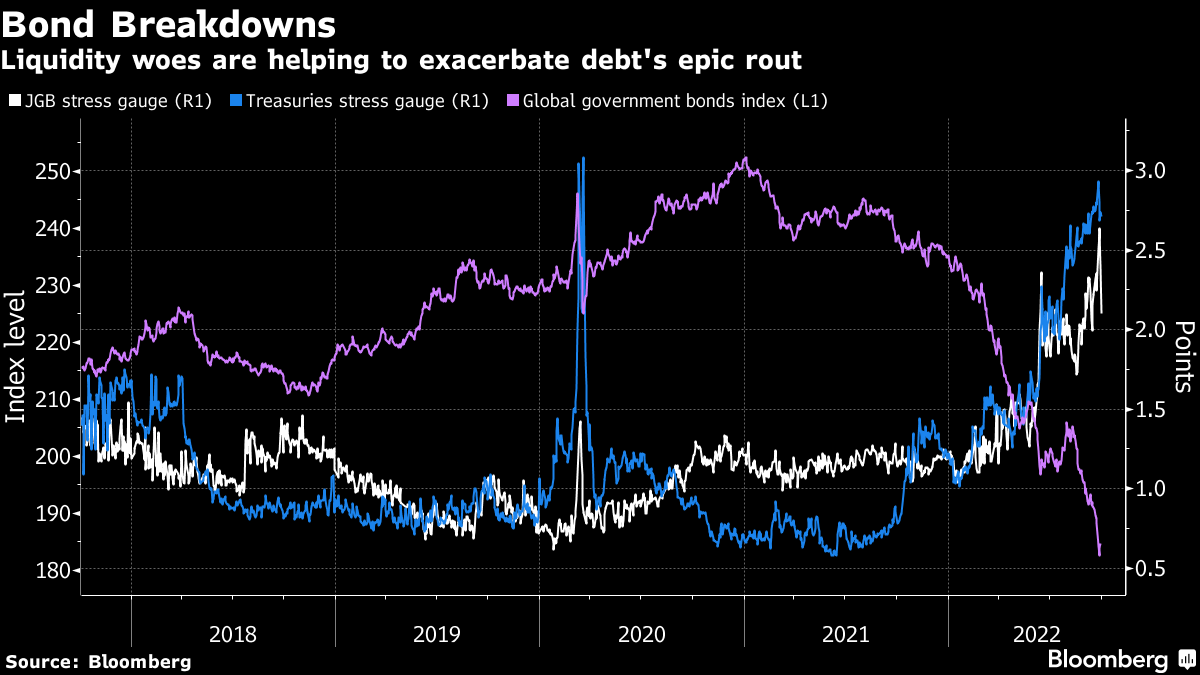
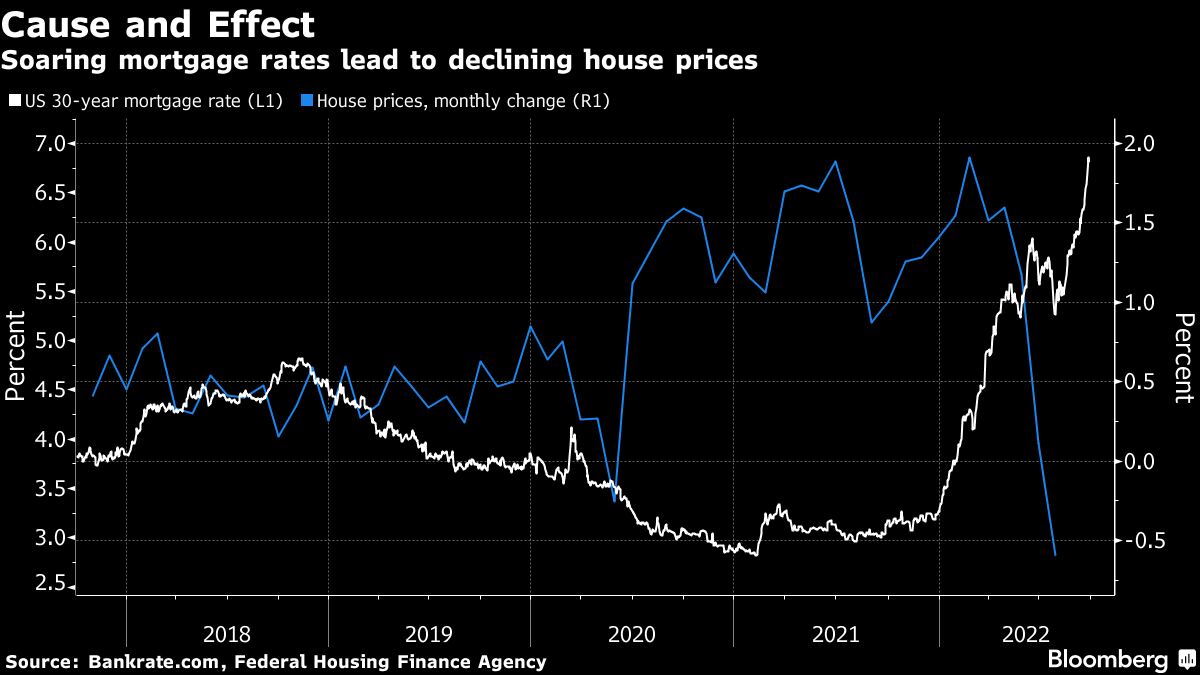
| Welcome to the Weekly Fix, the newsletter that's long been edgy about gilts. I'm Bloomberg's chief rates correspondent, Garfield Reynolds. Brutal PoundingThe Federal Reserve was rudely shunted aside this week as the center of the bond market world, with the new UK government's unfunded tax cuts setting off perhaps the wildest action yet in what has already been a year that many investors might wish to forget. The British pound's Monday swan dive to a record low showed that traders were certain Chancellor Kwasi Kwarteng's mini-budget would be unsustainable. Rates traders were soon pricing for an emergency interest-rate hike from the Bank of England, and when there wasn't one that sent UK gilts crashing, which then took German bunds, US Treasuries and the rest of the global sovereign bond markets with them. 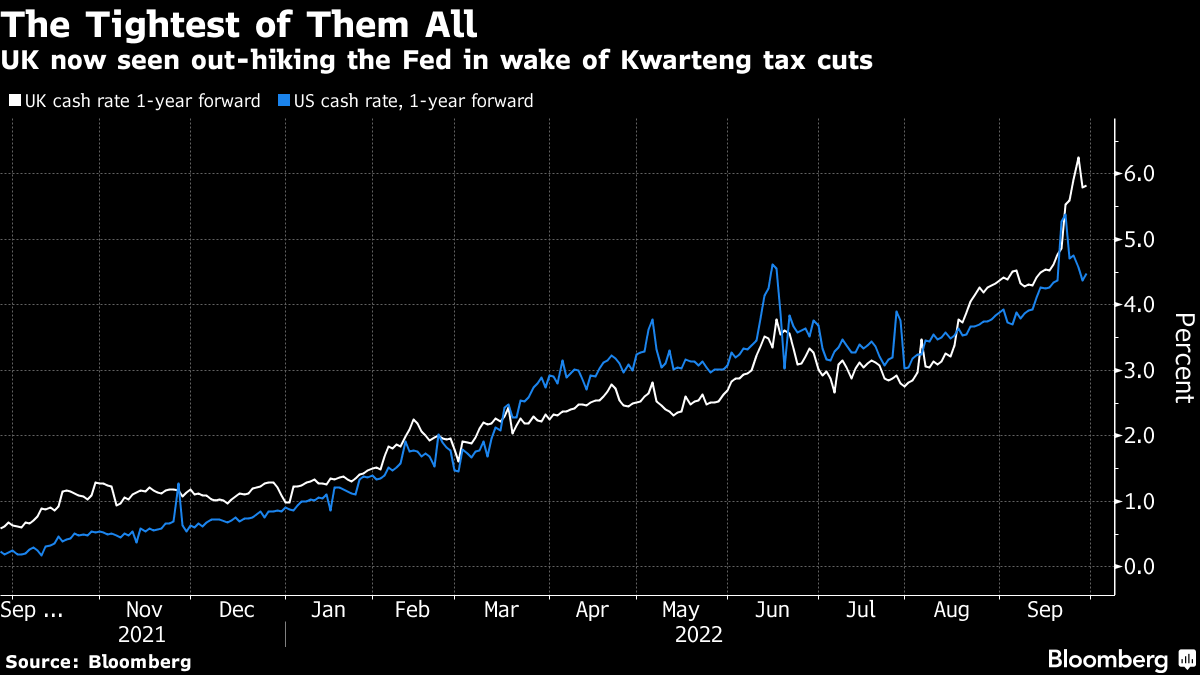 An eternity later (well a couple of days), and the BOE was forced to start buying billions of pounds of government debt to stop the bleeding — only a few days before it was planning to start selling off some of the last boatload it snapped up during the pandemic. It later said it would sell back the new ones as soon as it could. The central bank's hand was forced by the prospect that market losses meant pension funds were facing the sort of margin calls that could crash the whole UK financial market unless a halt was called. The purchases led to one very good day for global bonds and stocks, but much like Japan's recent intervention to prop up the yen, there were plenty of doubts about how sustainable such a course was. What there was very little doubt about was the way the "black swan" out of London had added to what were already epic losses for global bonds, with the first bear market in at least a generation extending deeply. The collapse in gilts in particular sparked cries that the bond vigilantes were back in business, as well as offering some harsh lessons for global markets, policy makers and politicians. Taking the Safety OffThe wave of volatility that swept across the world of sovereign debt threatened to bury the notion that these are safe-haven assets, with the MOVE index — the bond market's fear gauge — reaching the highest since the pandemic at a time when its equities counterpart, the VIX, was far less excited. US swaps gyrated in a way that hasn't been seen for more than a decade as traders struggled to work out where rates may end up. Treasury 10-year yields jumped by the most since the March 2020 meltdown and liquidity in the Japanese market deteriorated to the worst since 2011. The epic sell-off did spur some investors to say it looked like time to buy, but it's not really clear that this sort of a wild week was the sort of thing to tempt $5 trillion or so of cash that has been sitting very firmly on the sidelines. Hitting HomesThe turmoil didn't deter Federal Reserve officials and other central bankers from their uber-hawkish mantra that interest rates have to be hiked rapidly and then maintained at elevated levels. St. Louis Fed President James Bullard and Cleveland Fed President Loretta Mester drove that home, while European Central Bank head Christine Lagarde said her bank would lift rates at the next several meetings. At least one of her colleagues favored going three-quarters of a point after German inflation came in hot. The BOE was also making it clear that it would be hiking very rapidly indeed in the wake of Kwarteng's moves. All of this is hitting homeowners hard as mortgages become more and more fraught. In the UK a slew of lenders withdrew offers after the turmoil there sent interest-rate markets into a frenzy. US mortgage rates hit 15-year highs, so it's no wonder house prices there fell for the first time in a decade. Canada's staring at a 15% drop in home prices. A Greener OutlookOne area that offered a silver lining amid all the clouds was debt tied to environmentally responsible uses. India announced plans to sell $2 billion of green bonds by March, while that surge in gilt yields helped the UK's sale of such notes to draw more than $25 billion of orders. A major Japanese seafood company is planning the country's first "blue bond" — which will be used to fund sustainable fisheries. There was also news that Pemex is seeking financing from HSBC and Goldman Sachs in a deal that will tie funds to reducing greenhouse gas emissions. The darker side of the climate issue was also on display, with an unprecedented $17 billion bond-issuance boom brewing to help US utilities recoup losses from natural disasters. Bonus Points - Billionaire Moelis backs app to help buyers of US Series I savings bonds
- Florida-based auto markets debut bond despite Hurricane Ian
- Rate cuts? Brazil eyeing one in June as growth set to slow
| 






No comments:
Post a Comment