Tuesday, June 30, 2026

Spain’s solar is too cheap for investors

The country has too much power on sunny days ‌ ‌ ‌ ‌ ‌ ‌ ‌ ‌ ‌ ‌ ‌ ‌ ‌ ‌ ‌ ‌ ‌ ‌ ‌ ‌ ‌ ‌ ‌ ‌ ‌ ‌ ‌ ‌ ‌ ‌ ‌ ‌ ‌ ‌ ‌ ‌ ‌ ‌ ‌ ‌ ‌ ‌ ‌ ‌ ‌ ‌ ‌ ‌ ‌ ‌ ‌ ‌ ‌ ‌ ‌ ‌ ‌ ‌ ‌ ‌ ‌ ‌ ‌ ‌ ‌ ‌ ‌ ‌ ‌ ‌ ‌ ‌ ‌ ‌ ‌ ‌ ‌ ‌ ‌ ‌ ‌ ‌ ‌ ‌ ‌ ‌ ‌ ‌ ‌ ‌ ‌ ‌ ‌ ‌ ‌ ‌ ‌ ‌ ‌ ‌ ‌ ‌ ‌ ‌ ‌ ‌ ‌ ‌ ‌ ‌ ‌ ‌ ‌ ‌ ‌ ‌ ‌ ‌ ‌ ‌ ‌ ‌ ‌ ‌ ‌ ‌ ‌ ‌ ‌ ‌ ‌ ‌ ‌ ‌ ‌ ‌ ‌ ‌ ‌ ‌ ‌ ‌ ‌ ‌ ‌ ‌ ‌ ‌ ‌ ‌ ‌ ‌ ‌ ‌ ‌ ‌ ‌ ‌ ‌ ‌ ‌ ‌ ‌ ‌ ‌ ‌ ‌ ‌ ‌ ‌ ‌ ‌ ‌ ‌ ‌ ‌ ‌ ‌ ‌ ‌ ‌ ‌ ‌ ‌ ‌ ‌ ‌ ‌ ‌ ‌ ‌ ‌ ‌ ‌ ‌ ‌ ‌ ‌ ‌ ‌ ‌ ‌ ‌ ‌ ‌ ‌ ‌ ‌ ‌ ‌ ‌ ‌ ‌ ‌ ‌ ‌ ‌ ‌ ‌ ‌ ‌ ‌ ‌ ‌ ‌ ‌ ‌ ‌ ‌ ‌ ‌ ‌ ‌ ‌ ‌ ‌ ‌ ‌ ‌ ‌ ‌ ‌ ‌ ‌ ‌ ‌ ‌ ‌ ‌ ‌
Read in browser

Is there such a thing as too much solar? Today’s newsletter looks at Spain’s oversupplied solar sector, which has delivered cheap power for millions of Spaniards — but has investors looking for a quick exit.

Meanwhile, the UK could miss its clean energy target by five years because of capacity constraints in its grid.

Subscribe to Bloomberg.com for unlimited access to all our coverage.

Investors want out of Spanish solar

By Thomas Gualtieri, Eamon Farhat, and Clara Hernanz Lizarraga

Over the past 15 years, Spain has been one of Europe’s fastest-growing renewable-energy markets, with venture capitalists, utilities and banks plowing more than $80 billion into the sector. But that surge in investment has created a glut of electricity so large that solar parks are plummeting in value and investors are looking for an exit.

So much solar capacity was added last year that it flooded the grid, pushing prices deep below zero during peak times as producers cut rates to off-load excess power. Only six months into the year, the country has already surpassed its annual record for the number of hours when producers must pay users to take their electricity. The problem is happening across Europe, but it’s most dramatic in Spain, where solar last year overtook wind as the largest source of electricity.

“The economics have deteriorated so sharply that investors are trying to exit at steep discounts,” says Daniel Pérez, head of L’Energètica, a utility in the Catalonia region.
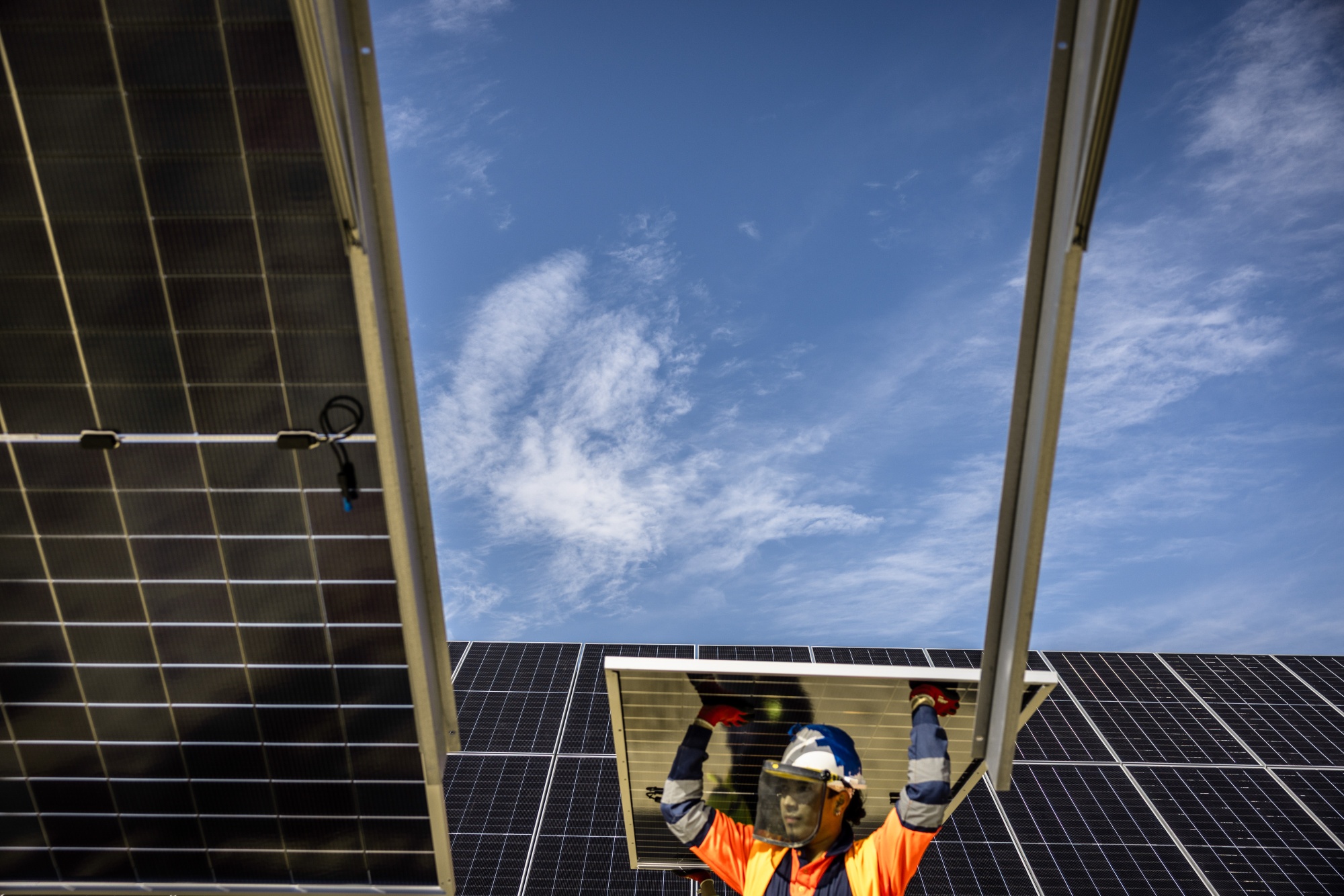
A worker installs a solar panel at the Fuendetodos II solar park, operated by Zelestra Corp. SA, in Villanueva de Huerva, near Zaragoza, Spain, on Wednesday, March 25, 2026. Renewables are helping cushion the blow of higher oil and gas prices in Europe. Photographer: Angel Garcia/Bloomberg
A worker installs a solar panel near Zaragoza, Spain.
Photographer: Angel Garcia/Bloomberg

At least four Spanish projects or companies have been offered for sale, according to people familiar with the matter. Arena Green Power SL and Matrix Renewables have been shopped around, the people say, asking not to be named discussing private processes. Both companies declined to comment. Privately held RIC Sun España SL was on the market, but the company says that’s been shelved as it works to add batteries to its parks.

The gap between the expectations of sellers and buyers has grown so big that transactions have slowed significantly, according to Alvarez & Marsal Valuation Services in Madrid. Iberdrola SA, Europe’s biggest green-power producer, has delayed some asset sales after getting what it considers lowball offers from potential buyers, two of the people say. Iberdrola declined to comment.

Short sellers are circling. BlackRock Advisors LLC and at least four other big firms have opened up sizable short positions (a bet that a stock will fall) in Solaria Energia y Medio Ambiente SA. The company’s solar output jumped by almost half in the first three months of this year, though the average price for its solar power fell one-fifth over the same period. Solaria declined to comment, but it has said that to diversify its business, it has raised €300 million ($342 million) to buy batteries to effectively stockpile excess electricity during peak hours. And it’s considering building data centers to move beyond simple generation — and provide a ready buyer for its power.
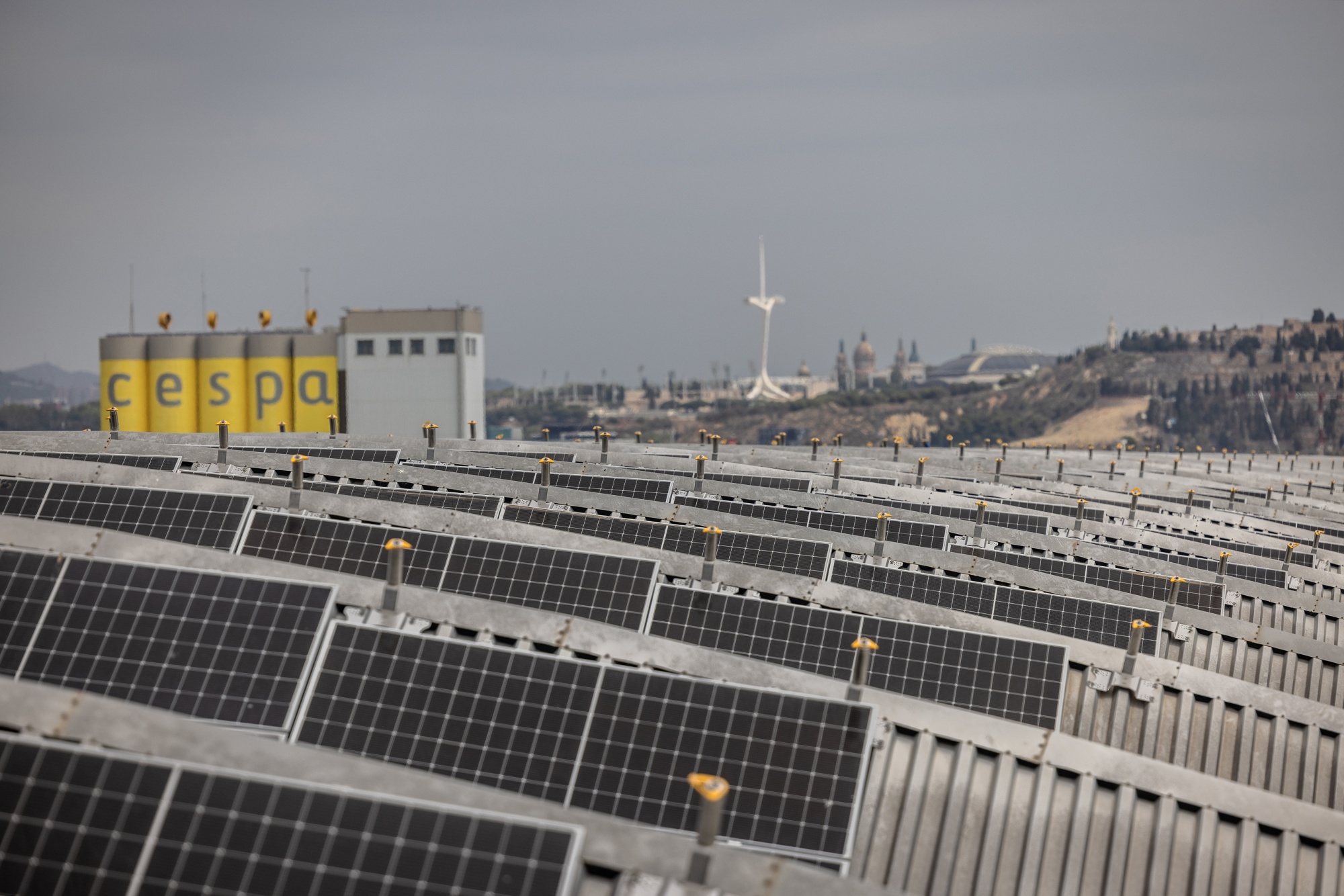
Solar panels on the roof of a Barcelona Metro workshop building, the Generalitat of Catalonia's largest solar power project, in the Zona Franca industrial area of Barcelona, Spain, on Friday, July 21, 2023. Spain is on track to become the first country among Europe's big five economies to generate more than 50% of its electricity from renewable sources, according to a forecast by Rystad Energy. Photographer: Angel Garcia/Bloomberg
Solar panels in Barcelona.
Photographer: Angel Garcia/Bloomberg

The problem has worsened since a blackout in April 2025 that plunged most of Spain and Portugal into darkness. Since then, Spain’s national grid operator, Red Eléctrica, has been more aggressive in ordering farms offline, because solar complicates network management. Power systems require stability in both frequency (the grid’s rhythm) and voltage (the electrical pressure that keeps power flowing reliably). Traditionally, large spinning turbines helped maintain this balance, but solar is more prone to sudden shifts in supply and demand and requires more active control.

For many Spanish consumers, the glut is a blessing, because the price they pay for power is linked to what producers get on the wholesale market. This year their rates have been among the lowest in Europe — about half of what Germans pay. But the surge in output has stirred a debate over how grids can adapt to the dramatic rise in renewable generation capacity.

Although some investors are shying away from the sector, it could become a “sweet spot” for funds that take stakes in troubled companies and try to turn them around, says Luis del Barrio, who leads the energy consulting practice in Madrid at Arthur D. Little Inc. “You’re looking at between €6 and €10 billion in equity” to buy struggling assets, he says. “Plus about €10 billion of investment in batteries to save the sector.”

Read more

Beyond solar

55,000 MW

Brookfield’s development pipeline of storage capacity globally, from current 3,100 MW. The firm expects batteries to play a central role as power becomes extremely cheap in the middle hours of the day

Storage solution

Companies “want the ability to hedge themselves when prices are high during the evening peaks, and storage coupled to renewables provide that.”

Arnaud Jouvin

Head of Brookfield’s global energy storage strategy

Grid woes weigh on UK climate goals

By Eamon Farhat

The UK will probably miss its clean electricity target by five years because of capacity constraints on its grid and could struggle to deliver on promises to cut household energy bills, according to consultant LCP Delta.

About 83% of all power should come from clean sources by 2030, short of the government’s goal of 95%, with that milestone now unlikely to be hit until 2035, LCP Delta said in a report. A huge amount of renewable energy — enough to power millions of homes — is set to be lost because it can’t flow to where it’s needed, prompting gas-fired plants to be turned up to fill the gap.
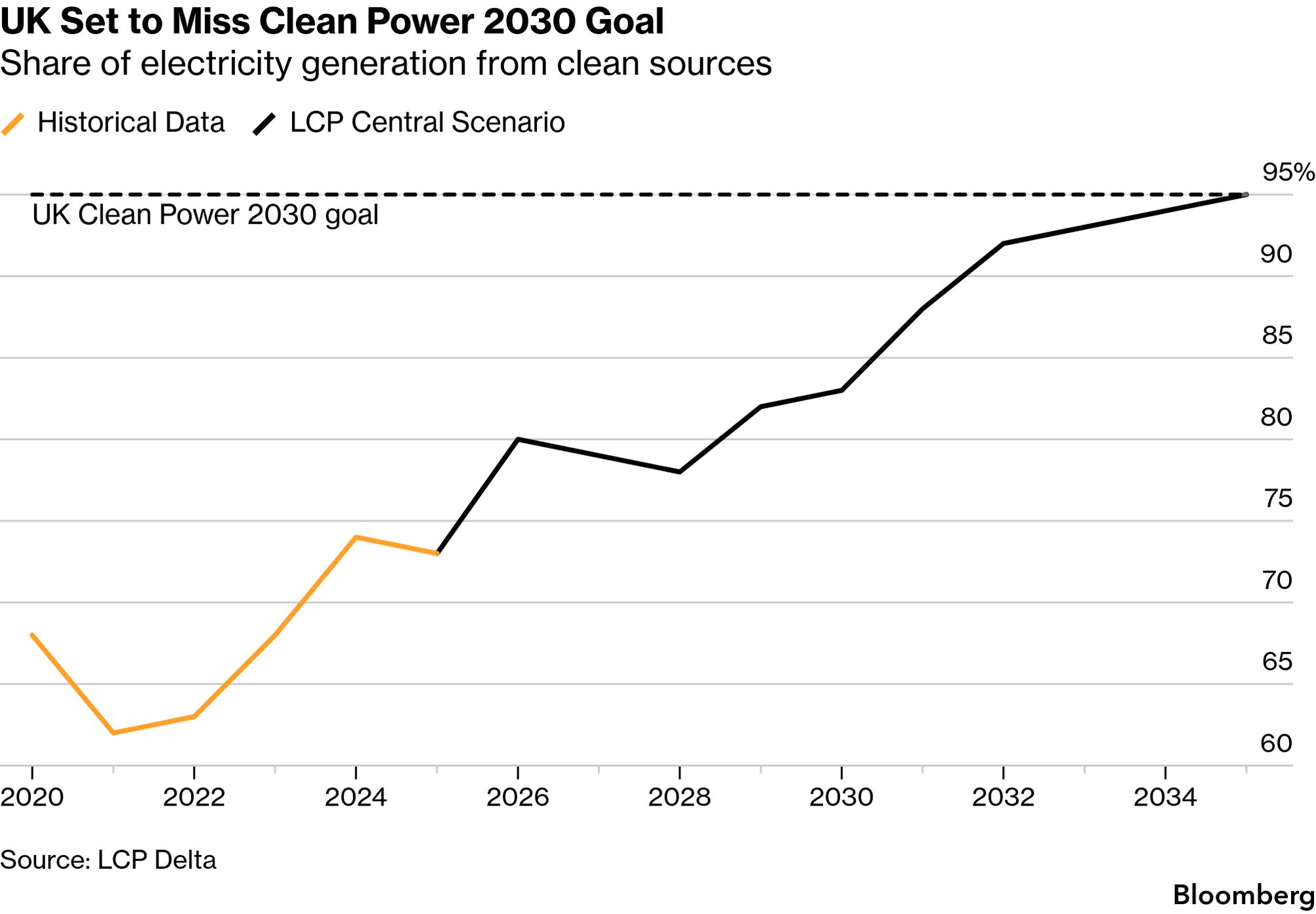
The warning underscores one of the biggest challenges facing Britain’s energy transition. While renewables output is rapidly expanding, there hasn’t been enough investment in the network to handle the extra flows and insufficient battery capacity to store excess power. That’s limiting how much electricity can actually be used and making it harder to curb fossil-fuel use and lower consumers’ bills.

Get full coverage

This week’s Zero listen

The common narrative is that the US renewables industry is struggling. But that’s not the case for the whole sector. This week on Zero, Akshat Rathi talks with Kevin Smith, chief executive officer of Cypress Creek Energy, which recently secured $3.5 billion in financing to build one of the biggest solar and battery projects in the US. Even as the current American administration dismantles clean-energy policies, Smith sees a bright future for solar and batteries.

Listen now, and subscribe on Apple, Spotify or YouTube to get new episodes of Zero every Thursday.

More from Green

Photo finish

Farmers at a flooded paddy field in Bhivpuri, India, on Wednesday, July 24, 2024. Farmers in the world’s biggest exporter of rice have so far planted the crop on about 11.56 million hectares (28.6 million acres) of land, up 21% from a year earlier, according to the farm ministry. Photographer: Indranil Aditya/Bloomberg
Farmers at a flooded paddy field in India in 2024.
Photographer: Indranil Aditya/Bloomberg

India’s monsoon season had an unusually weak start as the El Niño weather phenomenon curbed rains. The country had recorded a 40% rainfall deficit by mid-June. But ample rain forecast for early July could help India’s farmers as the busiest sowing period for key crops approaches. If the forecast holds, the rainfall could help rice, soybean, cotton and pulse farmers boost sowing, reducing risks to crop output, food inflation and rural incomes.

More from Bloomberg

  • Business of Food for a weekly look at how the world feeds itself in a changing economy and climate, from farming to supply chains to consumer trends
  • Energy Daily for a daily guide to the energy and commodities markets that power the global economy
  • Tech In Depth for analysis and scoops about the business of technology

Explore all Bloomberg newsletters.

We’re improving your newsletter experience and we’d love your feedback. If something looks off, help us fine-tune your experience by reporting it here.

Follow Us

https://assets.bwbx.io/images/users/iqjWHBFdfxIU/iDRduxloBOSA/v0/-1x-1.png icon https://assets.bwbx.io/images/users/iqjWHBFdfxIU/i5QE5__h22bE/v0/-1x-1.png icon https://assets.bwbx.io/images/users/iqjWHBFdfxIU/iiSKUb3JWcLI/v0/-1x-1.png icon https://assets.bwbx.io/images/users/iqjWHBFdfxIU/i_JvbwNnmprk/v0/-1x-1.png icon https://assets.bwbx.io/images/users/iqjWHBFdfxIU/iXt_II64P_EM/v0/-1x-1.png icon

You received this message because you are subscribed to Bloomberg’s Green Daily newsletter. If a friend forwarded you this message, sign up here to get it in your inbox.

Unsubscribe
Bloomberg.com
Contact Us
Bloomberg L.P.
731 Lexington Avenue
New York, NY 10022

Ads Powered By Liveintent | Ad Choices

Smart Money Knows Where You’re Going to Sell

Trading With Larry Benedict
chart

Editor’s Note: Tomorrow evening, our colleague, Jeff Brown, is putting on an event that he says is four years in the making… The Biotech Moment.

The biotech winter has been raging on for four years. But Jeff says a historic convergence is happening in the industry right now… and it will trigger a “golden age of biotech.”

Already, small biotech stocks are soaring 25%… 108%… 256%… 453%… and even 850%… in a matter of hours.

Jeff believes this convergence could trigger the biggest gains yet. So, to make the most of this opportunity, he’s created an AI trading system designed to spot these fast-moving stocks – before they soar.

He’s revealing all the details tomorrow, July 1, at 8 p.m. ET. You can go here to sign up with one click to join him.

Smart Money Knows Where You’re Going to Sell

By Larry Benedict, editor, Trading With Larry Benedict

Most traders are familiar with the rise of algorithmic trading.

From high-frequency firms executing thousands of trades every second through to sophisticated hedge funds exploiting tiny pricing inefficiencies, algorithms now account for a huge percentage of daily market activity.

But while retail traders might be familiar with some of the more common algo strategies, there’s one less obvious tactic they often overlook. And that can leave them exposed.

This strategy looks to exploit where large numbers of traders are likely to have placed their stop losses.

But if you follow some simple guidelines, you can greatly reduce the chances of becoming part of the herd.

Recommended Links


image

Jeff Brown: “The Wait Is Finally Over”

Some experts are calling it the “silent surge.” Biotech stocks have started soaring 25%… 108%… 256%… 453%… and even 850%… in a matter of hours.  As long as you act now – before July 23 – Jeff Brown says you could average $4,000 a month, for the next four years. He’s sharing all the details in The Biotech Moment tomorrow, Wednesday, July 1, at 8 p.m. ETClick here to register with a single click.
(When you click the link, your email address will automatically be added to Jeff’s guest list) 


image

“By July 30, Elon Musk’s Prophecy Will Fulfill Itself”

The two investment legends who picked Nvidia 10 years ago are predicting that… By the end of this month, Elon Musk’s new AI breakthrough they call “M.A.G.I…” Will collide with a strange market pattern with a flawless 100% track record of massive market gains. Click here to see the details because the last time this happened… Everyday folks had a chance to turn $10,000 into as much as $350,000 in just about 12 months.


Placing Stop Levels

The importance of using stop losses is drummed into us right from the moment we start trading.

And for good reason… A stop loss gives us a clearly defined exit point if a trade goes against us. It also helps prevent a small loss from turning into something much bigger.

But the problem isn’t the stop losses themselves… It’s where we place them.

The simple truth is that traders often place their stop losses around the same obvious technical levels. And that’s exactly where institutional trading algorithms expect to find them.

For example, if a stock had held multiple times at a key support level (say $100), you could expect a swathe of stop losses sitting just below that level (say $99.50–99.90). The rationale is simple: if the price breaks below support, then the trend may be changing and it’s time to exit the trade.

Another common level is the 200-day moving average, which many traders use to depict the long-term trend. A decisive break below that can also trigger a wave of stop-loss orders.

These are situations where the algorithms get to work.

When prices begin trading through these obvious technical levels, the algorithms know a large number of stop-loss orders are likely waiting. As those orders become market sells, they add further selling pressure, often accelerating the move lower.

Once that wave of forced selling exhausts itself, you’ll often see a short, sharp recovery as bargain hunters enter the market looking to profit from any bounce.

For a trader, there’s nothing quite as frustrating as getting stopped out, only to watch the stock quickly rebound.

Fortunately, there are some simple ways to reduce the chances of that happening.

Tune in to Trading With Larry Live

chart

Each week, Market Wizard Larry Benedict goes live to share his thoughts on what’s impacting the markets. Whether you’re a novice or expert trader, you won’t want to miss Larry’s insights and analysis. Even better, it’s free to watch.

Simply visit us on YouTube at 8:30 a.m. ET, Monday through Thursday, to catch the latest.

Avoiding the Trap

One strategy is to use a slightly wider stop level. The key, however, is not to increase your risk. That means trading a smaller number of shares while giving the trade a little more room to breathe.

So, you might place your stop below that cluster – around the $98 range, for example. The idea is to position it beyond the area where many obvious stops are clustered, while reducing your position size accordingly. So, your overall risk stays the same.

Another strategy is to use the Average True Range (ATR), which measures how much a stock typically moves over a given period.

Instead of placing your stop at a fixed price level, you could set it at, say, two times the stock’s 14-day ATR below your entry price.

Because the stop adjusts to the stock’s normal day-to-day volatility, it’s less likely to sit alongside everyone else’s stop orders.

Similarly, you can use Bollinger Bands, which are typically set at two standard deviations of price data above and below a stock’s recent average price.

Rather than using a fixed stop price, you could choose to exit if the stock closes below the lower Bollinger Band. Again, you still have a clearly defined exit strategy without placing your stop at one of the market’s most obvious levels.

There are also time-based stops, where you automatically exit a trade after a predetermined period regardless of price. Put simply, if the move you were anticipating hasn’t panned out by that time, then it’s time to move on to the next trade.

As you can see, there are a number of approaches you can use.

At the end of the day, successful trading isn't just about finding good entries. It's also about intelligently managing your exits. And by avoiding the obvious stop-loss levels, you give your trades more room to work – and reduce the chances of being shaken out of a trade right before the move you were expecting begins.

Regards,

Larry Benedict
Editor, Trading With Larry Benedict

Get Instant Trade Alerts on Mobile!

chart

Click the icon below from your mobile device to download The Opportunistic Trader app today for one-tap access to trade alerts, issues, and model portfolios for all of Larry’s services.
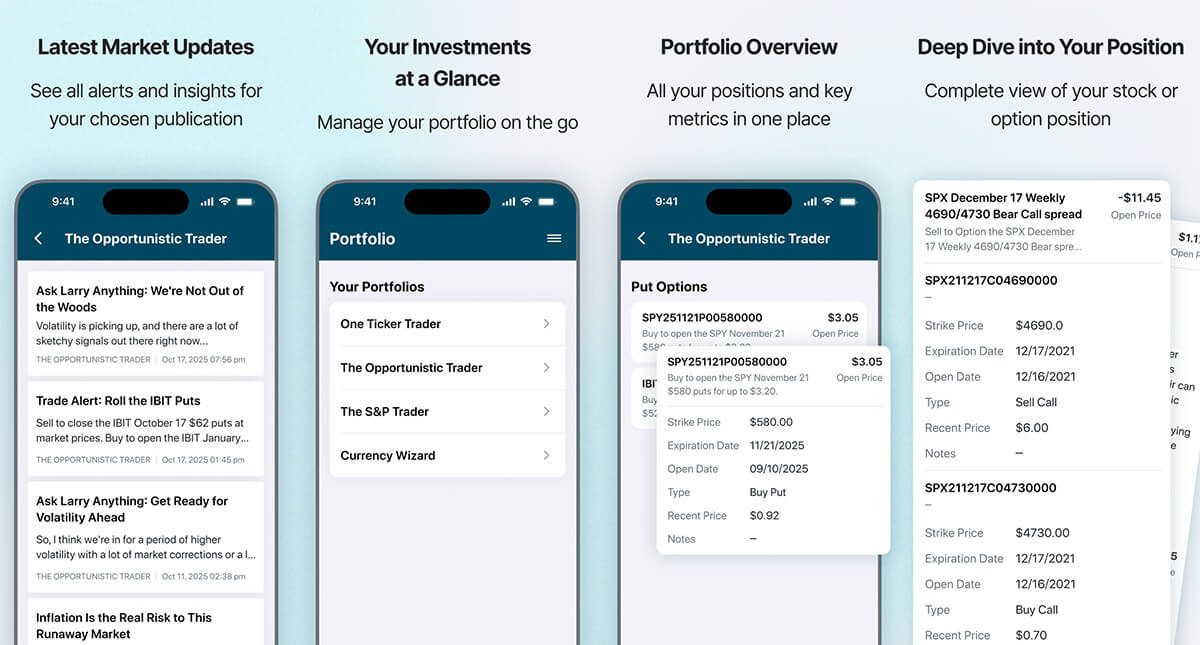
Available in the app store on Android and iPhone.

Download on the App Store Get it on Google Play

The Opportunistic Trader
1125 N Charles St, Baltimore, MD 21201
www.opportunistictrader.com

To ensure our emails continue reaching your inbox, please add our email address to your address book.

This editorial email containing advertisements was sent to reunisoft.cryptonews@blogger.com because you subscribed to this service. To stop receiving these emails, click here.

The Opportunistic Trader welcomes your feedback and questions. But please note: The law prohibits us from giving personalized advice.

To contact Customer Service, call toll free Domestic/International: 1-888-208-6550, Mon–Fri, 9am–5pm ET, or email us here.

© 2026 Omnia Research, LLC. All rights reserved. Any reproduction, copying, or redistribution of our content, in whole or in part, is prohibited without written permission from Omnia Research, LLC.

Privacy Policy | Terms of Use

(Nasdaq: VWAV) Is Leading Our Watchlist This Morning After Live Autonomous Demos At The Largest Defense Expos In The World

Any content you receive is for information purposes only. Always conduct your own research. 

*Sponsored

Krypton Street Just Moved VisionWave Holdings, Inc. (Nasdaq: VWAV) To The Top Of This Morning's Watchlist

—Tuesday, June 30, 2026

Don’t Miss Our Next Update—Get Real-Time Alerts Sent Directly To Your Phone. Up To 10X Faster Than Email.

Pull Up VWAV While It’s Still Early…

June 30, 2026

Dear Reader,

Last night we told you that VWAV would be leading our watchlist this morning.

Here we are—and it is still the only one on our radar today.

If you have not checked out the full report yet, here is what you need to know right now.

VisionWave Holdings, Inc. (Nasdaq: VWAV) recently unveiled two new combat-ready autonomous drone platforms—the TALON™ Tactical Autonomous Aerial System and the D-FLY™ Autonomous Intercept Platform—at Eurosatory 2026 in Paris, one of the world's largest and most prestigious land and airland defense exhibitions.

The company ran live demonstrations of its VARAN™ Unmanned Ground Vehicle throughout all five days of Eurosatory 2026, June 15–19, marking the first time VARAN™ was presented to the international defense community as a fully developed, physical product.

That Eurosatory debut was not a concept presentation.

It was hardware on the floor—running, integrated, and demonstrating the kind of multi-domain autonomous architecture that major defense procurement offices are actively seeking.

VisionWave sent a delegation of eleven, including five members of its Board of Directors and one Advisory Board member, alongside specialist consultants supporting live demonstrations and partner briefings throughout the five-day exhibition.

On June 9, 2026, VWAV announced a definitive agreement to acquire a controlling 52% interest in a publicly listed autonomous vision technology company in exchange for approximately $17.5M in VisionWave common shares.

The transaction is structured in two stages—an initial 46% at Stage 1 closing, followed by an additional 6% tied to a defined commercial milestone.

By adding advanced stereo and thermal computer vision capabilities to its existing RF-based sensing and AI architecture, VisionWave is building a broader multi-modal intelligence platform designed for counter-UAS, tactical unmanned systems, and commercial infrastructure applications.

VWAV is once again leading Krypton Street's watchlist this morning—Tuesday, June 30, 2026.

Get it on your screen while it is still early.

Inline Image

But keep in mind, VWAV has less than 19M shares listed as available to the public right now. When companies have small floats, the potential exists for big moves if demand begins to shift.

In late 2025, Goldman Sachs filed a Schedule 13G reporting beneficial ownership of approximately 5.2% of the company—a notable institutional signal for a company at this stage of its development cycle.

In February 2026, VisionWave closed and funded a $20M senior loan financing, providing additional capital to support its expanding strategic initiatives.

The company has also entered into a memorandum of agreement with a U.S. Tier-1 defense contractor generating approximately $9B in annual revenue and completed a paid pilot program with a UAE-based defense manufacturer reporting approximately $13B in annual revenue.

Together, these engagements demonstrate active collaboration with established participants in the global defense sector.

VisionWave’s Technology Stack

VisionWave Holdings, Inc. is a defense and advanced sensing technology company building an integrated multi-domain intelligence platform.

The company combines expertise in artificial intelligence, aerospace engineering, radio-frequency technologies, robotics, and computer vision to develop proprietary technologies that enable intelligent machines to operate in complex environments across air, ground, and maritime domains.

The technology architecture is organized around three core pillars: VisionRF™, a proprietary RF sensing platform that transforms radio-frequency signals into actionable intelligence; Stratum™, an AI autonomy and mission control platform for coordinating autonomous vehicle operations with real-time decision support; and qSpeed™, a computational acceleration architecture designed to reduce latency in time-critical decision workflows by prioritizing decision-critical computation paths.

Inline Image

Autonomous platforms include the VARAN™ UGV (unmanned ground vehicle designed for reconnaissance and mission support), the TALON™ Tactical Autonomous Aerial System, the D-FLY™ counter-drone interceptor, RF Platforms for multi-domain sensing, Solar Drone systems for commercial infrastructure maintenance, and a Tactical Mobility Platform for special operations.

Revenue is generated through product sales, technology licensing, strategic alliances, and joint ventures.

Recent M&A has materially expanded VisionWave’s operating platform.

The company acquired 100% of the xClibre™ AI video intelligence IP assets, independently valued at approximately $60M by BDO Consulting Group, and added Solar Drone Ltd. from Blade Ranger Ltd., extending its reach into autonomous inspection and infrastructure maintenance.

VisionWave also announced a definitive agreement to acquire a controlling 52% interest in a publicly listed autonomous vision technology company for approximately $17.5M in common shares, adding advanced stereo and thermal computer vision capabilities to its RF sensing and AI architecture.

In addition, the company completed an approximately $7M strategic transaction tied to RF defense and security technologies, while a proposed 51% acquisition of C.M. Composite Materials Ltd., an Israeli certified aerospace manufacturer whose structural components support systems publicly known as Iron Dome and Barak 8, remains pending subject to closing conditions.

Beyond Standalone Defense Tech

VWAV operates within the Aerospace & Defense sector, specifically at the intersection of autonomous systems, AI-driven sensing, and computational acceleration—three sub-sectors currently experiencing significant demand acceleration from both NATO-aligned defense budgets and commercial infrastructure modernization programs worldwide.

The global autonomous defense systems market is being reshaped by the lessons of recent conflicts, where drone warfare, counter-UAS capabilities, and integrated multi-domain sensing have moved from conceptual priorities to operational imperatives.

Procurement offices across the U.S., Europe, and the Middle East are no longer evaluating standalone technologies.

They want integrated solutions that can deploy quickly, operate together seamlessly, and create measurable operational advantage across the battlefield.

VisionWave’s dual-market strategy allows technologies developed for defense environments to scale into large commercial applications, including autonomous inspection, infrastructure monitoring, energy exploration, and data center operations.

The company’s recent DeepWave RF™ initiative—targeting near-bit subsurface RF sensing for oil and gas exploration—and its Tier IV data center JV term sheet illustrate this crossover strategy in action.

Latest Company Updates

June 26, 2026 – Completed all stages of an approximately $7M strategic transaction supporting the continued expansion of its RF technology portfolio across defense, homeland security, and critical infrastructure applications.

June 23, 2026 – Unveiled TALON™ and D-FLY™ autonomous drone platforms at Eurosatory 2026 in Paris, expanding the STRATUM™ battlefield autonomy ecosystem.

June 17, 2026 – Made international defense debut at Eurosatory 2026 with live VARAN™ UGV demonstrations across all five days.

June 16, 2026 – Signed term sheet for proposed Tier IV data center JV with Lucky Whale Production in Beth Shemesh (Jerusalem district), Israel.

June 15, 2026 – Filed U.S. patent application for SDNN™ Symbiotic Deep Neural Network architecture.

June 9, 2026 – Executed a definitive agreement to acquire a controlling 52% interest in a publicly listed autonomous vision technology company for approximately $17.5M in common shares, expanding its computer vision and AI capabilities.

June 2, 2026 – Announced plan to unveil DeepWave RF™ subsurface sensing initiative at AOW Energy 2026 in Accra, Ghana (September 1–3).

7 Reasons VWAV Could Be One To Watch This Morning

—Tuesday, June 30, 2026…

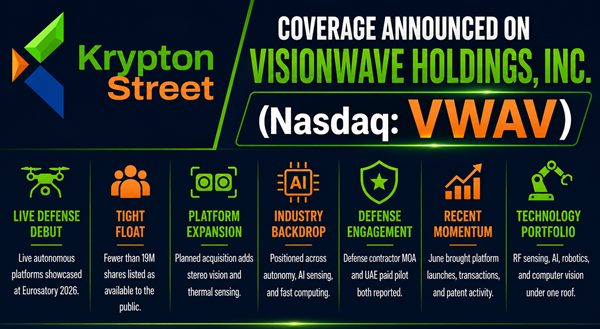
1. Tight Float: With fewer than 19M shares listed as available to the public, VWAV’s small float could witness the potential for big moves if demand begins to shift.

2. Defense Debut: VWAV recently showcased multiple autonomous platforms with live demonstrations at Eurosatory 2026, placing its technology in front of a global defense audience.

3. Platform Expansion: VWAV announced a definitive agreement to acquire a controlling interest in a publicly listed autonomous vision technology company, broadening its computer vision, RF sensing, and AI capabilities.

4. Industry Backdrop: VWAV operates at the intersection of autonomous systems, AI-driven sensing, and computational acceleration, areas seeing increased activity across defense and commercial markets.

5. Defense Engagement: VWAV has reported a memorandum of agreement with a U.S. Tier-1 defense contractor and completed a paid pilot program with a large UAE-based defense manufacturer.

6. Technology Portfolio: VWAV combines proprietary RF sensing, AI autonomy software, computer vision, robotics, and autonomous vehicle platforms into an integrated multi-domain technology architecture spanning air, ground, and commercial applications.

7. Recent Momentum: VWAV has announced multiple corporate developments throughout June 2026, including autonomous platform launches, strategic transactions, patent activity, and new technology initiatives.

Pull Up VWAV While It’s Still Early…

Inline Image

VWAV has moved back to the top of Krypton Street's watchlist for one simple reason: the company continues adding significant developments to an already active news cycle.

Its recent defense exhibition debut, expanding AI and sensing capabilities, strategic corporate activity, and public float of fewer than 19M shares make it the one company we're watching closely this morning.

Take a closer look at VWAV while it’s still early.

Sincerely,

Alex Ramsay
Co-Founder / Managing Editor
Krypton Street Newsletter

KryptonStreet.com (“KryptonStreet” or “KS” ) is owned by Media 1717 LLC, a single member limited liability company. Data is provided from third-party sources and KS is not responsible for its accuracy. Make sure to always do your own research and due diligence on any day and swing profile KS brings to your attention. Any emojis used do not have a specific defined meaning, and may be used inconsistently. We do not provide personalized in-vest-ment advice, are not in-vest-ment advisors, and any profiles we mention are not suitable for all in-vest-ors.

Pursuant to an agreement between Media 1717 LLC and TD Media LLC, Media 1717 LLC has been hired for a period beginning on 06/29/2026 and ending on 06/30/2026 to publicly disseminate information about (VWAV:US) via digital communications. Under this agreement, TD Media LLC has paid Media 1717 LLC seven thousand five hundred USD (“Funds”). To date, including under the previously described agreement, Media 1717 LLC has been paid forty four thousand USD (“Funds”). These Funds were part of the one hundred thousand USD funds that TD Media LLC received from a third party named Interactive Offers LLC who did receive the Funds directly or indirectly from the Issuer and does not own stock in the Issuer but the reader should assume that the clients of the third party own shares in the Issuer, which they will liquidate at or near the time you receive this communication and has the potential to hurt share prices.

Neither Media 1717 LLC, TD Media LLC and their member own shares of (VWAV:US).

Please see important disclosure information here: https://kryptonstreet.com/disclosure/vwav-BfFUS/#details

Starlink Is So Dominant, Europe Is Paying Musk and Funding His Rivals

Britain is buying Starlink today while the EU pours billions into IRIS², creating two waves of spending across the satellite supply chain ...