| Read in browser | ||||||||||||||


Welcome back to Pursuits Weekly, our look at the world’s biggest culture stories, as well as ideas and recommendations around travel, dining and art. Sign up here to get this newsletter every Saturday in your inbox, and be sure to also get the On Books newsletter from Bloomberg Weekend for reviews and recommendations to expand your thinking. Fearless cruisers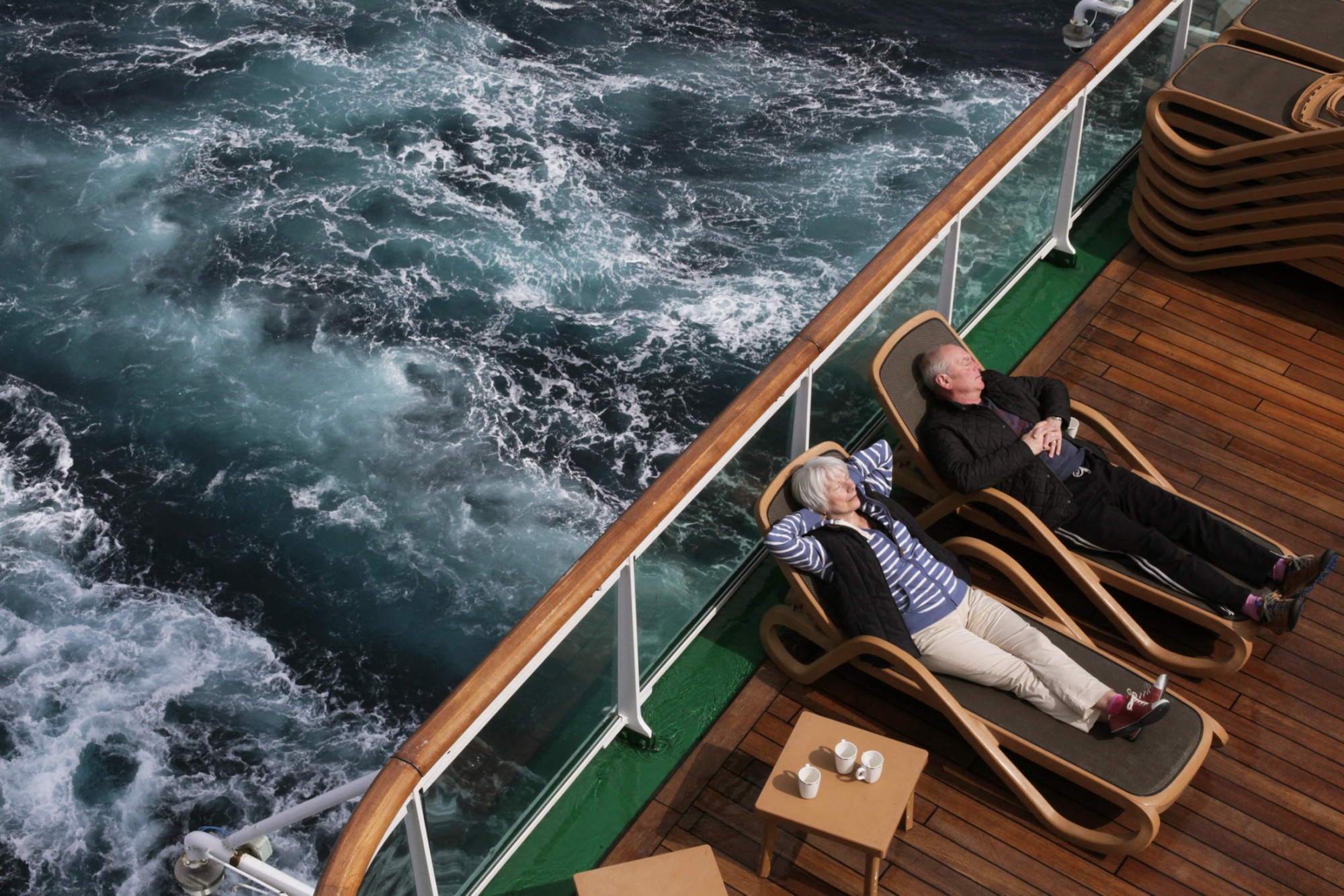
You could spend the rest of your life living like this.
Source: Alamy
At the beginning of 2013, the infamous “poop cruise” dominated headlines for weeks, and forced Carnival Corp. to cancel 14 scheduled journeys on the Triumph so that it could be repaired and refurbished. When the ship returned to the seas that June, its trips sold out. By the end of the year, Carnival’s revenues were higher than they had been a year earlier. Two years later, a terror attack in Tunisia killed 17 cruise ship passengers. Again, there were minimal effects on the industry. A similar story can be told about the Covid-19 pandemic. Royal Caribbean’s revenues were $11 billion in 2019, and plunged to just $2 billion in 2020 as the world suddenly stopped. Then, in the company’s first fully-operational year of 2023, the cruise line brought in a record $14 billion. It’s been off to the races ever since: 2025 revenues were $18 billion, up 64% from pre-pandemic levels. For all that cruise ships can be notorious vectors for disease, that doesn’t seem to discourage paying customers, some of whom want to live on the ships year-round. Even against this week’s backdrop of stomach-churning stories of quarantined passengers facing hantavirus and norovirus outbreaks, Viking Holdings Ltd announced that its net yield — basically the amount it earns per passenger per sailing day — hit an astonishing $596, roughly three times what was typical in the industry pre-pandemic. Outgoing finance chief Leah Talactac said the company had seen no meaningful increase in cancellations, global geopolitical upheaval notwithstanding. 
Hand sanitizer is everywhere on cruise ships.
Illustration: Zohar Lazar
Deaths on cruise ships are statistically inevitable, given that 37 million travelers took cruises last year. But they’re also rare. There were 557 passenger deaths between 2000 and 2019, a period that saw 372 million paying guests. That’s one death per 668,000 passengers, many of whom are elderly and/or infirm. As Brandon Presser discovered when he took over as temporary director of Royal Caribbean’s Harmony of the Seas, the crew on a cruise ship uses every tool at its disposal to ensure customer hygiene and prevent a norovirus outbreak. Recent headlines notwithstanding, there’s no particular indication that 2026 is going to end up with an uncommonly high number of passenger deaths. I’d love to conclude that cruise passengers are assiduous consumers of cruise-death statistics who can see through news-media noise. But I don’t really think that’s true. At heart, cruises represent an escape from life’s stresses. When you step on board, you’re optimizing for fun and relaxation, rather than worrying about whatever might go wrong. By the numbers
Airbnbs in Southampton, New York, near the Shinnecock Hills Golf Club, are renting for a pretty normal $1,460 per night during the US Open.
Photographer: Bruce Bennett/Getty Images North America
-2.5% The change in the average daily rate for an Airbnb in the Hamptons during the week that the US Open is taking place, compared to the same week last year, when the tournament was in Pennsylvania. As Paulina Cahcero reports, demand is up 32% year-on-year, but supply has risen too. £235 The amount that one giant African harvester queen ant can fetch in exotic pet markets, per Pat Stanchev, the general manager of Best Ants UK. (That’s about $315.) No wonder ant smuggling is a real problem. $650 The price of the 8,278-piece Lego set of Minas Tirith castle, from The Lord of the Rings, now available for pre-order. Or, you could spend a mere $630 for the 10,001-piece Eiffel Tower. 1,460,500 Swiss francs The final price at auction of a watch given to Charles de Gaulle to commemorate his victory in World War II. That’s about $1.85 million. Four personalized watches were made in total, one for each of the Allied leaders. The whereabouts of the Stalin and Roosevelt watches are unknown, but Bill Ackman bought Churchill’s in 2015 for $738,000. Time is on your side
A stripped-down watch face can be a reminder of how much time and space we really have.
Illustration by Ibrahim Rayintakath for Bloomberg Businessweek
Now that we know what happens when Swatch meets Audemars Piguet, Bloomberg watch czar Chris Rovzar has moved to a higher conceptual level and is thinking about what horology can contribute to the overlap of two timely (heh) ideas: abundance and mindfulness. At the heart of Big Time: A Simple Path to Time Abundance, the seventh book by time-management expert Laura Vanderkam, is the idea that you have more time than you think. Rovzar, a watch lover, is inclined to agree: On the dial of a mechanical watch, time can pass as quickly as a second or as slowly as a phase of the moon — a gloriously expansive view. Mechanical watches, which have existed for centuries, demand nothing from you; instead they suggest that time is, quite literally, on your side. Rovzar is a fan of the century-old jumping-hours complication, and I am too. Unlike conventional watches, where the hour hand continuously moves inexorably forwards, on a jumping-hour watch the hours indicator stays still for the full 60 minutes. Finer-grained timekeeping is outsourced to the minute hand, which is much better suited to the task. “In a world where we are inundated with notifications and demands on our time,” Rovzar writes, “a watch face that barely reveals any of its complexity feels like such a breath of fresh air.” 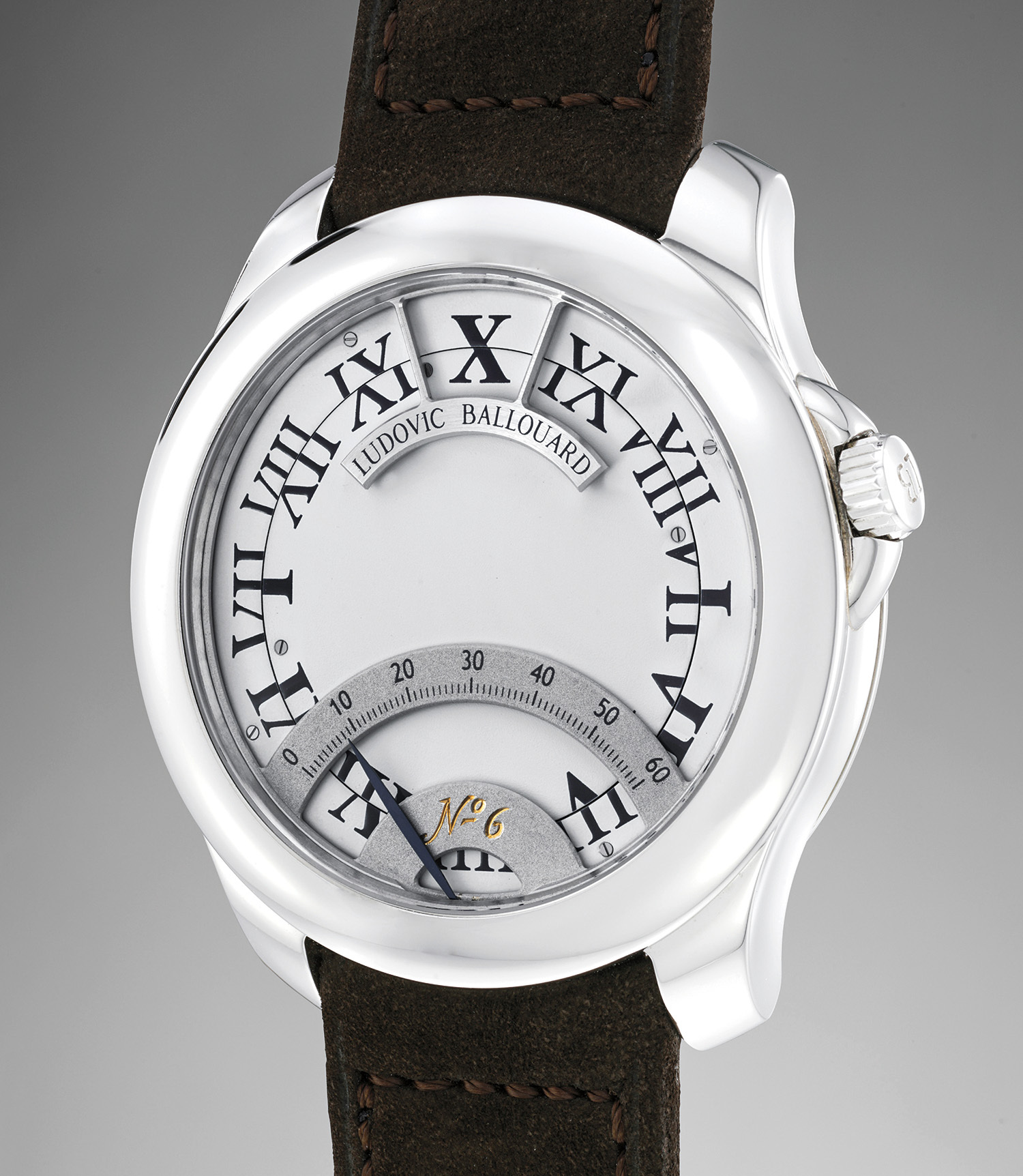
On a jumping-hours watch like Ballouard’s Half Time, time can stand still.
Source: Phillips
My favorite jumping-hour watch is probably the Half Time, by small independent watchmaker Ludovic Ballouard. It has not one but two hour-marker dials that jump every hour — a bigger one on the outside, rotating counterclockwise, and a slightly smaller one inside it, rotating clockwise. Time’s arrow points in both directions at once, just as it can in quantum mechanics. Where those arrows meet, lining up the Roman numeral marker, is a static point where the time is always now and where, for an hour at a stretch, time stands gloriously still. “Even busy people do have some space,” Vanderkam writes. Like a jumping-hours watch, they are capable of acting quickly — on some level that’s their purpose. But also “there is time to relax, to savor, to breathe.” A fair way to match artists with collectors
Collector Yayoi Shionoiri and artist Bob Szantyr in front of the piece of his (top left) she found at Zero Art Fair.
Photographer: Mackenzie Stroh for Bloomberg Businessweek
My Cultural Capital column this month is about Zero Art Fair (ZAF), a radical attempt to solve two big problems in the art world. Too many artists are burdened with storing too much of their own unsold work; and too many would-be collectors can’t afford to buy great original art. At ZAF, with a few stipulations, art lovers can pick up a work at no cost. Nick Jones, a self-described “unprofessional art critic” who’s working as a waiter, was a fan of New York-based artist Perri Neri but never thought he could afford one of her paintings, which can sell for $5,000 or more. He still can’t believe he got one for free. “It brings me joy every time I have a second to sit with it.” The artists are just as happy, since people living with their art is a large part of why they do what they do in the first place. Art should not be confined to museums — institutions that American philosopher John Dewey considered to be a place where art goes to die, exiled from its calling as a part of everyday life. “It’s just very touching to have somebody love my sincere and vulnerable attempt to make something with a little truth in it,” artist Bob Szantyr told me. “I wanted it to have a home, and my dream came true.” Still affordable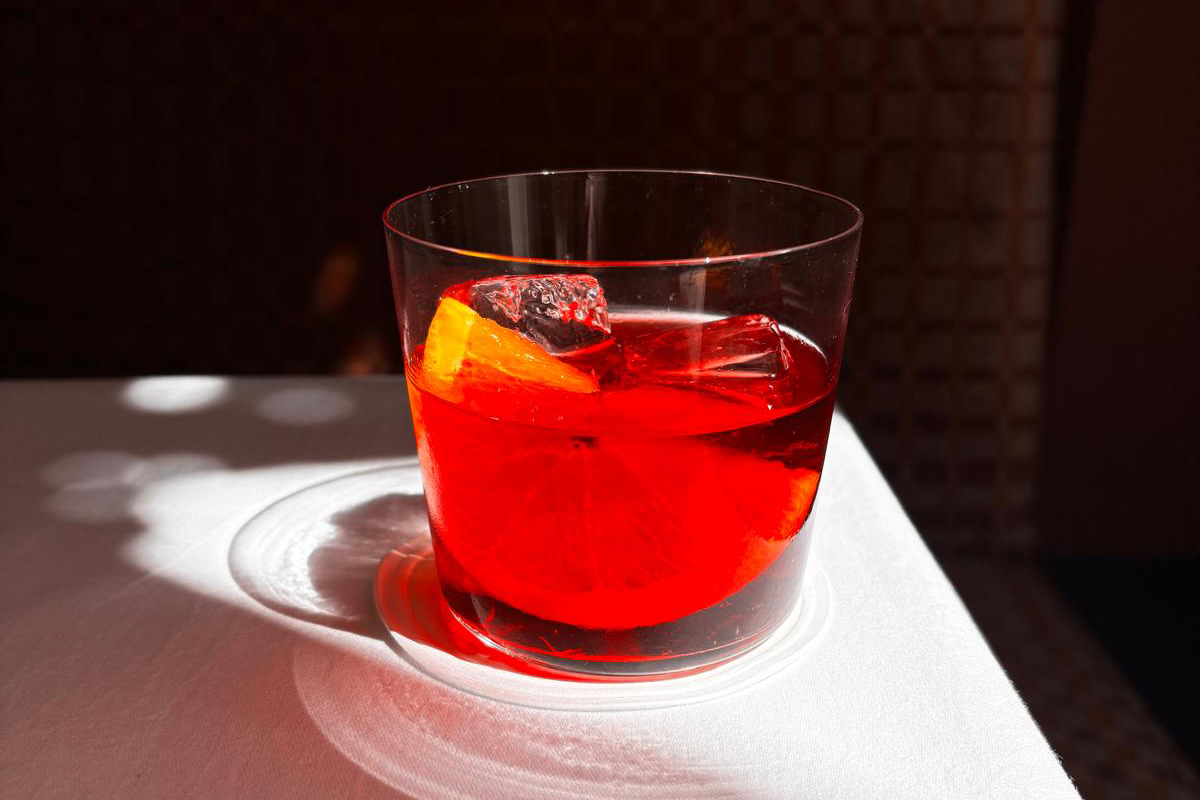
At Burro in London, the Negroni costs £7.50 ($10).
Source: Burro
Gus’ Sip & Dip in Chicago might be No. 27 on North America’s 50 Best Bars list, but that doesn’t mean it’s expensive: its 30-drink list of classic cocktails is priced at a uniform $12 apiece. “The price point often encourages you to order a second cocktail,” beverage director Kevin Beary tells Ari Bendersky. With the sticker shock from $22+ cocktails keeping patrons away from bars, entirely, the cheaper-drink trend serves both customer and bar owner. One way to keep prices down is via ingredients, especially limes. At the Radicle in Chicago, beverage director Nicole Yarovinsky offers up $10 cocktails by using citrus alternatives such as citric or malic acid, house-made shrubs and vinegars and verjus made from a local farmer’s imperfect blueberries. Conversely, if you want to splurge on specialty ingredients and still remain affordable, it helps to be selling something like gelato that’s cheap to begin with. Across northern Italy, reports Joel Hart, artisanal gelaterias are turning heads by using Japanese azuki beans, ancestral sheep’s milk ricotta and mulberries from Lake Iseo. A medium cup of egg-yolk-rich crema Bolognese gelato drizzled with aged balsamic at Sablé in Bologna costs only about €4 — less than $5 — with prices topping out at €7. That’s a price I wouldn’t blink at. One Very Specific Recommendation: Emma Sofia in Cats: The Jellicle Ball
Skimbleshanks works it in Cats: The Jellicle Ball
Photographer: Matthew Murphy and Evan Zimmerman for MurphyMade
Forget Kalshi: The smart money for the Best Musical Revival Tony is on Cats: The Jellicle Ball, which debuted at Perelman Performing Arts Center in 2024 and opened on Broadway last month. This new production reimagines the titular felines from Andrew Lloyd Webber’s Cats, which ran in the West End for 21 years, as humans in underground Harlem ballroom culture. These self-made families of Black, Latin, queer and transgender folks were popularized in the 1970s and ’80s and immortalized in the doc Paris Is Burning. Each cat has a category in which to compete (such as “Vogue,” “Runway,” and “Body”), and the stakes are not just a trophy, but redemption for an outsider class. Stealing the show is Emma Sofia as Skimbleshanks the Railway Cat, who emerges in an MTA conductor’s uniform and tiger-striped hair, singing half in Spanish in a thick New Yawk accent. A trained ballerina who has danced with the companies Morphoses and Ballet Hispánico, Sofia first hit Broadway as Wendy in Finding Neverland. Her vogue down the Cats runway is a pure explosion of energy and humor, helping transform a theater punchline into true joy and the hottest ticket in town. —Chris Rovzar New for subscribers: Free article gifting. Bloomberg.com subscribers can now gift up to five free articles a month to anyone you want. Just look for the “Gift this article” button on stories. (Not a subscriber? Unlock unlimited access and sign up here.) We’re improving your newsletter experience and we’d love your feedback. If something looks off, help us fine-tune your experience by reporting it here. Follow Us
You received this message because you are subscribed to Bloomberg’s Bloomberg Pursuits newsletter. If a friend forwarded you this message, sign up here to get it in your inbox.
|
Saturday, May 16, 2026
We’re not afraid of cruise ships





Subscribe to:
Post Comments (Atom)
Before tomorrow night — here's exactly what you're getting
Rare extension closes tomorrow night. Here's what's inside the Special Anniversary Cohort. ...

-
Bloomberg Evening Briefing Americas View in browser Who's paying for Donald Trum...
-
PLUS: Dogecoin scores first official ETP ...


No comments:
Post a Comment