This is Bloomberg Opinion Today, a rose-tinted look at Bloomberg Opinion’s opinions. On Sundays, we look at the major themes of the week past and how they will define the week ahead. Sign up for the daily newsletter here.
Polaroid is no longer a public company, but if it were, it’d probably be doing OK. At nearly every wedding or hen do (I believe American readers call these bachelorette parties) I’ve attended in the past year or so, an instant camera or two has also been in attendance. Millennials like me are suckers for the dreamy, lo-fi quality of the resulting images, and it satisfies our modern need for instant gratification and nostalgia for physical media.

Your newsletter writer’s own stack of recent instant photos. Photograph by Lara Williams/Bloomberg
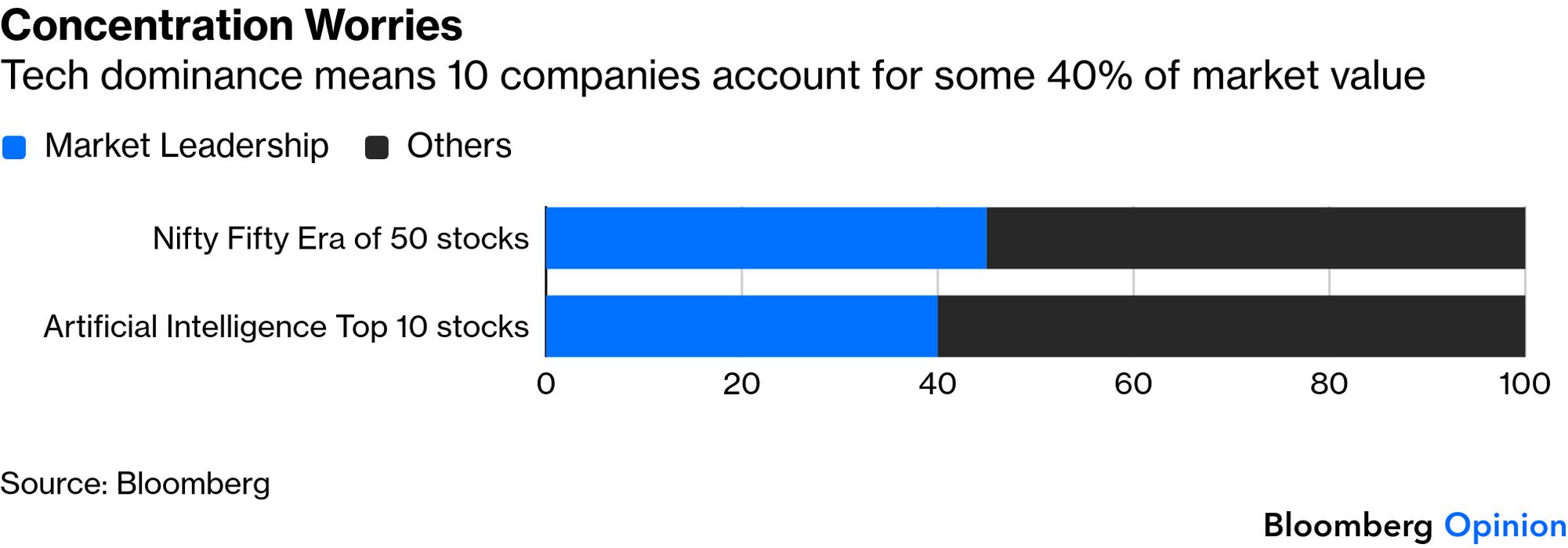
The markets are also making Richard Abbey nostalgic for Polaroid’s heyday. Back in the Nifty Fifty era of the late 1960s and early 1970s, he writes, Polaroid “controlled nearly two-thirds of the instant-camera market and traded at earnings multiples exceeding 90x.” Then the bubble burst and those Nifty stocks tanked the market. Today’s artificial-intelligence-driven rally feels awfully similar, if not worse.
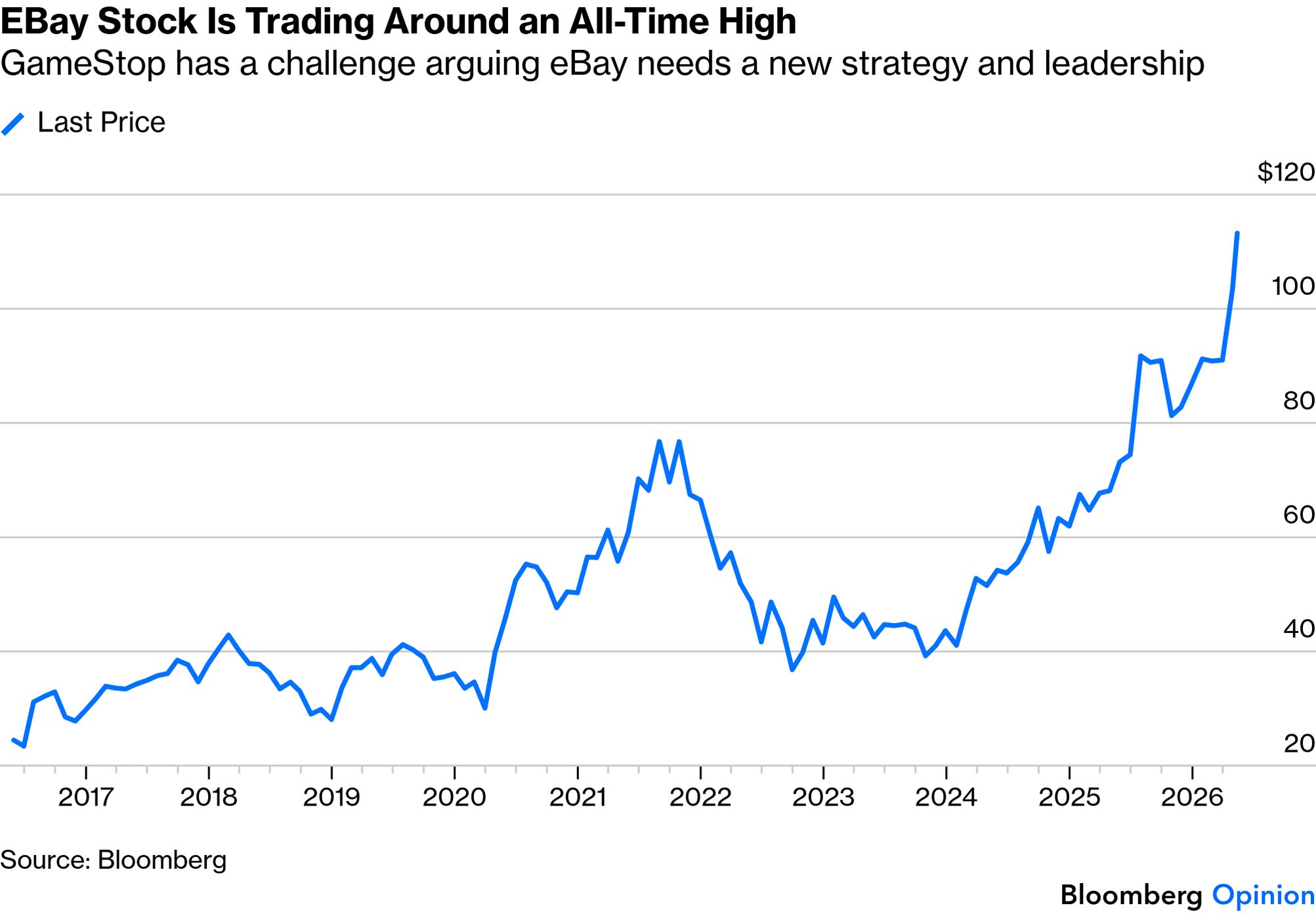
After all, back in the ’70s, Polaroid was one of 50 stocks that accounted for about 45% of the S&P 500’s value. Today, just the top 10 companies make up 40% of the index. Sure, profits are looking pretty stellar, but so did Polaroid’s back in the day. As Richard writes in John Authers’ newsletter: “The AI monsters now being built will ultimately compete against one another. Head-to-head competition, while good for consumers, is all but certain to damage profits.” Robert Burgess agrees. Business forecasters have recently turned pessimistic about margins — not because sales are expected to go down, but over concern about rising costs thanks to the Iran war: “The cost of inputs like energy, aluminum, copper and freight may not necessarily have an immediate impact on profits but rather filter in slowly over time, and linger … That’s what worries business executives even if Wall Street is sanguine.” Still, investors are hooked on AI. Even Ford Motor Co., founded in 1903, saw its stock jump by the most in more than six years on Wednesday on news that it had found a way to kinda tap into the AI boom with the launch of its grid-battery business. Liam Denning notes that it’s a sound move, following other industry stalwarts such as Caterpillar, not least because it’ll be great for Ford’s electric vehicles: “Reducing the cost of batteries is critical to EVs winning the affordability argument versus internal combustion engines and, as China has demonstrated, scaling up battery manufacturing capacity is key to this.” If that means getting a boost from AI’s aura, so be it. Meanwhile, another blast from markets past has made me nostalgic for the days of stonks, tendies and HODLing. Remember GameStop, the original meme stock, which gave a lot of short sellers tension migraines in 2021? You know, back during the pandemic, when nothing else was really going on? Well, GameStop is back in the news after it made a bid for eBay. That’s right: a company with $9 billion in cash, and a stock market capitalization of about $10 billion, wants to buy a company with a market cap of about $48 billion. CEO Ryan Cohen has infamously and inexplicably described the offer as “half cash, half stock”— $28 billion of each. How zany! Obviously, eBay rejected the bid this week.
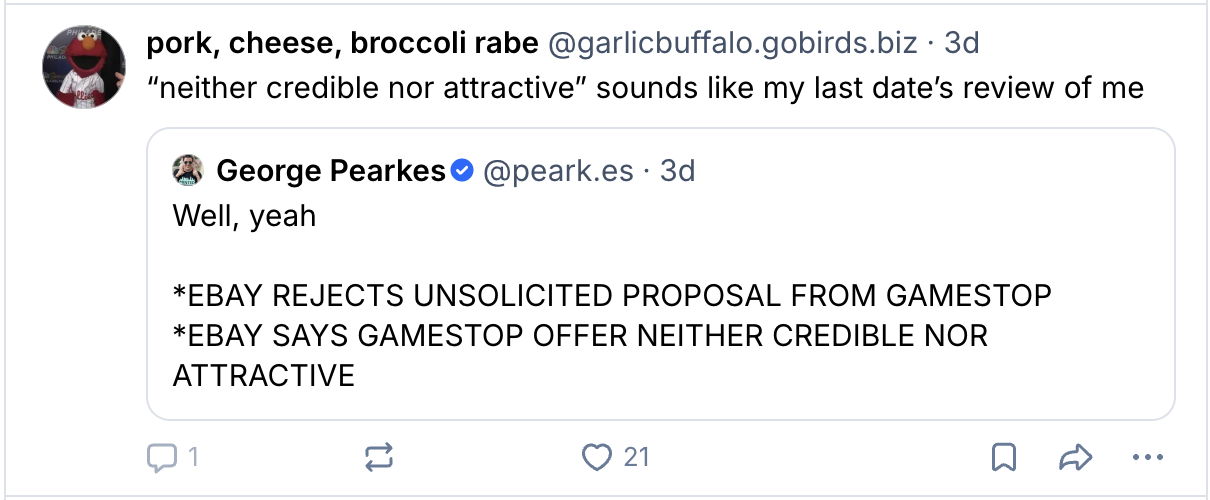
Is that the right call? As Matt Levine explains: “The appeal of this deal to shareholders is not its stated dollar value, not what they would get in a deal. The appeal of this deal to shareholders is (1) Ryan Cohen’s management and (2) meme-stockery.” We shouldn’t discount the value of zaniness in corporate finance. Chris Hughes reminds us that “RedHot sauce-maker McCormick & Co Inc. struck a deal in March to pay $45 billion in cash and stock for Unilever Plc’s food business when its own market capitalization was $14 billion.” As Chris notes, “corporate finance likes boldness” — but the fine print can be nasty. The other way to think of this offer is as Cohen’s application for a job at eBay. It’s not even that weird, really — as Matt points out: “Elon Musk wanted to run Twitter, so he bought it. David Ellison wanted to run Warner Bros., so he bought it.” Of course, those guys had cash, which Cohen doesn’t. So he’ll have to turn to activism. Whatever happens next, it should be fun! Meanwhile, eBay shares are up. So I guess AI and strong profits aren’t the only way to send your stock price to the moon?
Bonus Throwback Reading:
What’s the World Got in Store?
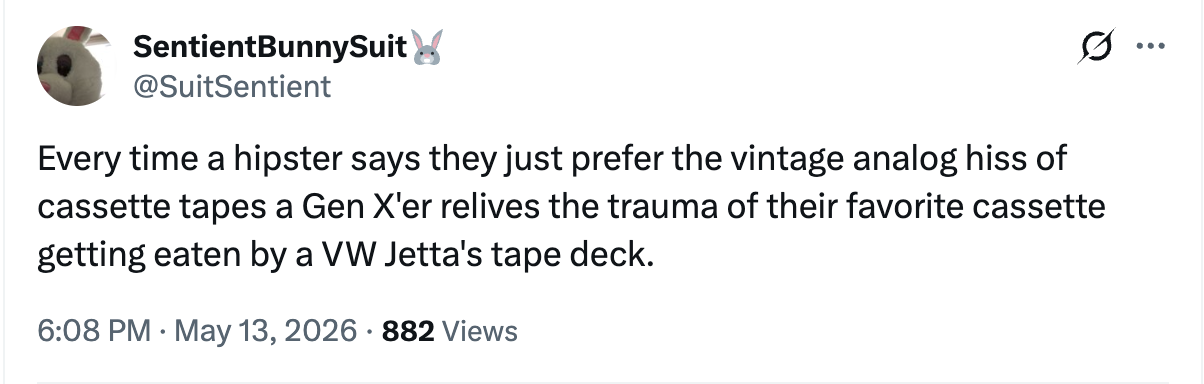
While the markets look longingly at cutting-edge, energy-hungry tech, culture is going the other way. Several albums, including Pulp’s More, Taylor Swift’s The Life of a Showgirl and Harry Styles’s KISS ALL THE TIME. DISCO, OCCASIONALLY, have been released on cassette tape, a medium famous for being really annoying and poor quality.
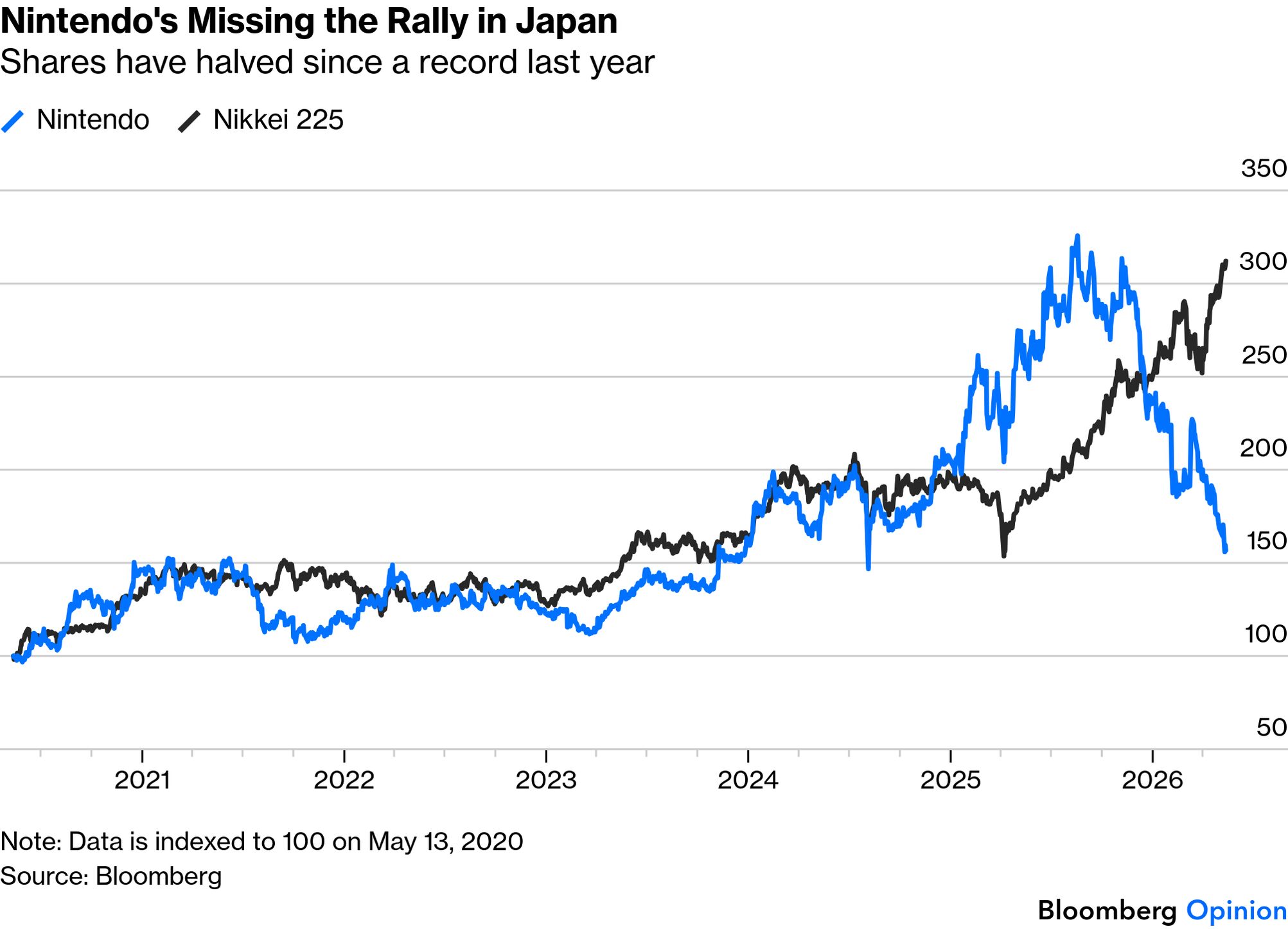
But while some Gen Zers come to grips with the rewind button, the rest of us are dealing with AI slop infiltrating our music apps. Billboard has spent 113 years meticulously defining its charts. As Peter A. Berry writes, it needs to use that same discernment to keep AI out, for the sake of artistic innovation and good-natured competition. Luckily, he writes, the fix is simple: creating a separate chart for AI music. “If Billboard has any misgivings about excluding AI entirely from its other storied rankings, it shouldn’t,” Peter says. “After all, it’s said “no” before.” Meanwhile, Nintendo has delved into the archives to resurrect Star Fox 64 – a clear play for elder millennials who remember the vulpine hero from their childhoods. Yet even as the Switch 2 has become the company’s fastest-selling console of all time and The Super Mario Galaxy Movie is poised to cross $1 billion at the global box office, investors are wary. The problem, as Gearoid Reidy explains, is that Nintendo’s plans for this year are a mystery: “It doesn’t have a single game announced for the crucial holiday shopping season.” Nintendo loves to surprise its gamers — the new Star Fox came out of nowhere. Investors, on the other hand, hate to be surprised.
Listen, I get it. I love a plan. I love reliability. But sometimes it’s a delight to be surprised by a Polaroid picture, a weird news story or a fun new game. Note: Please send pleasant surprises and feedback to Lara Williams at lwilliams218@bloomberg.net |








No comments:
Post a Comment