| Read in browser | ||||||||||||||

All over the world, the energy crisis is making it harder for governments to stick with their climate pledges. That same tension is playing out in New York, where Governor Kathy Hochul is watering down the state’s ambitious green plans. Today’s newsletter looks at the proposed deal and how that would impact New York’s efforts to cut planet-warming emissions. Plus, a look at the Trump administration’s plan to reform the Federal Emergency Management Agency. Subscribe to Bloomberg for unlimited access to all our stories. ‘Strike the right balance’A tentative state budget deal in New York includes an agreement with lawmakers to soften a landmark climate law that had called for steep and immediate cuts to planet-warming emissions, Governor Kathy Hochul’s office said on Thursday. The new deadline to begin enforcing regulations on greenhouse gases will be moved to 2028, according to a person familiar with the budget discussion. A court order had required the state to enact regulations right away. The person said a new interim target aims to cut emissions 60% by 2040 from a 1990 baseline. 
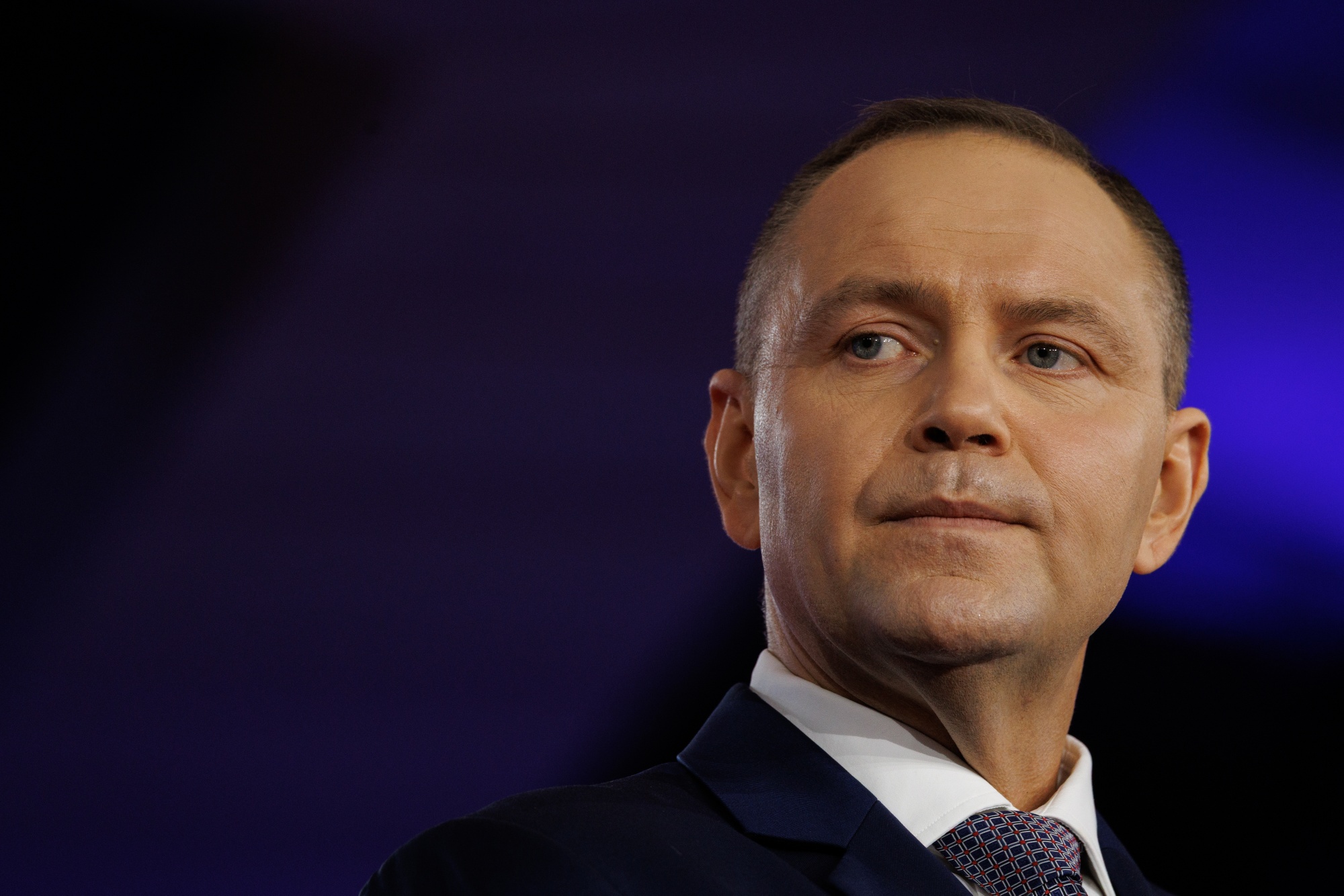
New York Governor Kathy Hochul
Photographer: Victor J. Blue/Bloomberg
Hochul proposed a revision to the state’s climate law in March, arguing that enforcement of tougher emissions rules would push up energy costs for consumers. The preliminary deal isn’t as far-reaching as she had originally proposed, which would have pushed back regulatory action to 2030. “We cannot meet the current timelines without driving energy costs higher,” Hochul said at a press conference on Thursday. “We have to strike the right balance between our clean energy ambitions and the affordability pressures that real New Yorkers are facing right now.” The agreement is part of a larger budget negotiation that has been delayed for over a month. At a press huddle shortly after the governor’s announcement, Speaker of the New York State Assembly Carl Heastie told reporters there wasn’t yet a firm deal on the budget. “There’s no budget deal,” Heastie said, adding that language on the climate law had not yet been finalized. The proposed changes would weaken a law considered one of the most ambitious state climate policies in the US. Soaring gasoline prices in the wake of the war in Iran have been driving similar debates in other states, including California, Massachusetts and Michigan, over whether pushing climate action would further squeeze families facing rising costs.
Read more
More time2028 The new deadline for New York to begin enforcing regulations on greenhouse gases, according to a person familiar. Cost of climate policies“There’s this effort to jump on affordability as an issue that should dissuade states from pursuing climate policies” Michael Burger Executive director of the Sabin Center for Climate Change Law at Columbia University Skyrocketing gasoline prices in the US are fueling efforts to weaken state climate laws. FEMA overhaulBy Zahra Hirji and Lauren Rosenthal President Donald Trump’s task force for reforming the Federal Emergency Management Agency on Thursday recommended sweeping changes to how the federal government responds to natural disasters. The recommendations, finalized at a council meeting in Washington, include reassessing FEMA staffing, rethinking what disasters qualify for federal disaster aid and then streamlining its distribution, reforming the National Flood Insurance Program, and shifting more training and spending decisions to state, local and tribal authorities, over a period of two to three years. At least half of the recommendations require action by Congress. A final report detailing the recommendations now goes to the White House and will be released for public comment. 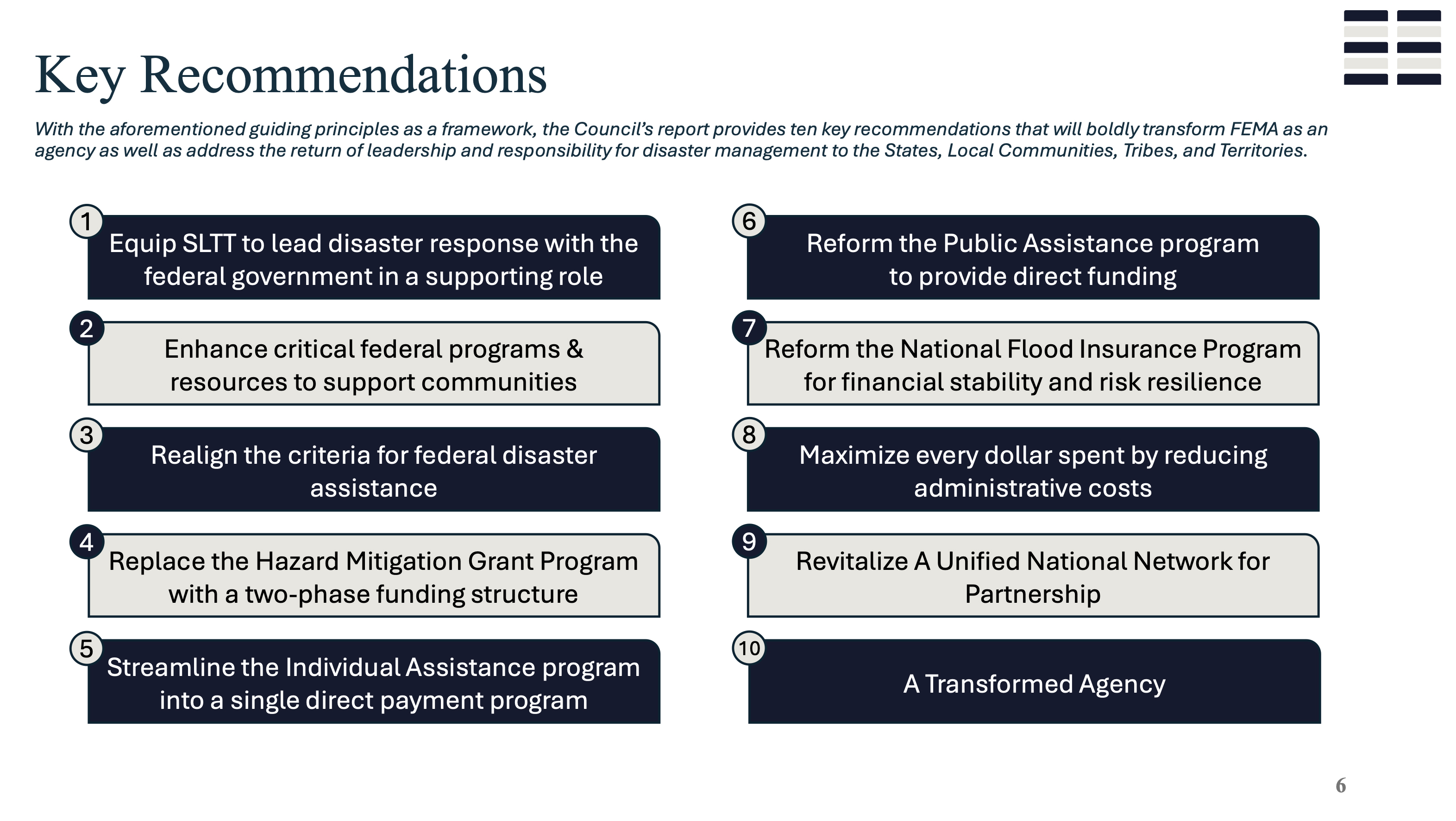
Ten recommendations presented by the FEMA Review Council on May 7.
Source: Department of Homeland Security
“Emergency managers have been waiting for these recommendations for more than 16 months. This is a pivotal moment — not only for FEMA, but for every state, local, tribal, and territorial emergency manager who depends on a strong federal partnership before, during, and after disasters,” said Carrie Speranza, former chair of FEMA National Advisory Council, a now-disbanded group of experts that advised the agency on all aspects of emergency management. “The implementation phase will ultimately determine the success of these reforms and their impact on communities nationwide.” In an executive order last year, Trump established the FEMA Review Council to propose an overhaul of the nation’s disaster-response system. Since April 2025, the council’s more than 10 members — senior government officials, state and local politicians and emergency managers — have gathered input from people involved in disaster work nationwide. The council spent more than a year soliciting public comments and developing recommendations. The report’s finalization follows months of upheaval inside FEMA, which has seen repeated leadership changes and the departure of more than 5,000 workers since Trump returned to the White House.
Read more
This week’s ZeroEverywhere you look, you see two types of technology existing side-by-side. One that runs on fossil fuels and one that runs on clean electricity. Some call it the mid-transition. This week on Zero, Emily Grubert tells Akshat Rathi how to navigate the mid-transition, and the better energy system that exists on the other side. Listen now, and subscribe on Apple, Spotify or YouTube to get new episodes of Zero every Thursday. More from GreenMore from Bloomberg
Explore all Bloomberg newsletters. We’re improving your newsletter experience and we’d love your feedback. If something looks off, help us fine-tune your experience by reporting it here. Follow Us
You received this message because you are subscribed to Bloomberg’s Green Daily newsletter. If a friend forwarded you this message, sign up here to get it in your inbox.
|
Sunday, May 10, 2026
New York’s climate rollback







Subscribe to:
Post Comments (Atom)
I have a name for why your trading hasn't gotten easier.
THE 4PM OPEN — live tomorrow at 2 PM Eastern. Add to your calendar. ͏ ͏ ͏ ͏ ͏ ͏ ͏ ͏ ͏ ͏ ͏ ͏ ͏ ͏ ͏ ͏ ͏ ͏ ͏ ͏ ͏ ͏ ͏ ͏...

-
PLUS: Dogecoin scores first official ETP ...
-
Swaps, memes, homes, tokens. View in browser Unicorn bucket We have talked a fe...


No comments:
Post a Comment