| Read in browser | ||||||||||||||

The world needs to electrify to run on clean energy. In Canada, Prime Minister Mark Carney unveiled a major policy to deliver on that solution. Today’s newsletter looks at Carney’s plan to double the nation’s electricity output, and how that might complicate the country’s emssions goals, at least in the short term. Plus, the climate risk for many London office buildings and the world’s biggest state-backed green fund faces more trouble. Subscribe to Bloomberg for unlimited access to all our stories. Going electricBy Brian Platt and Nojoud Al Mallees Prime Minister Mark Carney published a strategy that aims to double Canada’s electricity generation by 2050, including adjusting its clean electricity rules to give more flexibility on power generation using natural gas. The total cost of expanding Canada’s power grid is expected to top C$1 trillion ($729 billion), the strategy says, but that cost will be spread across the federal and provincial governments as well as private sector players. 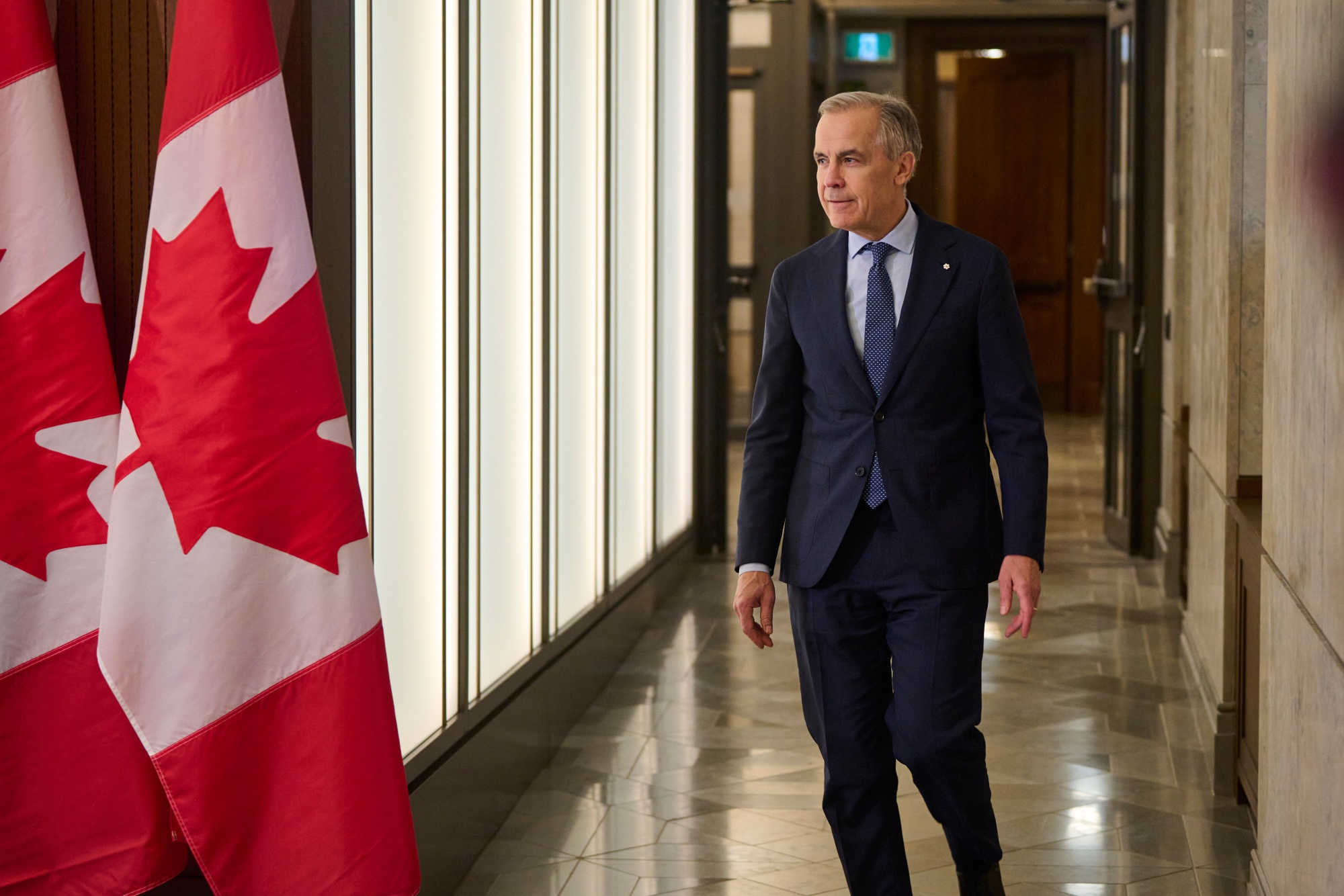
Canadian Prime Minister Mark Carney
Bloomberg
Carney announced the strategy a day before his government is expected to unveil an industrial carbon pricing agreement with Alberta meant to pave the way for a new oil pipeline to the west coast, along with a major carbon capture project in the province’s oil sands. The electricity strategy is short on concrete actions to meet its targets, but it says the government will now begin consultations with provinces, territories, Indigenous groups, utilities and unions on the path forward. “Doubling our grid will not be easy. The scale is huge, the timeline short, and the task of getting the right mix of power complex,” he said at a news conference in Ottawa on Thursday. “Get it wrong, and Canadians will pay higher utility bills. Be too timid, and Canadians will end up short of power — losing good jobs and growing reliant on foreign suppliers.”
Read more
Big investmentC$1 trillion The total estimated cost of expanding Canada’s power grid. Knock-on effect“We’ll update our climate plans and our emission reduction targets in due course.” Mark Carney Canadian Prime Minister The plan would loosen clean electricity rules, but Carney said this did not necessarily mean the government would change its green targets. Stranded officesLarge swathes of London’s office property risk becoming stranded assets as landlords run out of time to embark on major upgrades needed to meet new energy efficiency standards. That’s according to Robert Irving Burns, a property consultant, which says its analysis of government data shows that 78% of offices in Westminster and 71% in the City of London “will fail” to meet Minimum Energy Efficiency Standards (MEES) expected to take effect in the early 2030s. 
The London skyline.
Photographer: Julian Finney/Getty Images via Getty Images Europe
“Not only will achieving compliance require enormous capital expenditure across the board, but current market capacity — with labor shortages and financing constraints — will make achieving the early 2030s deadline virtually impossible,” Antony Antoniou, chief executive of RIB, said in a statement on Tuesday. The UK government has said that building owners in the country will need to meet tougher standards for energy efficiency in order to be able to lease commercial properties. That will likely mean having an Energy Performance Certificate (EPC) rating no lower than “B” by the early 2030s. Landlords will struggle in the new regulatory environment given the “huge scope” of the challenges ahead, RIB said. In all, more than 12,000 offices across central London currently require “significant” upgrades to comply with the new regulations, it estimates. In Westminster alone, more than three-quarters of offices “risk obsolescence,” RIB warned.
Read more
Funding pullbackThe world’s largest state-backed climate fund will lose half its funding from the UK, a major setback following the cancellation of a $4 billion pledge from the US last year. A spokesperson for the Green Climate Fund, set up by the United Nations, said that UK officials gave notification of impending cuts to the amount the country plans to contribute for the 2024 to 2027 period. It will lower the total to 815 million pounds ($1.1 billion) from an initial pledge of 1.6 billion pounds. The Financial Times reported the funding cut earlier. The change has been affected by “substantial reductions in UK development assistance spending,” said the GCF, which is based in Incheon, South Korea. “We are assessing what this decision means for the projects under preparation,” it said, as well as future initiatives.
Read more
This week’s ZeroThis week on Zero, Akshat Rathi talks wars raging and supply chains blocked with Gerald Butts, chairman of the political risk consultancy Eurasia Group and former chief of staff to Prime Minister Justin Trudeau. In an era of political chaos, they discuss how investors and companies are responding to the energy shock. Listen now, and subscribe on Apple, Spotify or YouTube to get new episodes of Zero every Thursday. More from GreenMore from Bloomberg
Explore all Bloomberg newsletters. We’re improving your newsletter experience and we’d love your feedback. If something looks off, help us fine-tune your experience by reporting it here. Follow Us
You received this message because you are subscribed to Bloomberg’s Green Daily newsletter. If a friend forwarded you this message, sign up here to get it in your inbox.
|
Friday, May 15, 2026
Carney’s big electricity pitch









Subscribe to:
Post Comments (Atom)
Carney’s big electricity pitch
Canada’s emissions future is uncertain ...
-
Bloomberg Evening Briefing Americas View in browser Who's paying for Donald Trum...
-
PLUS: Dogecoin scores first official ETP ...


No comments:
Post a Comment