| Read in browser | ||||||||||||||
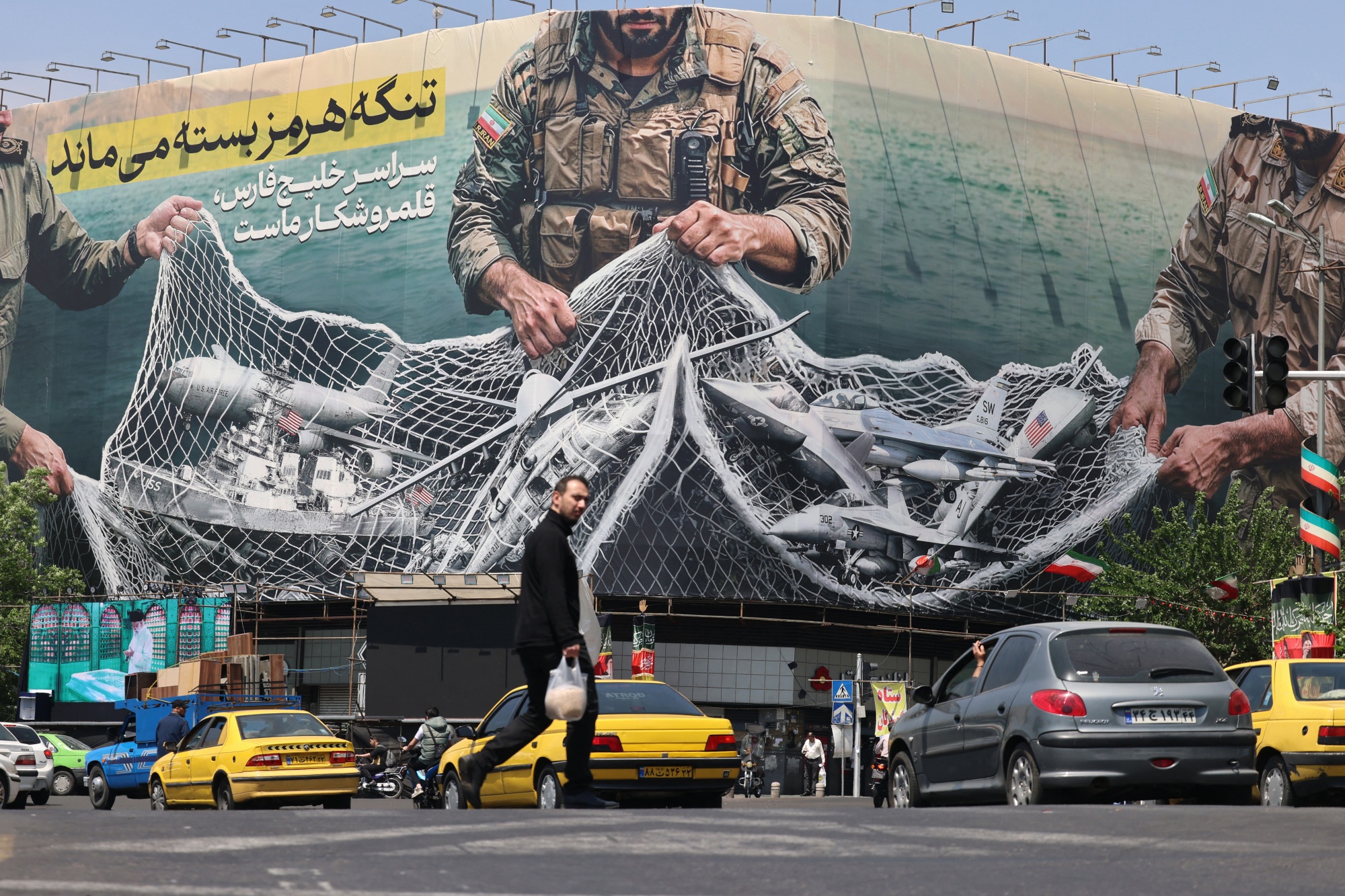
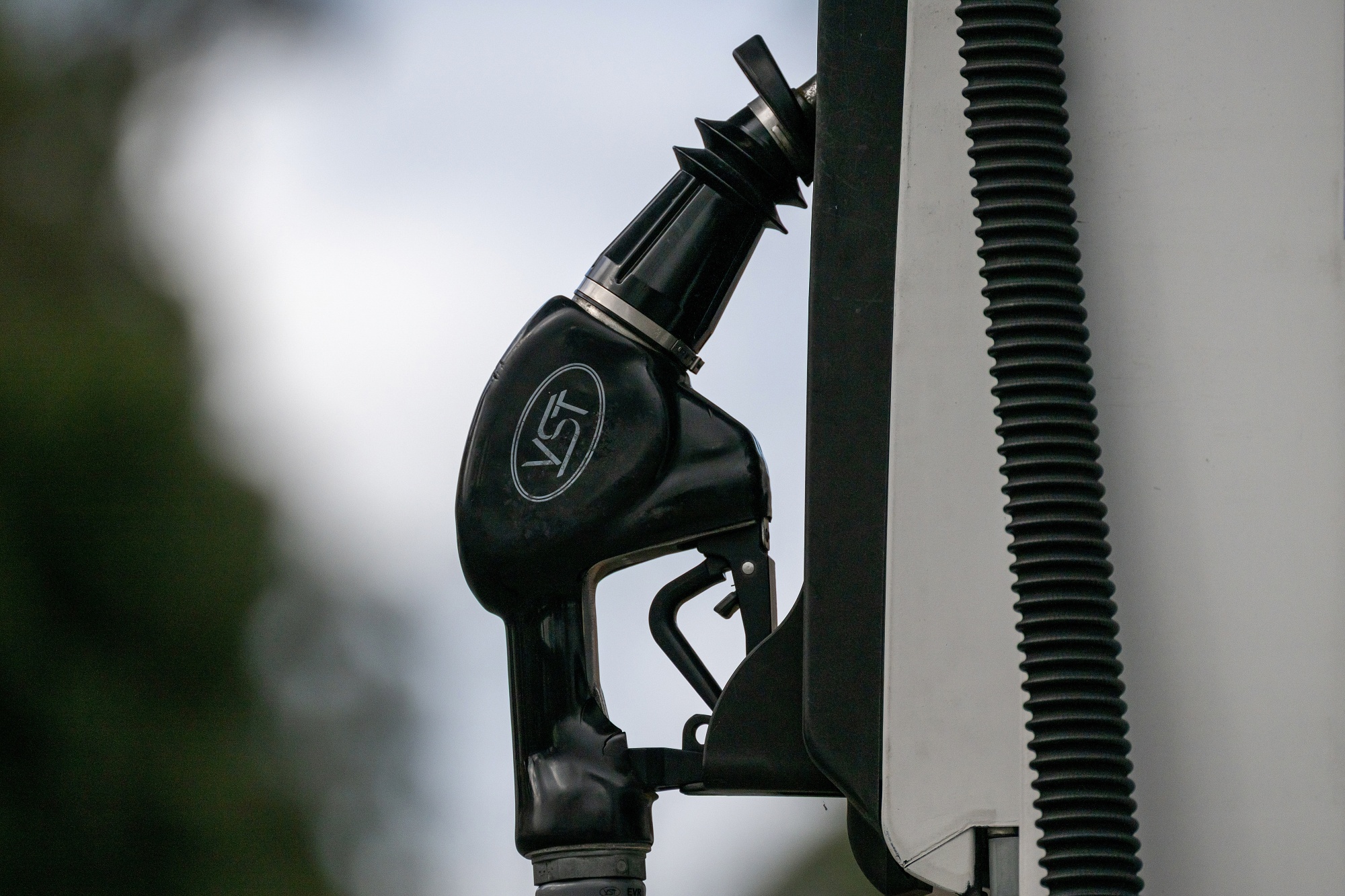
The US-Israel war with Iran and the calamity it’s triggered in global energy markets has been sharply felt by nations from Southeast Asia to Europe. In the US, however, the price for consumers flowing from Donald Trump’s decision to attack has been about $1.40 more for a gallon of gas, on average. This week, the warnings that more acute pain may be coming to American shores have been accumulating. On Friday, one more arrived—from Big Oil. Every day the Strait of Hormuz remains shut, the world is using up commercial stockpiles, strategic reserves and crude that was stored in vessels, Exxon Mobil, Chevron and ConocoPhillips said this week. These supplies are now running short, Chevron Chief Financial Officer Eimear Bonner said in an interview with Bloomberg TV on Friday. “There’s very little of the buffer left,” she said. “If you look at the unprecedented disruption and the world’s supply of oil and natural gas, the market hasn’t seen the full impact of that yet.” What You Need to Know TodayUS manufacturing growth in 2026 has managed to hang on despite war-induced spikes in energy and other input costs. This according to the Institute for Supply Management, a non-governmental organization that reported the US expansion has extended into April. The news comes despite the effective closure of the Strait of Hormuz, which has disrupted supply chains around the world, driving up the cost of oil and other materials like aluminum and helium. Higher gasoline and diesel prices have also made shipping products more expensive. Thirteen manufacturing industries reported growth in April, led by textile mills, nonmetallic mineral products and primary metals. Three industries indicated a contraction. 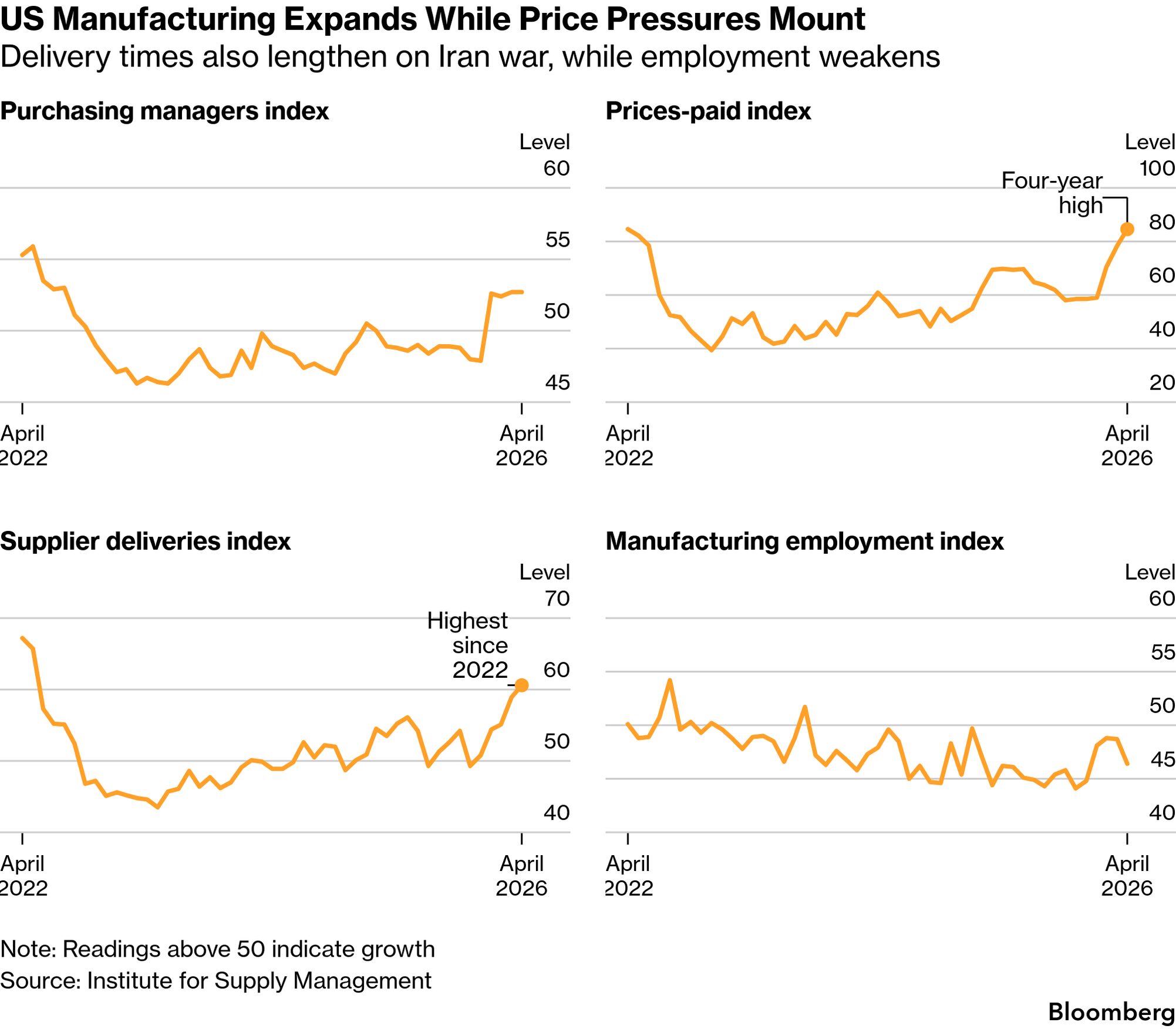
More bad news for Blue Owl—and private credit. Brown University’s $8 billion endowment quietly cut its position in a Blue Owl Capital private credit fund by more than half last quarter, joining retail investors in the rush to scale back exposure to the $1.8 trillion market. The university’s move, while small in comparison to the endowment’s total size, underscores the souring sentiment toward an opaque market big players on Wall Street have been scrambling to defend. It’s also more unwelcome news for Blue Owl in particular, as the firm’s non-traded credit funds saw a flood of requests to exit in the first quarter, totaling more than $5 billion. Japan likely spent around $34.5 billion Thursday in its first currency intervention to prop up the yen since July 2024, according to a Bloomberg analysis of central bank accounts. The scale of intervention was probably around ¥5.4 trillion, based on a comparison of Bank of Japan accounts released Friday and money broker forecasts. In 2024, authorities spent an average of ¥3.8 trillion on four occasions to support the yen. “I would say the intervention was effective as it brought the yen down to around 155 per dollar. But I don’t think they are out of woods yet,” said Takahide Kiuchi, executive economist at Nomura Research Institute and a former Bank of Japan board member. The pitch was straightforward: Invest in the cryptocurrency venture of President Donald Trump and his family, back the industry’s most powerful ally at the peak of their influence and share the spoils. Investors said yes, putting in more than $550 million across two fundraising rounds. What happened next was not publicly explained. After those rounds closed, the project sold an additional 5.9 billion tokens to accredited private investors, transactions worth hundreds of millions of dollars, with much of the proceeds directed to founder-affiliated entities. World Liberty, as the venture is known, described the sales as “white glove” transactions with private purchasers, but declined to say who the buyers were or where the money went. The project recently removed a page listing its co-founders. What is unfolding has no precedent in American financial life. A sitting president’s family holds financial stakes in a live token project—one setting governance rules, directing treasury sales, collecting proceeds—while the people who signed up find themselves with limited options to exit. 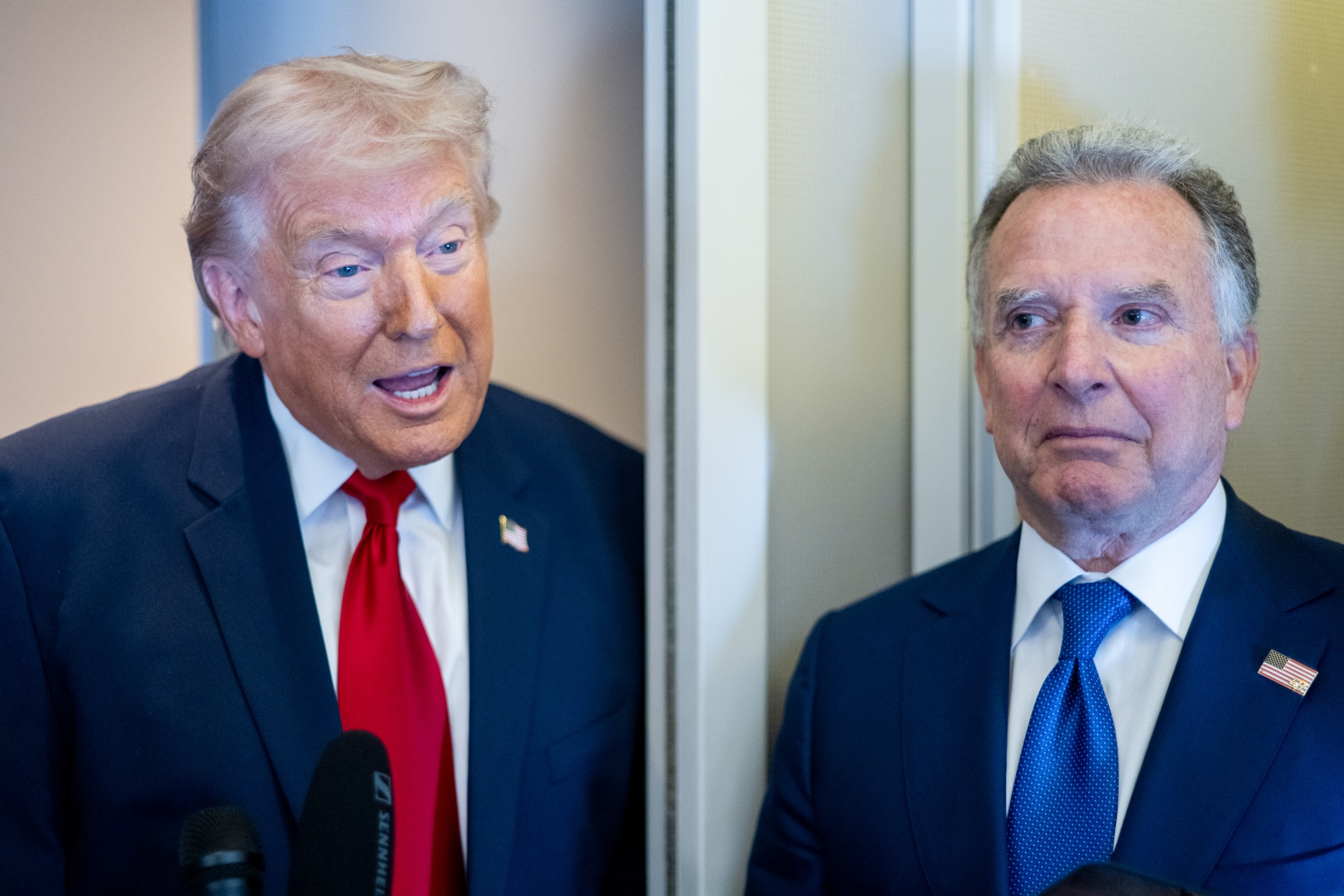
Donald Trump, left, and Steve Witkoff. World Liberty Financial was co-founded by members of the their families alongside other business partners. Both Trump and Witkoff, a real estate developer who serves as the president’s special envoy to the Middle East, were listed as co-founder emeritus on the project’s website.
Photographer: Roberto Schmidt/Getty Images via Getty Images North America
Spring Sale: Save 60% on your first year Get the numbers behind the narratives. Enjoy unlimited access to Bloomberg.com and the Bloomberg app, plus market tools, expert analysis, live updates and more. Offer ends soon. Unlock 60% offWhat You’ll Need to Know TomorrowFor Your CommuteMore from BloombergEnjoying Evening Briefing Americas? Get more news and analysis with our regional editions for Asia and Europe. Check out these newsletters, too:
Explore all newsletters at Bloomberg.com. We’re improving your newsletter experience and we’d love your feedback. If something looks off, help us fine-tune your experience by reporting it here. Follow Us
You received this message because you are subscribed to Bloomberg’s Evening Briefing Americas newsletter. If a friend forwarded you this message, sign up here to get it in your inbox.
|
Saturday, May 2, 2026
Big Oil’s warning








Subscribe to:
Post Comments (Atom)
Today at 2PM the full picture hits the screen.
15 months. Every number. The watchlist goes out tonight. ͏ ͏ ͏ ͏ ͏ ͏ ͏ ͏ ͏ ͏ ͏ ͏ ͏ ͏ ͏ ͏ ͏ ͏ ͏ ͏ ͏ ͏ ͏ ͏ ͏ ͏ ͏ ...

-
Revolutionary Stem Cell & PRP —Start Your Journey Today ...
-
You’ve shown interest in Regenerative Medicine ...


No comments:
Post a Comment