| Read in browser | ||||||||||||||


Welcome back to Pursuits Weekly, our look at the world’s biggest culture stories, as well as ideas and recommendations around travel, dining and art. Sign up here to get this newsletter every Saturday in your inbox. And if you want to see how good you are at telling a $300 hotel room from a $1,950 hotel room, take our quiz! We are not alone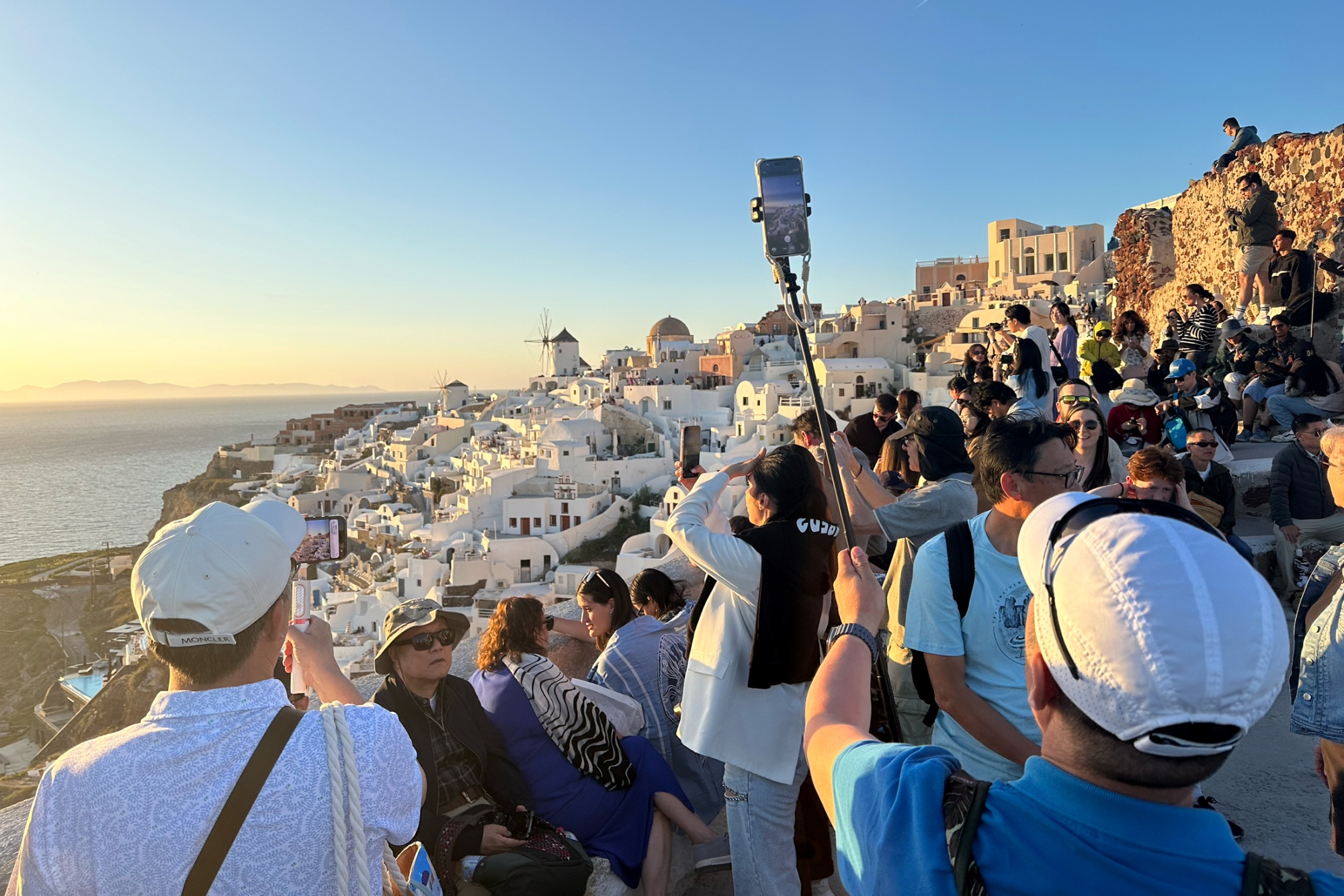
Selfie-snappers in Santorini
Photographer: Brandon Presser/Bloomberg
It’s Memorial Day on Monday, which means the summer travel season for Americans has officially started, with millions of families jetting to a pretty small number of popular destinations. In other words: Crowds. Jamie Davis Smith has stories this week of tourists being pecked by a flamingo on a destination beach in Aruba, or squeezing shoulder-to-shoulder past Santorini selfie-snappers. Small businesses blocked off by all that congestion have a legitimate complaint. And if throngs of visitors end up destroying historical sites in places like Machu Picchu or Cappadocia, that’s worst of all. There are different types of summer crowds, some worse than others, as Lebawit Lily Girma explains. For New Yorkers, many of them are found in the Hamptons, the go-to weekend destination for well-heeled city folk. After Memorial Day, when it comes to snagging a dinner reservation, “all bets are off,” writes Kat Odell. 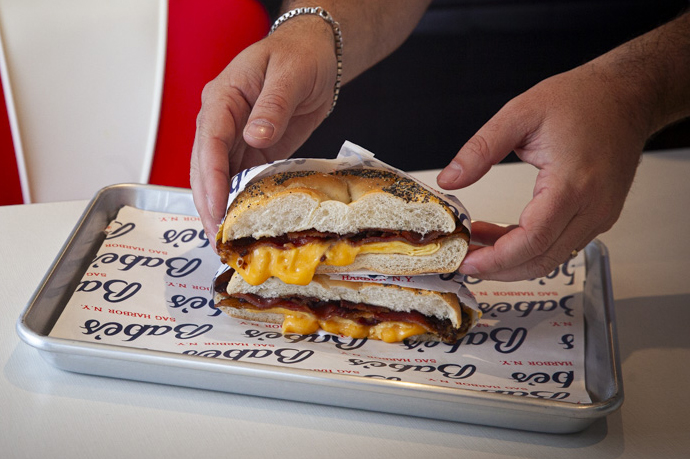
The $12 bacon, egg and cheese at Babe’s is a bargain, by Hamptons standards.
Photographer: Jamie Diamond
With a lot of the East End’s new restaurants coming in at lower price points, you might end up spending more in time than in money. Babe’s, an all-day joint in Sag Harbor specializing in pancakes, burgers and milkshakes, has just 20 seats, the wait for which stretched past an hour even before the summer began. Going off-season doesn’t really help: Bookings at North American Fairmont hotels in the spring and autumn have nearly doubled since 2019. In Europe, Pursuits reporter Sarah Rappaport went to the Amalfi Coast in late April and found plenty of crowds. The temperatures were still cooler and prices were better than peak season, but thanks to cruise ship traffic and social media hype, the streets were sardined. Amalfi’s pedestrian squares were tough to navigate, and rental cars navigating the narrow cliffside roads created highly congested traffic. The most crowded areas: by the ports, where both cruise ships and day trippers from Naples arrived. Rappaport did find one hack by staying in Borgo Santandrea, around a 15-minute drive away from Amalfi. The hotel has a free shuttle service into town, but when traffic gets too bad they send the house boat down the coast instead, making for a much quicker and more glamorous escape from the crowds. That’s not a strategy that works in Rome, of course. 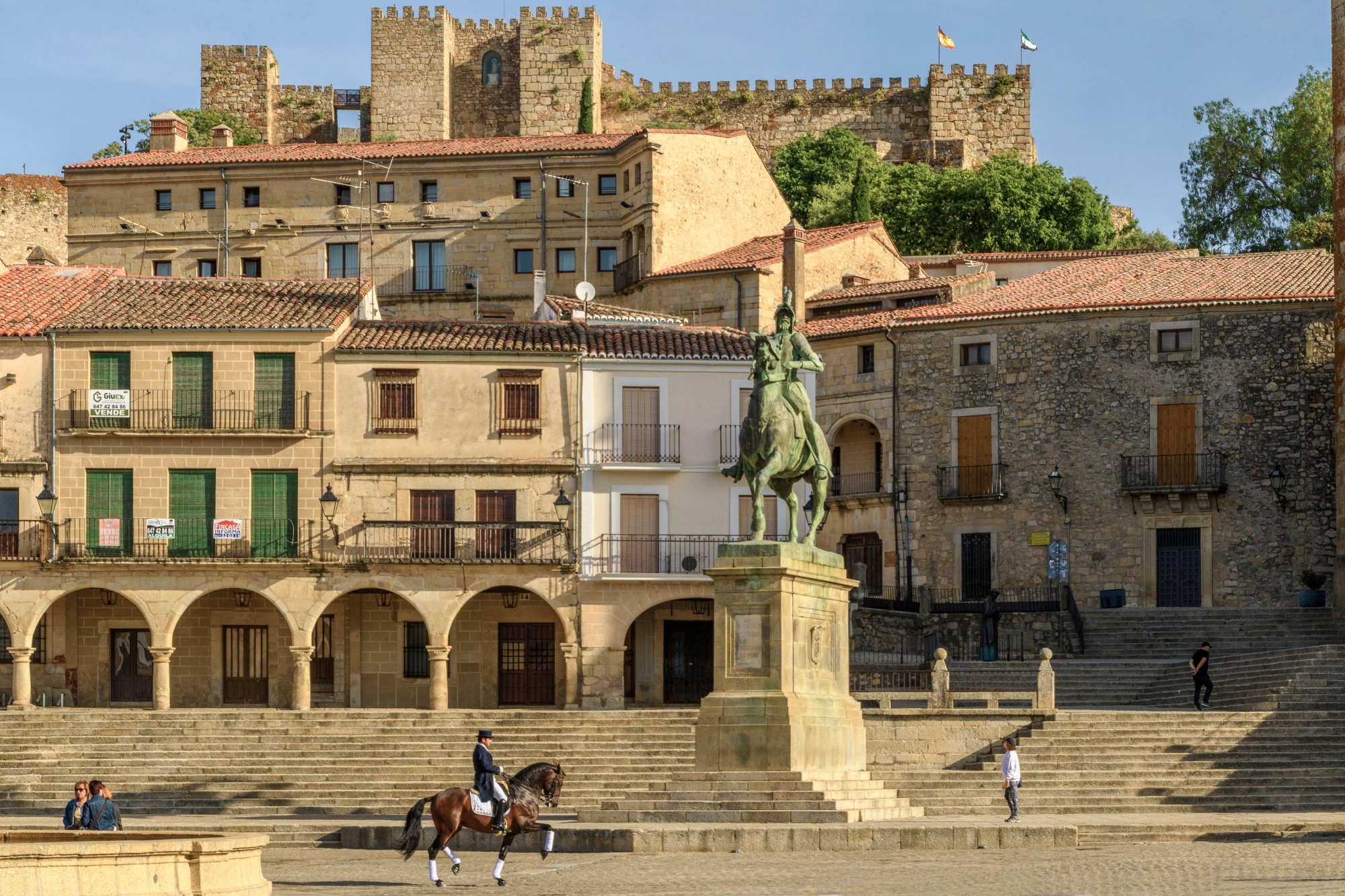
A largely deserted Plaza Mayor, in Trujillo, Extremadura.
Photographer: Teo Moreno Moreno/Alamy
So if you’re allergic to crowds, what should you do? Our 2026 Where to Go list has plenty of ideas, including Dakar, Senegal; Barreal, Argentina; the Scottish Hebrides; and Extremadura, which Paul Richardson describes as the magical corner of Spain tourists haven’t found yet. As for Rappaport, her recommendation would be the Greek mountains — a region where “if you hit traffic, it’s from shepherds guiding flocks across the roads.” The altitude also helps you escape the heat, with temperatures about 14C (25F) cooler than on the beach in Mykonos. Chris Rovzar has an even simpler idea: Why not just stay home? Leaving town, he writes of New York, “means you miss the city in some of its finest moments — long, lazy evenings at sidewalk cafes. Nights at the ballet or the Joyce Theater for their summer dance programs. Public parks with pools that turn into kid soup in the afternoons, and live outdoor music and theatrical performances.” Tables even open up at hot spots like Tatiana and Monkey Bar. While a few European cities do get thronged with tourists during the summer, there’s a good chance your own home doesn’t. The final option is not terrible either, which is to make peace with the crowds — and even learn to enjoy them. Times Square and Piccadilly Circus would be nothing without their tourists. Thrilling travel off the beaten path can be great for your brain, but joining the road more traveled can provide what sociologists call collective effervescence. There’s shared identity and reassuring solidarity in that confluence of humanity! By the numbers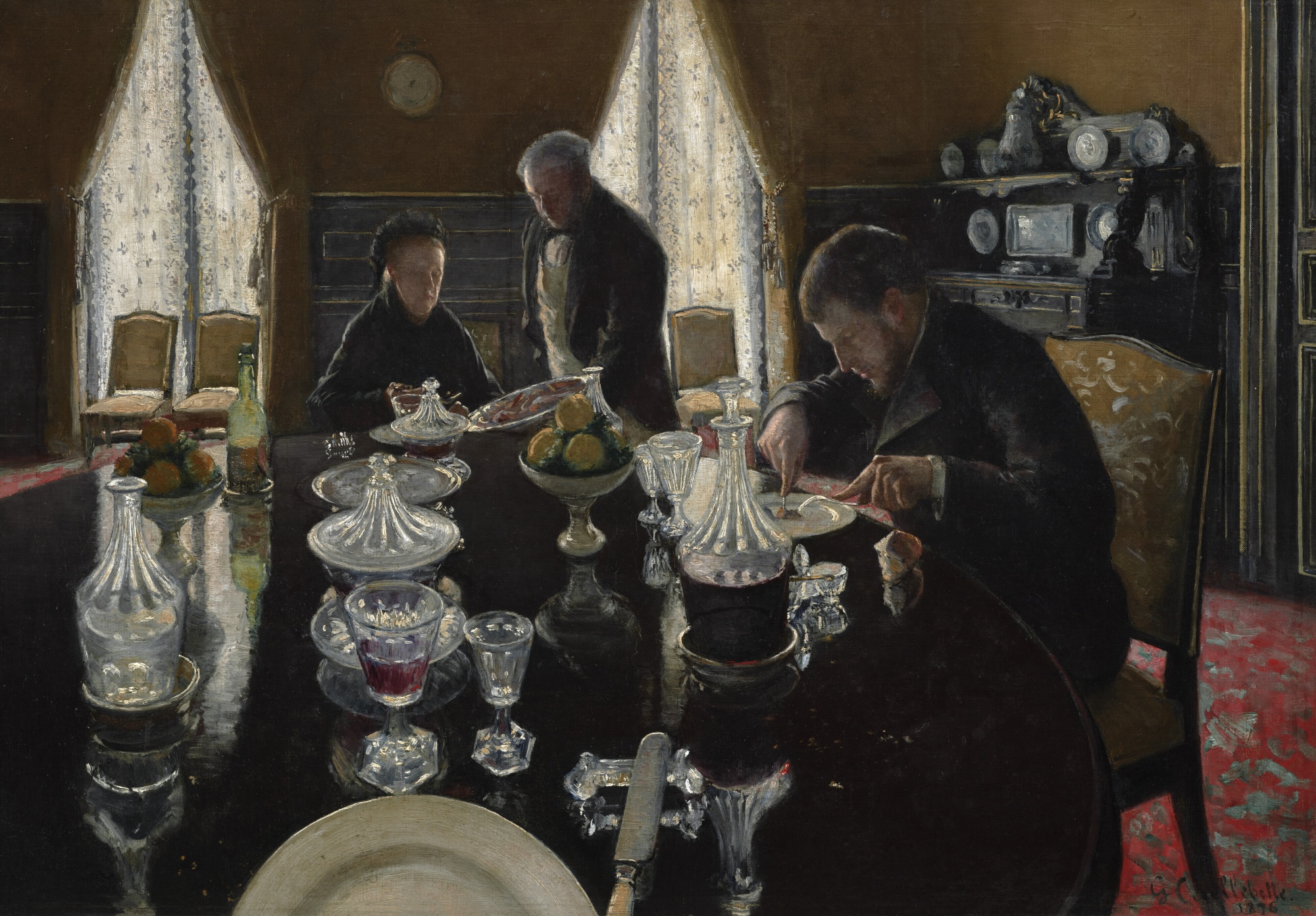
Le Déjeuner, painted from the point of view of the artist seated at the family dining table
Source: Christie’s
150 The number of years that Le Déjeuner, an important and accomplished early work by Gustave Caillebotte, remained in the artist’s family before being sold at Christie’s this week. The painting, featuring portraits of the artist’s butler, brother and widowed mother, sold for $8.6 million. 17,000 The number of nights the White Lotus cast and crew are expected to collectively spend in Cannes hotel rooms while shooting Season 4 of the HBO series. Already, Benoit Berthelot reports, the show has infiltrated the Cannes Film Festival — even if Thierry Frémaux, who has run the festival for the past 25 years, claims he’s never seen an episode. 260 million The number of Tintin books that have been sold globally, as documented in Bloomberg’s new On Books newsletter. (Fun fact: Bloomberg’s newsletters are all written in a web app called Tintin.)
Subscribe
Too tough for F1 drivers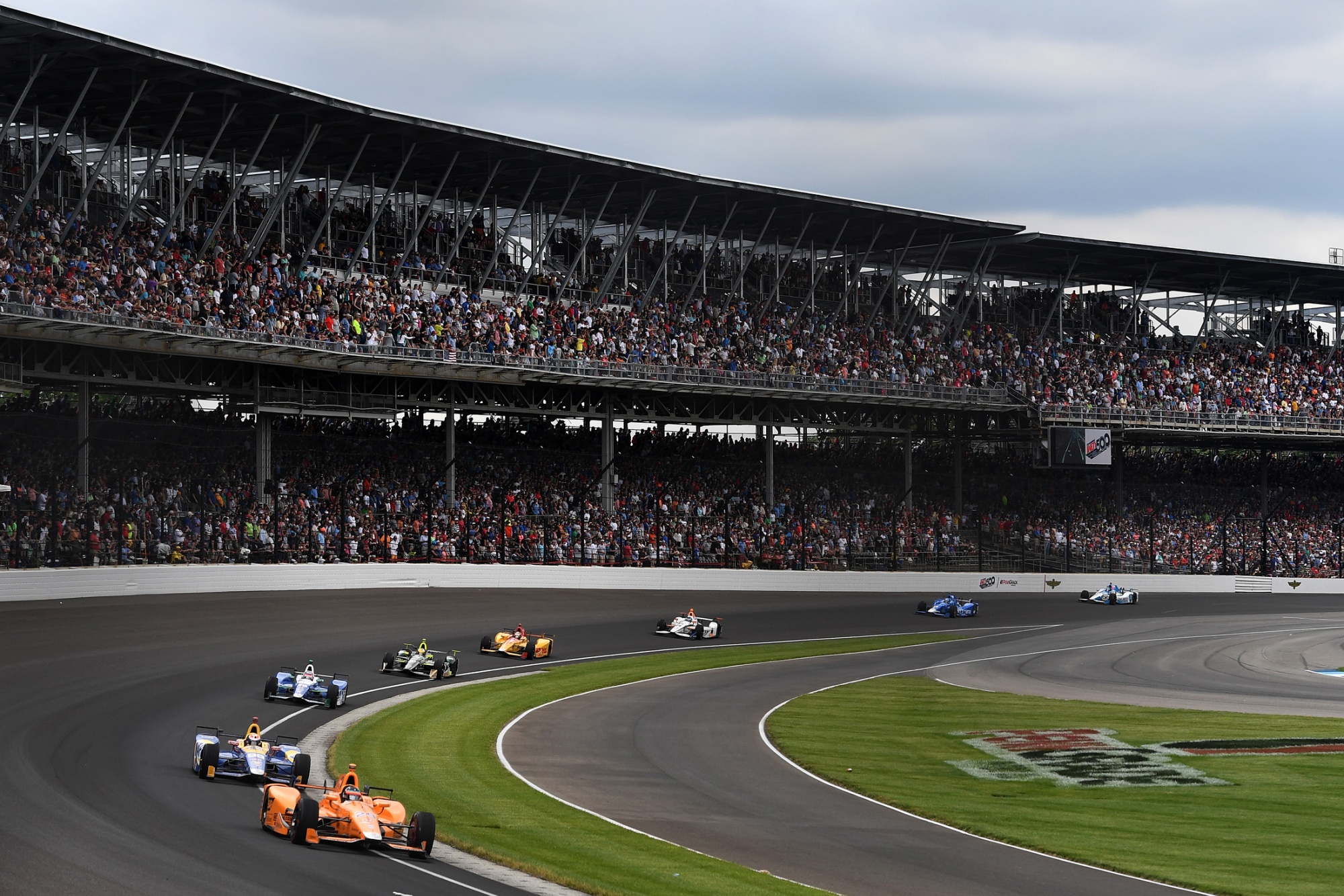
It’s hard to imagine these crowds extending around a course that’s 2.5 miles long.
Photographer: Jared C. Tilton/Getty Images
Car columnist Hannah Elliott writes: Sunday marks the 110th running of the Indianapolis 500. The “Greatest Spectacle in Racing” is the largest single-day spectator sporting event in the world, packing more than 300,000 fans into the Indianapolis Motor Speedway. (By comparison, fewer than 90,000 attended the last World Cup final.) Part of the “Triple Crown of Motorsport” that includes the Formula One Monaco Grand Prix and the 24 Hours of Le Mans, Indy is famous for its extreme difficulty. British driver Graham Hill, who died in a plane crash in 1975, is the only person ever to win all three Triple Crown races. This year, with F1 at unprecedented heights, and with the timeless mass appeal of the Indy 500, I was curious why there isn’t more crossover between the drivers. Red Bull’s Max Verstappen, the four-time F1 World Champion, made waves this month when he jumped into (and sold out) a 24-hour race at the Nurburgring. So why don’t we see Lewis Hamilton or George Russell trying their hand at Indy? I asked Zak Brown, the CEO of McLaren Racing, about it this week on our Hot Pursuit! podcast, and he had a pretty succinct answer: “The Indy 500 scares the majority of the [drivers on the] grid in Formula One.” Indy cars go even faster than F1 cars, and the race’s 500-mile length is more than double anything in F1. When 33 cars come into turn one at 240 mph, “anything can happen,” Brown says, adding that if he brings it up to them, most “don’t want anything to do” with it. How to get golf fit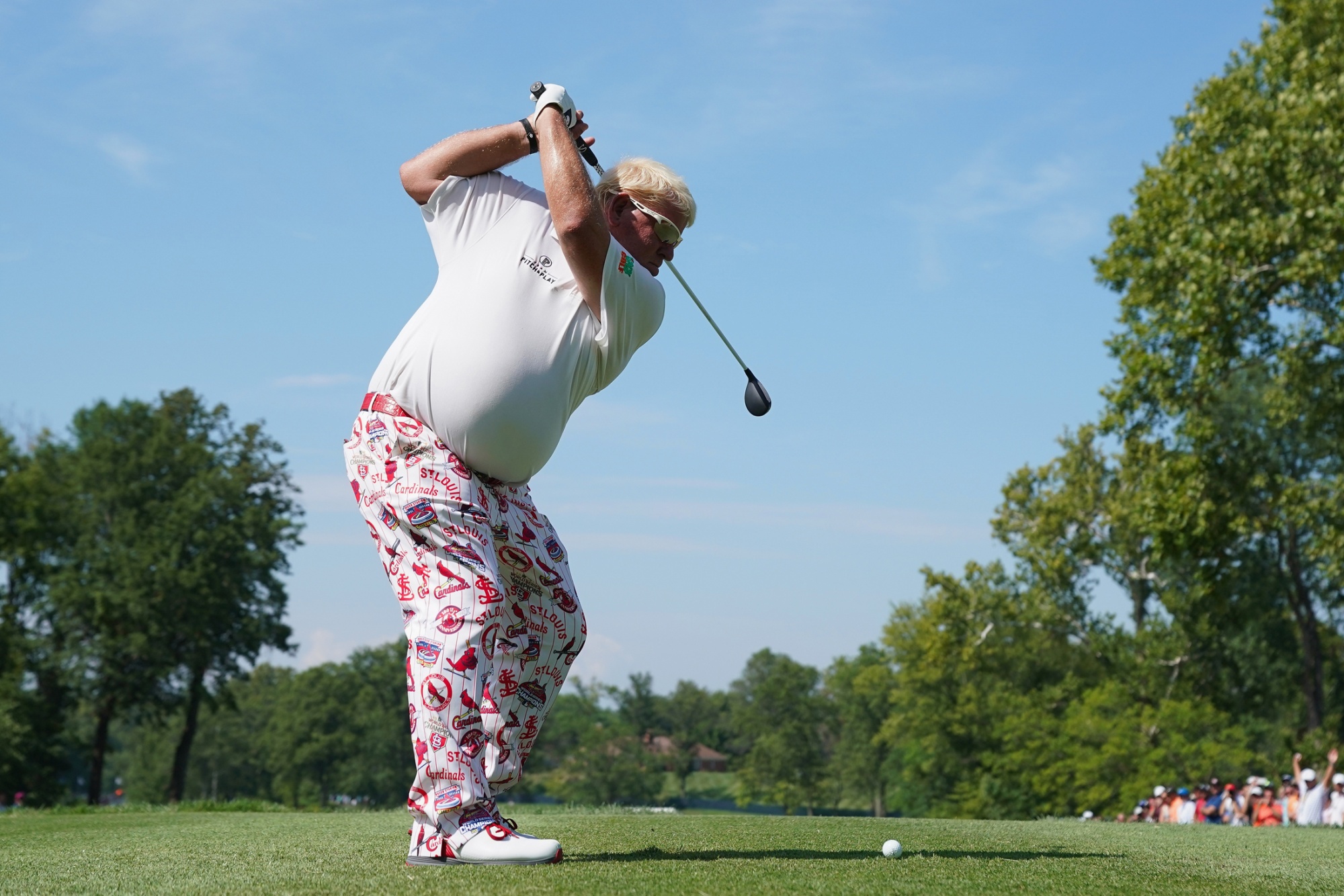
This is the ideal golf body. You may not like it, but this is what peak performance looks like.
Photographer: Ross Kinnaird/Getty Images
Every season for 14 consecutive years, John Daly’s first hit from a golf tee averaged more than 300 yards. (That’s him in the photo above.) In 1997, one of his drives traveled for 498 yards. For all that he doesn’t look particularly athletic, says Ben Salisbury, a golf-fitness expert. “He’s extremely mobile. He’s incredibly powerful.” Serious amateur golfers have been training for their sport for years, cognizant that simply walking 18 holes doesn’t provide sufficient exercise. But they’re not chasing the kind of gains that show up in six-packs and shirt-stretching biceps. Instead they’re doing isometric drills and exercises including plyometric box jumps, one-legged deadlifts and Paloff presses, all designed to improve indicators like thoracic spine mobility. That’s according to Michael Croley, someone who knows what those words mean. It turns out that getting “golf fit” isn’t all that different to what you need to do to improve your performance in football, baseball or basketball. “A squat is still a squat,” says Lindsay Becker of Buckeye Performance Golf in Dublin, Ohio. It adds muscle, which helps unlock explosiveness, leading to speed in the golf swing. And that, ultimately, is how you hit a very small ball a very long distance.
Read more
One Very Specific Recommendation: Yoko Ono’s puzzle pieces
If you visit “Yoko Ono: Music of the Mind” in Los Angeles you can take away a free souvenir.
Photographer: Hannah Elliott/Bloomberg
Yoko Ono’s participatory Cut Piece (1964) may be her most radical work, but it was the tiny blue puzzle piece from her 2001 work Helmets (Pieces of Sky), that stayed with me this week after seeing the artist’s museum show, “Yoko Ono: Music of the Mind,” at the Broad in Los Angeles through Oct. 11. Helmets (Pieces of Sky) today feels more relevant and urgent than ever, reminding us that art is a unifying force, and that we are all connected as part of a bigger masterpiece. I put my puzzle piece in a pretty ash tray on my coffee table at home, so I can see it every morning and imagine a beautiful future. Just like Yoko. —Hannah Elliott More from Bloomberg Ideas & Culture
New for subscribers: Free article gifting. Bloomberg.com subscribers can now gift up to five free articles a month to anyone you want. Just look for the “Gift this article” button on stories. (Not a subscriber? Unlock unlimited access and sign up here.) We’re improving your newsletter experience and we’d love your feedback. If something looks off, help us fine-tune your experience by reporting it here. Follow Us
You received this message because you are subscribed to Bloomberg’s Bloomberg Pursuits newsletter. If a friend forwarded you this message, sign up here to get it in your inbox.
|
Saturday, May 23, 2026
Avoid the summer crowds






Subscribe to:
Post Comments (Atom)

-
Bloomberg Evening Briefing Americas View in browser Who's paying for Donald Trum...
-
PLUS: Dogecoin scores first official ETP ...


No comments:
Post a Comment