|
If you’re a commencement speaker at a graduation ceremony, your primary goal is to say some nice words that will inspire the educated hatchlings in front of you to venture forth into the world and change it for the better. Your secondary goal is much simpler: Don’t get booed. It sounds easy!! But many have failed. I know Harrison Butker’s name only because he gave an incredibly tone-deaf speech in 2024 and got condemned by an order of nuns for telling female degree holders to become homemakers. Now, I also know Gloria Caulfield’s name — but not for the same reason. Standing in front of a room full of arts and humanities majors whose job prospects are incredibly bleak, the real estate executive extolled the promise of AI, which she said will lead to “the next industrial revolution.” She was met with a cacophony of boos from the University of Central Florida’s Class of 2026. Dave Lee says a similar “tense anti-AI sentiment” was also present during Marquette’s graduation ceremony on Saturday, where Adobe’s global head of AI and agentic systems, Chris Duffey, took the podium. When the university first announced he would be the speaker, alumni called it “embarrassing” and the student news site ran an editorial protesting the choice, saying graduates deserve “a commencement speech, not a Silicon Valley lecture.” Graduates at Carnegie Mellon University in Pittsburgh felt differently. On the same weekend, they cheered as Nvidia CEO Jensen Huang addressed them. “This is your time,” he said. “AI is not just creating a new computing industry. It is creating a new industrial era.” Easy to say that when you’re at the helm of a company that is now worth more than every single healthcare stock in the S&P 500 combined:
The divergence in sentiment of new grads shows how difficult it is to strike the right tone in today’s landscape, says Dave. “Speakers wading into the subject of AI know they are no less a student of it than the people they are addressing. What they can offer is the age-old advice that could have been given at any commencement address at any time in the last century or more, which is: Work hard, have integrity and hope for the best.” It’s also sound advice for the schools themselves. The Bloomberg Editorial Board says more than a quarter of nonprofit four-year colleges and universities in the US are at risk of closing or merging within the next decade because enrollment is in free fall amid sliding academic standards. “Simply put, graduates want jobs,” it says. “Unemployment among young adults with a bachelor’s degree remains high, and uncertainty prevails about the effect of artificial intelligence on entry-level work.”
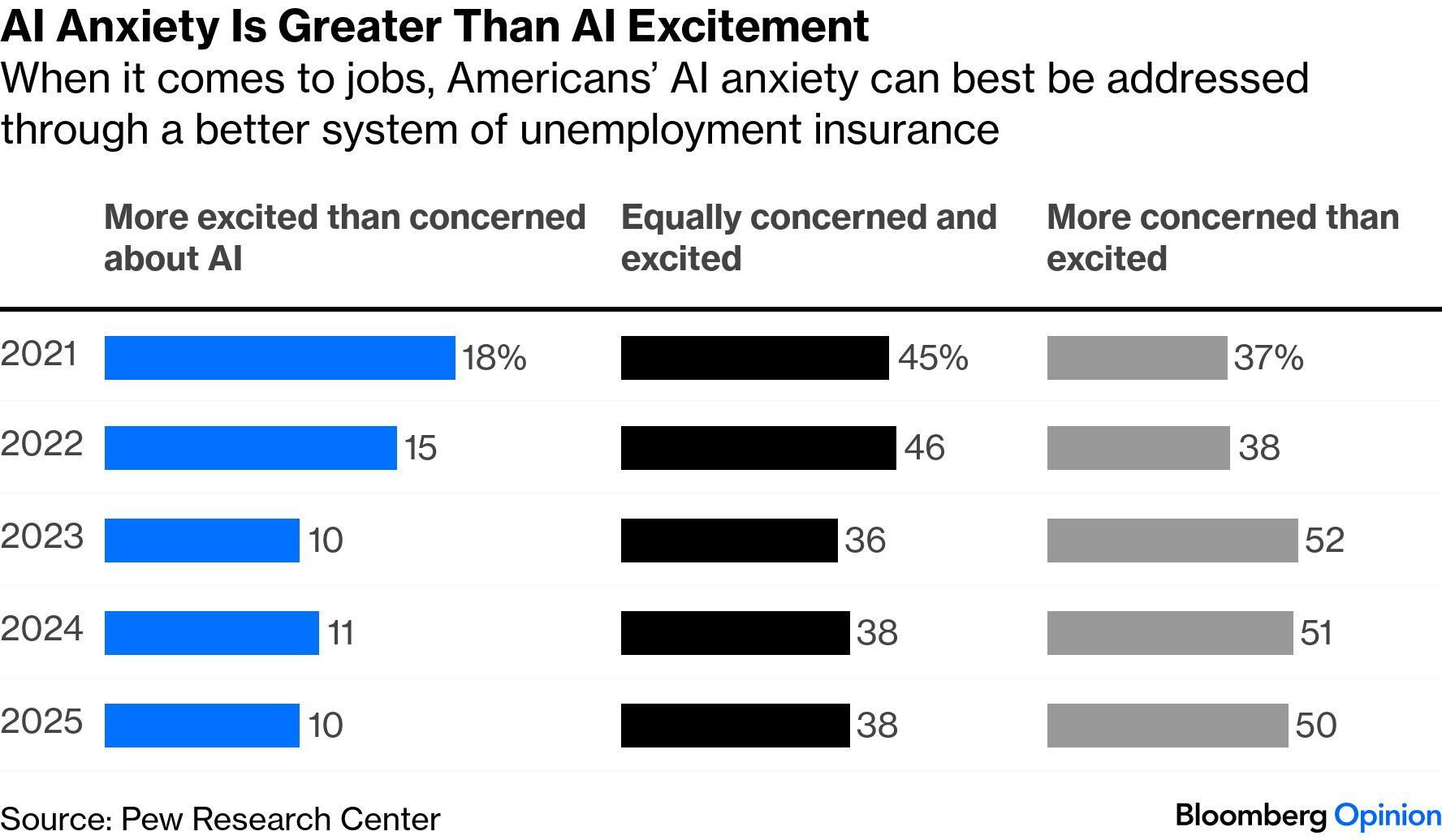
The board’s advice for educators: “Liberal arts colleges will need to demonstrate that the skills they were founded to impart — critical thinking, civic literacy, empathy, curiosity — are compatible with the jobs of tomorrow.” What will those jobs of tomorrow look like? And what happens if you can’t secure one? The fear of being jobless because of AI doesn’t just haunt the nightmares of heavily indebted graduates — we all feel it, even veterans of the workforce. To alleviate those worries, Kathryn Anne Edwards says, “America needs a long-term unemployment system that’s both effective and reassuring.” That means giving job-seeking people the resources they need — moving assistance, entrepreneurial support, vocational training — to pivot and adapt. Who knows, maybe a former Amazon employee could end up having a very lucrative career in commencement speechwriting. We could really use some more competence in that arena. Bonus AI Future Reading: “Chipflation” isn’t just a problem for our tech overlords who somehow need to earn a financial return on their investments. — Chris Bryant
Starmer Is Kicking and Screaming |
Here’s a completely hypothetical question: If 90 of your colleagues thought you were terrible at your job and asked you to quit, would you do it? I am a people pleaser through and through, so I would probably leave immediately. This guy, however, is seemingly determined to stick around:

Photographer: Jose Sarmento Matos/Bloomberg
Dozens of MPs from Keir Starmer’s own party, as well as members of his cabinet and even the cat, have asked him to politely vacate the premises of 10 Downing Street. And yet! He’s choosing to ride out his prime ministership until the bitter end. “Much will depend on how exactly Starmer exits, and the timetable that emerges for choosing a successor,” Rosa Prince writes. “If he keeps clinging on grimly, daring his ministers to force him out — as with Johnson four years ago — the starting gun could be fired almost immediately. That would favor Wes Streeting, the ambitious health secretary, and to a lesser extent the former Deputy Prime Minister Angela Rayner. A contest featuring only this flawed pair would be a disaster.” Read the whole thing. |











No comments:
Post a Comment