| Read in browser | ||||||||||||||

Some of Europe’s top companies bought carbon credits generated by facilities in central China. Yet when Bloomberg reporters visited the region, some projects did not appear to exist at all. Read an extract below and see the full story, along with responses from authorities, on Bloomberg.com. Empty projectsBy Petra Sorge, Natasha White and Hayley Warren Among the yellow-brown hills of central China’s Loess Plateau, the energy industry is booming. So is the business of emissions reduction. European companies have funded a number of dry-gas facilities in the area, which process gas containing little or no liquid hydrocarbon. Those companies have also financed projects that generate carbon credits, primarily by capturing pollutants that would otherwise leak into the atmosphere. It’s a highly bureaucratic, but potentially lucrative, process. A project developer — either the facility owner, or someone else — files a proposal to a carbon-crediting program explaining how emissions will be cut and what equipment will be used. A third-party auditor verifies the site and the plan. Finally, the project can be registered, approved by authorities and implemented, then the developer can begin selling credits. 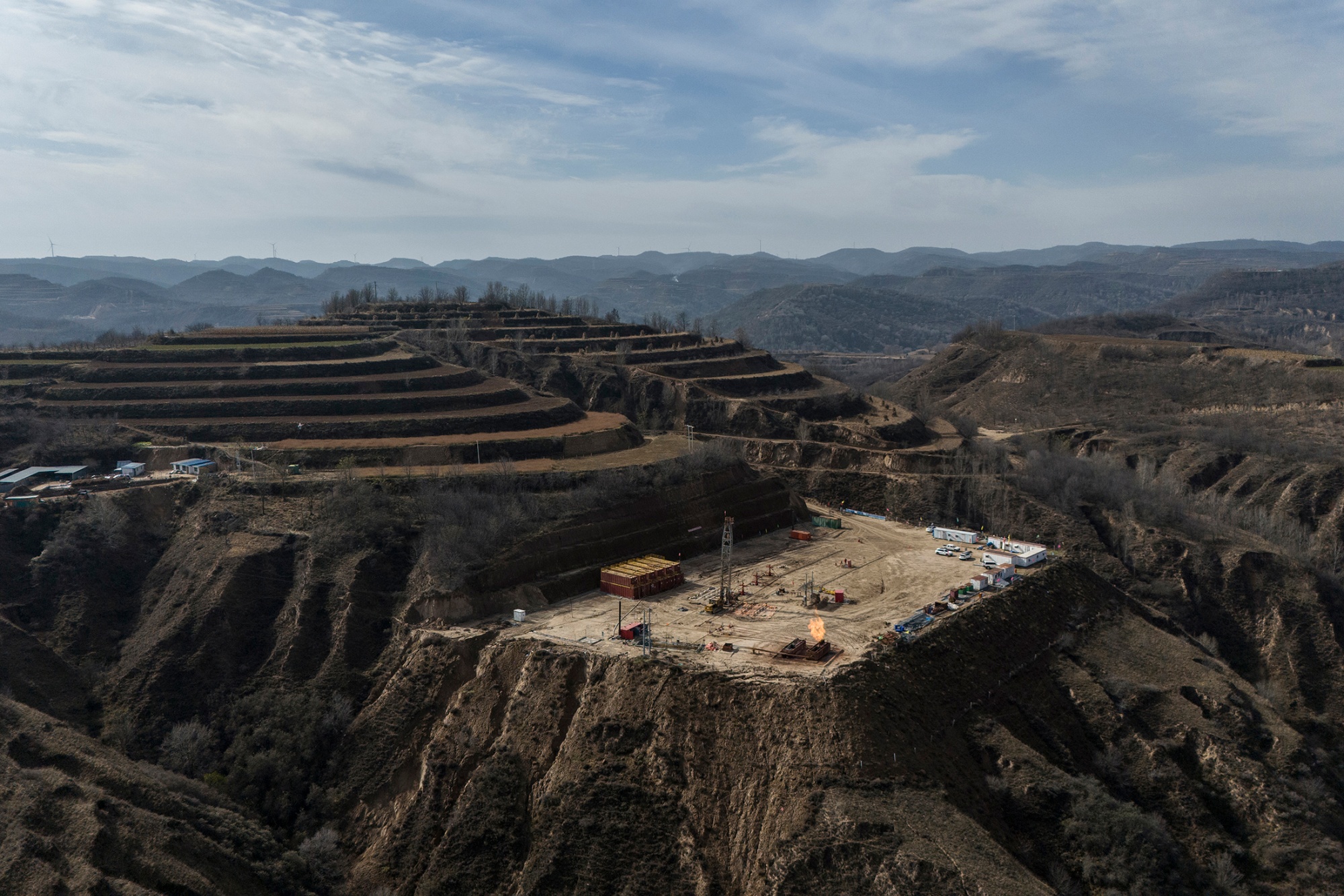
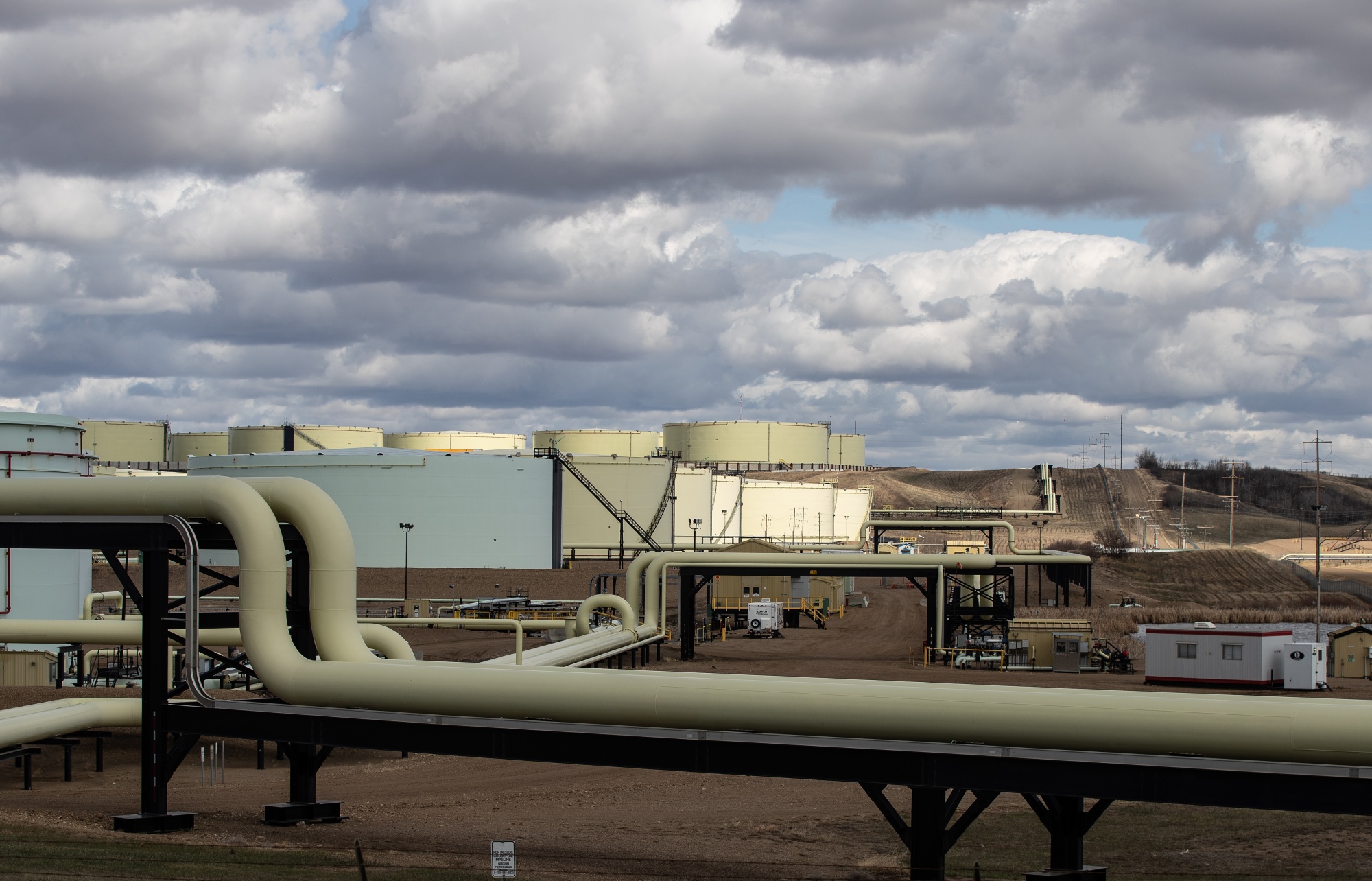
A work site in the Changqing oilfield, Shaanxi Province, China.
Source: Bloomberg
Projects in the Changqing oilfield claiming to avoid almost 120,000 tons of CO2e emissions were registered with Austrian and Polish authorities in 2023 and with Luxembourg in 2021, according to a verification report and European Union data. But when Bloomberg reporters visited some of the locations listed in the documents in November and BloombergNEF analysed drone footage and satellite images of the vicinity, the projects did not appear to exist. One site was still under development and there was no sign of the equipment needed to trap emissions. In Germany, a scandal over Chinese credits sold into Europe’s government-run upstream emissions reduction (UER) scheme first erupted more than two years ago. Forty-five carbon-offset projects selling credits to major energy companies have been found by German authorities to be “suspicious,” to have overstated their environmental impact or to be fake. The authorities have withdrawn UER credits generated by two-thirds of these projects, an agency spokesperson said. Almost all of the sponsors are appealing the decisions, including one that has compensated for the credits, the spokesperson added. While the carbon-credit market has long been dogged by concerns about its integrity, entirely falsified projects have been virtually unheard of, according to Jürg Füssler, managing partner at consultancy Infras and a former UN adviser on carbon credits. The 30 invalidated projects had claimed to save 2.1 million tons of carbon dioxide, roughly equivalent to the pollution emitted by around 500,000 cars or the power use of about 300,000 homes in a year. While the credits have now been voided, the companies and individuals behind the projects are unlikely to face any legal consequences. A fraud investigation into 17 employees at the European verification bodies that approved the projects was closed in January due to lack of evidence and the companies themselves cannot be criminally prosecuted under German law. A spokesperson for the German Environment Agency said its investigations had clearly found that some projects relied on incorrect documentation, failed to deliver the promised emissions reductions or were not properly validated and verified as required. They added that while the projects were unlawful under administrative law, this does not automatically imply criminal liability. None of the companies that bought the credits — including BP Plc, Électricité de France SA, Exxon Mobil Corp., MB Energy, MOL Group, OMV AG, the German-controlled subsidiary of Rosneft PJSC, Shell Plc, TotalEnergies SE and Vitol SA — are required to pay a penalty if avoided carbon emissions were inaccurately claimed. That’s because the offsets were purchased in good faith, a spokesperson for Germany’s General Customs Directorate said. In other words, the companies were using the system as it was designed. Yet Germany is just one of at least nine European countries where carbon credits were purchased from projects exhibiting similar concerning characteristics, an investigation by Bloomberg News and BNEF has found. Some projects don’t appear to exist at all, site visits by reporters and drone footage analysis by BNEF show. Others involved a project developer-turned-auditor who — in a system that allowed developers to employ their own watchdogs — treated the two professions as a revolving door. Collectively, the projects sold credits equivalent to almost 500,000 tons of CO2 to countries other than Germany. But the total claimed by flawed projects may well be much higher. The UER system shows how even carefully designed carbon-credit models can be abused. “The apparent failure of the rules for reporting, verification and governance in the UER case is particularly problematic because it was run by governments,” Infras’ Füssler said. “Such crediting systems need stringent rules, consistent oversight, adequate resources and robust sanction mechanisms in all involved authorities.” This year was supposed to be a turning point for carbon markets, with the United Nations’ long-delayed country-to-country trading system coming into force and airlines preparing to enter a mandatory program to offset their emissions. Spurious credits undermine climate-change mitigation efforts and drive down the value of legitimate emissions-reduction projects, meaning communities and businesses that invest in the credits take a financial hit. The European Commission has not specified whether the same auditing firms will be involved in the new system, but officials have privately expressed concern that it will be hard to avoid. The UER’s failings showed, at best, gross negligence by some of the leading auditors of carbon credits, said Axel Michaelowa, senior founding partner at climate group Perspectives and senior researcher at the University of Zurich. “All this is stuff we do not want to see in international carbon markets.”
Read the story
EU climate target90% The European Union aims to cut emissions by 2040 by this amount compared to 1990 levels, including through the limited use of “high-quality international carbon credits”. Tougher rules“Significantly stricter controls are needed to verify on-site whether the supposed production facilities even exist and are producing what they claim to be producing.” Sandra Rostek Head of the Berlin Office at the German Biogas Association and vice-chair of the victims’ initiative Stop Climate Fraud Battery nerds are profitingWith the mercury tipping 40 degrees Celsius (104 degrees Fahrenheit) on a summer evening in Sydney this January, barrister Ben Phillips spotted a lucrative opportunity: Switch off the air-conditioning. Millions of households were sweltering in the heat, and cranking up cooling devices to compensate. But Phillips’ home, in the inner suburb of Marrickville, was tolerable after pumping out AC powered by rooftop solar panels all day. A text message from his retailer Amber Electric Pty had alerted him that the strained grid was currently paying $10 per kilowatt-hour for power — roughly 140 times normal prices. He’s part of a rapidly growing community of battery buffs — Australian householders making their home solar-and-battery setups into the sort of nerdy hobby that turns middle-aged people on to vinyl records, bonsai and baking. 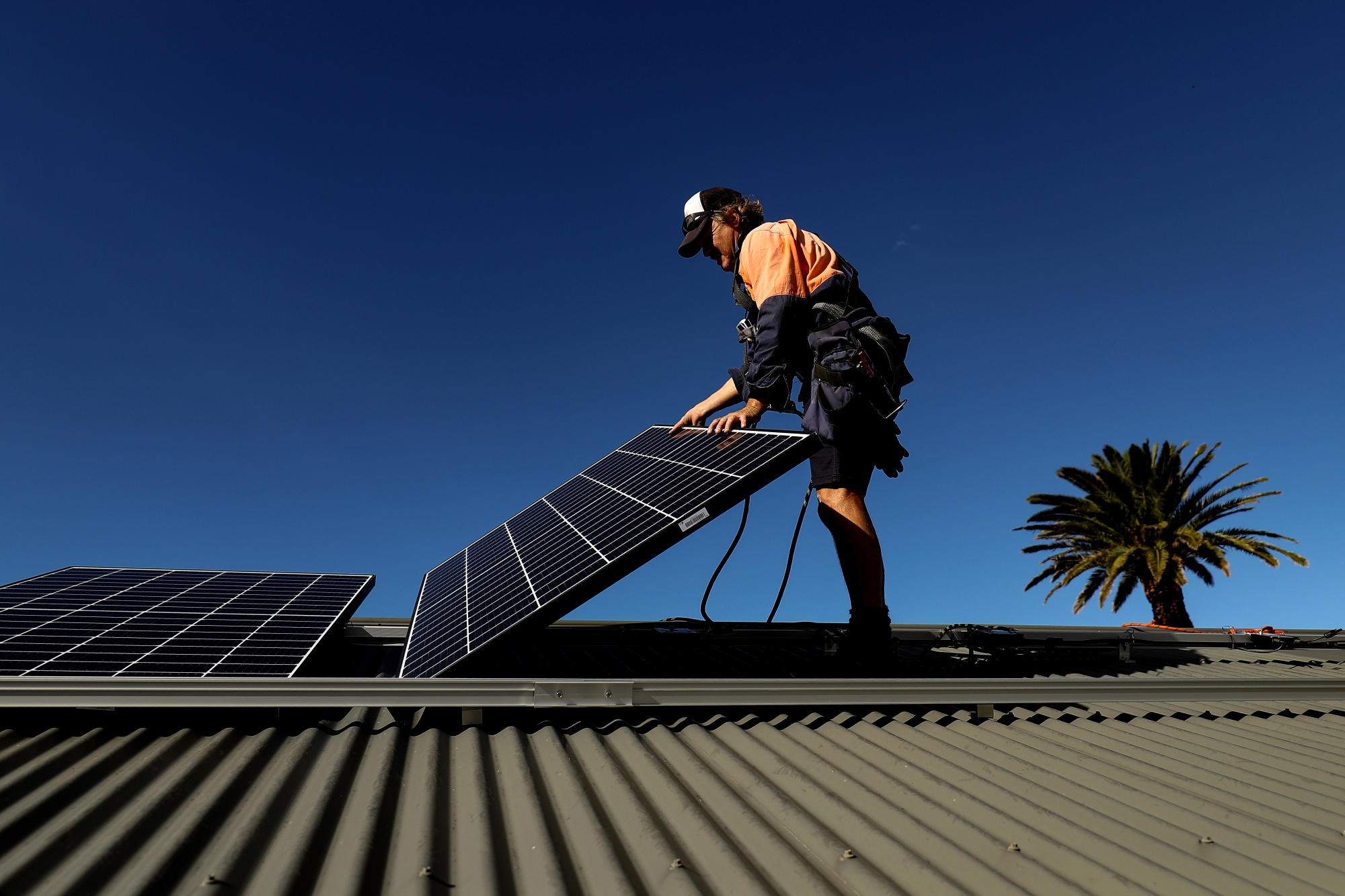
Solar panels onto the rooftop of a residential property in Sydney.
Photographer: Brendon Thorne/Bloomberg
The revolution offers a lesson in how to manage the next stage of the energy transition. Grids are going from dependence on a small number of old-style generators that can be switched on and off to huge distributed fleets of solar panels, wind turbines, and batteries. These must respond rapidly to changes in both supply and demand that often push prices into negative territory. The government expects the program to deliver 40 gigawatt-hours of home batteries by 2030. If charged and discharged daily, that’s sufficient to provide about 6% of the country’s electricity needs. It puts the nation on track to hit a target of 82% renewables in generation by 2030, up from 8.7% in 2010, an executive at the government’s Clean Energy Regulator said this month. On LinkedIn, Facebook and Reddit, solar dads and climate mavens are exchanging information on which equipment to buy and which installer to use; crowdsourcing explanations for anomalous grid charges; laying out their long-term trading strategies; tracking the effect of bushfire smoke on their home set-ups; and debating which utility has the most competitive rates.
Read more
Deadly mine disasterBy Bloomberg News Authorities at a briefing late Saturday lowered the death toll to 82 from an earlier estimate of 90. They said two people remain missing and 128 are hospitalized after Friday’s blast, according to Xinhua. Rescue efforts continue. Chinese President Xi Jinping urged stronger risk inspections and hazard controls, and called for heightened vigilance during the current season, when heavy rain and floods are more common. Premier Li Qiang echoed the directives, seeking transparent information disclosure and tighter enforcement of safety responsibilities across key sectors, Xinhua News Agency reported. 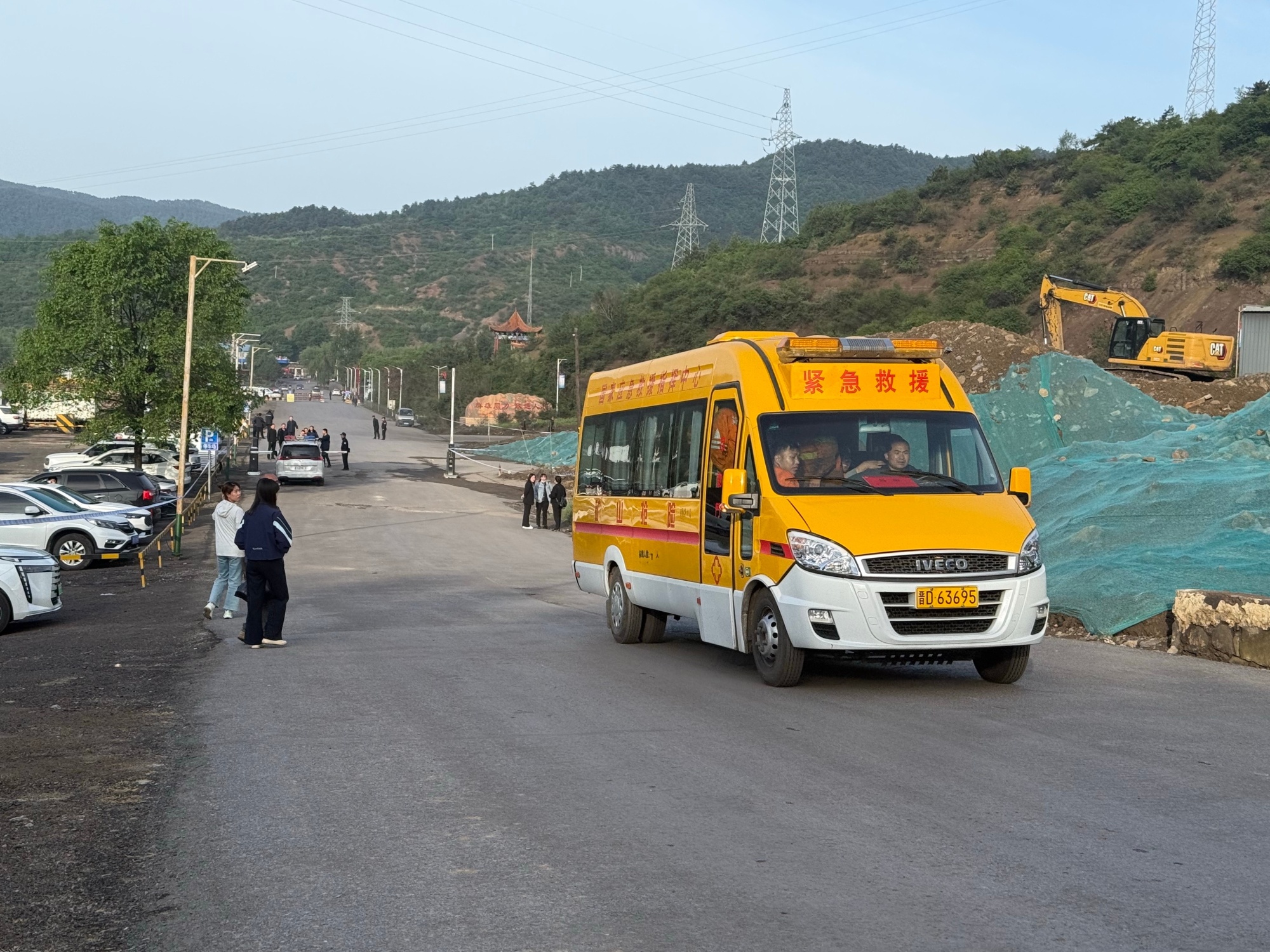
Rescuers at the site of the Liushenyu coal mine in Changzhi, Shanxi province.
Photographer: Cao Yang/Xinhua/AP via AP Photo
China’s State Council investigation team will conduct “a rigorous and thorough investigation to fully ascertain the causes of the accident, clarify the responsibilities of local authorities, industry regulators and the company, and impose severe penalties in accordance with laws and regulations,” Xinhua reported. The investigation team also called for a nationwide review of mining safety measures and a crackdown on illegal practices, including hidden work sites, falsified monitoring data, unclear worker counts, and improper subcontracting.
Read more
|
 |
 |
 |
 |
 |
You received this message because you are subscribed to Bloomberg’s Green Daily newsletter. If a friend forwarded you this message, sign up here to get it in your inbox.
| Unsubscribe Bloomberg.com Contact Us |
Bloomberg L.P. 731 Lexington Avenue New York, NY 10022 |
 |
| |  |




No comments:
Post a Comment