| Read in browser | ||||||||||||||
Welcome to Balance of Power, bringing you the latest in global politics. If you haven’t yet, sign up here. Canada may not want be the 51st US state, but it’s increasingly acting like the 28th state of the European Union — at least in spirit. Since taking office last year, Prime Minister Mark Carney has made cozying up to Europe a core part of his strategy as he tries to break Canada’s economic and security dependence on the US. He’s repeatedly described Canada as the “most European of non-European countries,” and is forging closer ties on defense, trade and diplomacy. Canadian Foreign Minister Anita Anand dropped by an EU foreign ministers’ meeting in Brussels yesterday. 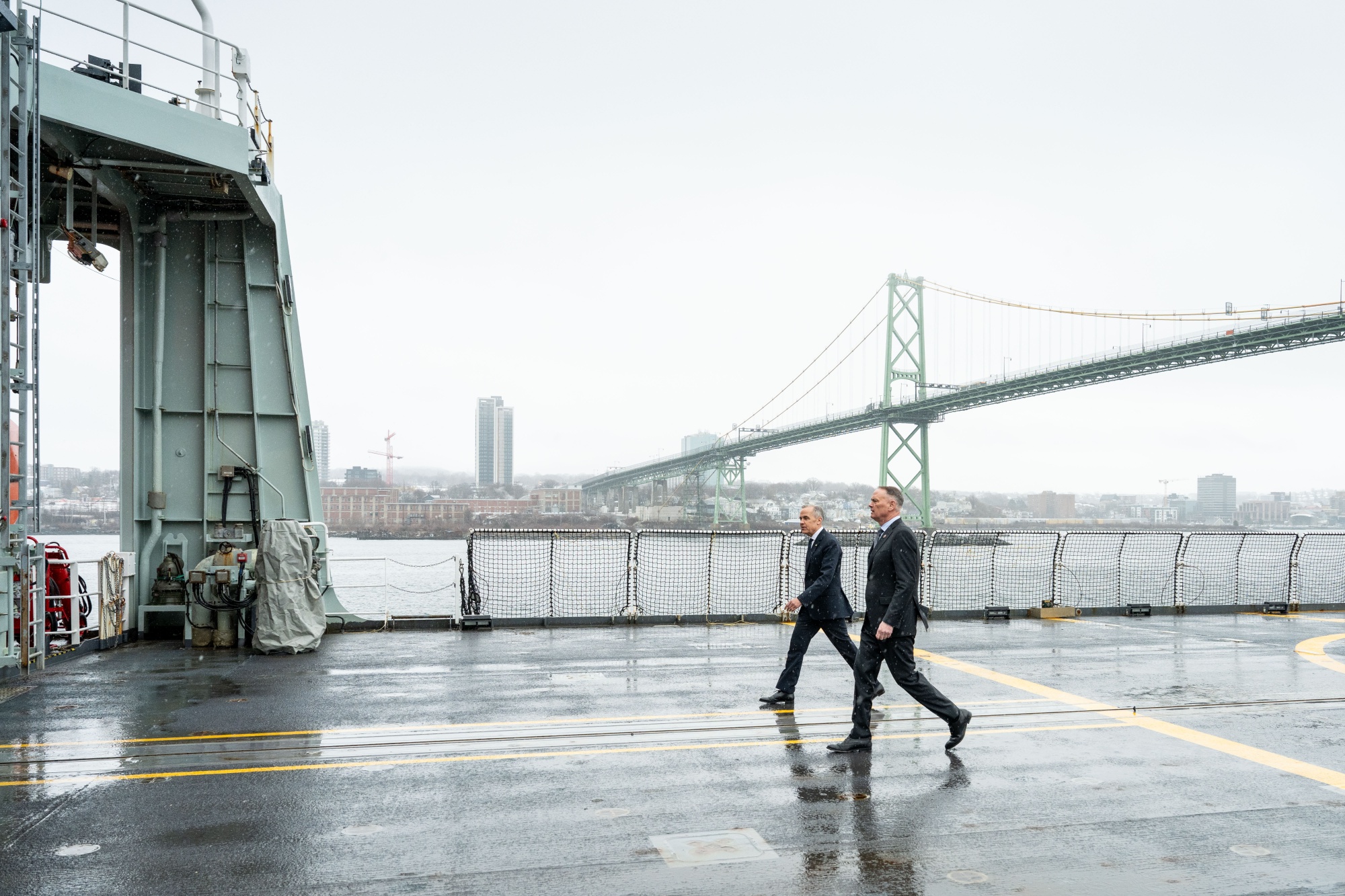
Carney and Defence Minister David McGuinty at the HMC Dockyard in Halifax, Canada, on March 26.
Photographer: Dean Casavechia/Bloomberg
The Canadian leader attended the European Political Community Summit in Armenia last week, and met the German chancellor in Norway in March. The coming weeks will see Carney in France for the Group of Seven, while Irish Prime Minister Micheál Martin has also invited him to visit. Carney is on familiar turf. As Bank of England governor during the 2016 Brexit referendum, he made clear the economic risks of the UK quitting the EU. A decade on, it was in Europe, at Davos in January, that he unveiled his middle powers strategy of working with like-minded nations to counter coercion by global giants. Military spending is at the forefront of the burgeoning Canada-Europe relationship. Carney is pouring billions of dollars into defense, and he’s made it an explicit goal to reduce the amount spent on American-made equipment. Canada is the only non-European country to join the EU’s military procurement program known as SAFE, and European firms are making a hard charge for submarine and fighter-jet contracts. Yet Canada still has just one land border, and it happens to be with the world’s largest economy — about two-thirds of exports still flow south. With the US-Mexico-Canada Agreement coming up for re-negotiation, Carney has to step carefully in making new best friends. — Brian Platt 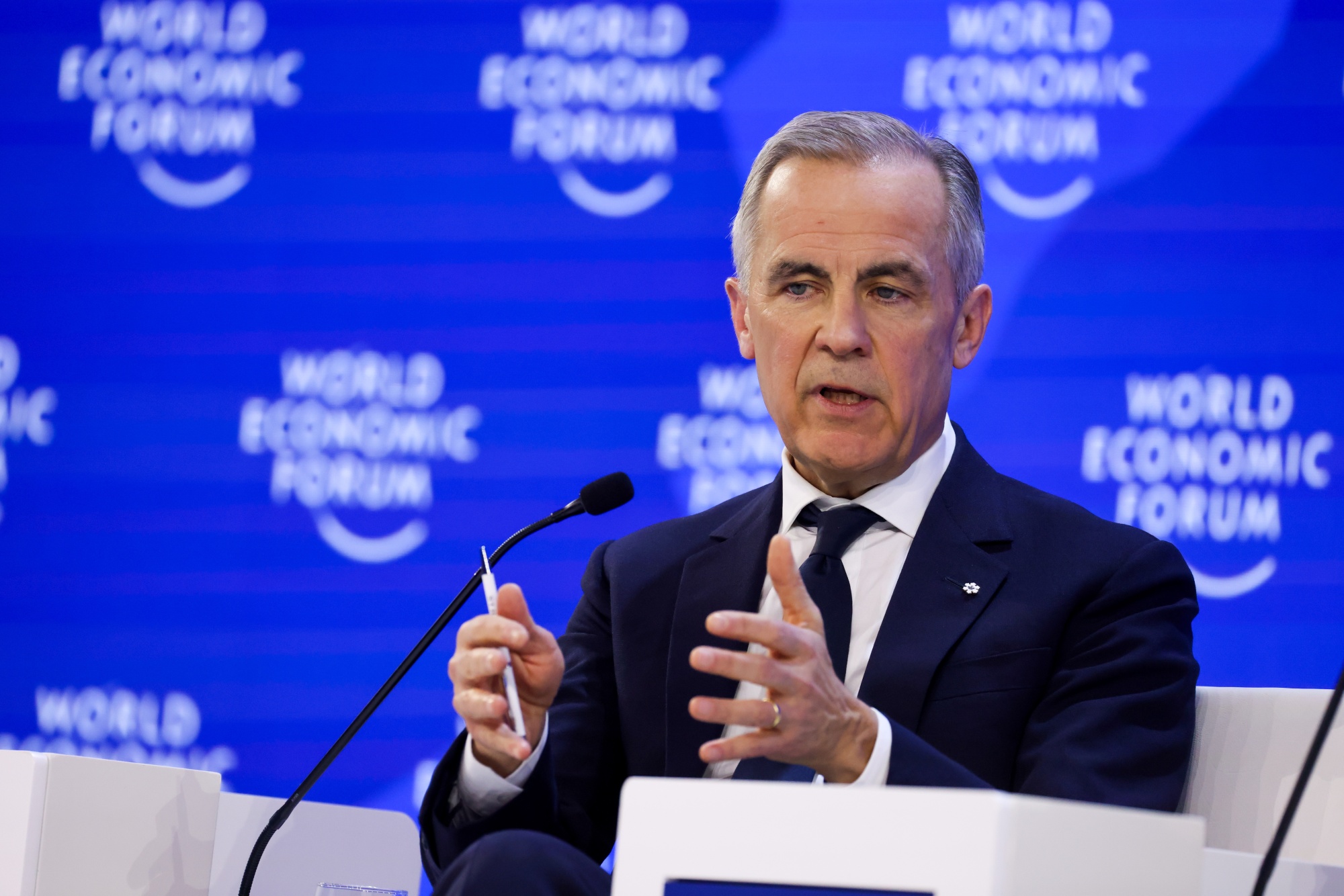
Carney at the World Economic Forum in Davos on Jan. 20, where he laid out the concept of middle powers working together.
Photographer: Krisztian Bocsi/Bloomberg
Global Must ReadsDonald Trump will meet his Chinese counterpart, Xi Jinping, in Beijing on Thursday for a summit that will be dominated by discussions on trade and the Iran war, the White House said, after the US president issued a warning that the ceasefire in the Gulf was on “life support.” The US stepped up the economic pressure ahead of the meeting by sanctioning a dozen entities and individuals over the sale of Iranian oil to China. Keir Starmer faces growing pressure to step down as Britain’s prime minister after dozens of members of Parliament, including Cabinet allies, joined calls for him to set out a timetable for his departure. A defiant Starmer nevertheless told a Cabinet meeting today that he intends to stay on, saying that “the country expects us to get on with governing.” UK stocks, the pound and gilts all fell in London trading on the prospect of more political upheaval. 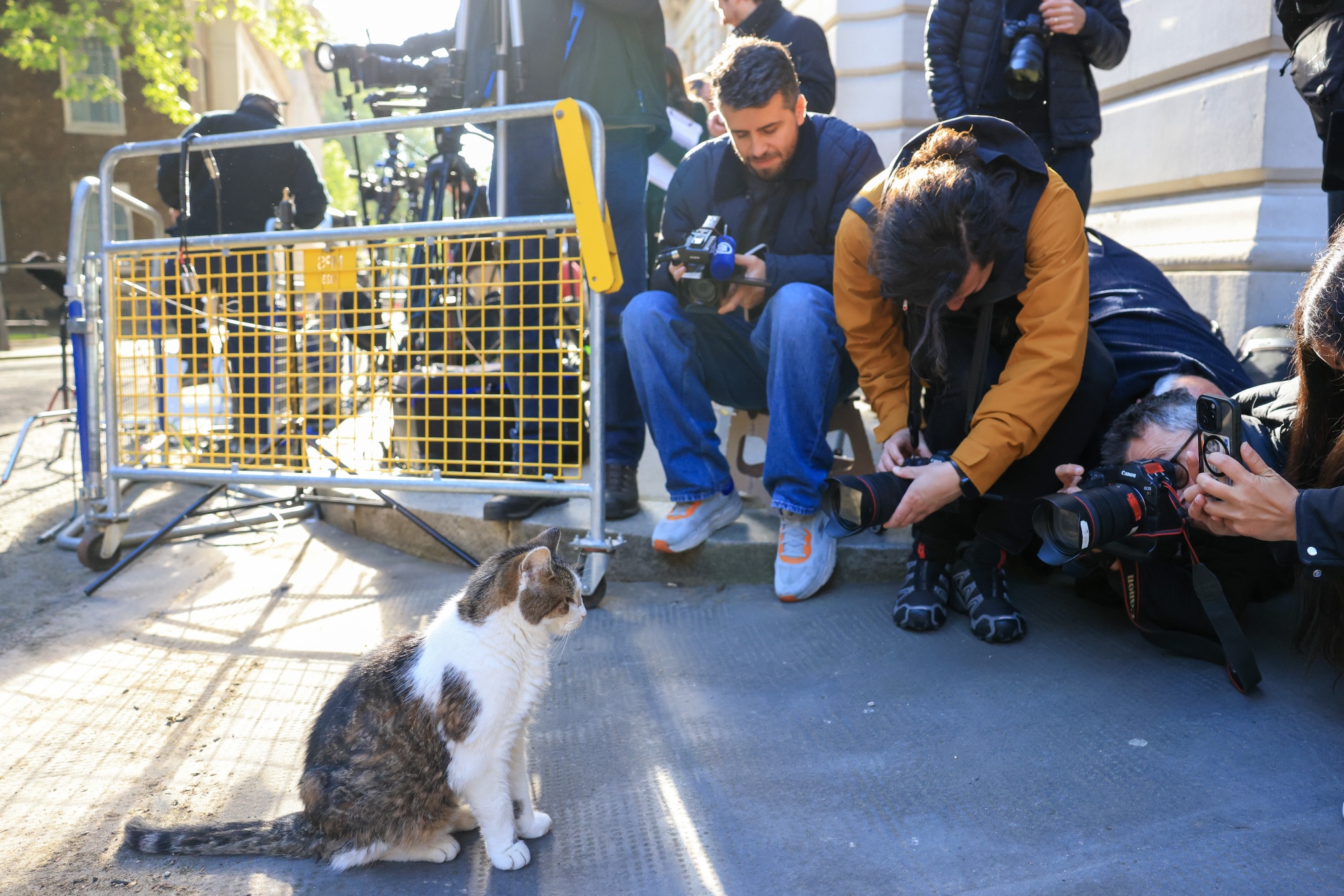
Larry, the Downing Street cat, pauses by the media scrum outside No. 10 today.
Photographer: Chris Ratcliffe/Bloomberg
South African President Cyril Ramaphosa rejected calls to resign and vowed to challenge a report criticizing his handling of a robbery at his farm in 2020, after the nation’s top court resurrected the scandal. The Constitutional Court on May 8 ruled that lawmakers erred four years ago when they failed to establish an impeachment committee to look into how Ramaphosa dealt with the theft of foreign exchange hidden in a sofa on his game farm. A top South Korean policymaker said citizens should be paid a “dividend” using taxes on surging artificial-intelligence profits, hinting at government concerns that the advent of AI risks widening the gap between the haves and have-nots. South Korea is home to chipmakers Samsung and Sk Hynix, both major beneficiaries of the AI boom, and has witnessed public calls for industry leaders to share more of the spoils of the global AI infrastructure bonanza. With a tight-knit group of advisers, Ursula von der Leyen has built a presidential operation that exerts control over every aspect of what goes on inside the European Commission, sidelining almost all but her inner circle. That’s spreading her office thin and means less focus on core economic responsibilities, resulting in a faltering campaign to revive the EU project and causing simmering tensions to boil over. 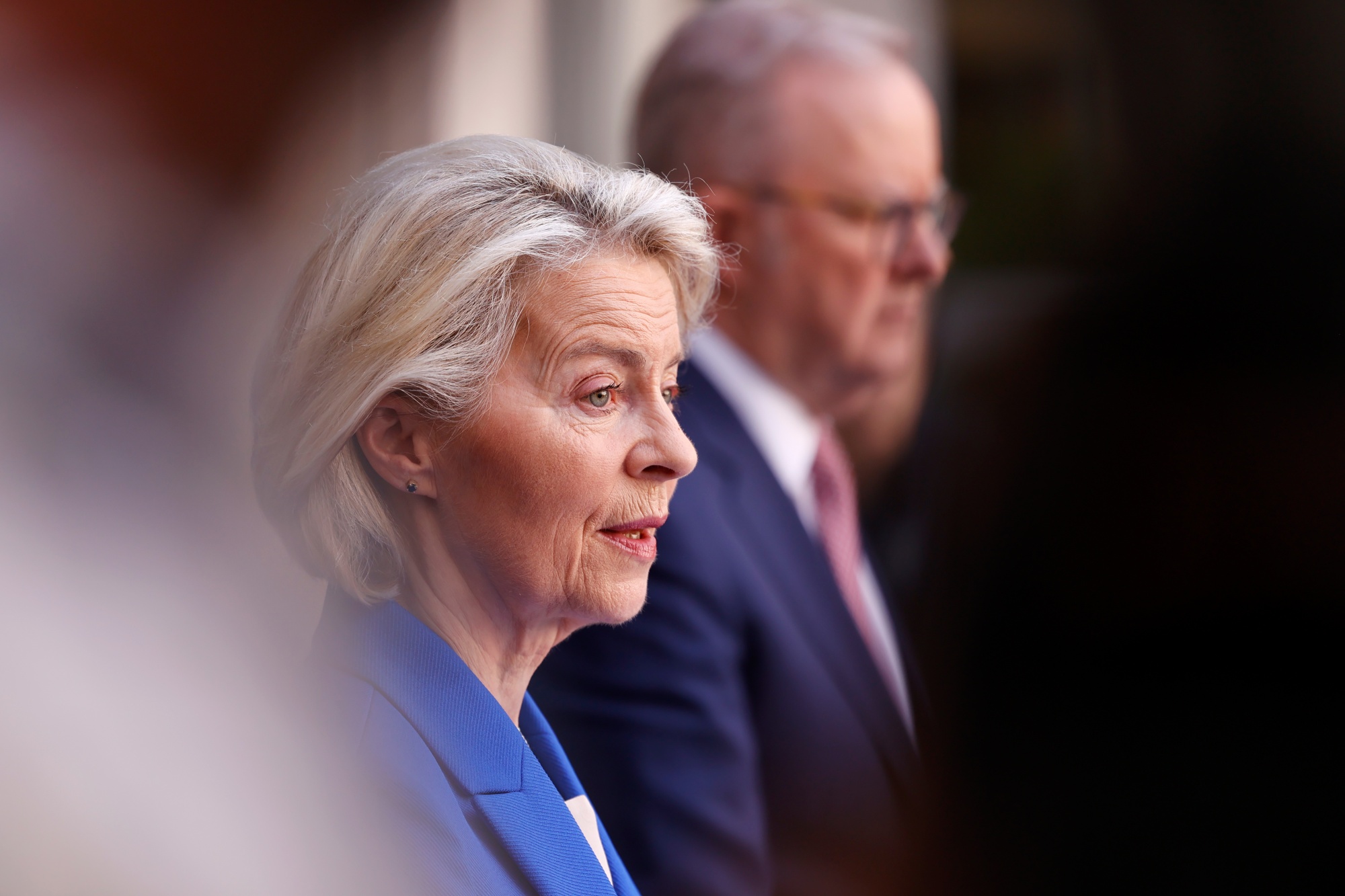
Von der Leyen in Canberra on March 24.
Photographer: Hilary Wardhaugh/Bloomberg
The EU reached a political agreement to sanction violent settlers in the West Bank, the first time the bloc has been able to get unanimous backing for punitive measures against Israel since the height of the Gaza crisis. German Chancellor Friedrich Merz is seeking to reverse his beleaguered government’s fortunes by getting an ambitious reform agenda back on track at a coalition meeting planned for later today. Ukrainian President Volodymyr Zelenskiy’s former top aide, Andriy Yermak, was accused by anti-graft authorities of money-laundering. Mexican authorities arrested a cartel leader and seized seven tigers in the latest raid tied to a fuel-theft scandal that roused the nation. Sign up for the Washington Edition newsletter for news from the US capital and watch Balance of Power at 1 and 5 p.m. ET weekdays on Bloomberg Television. Chart of the Day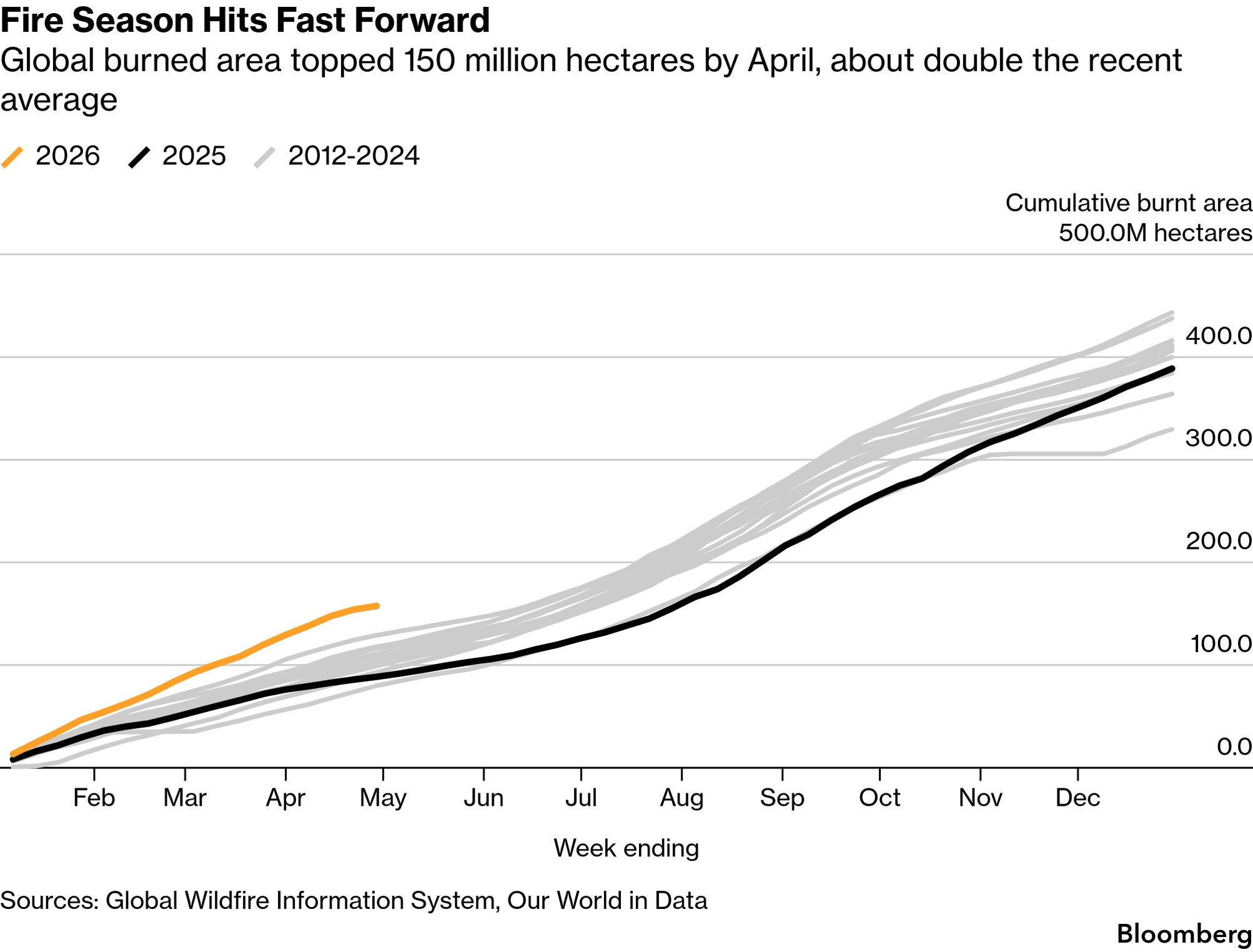
Record-breaking heat and drought have fueled the world’s worst start to a wildfire year yet, as climate change and a developing El Niño threaten to push extreme weather to new heights. Over the first four months of the year, an area almost the size of Alaska was burned, according to satellite estimates from the Global Wildfire Information System — roughly double the seasonal average for this period. And FinallyConstruction work at Ford’s new factory in Marshall, Michigan, is almost done — and it’s a scene to warm Trump’s heart. An iconic US company is poised to cut the ribbon on its first wholly owned domestic greenfield plant in half a century, and bring manufacturing jobs and money to a slice of small-town America that’s been starved of both. The twist is that all this comes with a big assist from China. For its $3 billion BlueOval factory, Ford linked up with CATL, the Chinese battery giant, drawing flak — but the plant got built anyway. 
Marshall’s economy is getting a lift from BlueOval, but there’s also been local opposition.
Photographer: Caria Taylor/Bloomberg
More from Bloomberg
We’re improving your newsletter experience and we’d love your feedback. If something looks off, help us by reporting it here. Follow Us
You received this message because you are subscribed to Bloomberg’s Balance of Power newsletter. If a friend forwarded you this message, sign up here to get it in your inbox.
|
Tuesday, May 12, 2026
28th state





Subscribe to:
Post Comments (Atom)
See how AI is changing trade decisions
Quick reminder: watch your AI investing session Hi — Jessica here from Wyatt Investment Research. ...

-
Bloomberg Evening Briefing Americas View in browser Who's paying for Donald Trum...
-
PLUS: Dogecoin scores first official ETP ...


No comments:
Post a Comment