| Read in browser | ||||||||||||||

Welcome to Balance of Power, bringing you the latest in global politics. If you haven’t yet, sign up here. When Japan’s Mitsubishi “Zero” fighter jet took to the skies in the early 1940s, it quickly gained a reputation as lethal in dogfights thanks to its agility and speed. It was one of the most significant achievements of a defense industry that collapsed following Tokyo’s wartime defeat. Eight decades after Japan enshrined a commitment to pacifism in its post-WWII constitution, Prime Minister Sanae Takaichi is on a mission to revive the sector. She’s pursuing a vision of a more powerful nation, able to stand up to rising threats from China and North Korea without simply relying on the US for protection. Takaichi’s cabinet approved legal changes this week that will for the first time since the war allow Japan to export lethal military equipment such as missiles, fighter jets and warships. 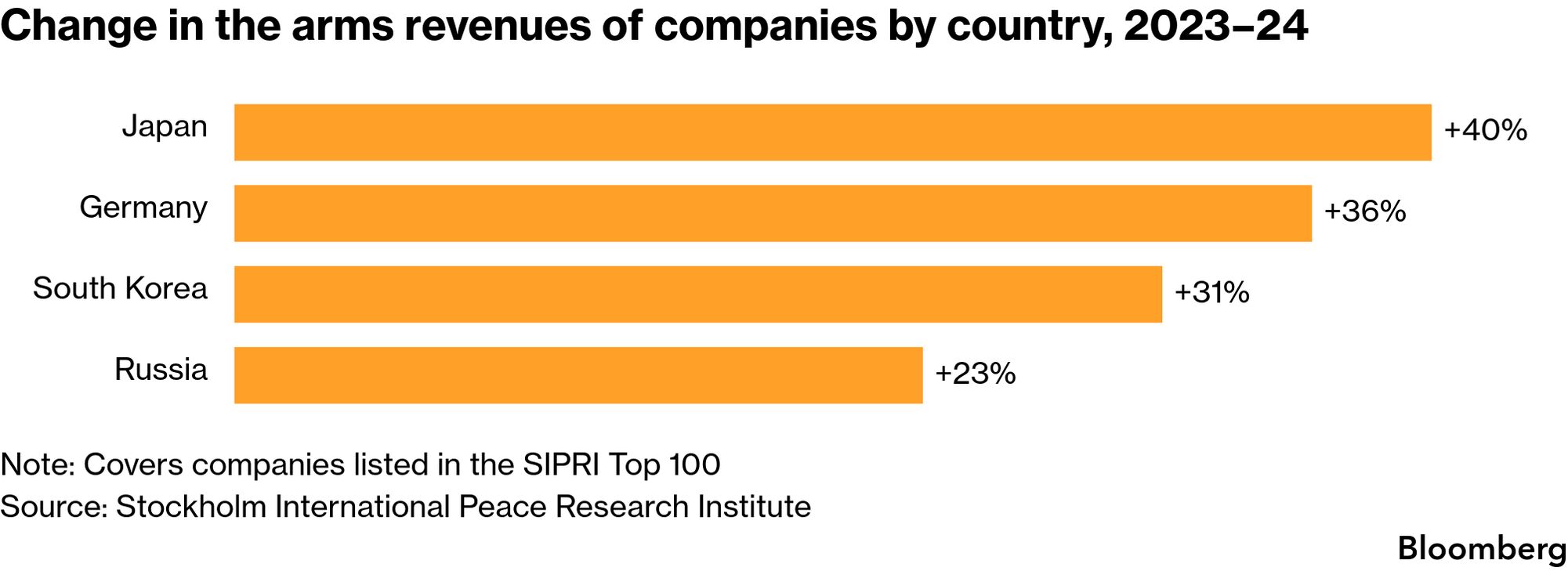
Her hope is that the defense industry can flourish by tapping into soaring global demand, in turn developing a more robust supply of home-grown materiel for Japan’s military. The moment appears ripe. Conflicts in the Middle East and Ukraine are driving innovation and orders. Takaichi is offering government money for Japanese companies to invest in defense R&D. China has taken notice, issuing warnings about a revival of Tokyo’s past militarism under which it suffered. There is some domestic concern about the move: A recent poll found 67% of respondents opposed weapons exports. But one big deal has already been done to provide Australia with warships, and Takaichi’s approval is holding up well. She is in any case not alone, with Germany also casting off postwar reticence and ramping up its defense capabilities. In the coming weeks Takaichi and her defense minister are planning trips to Southeast Asian countries that are in the market for equipment to respond to challenges from Beijing. Orders from those nations could be among the first steps to a renaissance of Japanese military manufacturing. — Alastair Gale 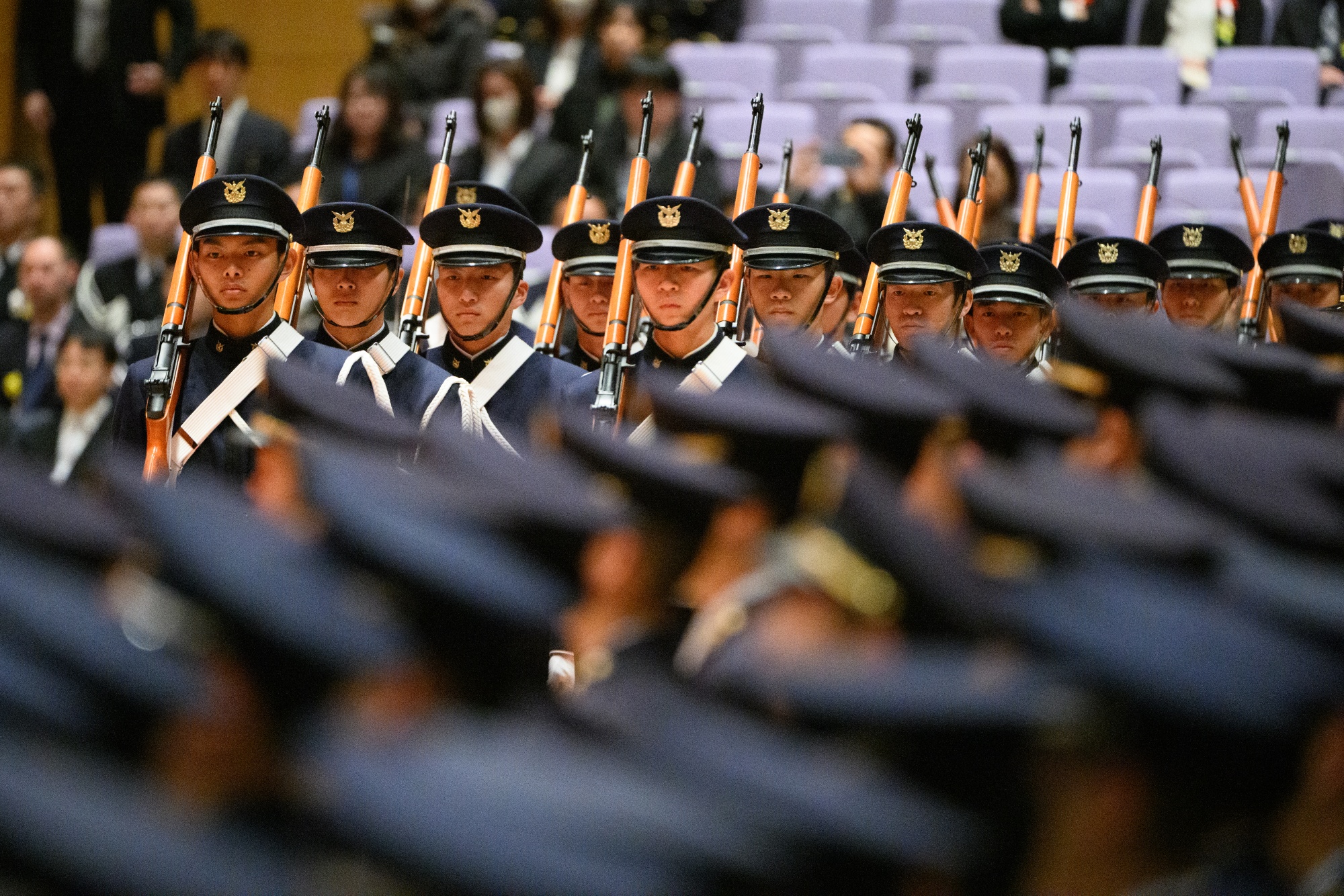
Japan’s National Defense Academy’s graduation ceremony in Yokosuka on March 14.
Photographer: Akio Kon/Bloomberg
Global Must ReadsTraffic through the Strait of Hormuz ground to a halt after Iran fired on commercial ships and said it had seized at least two vessels — a first in nearly eight weeks of war. The US and Iran are locked in a battle for control of the waterway after failing to meet for a fresh round of peace talks, with Trump saying the truce agreed to on April 7 will stay in place indefinitely while Washington waits for Tehran to submit a new proposal.  
Joumanna Bercetche reports on the battle for Hormuz on Bloomberg TV.
London Mayor Sadiq Khan said it would be “folly” to replace Prime Minister Keir Starmer this year at a time of such geopolitical upheaval, insisting that foreign investors, businesspeople and students were attracted to the UK by its political stability. Khan gave his tentative backing for his fellow Labour Party member in a Bloomberg interview as pressure grows on the premier to resign over his handling of the Peter Mandelson scandal. Just two weeks before voters in India’s eastern state of West Bengal were due to go to the polls, about 9 million names were removed from the registered roll. While the Election Commission insists the move was to weed out fake voters and illegal migrants, opposition groups allege that Prime Minister Narendra Modi’s party is using the exercise to target mainly poor and Muslim voters, and tilt the outcome of the election starting today in its favor. 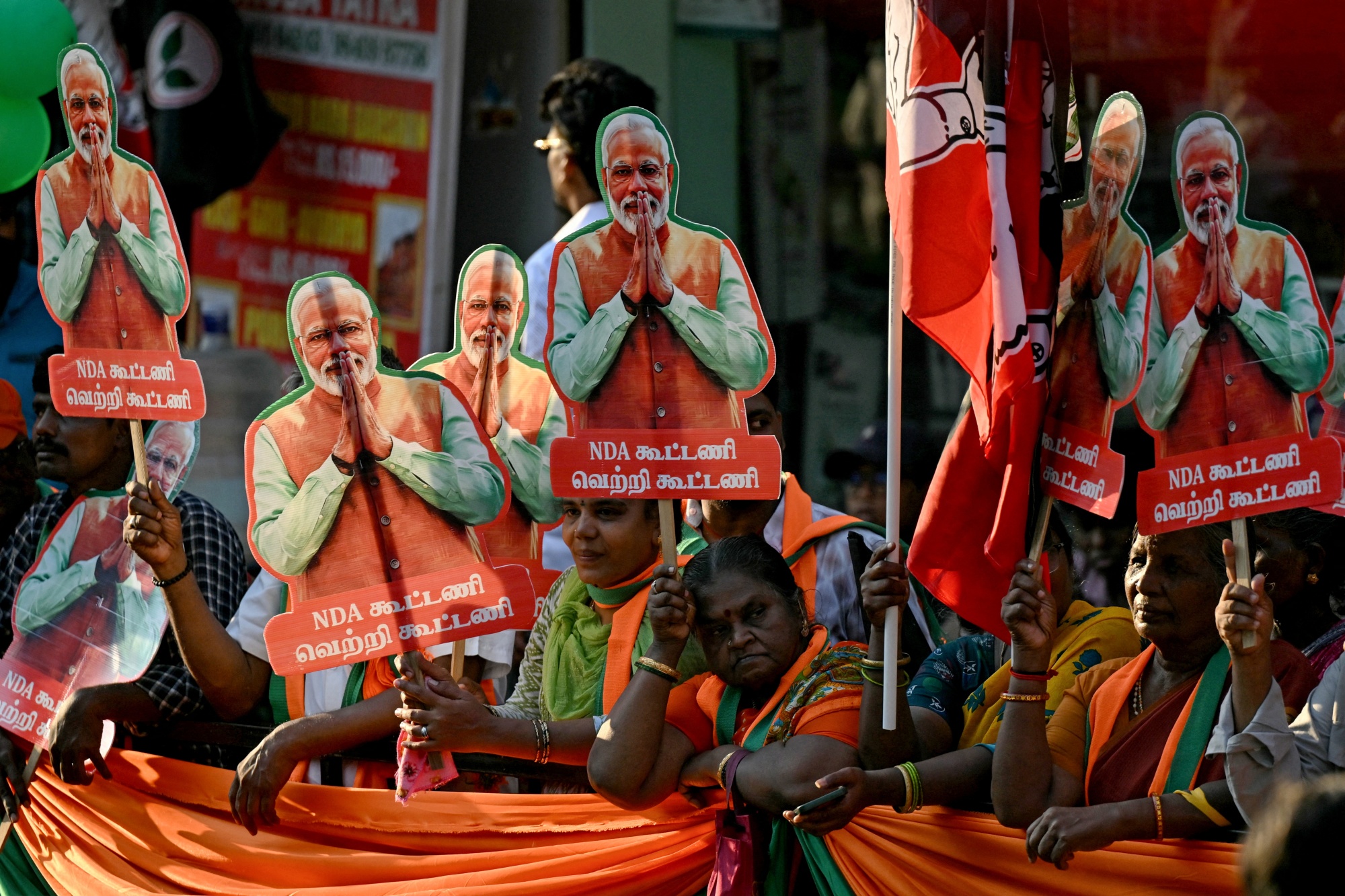
Supporters carry cut-outs of Modi during elections in Chennai on Sunday.
Photographer: R. Satish Babu/AFP/Getty Images
Flávio Bolsonaro’s famous last name helped power his surge in Brazil’s presidential race even before official campaigning for the October vote has begun. But he’s now confronting the downside of being the son of former President Jair Bolsonaro if he’s to unseat Luiz Inácio Lula da Silva, namely a dilemma over the need to both mobilize hardline conservatives still deeply loyal to his father while appealing to undecided voters who view his family as toxic. Viktor Orbán’s imminent departure from the political stage has given the European Union a rare window for change as leaders prepare to meet in Cyprus, with sources saying numerous policies that stalled during the Hungarian prime minister’s time in power are suddenly back in play. An asset-management fund in the Equilor group of companies part-owned by Orban’s son-in-law profited from financial-market bets on the strongman losing the election. US Navy Secretary John Phelan was fired after clashing with top leaders at the Pentagon, including over administration efforts to revive shipbuilding, sources say, making him the latest high-profile military departure during the war in Iran. A Virginia judge halted the implementation of a voter-approved plan to redraw the US state’s congressional maps in a way that would have led to more House seats for Democrats. Kenyan President William Ruto is betting on a revival of a stalled railway project as part of a $39 billion infrastructure push to win a second term and cement his legacy. Tens of thousands of people gathered outside Samsung’s main chip hub in the South Korean city of Pyeongtaek to demand employees get a greater share of profits reaped from the AI boom. 
On this week’s episode of Trumponomics, host Stephanie Flanders and Bloomberg’s Michael Deng and Laura Noonan break down why Mythos, Anthropic’s most powerful AI model, is sparking both panic and optimism in boardrooms and across governments. Listen on Apple, Spotify or wherever you get your podcasts.
Coming soon: Get the AI Today newsletter — chronicling the disruptions and threats of AI on businesses, workers, governments and economies with analysis from Bloomberg’s global newsroom. Sign up for the Washington Edition newsletter for news from the US capital and watch Balance of Power at 1 and 5 p.m. ET weekdays on Bloomberg Television. Chart of the Day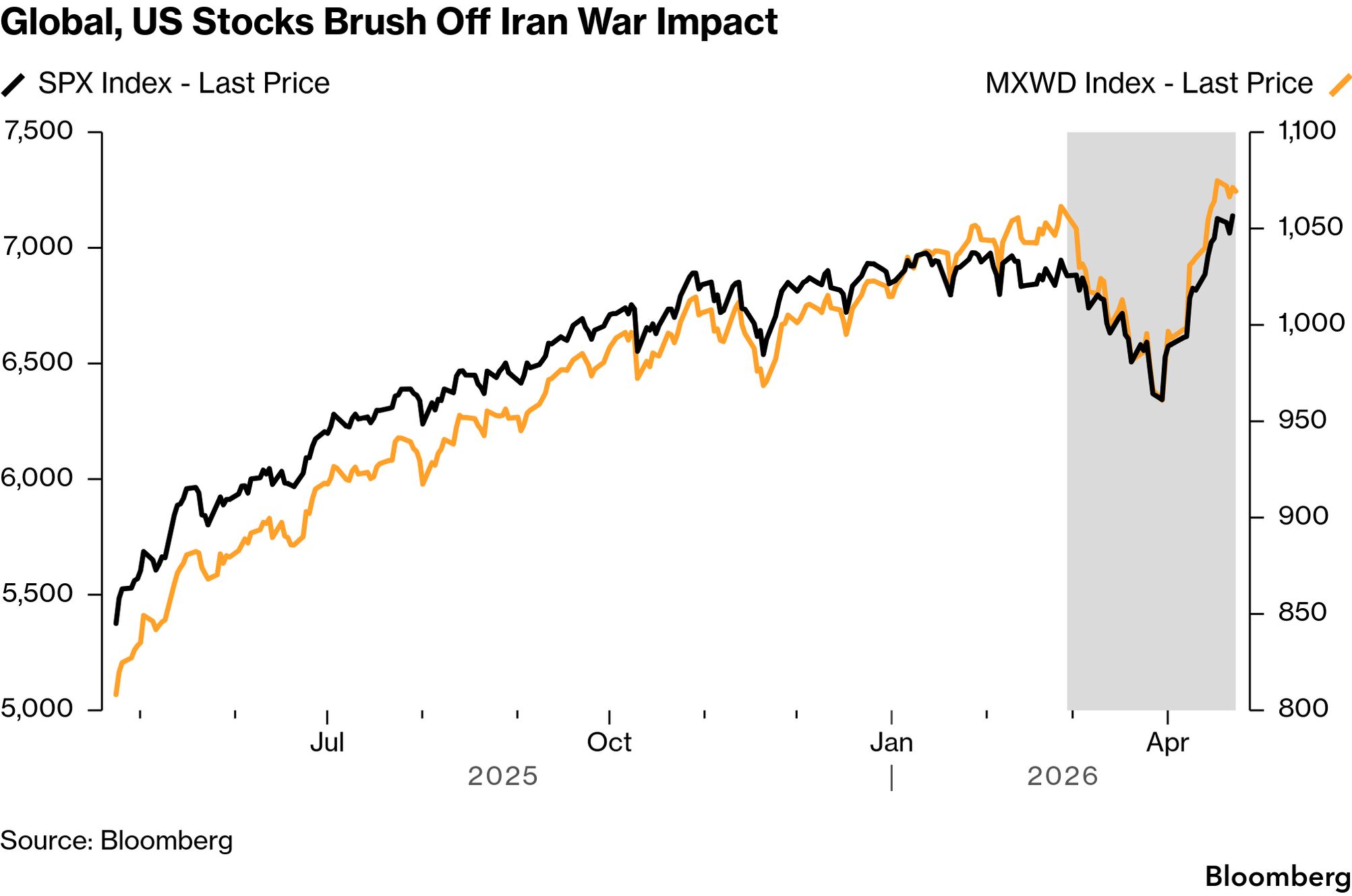
Nearly two months into the conflict in Iran, global stock markets are staging a defiant rally to rebound from the initial shock. From the US to Taiwan and South Korea, a disconnect has emerged: while the geopolitical tensions remain high, equities are charging back toward all-time highs. Here are five reasons why. And FinallyWhen the EU imposed sanctions on Russia four years ago, Estonian timber producer Puidukoda quickly had to figure out how to replace more than half of its imports of spruce and pine by pivoting to suppliers in Scandinavia. It’s among hundreds of companies that overhauled how they do business after the Baltic states underwent the most dramatic economic shift in Europe caused by Russia’s war in Ukraine. As other countries make noises about normalizing ties with Moscow, officials in the region say there’s no going back. 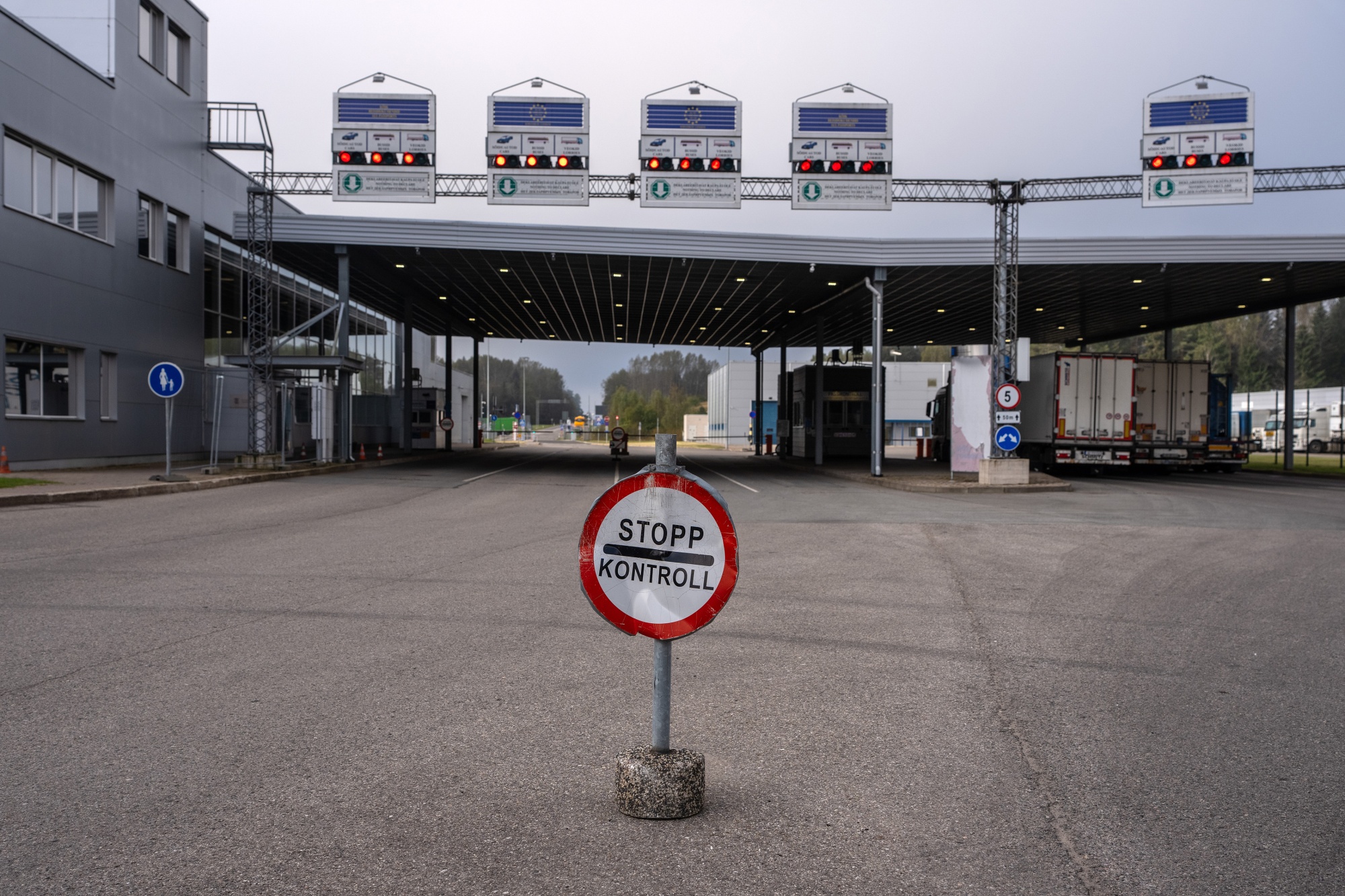
The border crossing with Russia in Luhamaa, Estonia.
Photographer: Carl Court/Getty Images
More from Bloomberg
We’re improving your newsletter experience and we’d love your feedback. If something looks off, help us by reporting it here. Follow Us
You received this message because you are subscribed to Bloomberg’s Balance of Power newsletter. If a friend forwarded you this message, sign up here to get it in your inbox.
|
Thursday, April 23, 2026
Japan raises its head





Subscribe to:
Post Comments (Atom)
Where to Put $100 Before Trump's New Tech Law Rolls Out
Jeff Brown was consulted by Congress on this - here's what he says comes next ...

-
PLUS: Dogecoin scores first official ETP ...
-
Swaps, memes, homes, tokens. View in browser Unicorn bucket We have talked a fe...


No comments:
Post a Comment