Monday, April 13, 2026

Economics Daily: 5 things to watch at the IMF

For the fourth time in six years, the IMF-World Bank Spring meetings take place at a fraught moment. ‌ ‌ ‌ ‌ ‌ ‌ ‌ ‌ ‌ ‌ ‌ ‌ ‌ ‌ ‌ ‌ ‌ ‌ ‌ ‌ ‌ ‌ ‌ ‌ ‌ ‌ ‌ ‌ ‌ ‌ ‌ ‌ ‌ ‌ ‌ ‌ ‌ ‌ ‌ ‌ ‌ ‌ ‌ ‌ ‌ ‌ ‌ ‌ ‌ ‌ ‌ ‌ ‌ ‌ ‌ ‌ ‌ ‌ ‌ ‌ ‌ ‌ ‌ ‌ ‌ ‌ ‌ ‌ ‌ ‌ ‌ ‌ ‌ ‌ ‌ ‌ ‌ ‌ ‌ ‌ ‌ ‌ ‌ ‌ ‌ ‌ ‌ ‌ ‌ ‌ ‌ ‌ ‌ ‌ ‌ ‌ ‌ ‌ ‌ ‌ ‌ ‌ ‌ ‌ ‌ ‌ ‌ ‌ ‌ ‌ ‌ ‌ ‌ ‌ ‌ ‌ ‌ ‌ ‌ ‌ ‌ ‌ ‌ ‌ ‌ ‌ ‌ ‌ ‌ ‌ ‌ ‌ ‌ ‌ ‌ ‌ ‌ ‌ ‌ ‌ ‌ ‌ ‌ ‌ ‌ ‌ ‌ ‌ ‌ ‌ ‌ ‌ ‌ ‌ ‌ ‌ ‌ ‌ ‌ ‌ ‌ ‌ ‌ ‌ ‌ ‌ ‌ ‌ ‌ ‌ ‌ ‌ ‌ ‌ ‌ ‌ ‌ ‌ ‌ ‌ ‌ ‌ ‌ ‌ ‌ ‌ ‌ ‌ ‌ ‌ ‌ ‌ ‌ ‌ ‌ ‌ ‌ ‌ ‌ ‌ ‌ ‌ ‌ ‌ ‌ ‌ ‌ ‌ ‌ ‌ ‌ ‌ ‌ ‌ ‌ ‌ ‌ ‌ ‌ ‌ ‌ ‌ ‌ ‌ ‌ ‌ ‌ ‌ ‌ ‌ ‌ ‌ ‌ ‌ ‌ ‌ ‌ ‌ ‌ ‌ ‌ ‌ ‌ ‌ ‌ ‌ ‌ ‌ ‌ ‌
Read in browser

I’m Cécile Daurat, a senior economics editor in Washington. Today we’re looking at the five things to watch this week at this week’s IMF gathering. Send us feedback and tips to ecodaily@bloomberg.net.

To readers of the Balance of Power, Supply Lines, Washington Edition and Brussels Edition newsletters: We thought you’d enjoy this special edition of Economics Daily. To continue receiving this newsletter, sign up here.

The global economy is being tested again. War in the Middle East poses a new challenge, adding to ongoing shifts in geopolitics, trade, and technology. At the 2026 IMF-World Bank Spring Meetings, policymakers will discuss how economies are managing this shock and the policies needed to strengthen growth and resilience. Join the Conversation!

Top Stories

Five Key Things to Watch

For the fourth time in six years, the IMF-World Bank Spring Meetings take place at a moment fraught with global uncertainty: The Covid pandemic in 2020, the war in Ukraine in 2022, Trump’s tariffs in 2025 and now an oil shock triggered by a conflict in the Middle East. 

Before the US and Israel attacked Iran on Feb. 28, the IMF was planning to upgrade its growth forecasts. Not anymore, Managing Director Kristalina Georgieva said last week. Under the most optimistic scenario, growth will be slower than expected just a few weeks ago. The damage to energy infrastructure and supply chains is done.

The impact of the war on economic activity and inflation will be top of mind at the gathering that starts today, but key issues that would have been a priority before the conflict — the ballooning global debt, say — remain important topics.
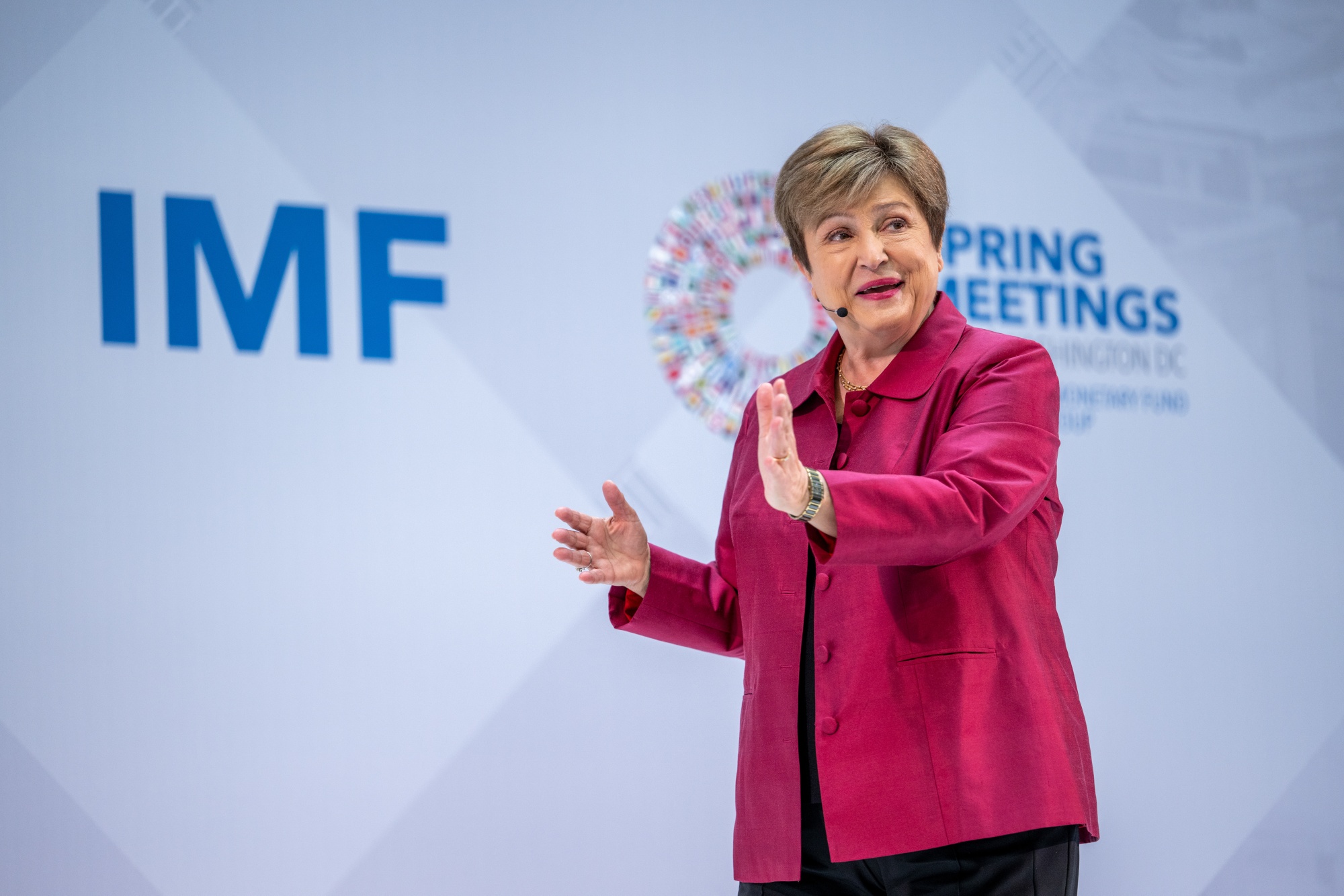
Kristalina Georgieva, managing director of the International Monetary Fund (IMF), during a curtain raiser speech ahead of the International Monetary Fund (IMF) and World Bank Spring meetings at the IMF headquarters in Washington, DC, US, on Thursday, April 9, 2026. The International Monetary Fund said that the conflict in the Middle East is a major supply shock that will test the resilience of a world with limited scope for fiscal support, even as US and Iran have negotiated a two-week ceasefire. Photographer: Daniel Heuer/Bloomberg
IMF Managing Director Kristalina Georgieva in Washington, DC, on April 9.
Photographer: Daniel Heuer/Bloomberg

Here are five things to watch:

  • The Middle East fallout: The World Economic Outlook published Tuesday will include three scenarios, from a relatively swift recovery to a prolonged period of high oil prices affecting the broader economy, Georgieva said. With the situation changing daily, finance chiefs will no doubt be repeatedly questioned again and again about the impact.
  • Central bank policy leaning: The conflict has introduced significant uncertainty for the European Central Bank and the Bank of Japan, both of which were seen raising interest rates as soon as this month. Their policymakers will face intense scrutiny, perhaps even more so than Fed officials.
  • Scale of IMF support: The fund anticipates requests for balance of payment needs ranging from $20 billion (if a ceasefire holds) to $50 billion. This substantial funding would be on top to the approximately $140 billion already outstanding.
  • Fragmentation and deglobalization: Themes of a fragmented world and “strained multilateralism” will feature prominently on panels. Despite Georgieva’s plea against go-it-alone actions, the prospect of international cooperation in the face of a crisis appears dim. Even if countries were willing to work on unified action, they may not be able to afford to.
  • Private market risks: “Cockroach” became a buzzword the last time financial chiefs convened in DC, as Jamie Dimon came up with his oft-quoted analogy just as the fall meetings were getting under way. Seven months later, perhaps not coincidently, the IMF has dedicated a chapter of its Global Financial Stability Report to the growth of non-bank lending in emerging markets.

AI and tariffs, prominent in October’s discussions, may be overshadowed by geopolitics this time.

The Best of Bloomberg Economics

  • BOJ Governor Kazuo Ueda signaled a more cautious stance on raising rates in a key opportunity to signal before the next policy meeting.
  • A typical UK household will nearly £500 worse off from surging energy prices in a setback for Prime Minister Keir Starmer.
  • Bank of Korea governor nominee Shin Hyun Song sees greater risks to inflation than growth from current turmoil in the Middle East.
  • Chancellor Friedrich Merz’s coalition agreed on measures worth €1.6 billion to ease the impact of surging fuel prices for German consumers.
  • With graduates underemployed and artificial intelligence threatening work, parents are paying as much as $50,000 for career coaching.
  • Brazilian consumers pinched by shrinkflation are exposing affordability woes that pose a risk to President Luiz Inacio Lula da Silva’s reelection.

Need-to-Know Research

By now it’s conventional wisdom that the global economy’s 2026 performance will come down to a single variable: What the price of oil will average over the course of the year. Bloomberg Economics has calculated the difference between the upside and downside cases.

In a negative scenario with oil at $170 a barrel, global GDP would expand just 2.2% this year, compared with 3.4% in 2025, Tom Orlik and Jamie Rush wrote in a note last week. But in a positive scenario, with oil back at $65, the world could achieve a 3.1% expansion. In monetary terms that amounts to just over $1 trillion – the equivalent of a little more than Switzerland’s economy, or somewhat less than Saudi Arabia’s.
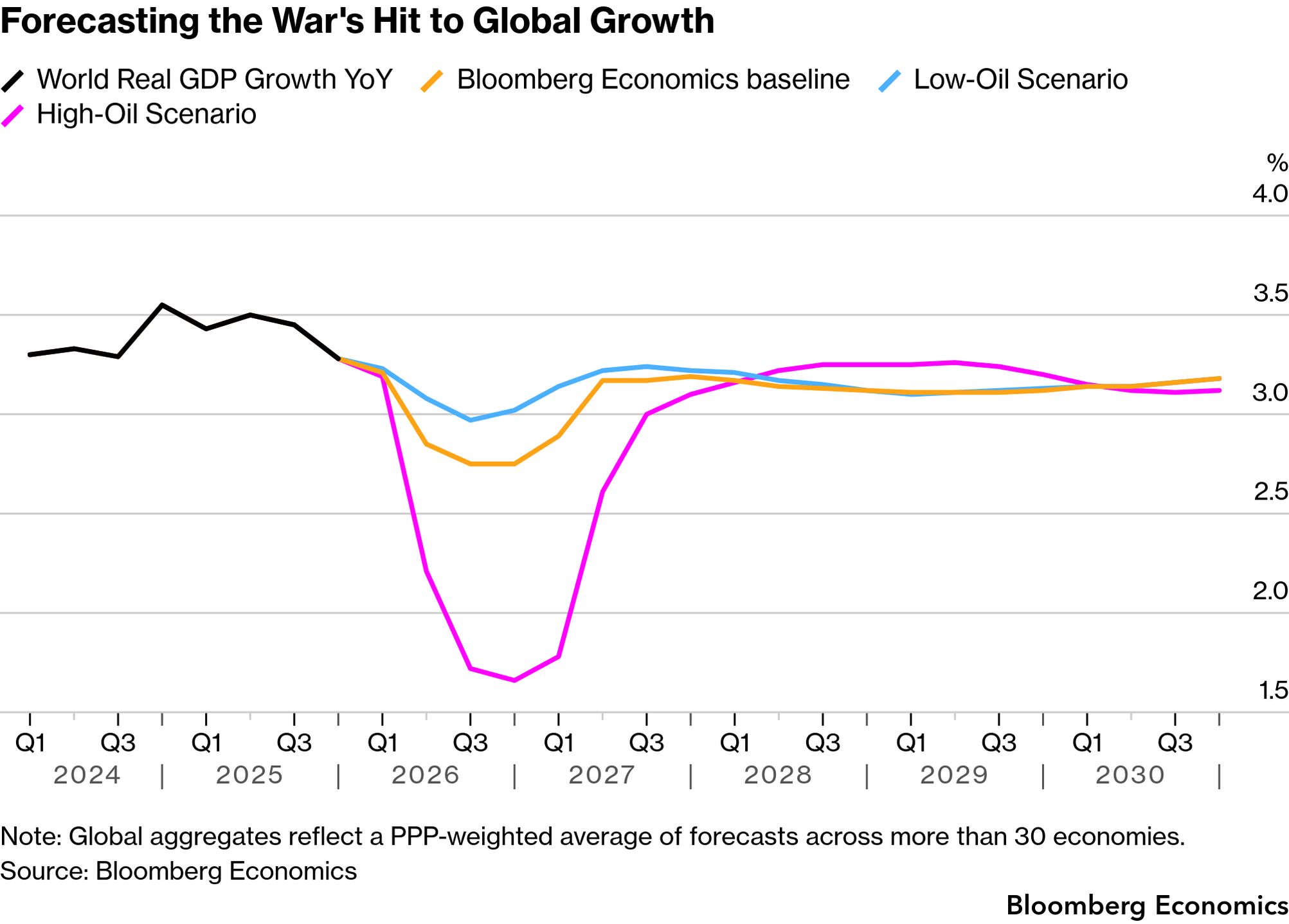
With oil prices hovering something under $100 a barrel, the team’s base case sees 2.9% global growth this year, which would be the weakest since 2020. Under that middle scenario, world inflation is seen at 4.2% for the fourth quarter, versus 3.1% at the end of 2025. In the escalation scenario, world CPI climbs 5.4%. The positive case is 3.7%.

  • For the full note on the Bloomberg terminal, click here.

More from Bloomberg

Enjoy Economics Daily?

Plus, here are some newsletters we think you might like

  • Supply Lines for daily insights into supply chains and global trade
  • Business of Food for a weekly look at how the world feeds itself in a changing economy and climate, from farming to supply chains to consumer trends
  • Balance of Power for the latest in politics from around the globe
  • Explore all newsletters at Bloomberg.com.

We’re improving your newsletter experience and we’d love your feedback. If something looks off, help us fine-tune your experience by reporting it here.

Follow us

https://assets.bwbx.io/images/users/iqjWHBFdfxIU/iDRduxloBOSA/v0/-1x-1.png icon https://assets.bwbx.io/images/users/iqjWHBFdfxIU/i5QE5__h22bE/v0/-1x-1.png icon https://assets.bwbx.io/images/users/iqjWHBFdfxIU/iiSKUb3JWcLI/v0/-1x-1.png icon https://assets.bwbx.io/images/users/iqjWHBFdfxIU/i_JvbwNnmprk/v0/-1x-1.png icon https://assets.bwbx.io/images/users/iqjWHBFdfxIU/iXt_II64P_EM/v0/-1x-1.png icon

You received this message because you are subscribed to Bloomberg’s Economics Daily newsletter. If a friend forwarded you this message, sign up here to get it in your inbox.

Unsubscribe
Bloomberg.com
Contact Us
Bloomberg L.P.
731 Lexington Avenue
New York, NY 10022
Ads Powered By Liveintent | Ad Choices

No comments:

Post a Comment

Economics Daily: 5 things to watch at the IMF

For the fourth time in six years, the IMF-World Bank Spring meetings take place at a fraught moment. ‌ ‌ ‌ ‌ ‌ ‌ ‌ ‌...