| Read in browser | ||||||||||||||

Welcome to Balance of Power, bringing you the latest in global politics. If you haven’t yet, sign up here. Donald Trump declared in 2018 that North Korea was no longer a nuclear threat. The numbers tell a different story. Trump met Kim Jong Un three times during his first term as their relationship shifted from brinkmanship to bromance. The two may even meet again when the president visits China in May. Kim, though, never slowed his nuclear program, hailed in state propaganda as the “sword and shield” protecting his rule. After years of threatening nuclear war on the US, Pyongyang may now have the ability to fight one. Production of fissile material and intercontinental ballistic missiles has reached a point where North Korea could challenge US homeland defenses. 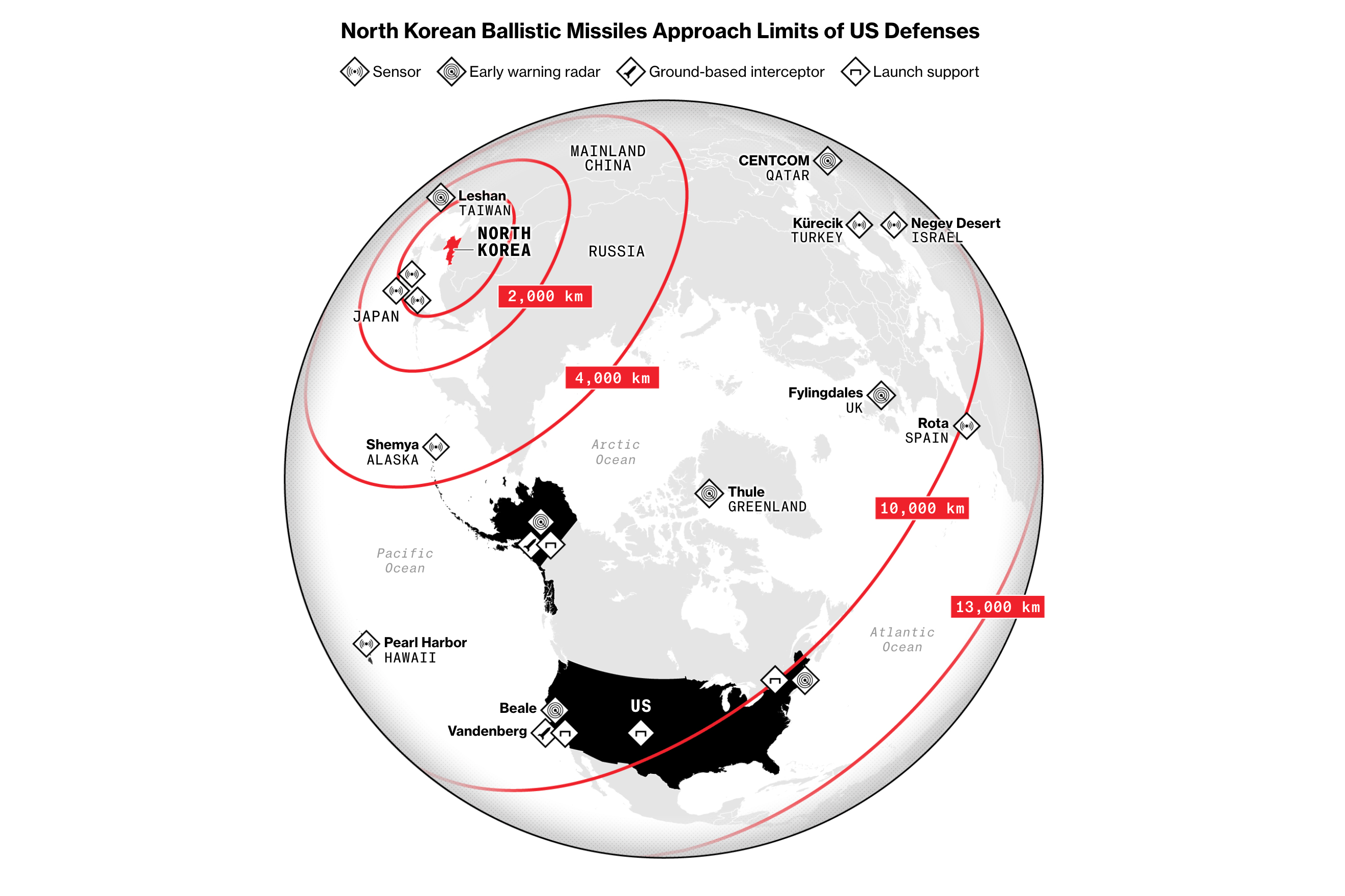
South Korea’s president said this year that Pyongyang can produce enough fissile material for about 20 nuclear bombs annually, putting it on a trajectory to rival France’s stockpile within a decade in size, if not sophistication. During Trump’s first term, experts estimated production was at about six bombs’ worth. North Korea isn’t just building more weapons; it’s building better ones. These include solid-fuel missiles that are easier to hide and quicker to deploy, plus ICBMs capable of carrying heavier payloads. It has sent missiles to Russia for use in Ukraine, where they’ve likely been battle-tested against US air-defense systems. Production is speeding up. That matters because scale changes the game. Quantity, not capability, is now the threat. Diplomacy looks like a relic. Kim has ignored calls to return to talks and shown no sign that Trump can entice him to abandon his nuclear ambitions. True, North Korea hasn’t proven it can reliably deliver a warhead that survives reentry. But recent events in Iran and Venezuela have shown that regimes without a credible nuclear deterrent remain vulnerable. In Pyongyang, that lesson reinforces the belief that nuclear weapons are not just leverage, but the ultimate guarantee of survival. — Jon Herskovitz 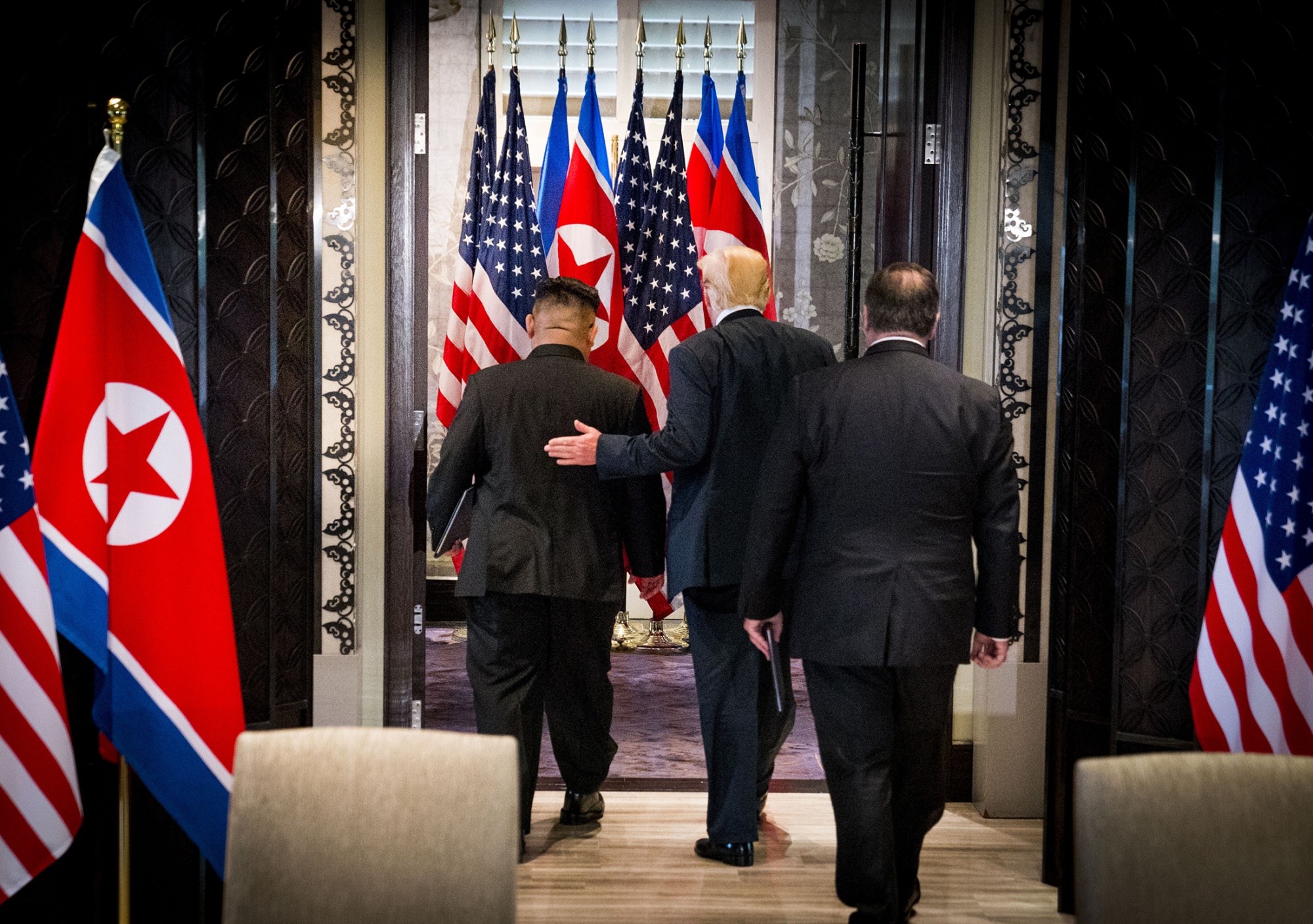
Kim and Trump in Singapore in 2018.
Photographer: Doug Mills/The New York Times
Global Must ReadsThe shock decision yesterday by the United Arab Emirates to quit OPEC blindsided its partners of six decades and the cartel will now have to fight to stay relevant in a fast-shifting global oil market. Trump signaled the US will stick with a naval blockade of Iranian ports, as it tries to choke off Tehran’s oil exports and force it back to the negotiating table. Meanwhile, the US president attacked Germany’s Friedrich Merz after the chancellor criticized the US handling of the war. 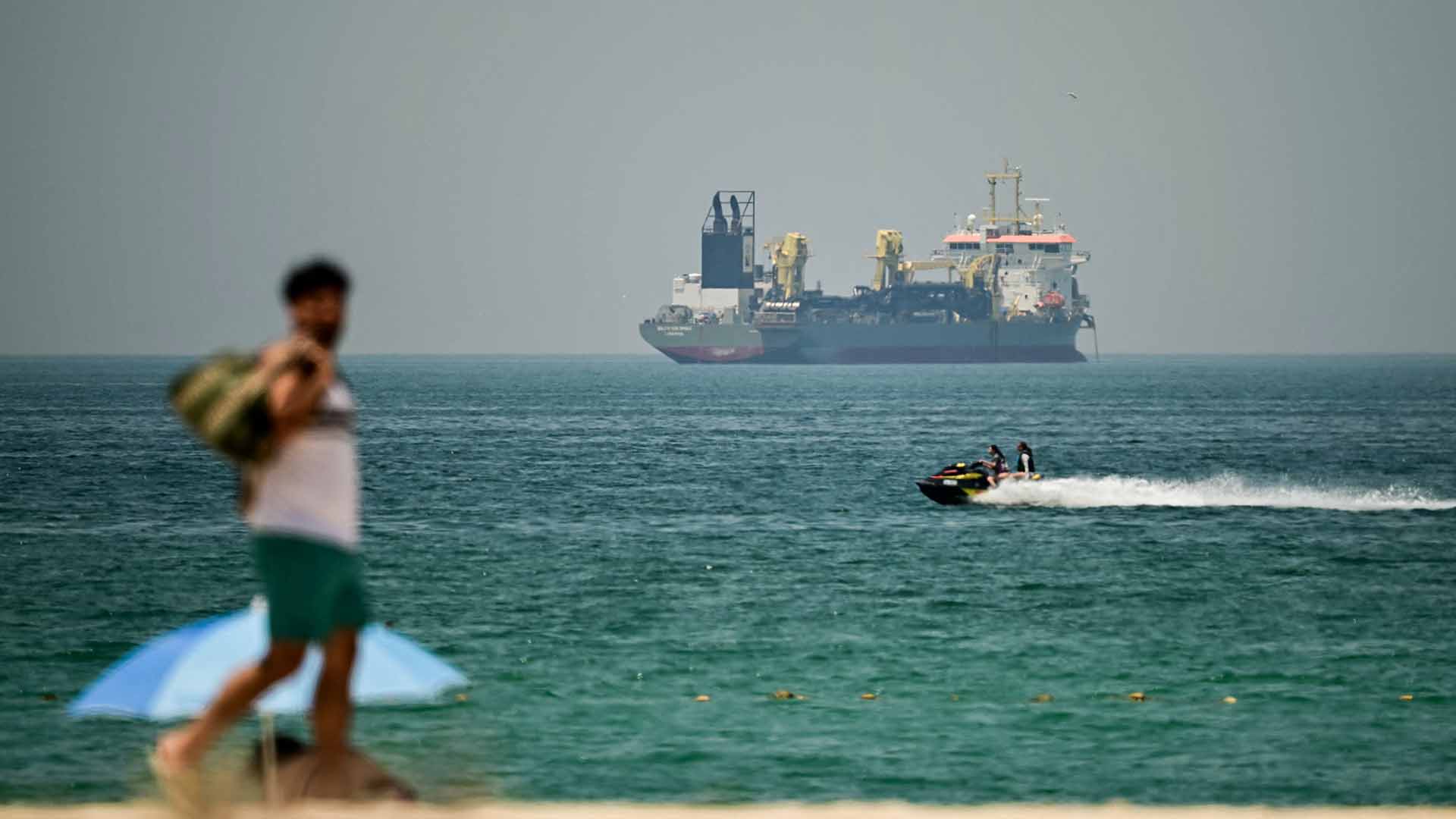 
Bloomberg’s Stephen Stapczynski explains how differences in the vision of the UAE and OPEC’s de facto leader, Saudi Arabia, have simmered for years.
The US has warned banks they are at risk of secondary sanctions if they support Chinese private refiners that buy Iranian oil, cranking up pressure on Tehran even at the cost of further irking Beijing ahead of next month’s planned meeting between Trump and President Xi Jinping. The two leaders’ desire to stabilize ties is being tested by vulnerabilities over Iranian oil and AI. King Charles III called on the US to resist the pull of isolationism and maintain its leadership role in the world by supporting Ukraine and NATO in an unusually pointed speech for a monarch. The king’s address to Congress coincided with Prime Minister Keir Starmer’s appearance in Parliament yesterday, both illustrating how much managing ties with Trump’s America has come to consume the British state. Brazilian President Luiz Inácio Lula da Silva plans to roll out a program to renegotiate more than 100 billion reais ($20 billion) in household debt, adding to a string of measures to support consumption as he seeks to bolster his popularity ahead of the October election. Household debt, which stood at a record 49.9% of Brazilians’ annual income in February, has become a key campaign issue for Lula, who has struggled to counter gains by Senator Flávio Bolsonaro in opinion polls. The European Union is considering imposing stricter conditions on its €90 billion ($105 billion) loan to Ukraine, making some of the payouts dependent on the introduction of an unpopular tax change for businesses, sources say. Meanwhile, incoming Hungarian Prime Minister Péter Magyar will push for a deal to restore access to billions of euros in frozen EU aid during his first trip to Brussels today. Europe may spend years grappling with the fallout from the Iran war, EU chief Ursula von der Leyen warned separately. Russia will stage its annual May 9 parade marking the WWII defeat of Nazi Germany without heavy military equipment for the first time since 2007, as the war in Ukraine takes its toll on President Vladimir Putin’s army. 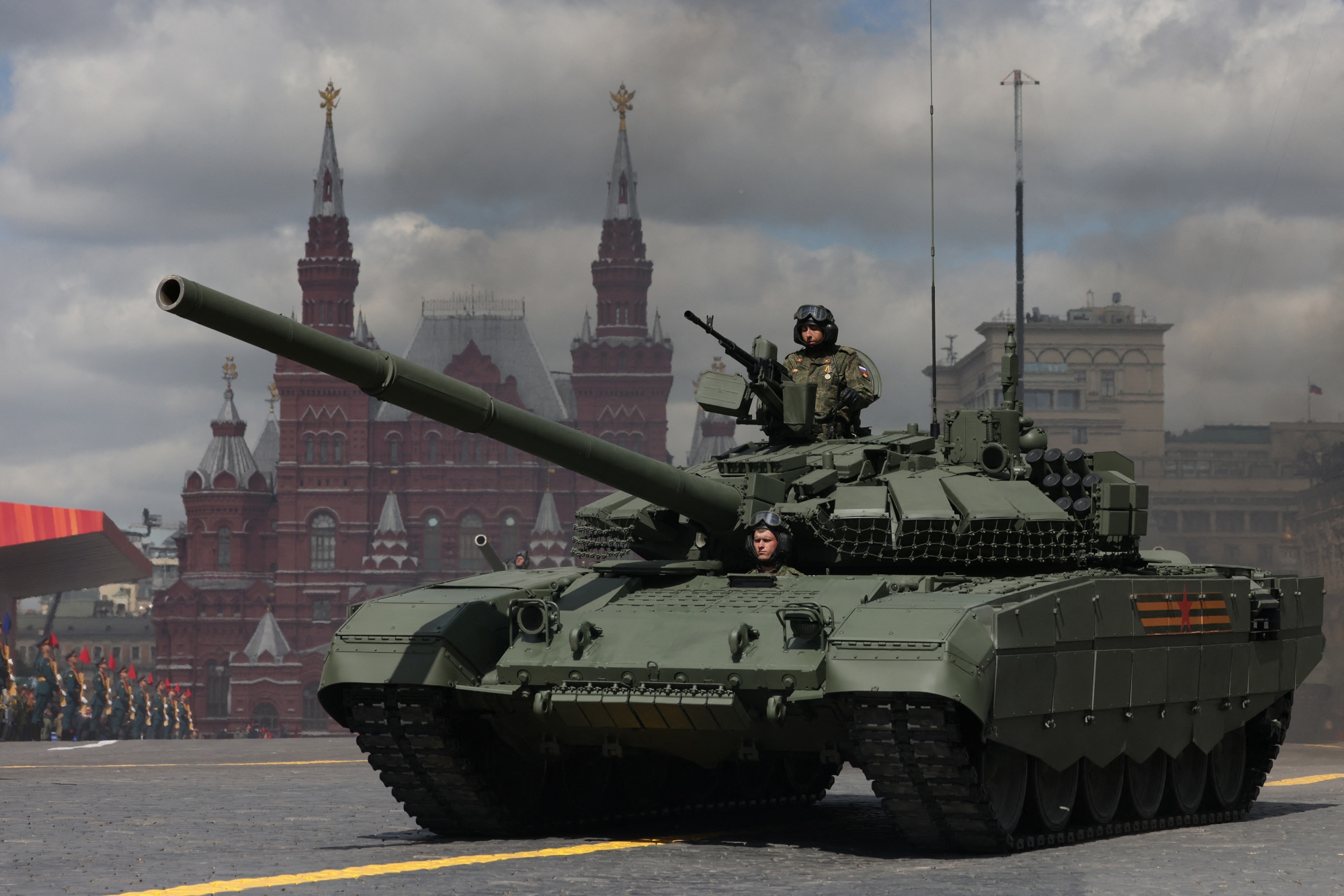
The Victory Day military parade in Moscow in May 2025.
Source: AFP/Getty Images
Key congressional Republicans are poised to break with Trump on his proposed 44% raise for the Pentagon to a $1.5 trillion budget, a rare act of defiance that signals the president’s weakening grip as the midterm elections near. A proposal to cap Switzerland’s population at 10 million drew the support of 52% of respondents in the first poll showing a majority for the idea ahead of the June vote. Australia’s richest person, Gina Rinehart, has donated a plane to Pauline Hanson, the leader of the country’s hard-right One Nation Party, enabling her to visit more areas to drum up support ahead of federal elections in 2028. Coming soon: Get the AI Today newsletter — chronicling the disruptions and threats of AI on businesses, workers, governments and economies with analysis from Bloomberg’s global newsroom. Sign up for the Washington Edition newsletter for news from the US capital and watch Balance of Power at 1 and 5 p.m. ET weekdays on Bloomberg Television. Chart of the Day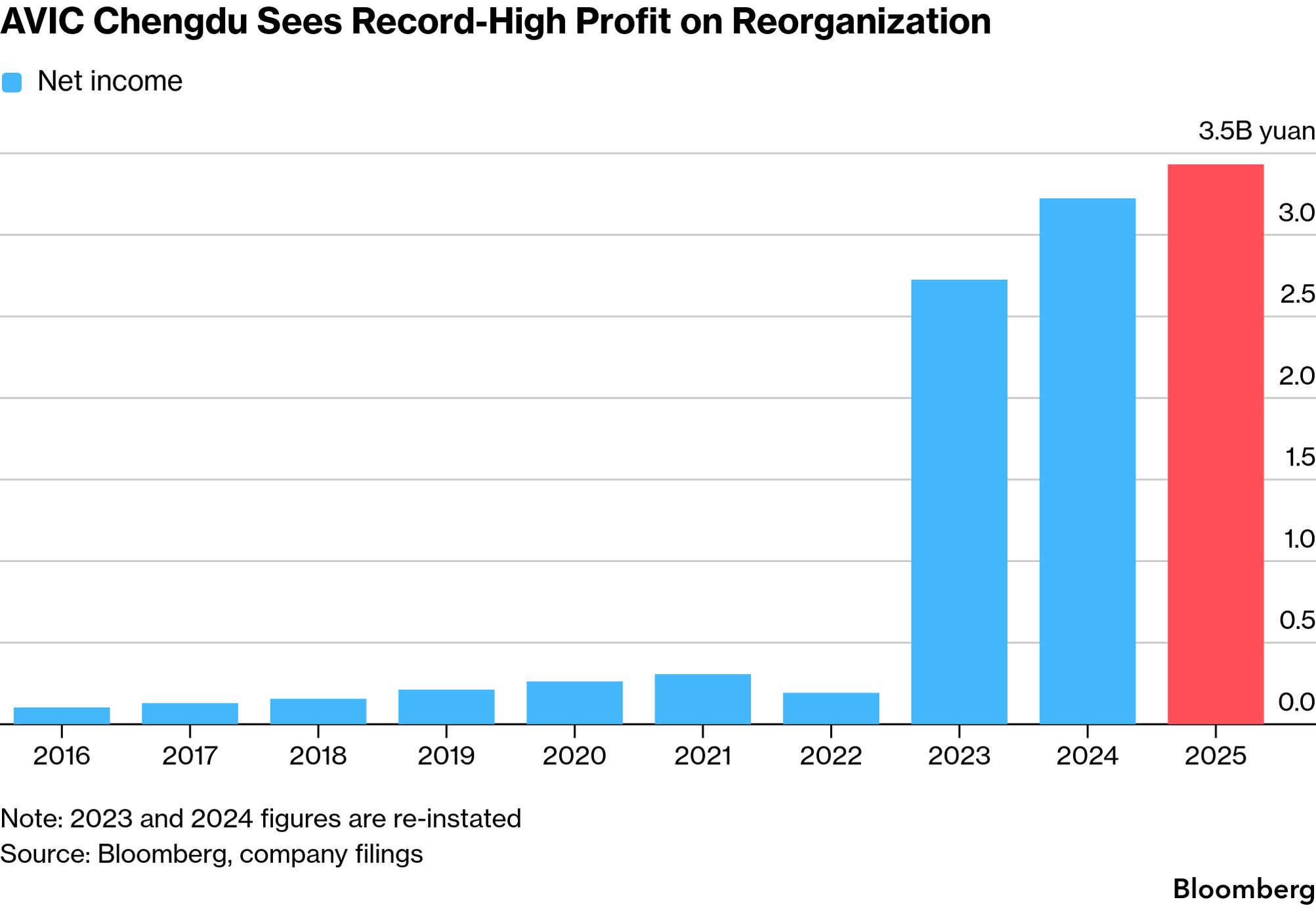
A Chinese maker of the fighter jets that rose to fame in the India-Pakistan conflict last year posted record profit and saw first-quarter sales nearly double. AVIC Chengdu’s single-engine, multi-role J-10 fighters were battle-tested in May, when Pakistan claimed to have shot down multiple Indian aircraft, including French-made Rafale jets. And FinallyThe Netherlands, the birthplace of the stock exchange and the forerunner to the modern central bank, is gearing up for a new tax on paper profits, sparking public and political opposition and opening another front in the international push to target the wealthy. While other governments are also pursuing tax-the-rich policies, the turmoil over the Dutch proposal threatens to damage a longstanding reputation for sober economic policymaking. 
Groenburgwal, Amsterdam
Photographer: Jussi Puikkonen/Bloomberg
More from Bloomberg
We’re improving your newsletter experience and we’d love your feedback. If something looks off, help us by reporting it here. Follow Us
You received this message because you are subscribed to Bloomberg’s Balance of Power newsletter. If a friend forwarded you this message, sign up here to get it in your inbox.
|
Wednesday, April 29, 2026
A nuclear shield





Subscribe to:
Post Comments (Atom)
What sits behind the Ozempic boom
Ten names, not the two everyone knows. ...

-
Revolutionary Stem Cell & PRP —Start Your Journey Today ...
-
You’ve shown interest in Regenerative Medicine ...


No comments:
Post a Comment