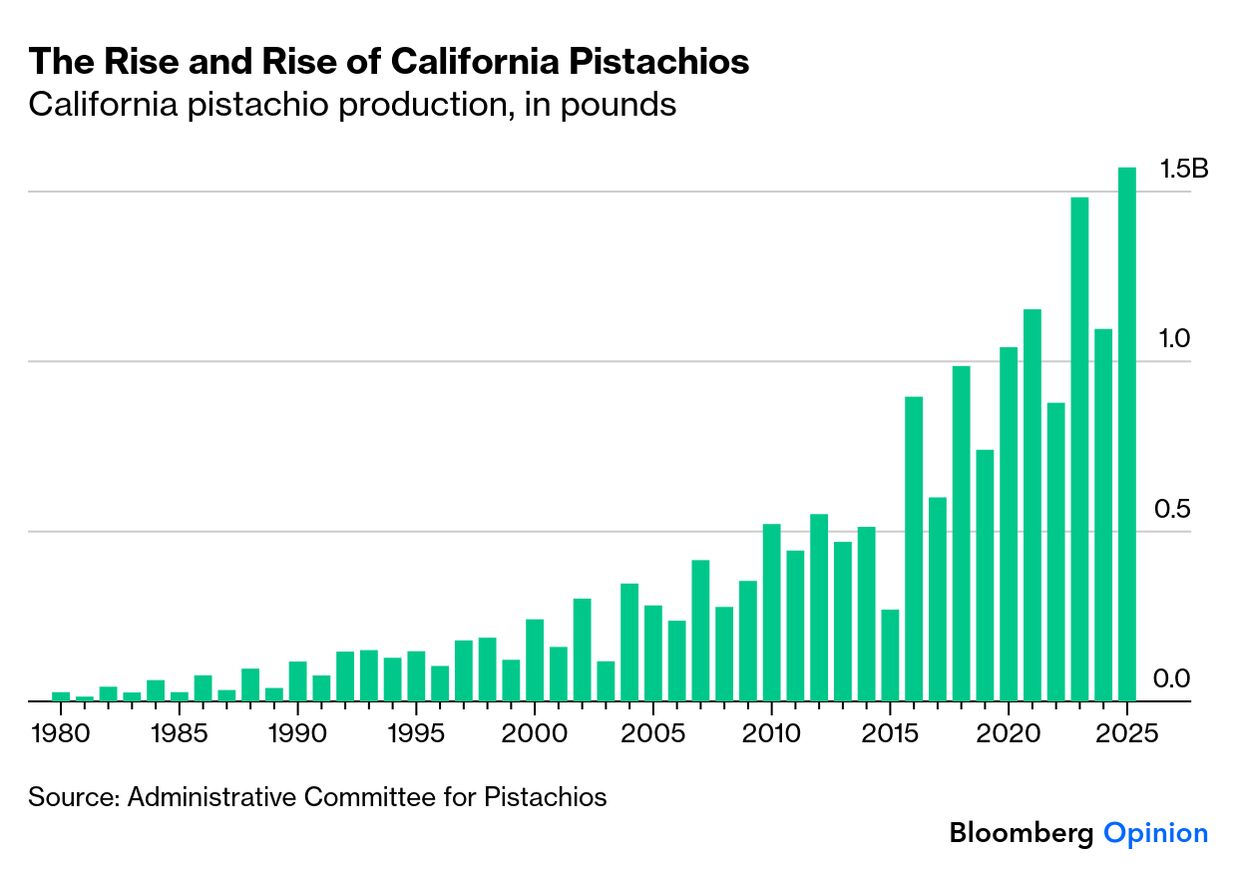
| I'm Justin Fox and this is Bloomberg Opinion Today, a less-than-$100-per-megawatt-hour distillation of Bloomberg Opinion's opinions. On Sundays, we look at the major themes of the week past and how they will define the week ahead. Sign up for the daily newsletter here. OK, maybe not everything. If you want to read about something that doesn't seem to be going well at all, we had 30+ columns (and an editorial and many videos) last week about the Iran war and its effects. There were encouraging developments to be found at Bloomberg Opinion, though, if you looked hard enough. The really big one was this: As the price of oil flirts with $100 a barrel — Javier Blas, in one of the Iran columns I link to above, predicts it will continue to rise $3 to $6 a day as long as the war persists — the price of battery power has fallen below $100 per megawatt-hour, and David Fickling says there's no going back. How many megawatt-hours are there in a barrel of oil? About 1.6, which means the $78 per megawatt-hour cost of grid electricity from four-hour batteries is equivalent in terms of energy content to $125 per barrel of oil. But the efficiency of oil-fueled power plants is only around 30% (meaning 70% of the energy is wasted) while utility-scale batteries return around 80% of the electricity they store. And while natural gas power plants are much more common and efficient (up to 60%) than oil-powered ones, they too have become more expensive sources of electricity in much of the world than batteries that charge up with cheap renewable energy when the sun is shining and/or the wind is blowing. 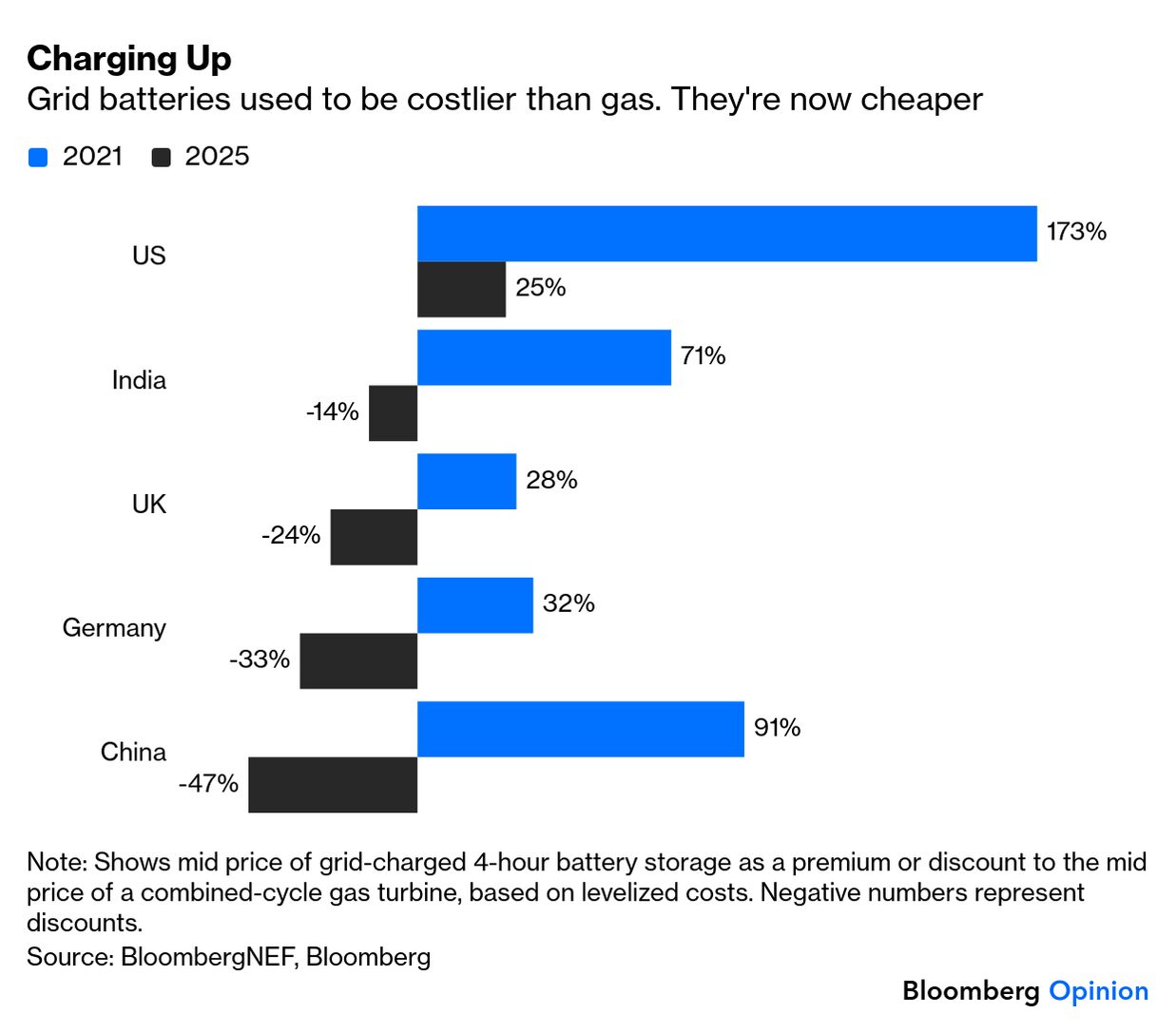 As for electric vehicles, David — who lives in Australia — says his swanky new Geely EX5 cost $29,400 USD and "charges up for half the cost of an equivalent tank of gas." With every uptick in the price of oil, that battery advantage just keeps getting bigger. It's kind of starting to look as if, by attacking Iran, US President Donald Trump has given the world a huge shove in the direction of the oft-predicted, much-delayed transition away from oil. The specifics of the shove are maybe not so good. The eventual result may be great. Another thing that's good, according to Allison Schrager, is the US retirement system. The switch from defined-benefit pensions to defined-contribution 401(k)s has actually left older Americans better off overall, while lower-income workers who can contribute little or nothing to 401(k)s get a pretty good deal from Social Security. And yes it's a bit of a stretch, but it also seems like good news that the big increase in tariffs over the past year hasn't derailed the economy. For one thing, writes Robert Burgess, it signals that the US can afford higher taxes — which the country is probably going to need to dig itself out of the budgetary hole its elected representatives have been digging for the past couple of decades. Happy Bday, Wealth of Nations and Pikachu | The US turns 250 this year. As you may be aware, that means Adam Smith's An Inquiry Into the Nature and Causes of the Wealth of Nations is turning 250 too. As I certainly was not aware until I read Gearoid Reidy's column, it also means the Pokémon and Resident Evil game franchises are turning 30. What these works have in common is … well, they don't have much in common other than durability. For Pokémon and Resident Evil, Gearoid credits careful shepherding, multimedia ubiquity and the willingness of their Japanese corporate parents to leave money on the table by not overwhelming gamers with new releases. With The Wealth of Nations, Clive Crook figures it's so durable because it's so great. It's also not the market-fundamentalist screed it is often made out to be. Along with Smith's other great work, The Theory of Moral Sentiments, Wealth represents an attempt, Clive writes, "to understand how a commercial society works, starting from the observation that the success of any such enterprise seems extremely improbable." I wrote about how the 1979 Iranian revolution helped launch the now world-leading California pistachio industry. This involved making a bunch of pistachio-colored charts, and I feel compelled to share at least one. The main thing that will be coming, clearly, is more news about the conflict in the Middle East. Some will be bad, some might be good and almost all will be at least partly erroneous. "The first casualty when war comes is truth," US Senator Hiram Johnson of California is said to have said in 1918 or thereabouts. Quote Investigator finds no evidence of Johnson uttering these words, though. It does find a California anti-war activist saying something similar in 1915 and attributing it to "someone," as well as multiple earlier quotes that express the basic idea. The true first casualty when war comes may be proper attribution of quotes about the inaccuracy of war reporting. In any case, I've had a copy of Phillip Knightley's 1975 book on the tendency of war news to be wrong, The First Casualty, on my shelf since the first Iraq war but have never actually read it. Perhaps now is the time! There's an updated 2004 edition with chapters on both Iraq wars if you're interested. There's also Evelyn Waugh's classic war-reporting novel Scoop, which will make you laugh if also probably cringe a lot. Or, you know, there's a two-day Federal Open Market Committee meeting this week, so you can just bide your time until Jerome Powell's press conference on Wednesday. And Friday is the first day of spring in the Northern Hemisphere. Note: Please send Pokémon packs and feedback to Justin Fox at justinfox@bloomberg.net | 







No comments:
Post a Comment