Friday, February 20, 2026

We haven’t heard the last of tariffs

Supreme Court strikes down some duties
View in browser
Bloomberg

From the Bloomberg News live blog, it's not overstating things to say the Supreme Court's ruling striking down President Donald Trump's power to impose tariffs is historic. For today's newsletter, Bloomberg Businessweek national correspondent Joshua Green writes that the era of Trump tariffs is likely to continue. Plus: Why the ruling might help Trump with affordability concerns, how Jerome Powell is preparing for the end of his term as Fed chair and why it's good for baseball to have a heavy favorite like the Los Angeles Dodgers. There's also a new episode of Everybody's Business.

If this email was forwarded to you, click here to sign up.

The US Supreme Court's decision today to strike down Donald Trump's tariff regime is a major setback and a political embarrassment for the president. But don't count on Trump abandoning his tariff project now.

In a 6-3 ruling, the court said the president couldn't use a federal emergency-powers law to impose his "reciprocal" tariffs on countries around the world. In addition to those "Liberation Day" levies, the decision also applies to those imposed on goods from Canada, Mexico and China in the name of addressing fentanyl trafficking.

By now, everyone knows that Trump loves tariffs; he has, after all, deemed the word "the most beautiful" he knows. He's less enamored, though, of the hard work needed to enact them the traditional way by working with Congress. So last year, Trump did an end run around the legislative branch, claiming the 1977 International Emergency Economic Powers Act gives him broad authority to impose tariffs. Then he proceeded to slap countries around the world—friends and foes alike—with levies that in some cases reached as high as 70%.
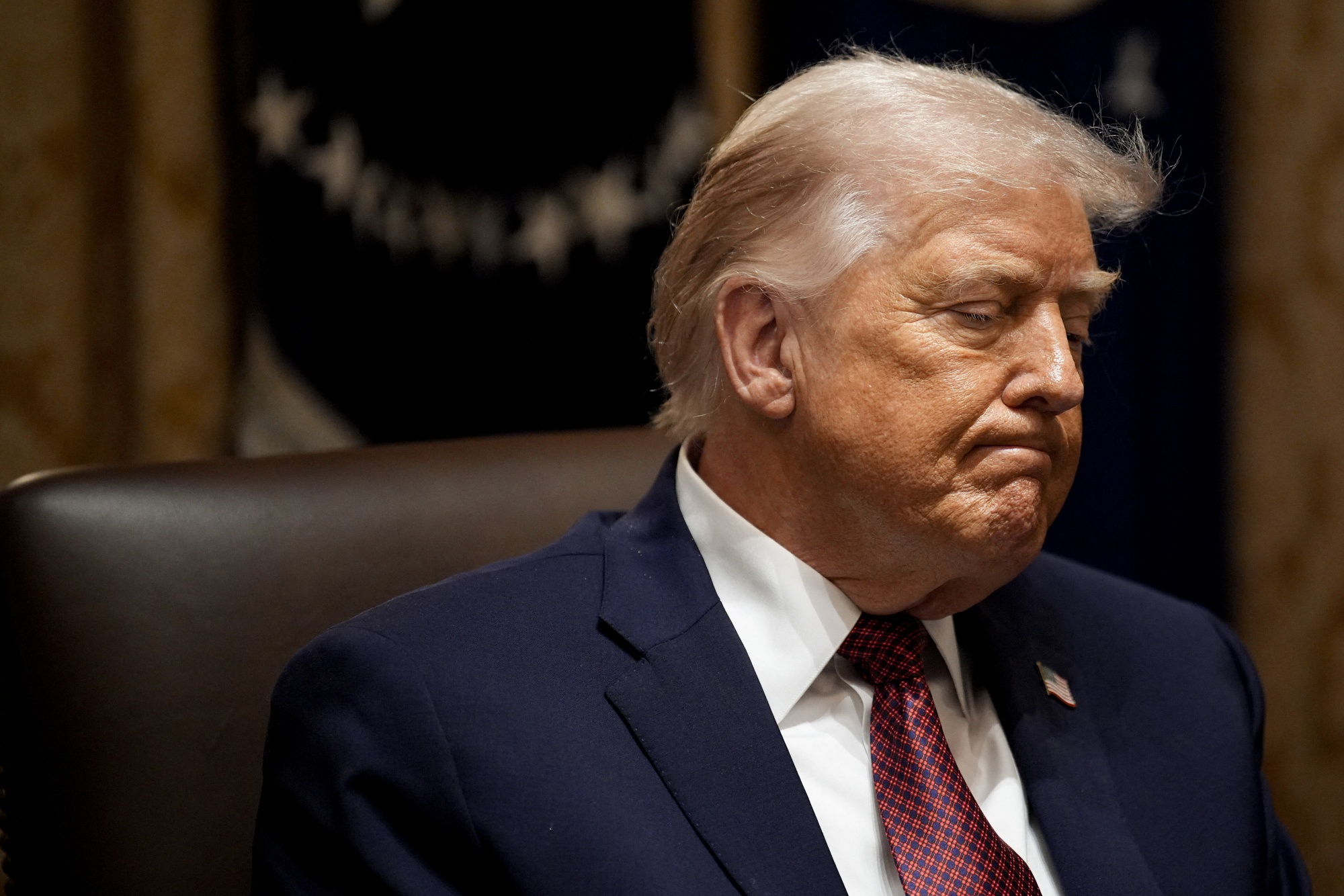
Trump in the Cabinet Room of the White House in December. Photographer: Yuri Gripas/Abaca

Trump has made a habit of declaring national emergencies in his second term—nine times in his first nine months, according to Elizabeth Goitein of the Brennan Center for Justice—on everything from energy to trade to immigration. That's far more than any other president since the enactment of the National Emergencies Act 50 years ago.

But for tariffs, at least, the court today said Trump doesn't have the emergency powers he claimed, risking all sorts of economic and geopolitical uncertainty. The ruling will complicate relations with major trading partners like China, the European Union and dozens of others that have been hit with tariffs. It also creates substantial headaches for the administration here at home, as more than 1,000 companies have sued to recoup their share of the roughly $170 billion paid in duties so far. The justices didn't address the refund issue today, leaving it to a lower court to sort it out.

In a social media post from November, Trump acknowledged that tariff refunds would be a "catastrophe" and an "economic disaster." That's because the administration was counting on revenue from the levies to help pay for costly tax cuts and various spending programs baked into his One Big Beautiful Bill Act. Losing that money threatens to bruise the government's fiscal standing.

Few consumers will mourn the court's decision, and many will likely cheer it. An ABC News/Washington Post poll in November found that almost two-thirds of Americans disapprove of Trump's tariff policies, including 96% of Democrats, 72% of independents and 29% of Republicans. And a Bloomberg Economics analysis before the decision said a sweeping ruling against Trump could reduce the US average effective tariff rate from 14.5% to 6.5%, a level not seen since March. If companies pass those savings along to consumers, it could help ease the affordability crisis that polls consistently show to be the top concern among US voters.

So where's the catch? Given the president's conviction that tariffs are a vital tool of his economic statecraft, he'll likely try to revive them. Trump's initial reaction, according to CNN's Kaitlan Collins, was to call the decision a "disgrace," and he vows to implement a backup plan. He won't necessarily even have to go through Congress to do so. During his first term, Trump relied on other mechanisms to enact his cherished import taxes. He invoked the Trade Expansion Act of 1962 when imposing steel tariffs and the Trade Act of 1974 to impose duties on China. As Bloomberg's Shawn Donnan noted in November, both could be revived to impose import taxes on cars, computer chips, drugs and much more. Ultimately, Trump will have to decide whether to accept the court's decision or barrel ahead. Given his penchant for bombast and bluster, it's not hard to predict which route he'll choose.

RELATED: Supreme Court's Tariff Ruling Is Secretly a Gift to Trump
Shawn Donnan writes: "What's been left unsaid by the White House in the wake of Trump's loss before a Supreme Court stacked with his appointees, though, is that this decision presents the administration with an opportunity. What at the moment looks like an embarrassing setback creates an opening for Trump to recalibrate his tariffs, which polls show are unpopular with voters."

EXPLAINER: Trump's Options After the Supreme Court Said His Tariffs Are Illegal

Trade wars, tariff threats and logistics shocks are upending businesses and spreading volatility. Sign up for the Supply Lines newsletter to understand the new order of global commerce. 

In Brief

Get the Bloomberg Businessweek print magazine delivered to you and unlimited access to Businessweek stories on Businessweek.com. Annual subscription for $99.

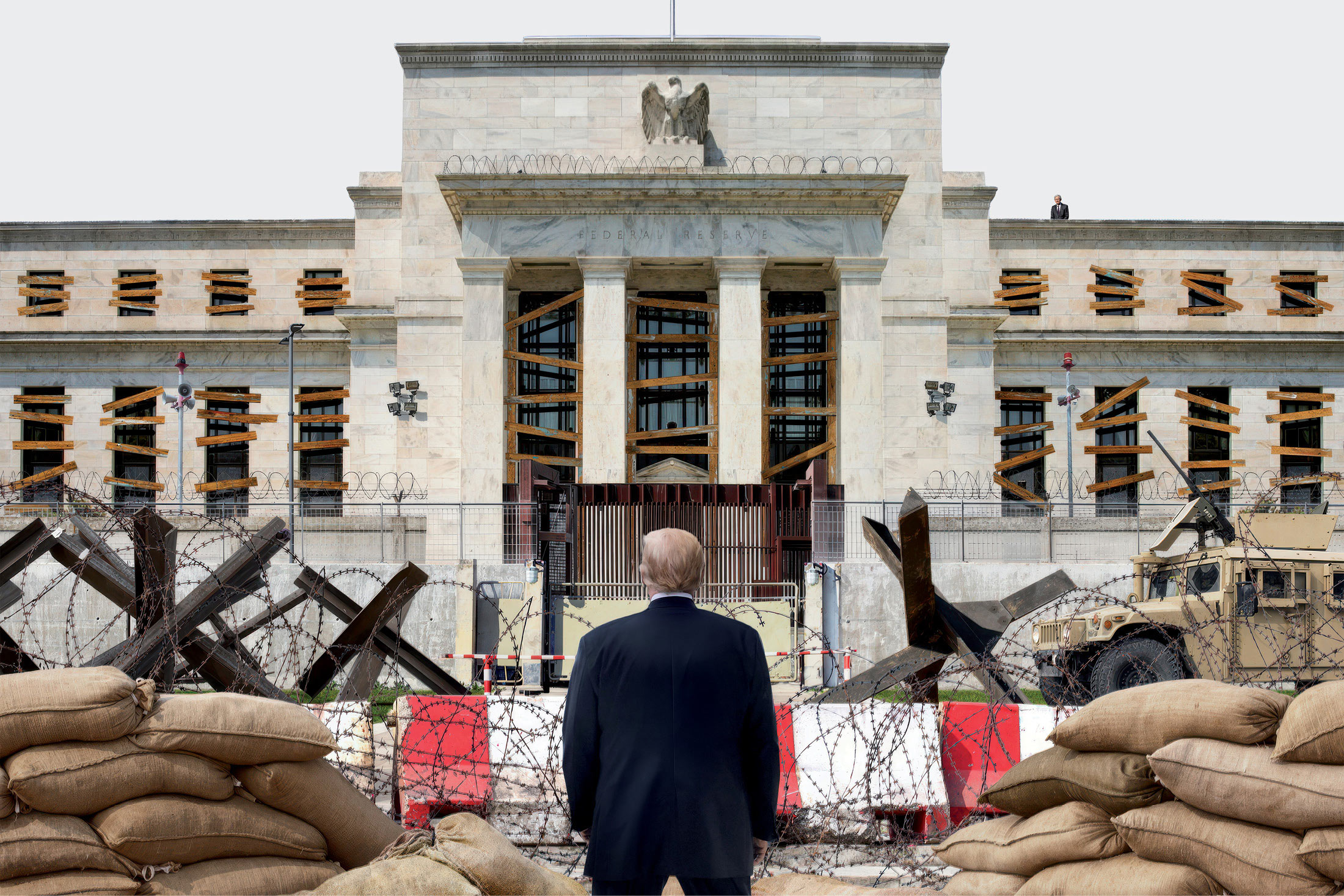
Powell Is Fortifying the Fed

Photo illustration: Justin Metz for Bloomberg Businessweek; photos: Getty Images

A few months ago, something very unusual happened at the Federal Reserve, though only seasoned central bank watchers likely sensed this particular disturbance in the force. At the December meeting on interest rates, the vote was split 9-3. Nine members of the Fed's rate-setting committee (including Chair Jerome Powell) elected to lower the benchmark by a quarter percentage point, and two others dissented in favor of no reductions. President Donald Trump's appointee, Stephen Miran, also dissented, because he thought economic conditions warranted a much bigger whack.

This kind of disagreement is rare at the central bank, which strives for unanimity in its policy decisions. It was the first time since 2019 that three officials on the Federal Open Markets Committee voted against a policy decision. The real news, however, was not so much the split vote itself but how Powell spoke about it. In a press conference after, rather than dismissing the dissent, he made a point of celebrating the committee's robust debate, saying "the discussions we have are as good as any we've had in my 14 years at the Fed."

Tolerating—or even encouraging—dissent at the central bank is one of several moves by Powell that could fortify the 112-year-old institution against the Trump administration's unrelenting efforts to take control of monetary policy.

Stacey Vanek Smith writes about some of the other moves the central bank chair has been making further removed from the public eye: How Jerome Powell Is Trump-Proofing the Fed

On the Podcast

Salaries are an anchor in many Americans' lives, but billionaires instead rely on investment income and tax avoidance to line their pockets. For this week's episode of the Everybody's Business podcast from Bloomberg Businessweek, professor and author Ray Madoff takes us behind the curtain of the megarich and their asset-saving tricks, just as states like California and cities like New York debate how to address their crushing budget shortfalls. Plus, what Generation Alpha thinks about your skinny jeans and Steven Colbert takes on the FCC.

Listen and subscribe on Apple, Spotify, iHeart and the Bloomberg Terminal.

Weaker Growth

1.4% 

That's the annual rate at which inflation-adjusted gross domestic product increased in the fourth quarter, according to the government's initial estimate out on Friday. The US economy grew less than expected at the end of last year, dragged down by a record-long government shutdown, consumer spending and trade.

Baseball Fans, Stop Whining About the Dodgers

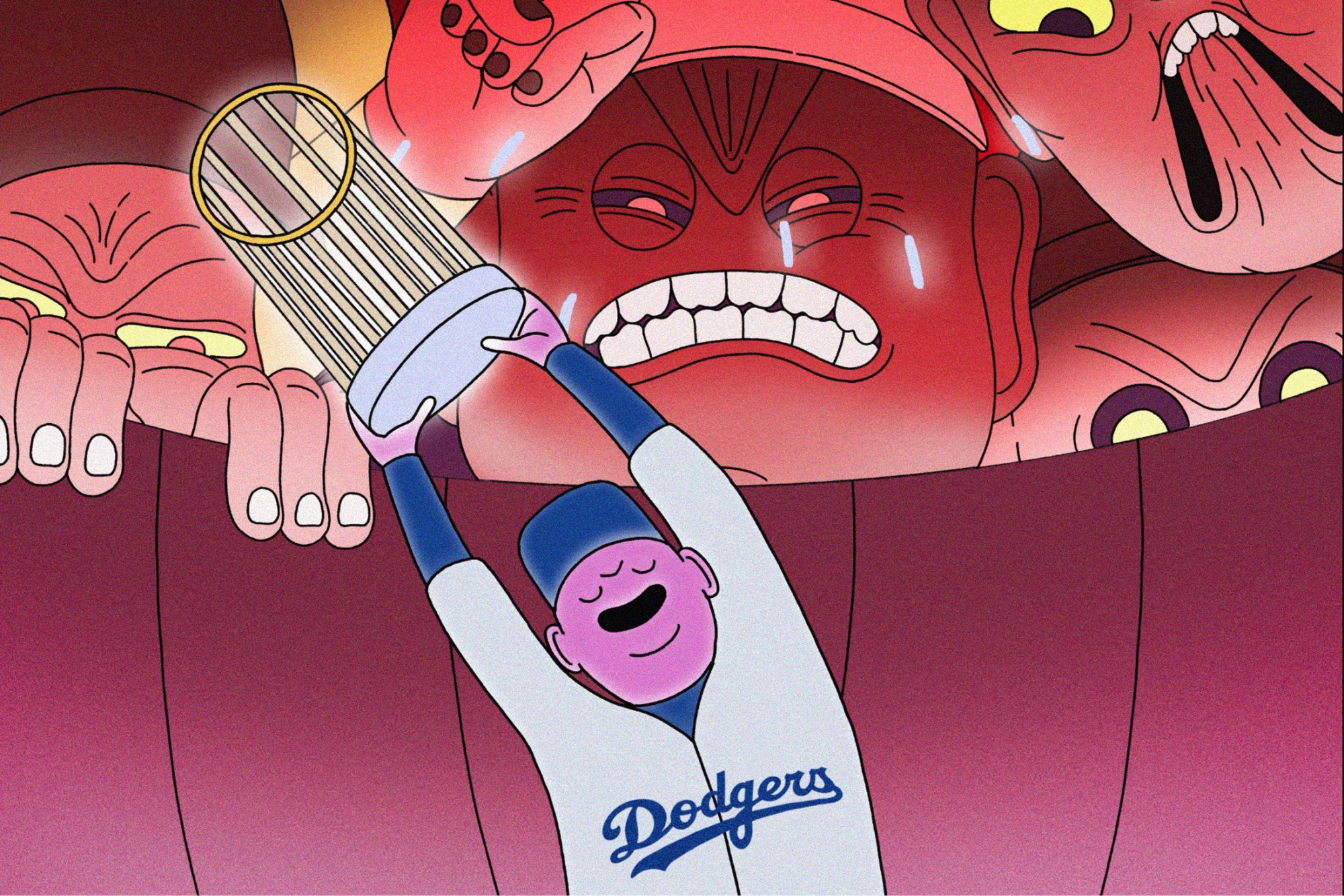
Illustration: Alex Gamsu Jenkins for Bloomberg Businessweek

In January, when the Los Angeles Dodgers signed outfielder Kyle Tucker to a four-year, $240 million contract, the sports talk radio hosts of America knew just what to do. The Dodgers, fresh off a second consecutive World Series victory, had landed the biggest prize in Major League Baseball's free agent market. It was time to commence handwringing about competitive balance. "It's terrible for baseball," longtime sports yakker Chris "Mad Dog" Russo told Dan Patrick, a fellow veteran of the trade, on his show after news of Tucker's signing broke.

Russo (a lifelong San Francisco Giants fan) then made the familiar case that something must be done to stop the Dodgers from spending their way to success. He ticked through a list of their big-name free agent signings over the past few years, from Shohei Ohtani and Yoshinobu Yamamoto to, this winter, Edwin Diaz and Tucker; pointed to their half-billion-dollar payroll; and lamented their monotonous run of playoff appearances, now at 13 straight seasons. "I mean this is getting to be a joke," he said. "You can't tell me it's good for the sport."

But in a new Field Day column, Ira Boudway does just that: The Dodgers Are Annoying, Greedy—and Good for Baseball

What's Next for Tariffs

"It is a hard path for the administration to go to Congress because even within the Republican caucus there are a variety of views on tariffs. It can just really get bogged down in the details and make it difficult to get anything across the finish line."
Greta Peisch
Who served as general counsel for the US Trade Representative during the Biden administration
Trump faces daunting odds of convincing the US Congress to restore his sweeping global tariffs after the Supreme Court decision Friday that struck them down.

Play Alphadots!

Our daily word puzzle with a plot twist.

alphadots

Today's clue is: Pitcher's equipment?

Play now!

More From Bloomberg

Like Businessweek Daily? Check out these newsletters:

  • Odd Lots, with Joe Weisenthal and Tracy Alloway, explores the most interesting topics in finance, markets and economics.
  • Power On, with Mark Gurman, has the inside scoop on all things Apple and consumer tech.
  • Washington Edition follows Trump's second term through the lens of business, markets and the economy.
  • Bloomberg Weekend discusses big ideas and open questions in the fascinating places where finance, life and culture meet.
  • Business of Food covers how the world feeds itself in a changing economy and climate, from farming to supply chains to consumer trends.

Explore all Bloomberg newsletters.

Follow Us

Like getting this newsletter? Subscribe to Bloomberg.com for unlimited access to trusted, data-driven journalism and subscriber-only insights.

Want to sponsor this newsletter? Get in touch here.

You received this message because you are subscribed to Bloomberg's Businessweek Daily newsletter. If a friend forwarded you this message, sign up here to get it in your inbox.
Unsubscribe
Bloomberg.com
Contact Us
Bloomberg L.P.
731 Lexington Avenue,
New York, NY 10022
Ads Powered By Liveintent Ad Choices

No comments:

Post a Comment

Special AI Project About To Lo "Live"

...