| Read in browser | ||||||||||||||
 The world is running a major nature deficit right now, and the costs could prove enormous. That's the warning in a new report out Monday and the subject of today's newsletter. Plus, climate risk is already impacting the GDP of the countries with the least ability to foot the bill, and the Super Bowl halftime show. (You read that right.) Did someone forward you this email? You can subscribe to the Green Daily for free climate news to your inbox six days a week. Cost of doing businessBy Olivia Rudgard and Eric Roston Global businesses are undermining the environment even though they rely on nature for key raw materials and critical services such as pollination and water filtration, according to a major report endorsed by more than 150 countries. "A focus on growth as measured by the gross domestic product" has resulted in significant damage to the natural world, says the study released on Monday. Nearly 80 scientists and industry experts spent three years working on the report, which is designed to inform investment decisions and national policies. 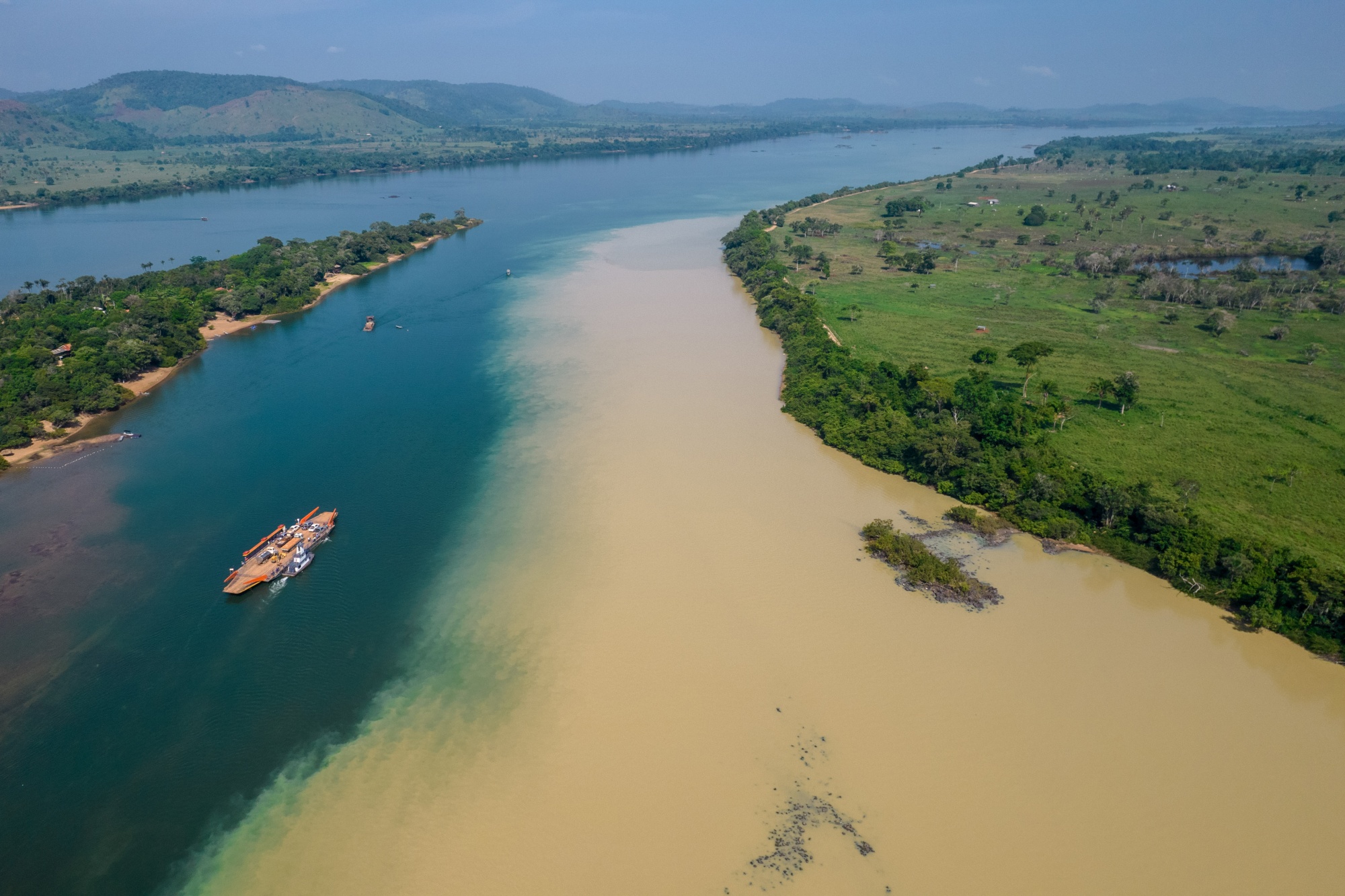 A boat passes through the meeting of the Xingu River and the Rio Fresco in Brazil. Photographer: Jonne Roriz/Bloomberg The report was agreed upon by researchers and diplomats at the summit of the Intergovernmental Platform on Biodiversity and Ecosystem Services (IPBES), which concluded in Manchester, UK, on Sunday. Nature is in decline worldwide, and levels of so-called natural capital — ecosystems and natural resources — have fallen by nearly 40%, the report says. But because markets don't adequately price or value biodiversity, businesses don't experience the cost of the damage and often can't make money from protecting it, meaning there is little incentive to do so, the authors argue. Nongovernmental organizations and scientists have long argued that defending nature and biodiversity is a way for companies to protect themselves from risks like extreme heat and flooding, as well as loss of the plants and wildlife that are relied upon for food and medicine. But companies and governments still favor investments that are likely to harm nature rather than help it. Some $7.3 trillion was spent on "nature-negative" activities compared to $220 billion on nature-friendly investments in 2023, according to the UN's most recent State of Finance for Nature report. "Too often, at present, what's good for business is bad for nature, and vice versa," Stephen Polasky, professor of environmental economics at the University of Minnesota, and co-chair of the report, said in a press conference on Monday. "We can't just say 'businesses, please be good' — we actually have to tie this to some kinds of mechanisms so they have incentives to take these actions." Read the full story. You can subscribe to Bloomberg News for the latest climate and biodiversity news. Funding needed$700 billion The amount that almost 200 governments pledged to raise annually by the end of the decade to reverse the loss of nature. Countries are slated to check up on progress in Armenia this fall. Making the case"Biodiversity shouldn't be a sustainability box-ticking exercise. Fundamentally, if your soil biodiversity dies, then your crop yields die." Dimple Patel Chief executive officer, NatureMetrics NatureMetrics helps companies measure their impact on nature using so-called eDNA. Credit ratings alertBy Eric Roston Nations that pollute the least are among the most vulnerable to disasters and face the highest barriers to the financing they need to protect themselves. As climate impacts worsen, already towering debt loads, finance costs and poor sovereign credit ratings could enforce a "vicious cycle" for developing countries, according to new research. Fitch Ratings this month published an analysis suggesting that small countries prone to extreme weather and fossil-fuel exporters may face the highest sovereign risks from climate change in the coming years. 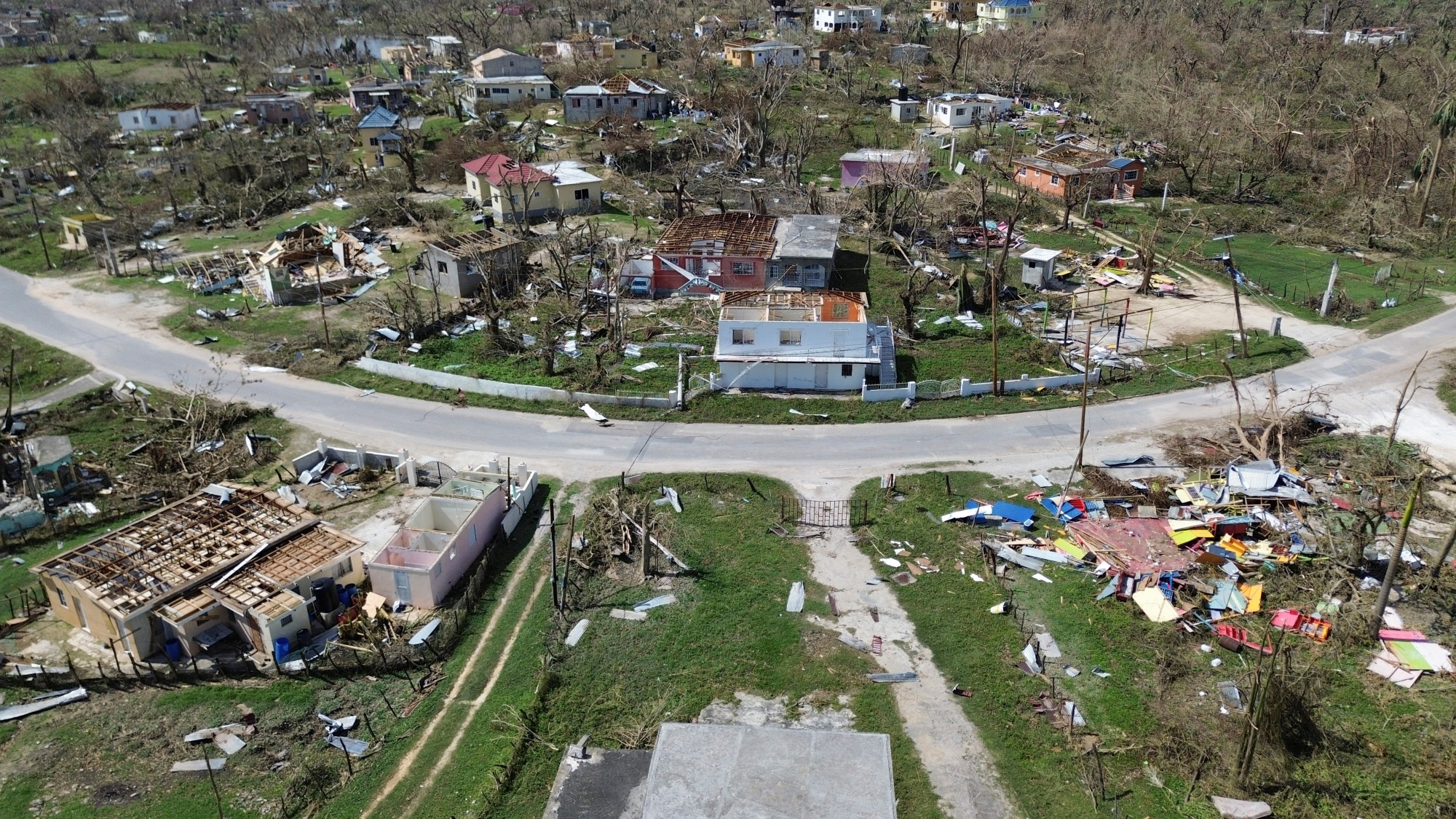 Damaged buildings in the aftermath of Hurricane Melissa in Lewis Town, Jamaica. Photographer: Ricardo Makyn/AFP/Getty Images A new tool for analysis — called Climate Vulnerability Signals — scores sovereign credit on a 100-point scale, based on both physical risks and "transition risks," or economic sensitivity to declining fossil-fuel use and high clean-tech costs. Of 119 countries analyzed through 2050, 60 had scores high enough to suggest that they were at risk of a credit downgrade by 2050, according to the report. That would make it harder for them to borrow to finance projects that protect against climate change and speed the energy transition. Identifying future risks is essential, said June Choi, a PhD candidate at Stanford University, but it's equally important for agencies to spell out what kind of adaptations reduce risks. Choi and Stanford colleagues late last month published a working draft that looks backward through time and finds a strong association between countries' exposure to tropical storms and the likelihood of having a speculative sovereign rating. The paper has yet to be submitted for peer review, but it adds to growing evidence linking climate impacts to sovereign credit risk. More and more extreme weather shocks make it harder to service debt, raising the cost of capital and consequently the bar for resilience investments. Read the full story to learn more about Choi's research and findings. More from Green Sylvia Earle Photographer: Kimberly White/Getty Images for RE:WIRED Green 2022 Plans to extract metals from the deep seabed are too complex and costly to succeed, according to one of the world's most experienced marine biologists. "Going up in space is relatively easy compared to going deep into the ocean," said Sylvia Earle, 90, an oceanographer and previously the first woman to serve as chief scientist of the National Oceanographic and Atmospheric Administration. "It's an illusion because of the actual cost of mobilizing what it takes to operate in those depths." Nations, including the US, are racing to craft policies and improve technologies to enable the extraction of critical minerals, or metals like copper and gold, from the deep ocean in attempts to bolster economic and supply chain security. Japan is advancing a decade-old plan to extract rare earths from the seabed as it tries to counter China's dominance of the materials. Read the full story to see Earle's full warning. This week's Zero Major economies around the world are grappling with electricity grids under stress from equipment bottlenecks and workforce shortages. What can be done to solve it? This week on Zero, Akshat Rathi talks with Manoj Sinha, CEO of Husk Power Systems, about distributed energy resources and their potential to bring electricity to where it is needed most — from energy-poor regions in the Global South, to energy-hungry data centers in rich countries. Listen now, and subscribe on Apple, Spotify or YouTube to get new episodes of Zero every Thursday. Photo finish Bad Bunny performs during the Super Bowl LX Halftime Show. Photographer: Ishika Samant/Getty Images Raise your hand if you had energy justice as an integral part of the Super Bowl halftime show. Bad Bunny's set was an ode to his native Puerto Rico. The reggaeton star broke out "El Apagon," a song that sounds like a club banger but has lyrics exploring deep problems on the island while celebrating its culture. Those problems include its poorly maintained grid, which became an international issue during the 2017 Hurricane Maria blackout, the longest in US history. (The song's title in English is "The Blackout," and the official video is a 23-minute documentary about the grid and other issues.) As Bad Bunny climbed a power pole to perform the song, dancers spun on other poles as transformers exploded. It was an unmissable message, even if you don't speak a word of Spanish. More from Bloomberg
Explore all Bloomberg newsletters. Follow us
You received this message because you are subscribed to Bloomberg's Green Daily newsletter. If a friend forwarded you this message, sign up here to get it in your inbox.
|
Monday, February 9, 2026
How much is nature worth?





Subscribe to:
Post Comments (Atom)
Protests flare as Herzog visit continues, Macquarie update, Firmus funding
Get caught up Read in browser Israel's President Isaac Herzog continues his tour of Australia today, after protests flared in Sydney...
-
PLUS: Dogecoin scores first official ETP ...
-
Hollywood is often political View in browser The Academy Awards ceremony is on Sunday night, and i...


No comments:
Post a Comment