| Bloomberg Evening Briefing Americas |
| |
| Thanks, but no thanks. Again. Warner Bros. Discovery plans once more to reject a takeover bid from Larry and David Ellison and the media company Paramount Skydance. The Warner Bros. board hasn't made a final determination, but among its concerns is said to be that Paramount has yet to increase its original offer—one which Warner Bros. rejected as inferior to that of Netflix (the company it wants to merge with). Several shareholders have said they expect Paramount to offer more money. The board is also worried the Paramount deal won't allow the company to manage its debt without the Ellisons' approval, and that Paramount hasn't guaranteed it would cover the breakup free Warner Bros. would have to pay Netflix. —David E. Rovella | |
What You Need to Know Today | |
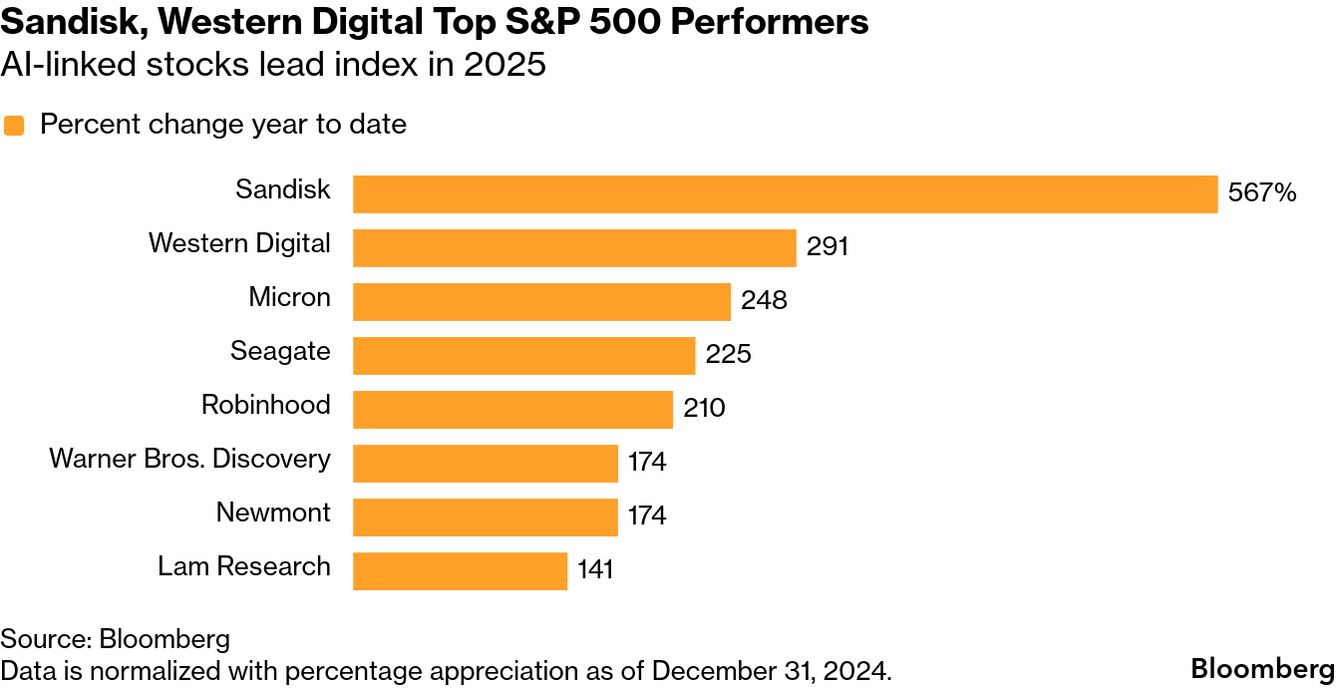
| With Wall Street (at least publicly) sanguine about the risk of an artificial intelligence bubble popping, some investors are seeking new ways to cash in on the frenzy. The beneficiaries appear to be so-called pick-and-shovel stocks—the companies actually building those massive data centers underpinning the AI revolution members of the Magnificent 7 keep paying each other for. Investors may find room to grow and better valuations by buying into the next wave of companies set to benefit from the billions of dollars hyperscalers like Amazon and Microsoft are spending. The focus is "where that money is being spent," said Matt Sallee, a portfolio manager at Tortoise Capital Advisors. "The chips to a degree, but more so some of the names that you haven't really heard of." | |
| |
|
| They call it America's "cancer industrial complex." About 2 million people across the country are diagnosed with the disease each year, and many face the same grim financial battle. For those who don't yet qualify for Medicare, it's especially fraught—and often deadly. Middle-age and younger Americans who find themselves at the mercy of the "complex" are often saddled with years of complicated treatment and soaring prescription costs—even if they have private insurance. A Bloomberg News investigation this year found that the median initial price of cancer drugs has quadrupled since 2000, to a staggering $25,000 a month. And many of the added expenses may not even be necessary. Fewer than half of the drugs approved since 2000 have ever been proven to prolong people's lives, according to a Bloomberg analysis. And it's about to get worse. Even with a patchwork of government payment caps and charity programs, the price still soars far out of proportion to the benefits. With the refusal of Republicans in Congress to extend Affordable Care Act subsidies for millions of Americans, the fallout is likely to expand in the new year. | |
|
| |
|
| A year of less-than-stellar news for Tesla is ending on a similarly troublesome note for Elon Musk's company. The electric vehicle maker took the unusual step of publishing a series of sales estimates indicating the outlook for its vehicle deliveries may be lower than many investors were expecting. Tesla is on course for its second consecutive drop in annual vehicle sales, with the company compiling an average estimate for 1.6 million deliveries, down more than 8% from a year earlier. The carmaker's estimates for the next three years are also lower than averages compiled by Bloomberg. | |
| |
|
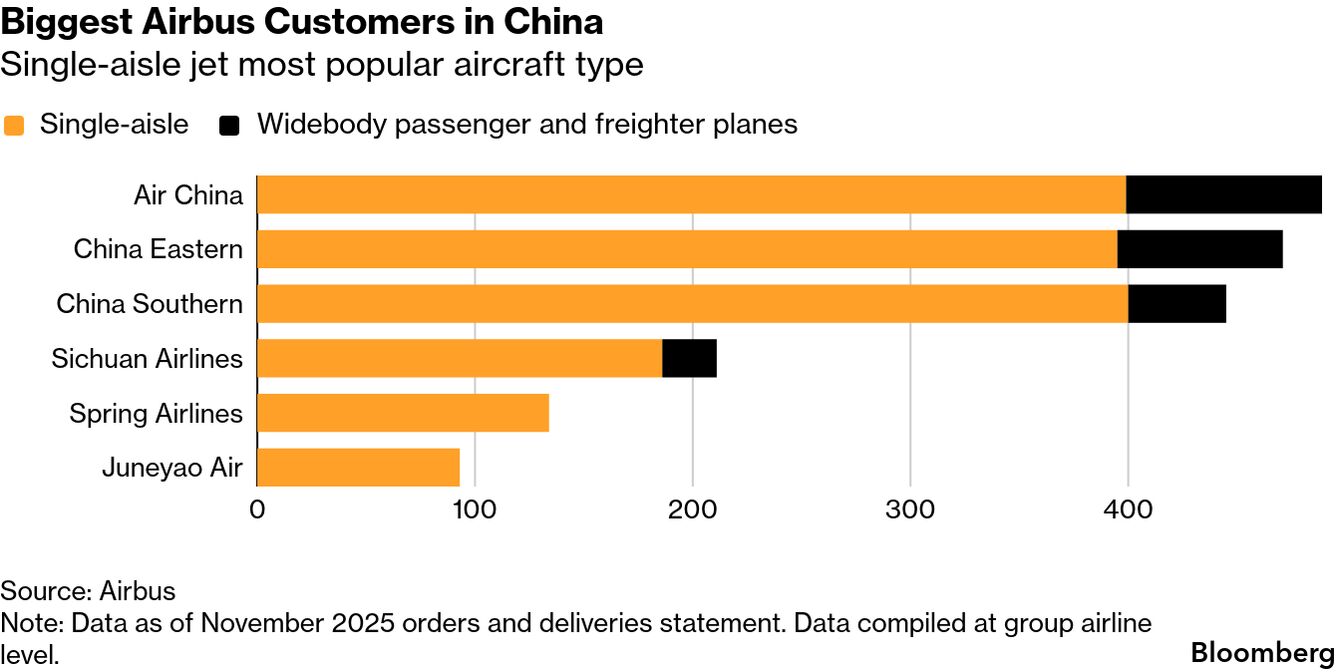
| Air China will buy 60 Airbus aircraft in a long-anticipated transaction worth $9.53 billion, deepening its reliance on western-made planes. The state-run carrier said it would take delivery of the A320neo family jets from 2028-2032. China has been said to be lining up a group purchase of about 500 aircraft from Airbus. The current order delivers a much needed boost for Airbus, which has suffered setbacks in recent weeks, with software glitches temporarily causing a global recall of its most profitable jets and quality issues emerging on some newly made aircraft. | |
|
| Cooking television show America's Test Kitchen has agreed to purchase recipe site Food52, which said it was forced to file bankruptcy after its lender unexpectedly swept cash from its accounts. The offer from America's Test Kitchen is worth $6.5 million and will gives Food52 a path out of Chapter 11 under new ownership. Food52 has struggled following a pandemic era boom, saying in court papers that "the pivot from growth-at-all-costs to a model of responsible, profitable growth proved elusive to achieve." The business has been burdened with high operating costs, "unfavorable legacy contracts, outdated technology and lack of scalable systems," | |
|
| |
What You'll Need to Know Tomorrow | |
| |
| |
| |
| Enjoying Evening Briefing Americas? Get more news and analysis with our regional editions for Asia and Europe. Check out these newsletters, too: Explore all newsletters at Bloomberg.com. | |
| |
Before it's here, it's on the Bloomberg Terminal. Find out more about how the Terminal delivers information and analysis that financial professionals can't find anywhere else. Learn more. Want to sponsor this newsletter? Get in touch here. | | | You received this message because you are subscribed to Bloomberg's Evening Briefing Americas newsletter. If a friend forwarded you this message, sign up here to get it in your inbox. | | |

















No comments:
Post a Comment