|
Reading time: 5 minutes |
News | Crypto Converter | Crypto Calculators |
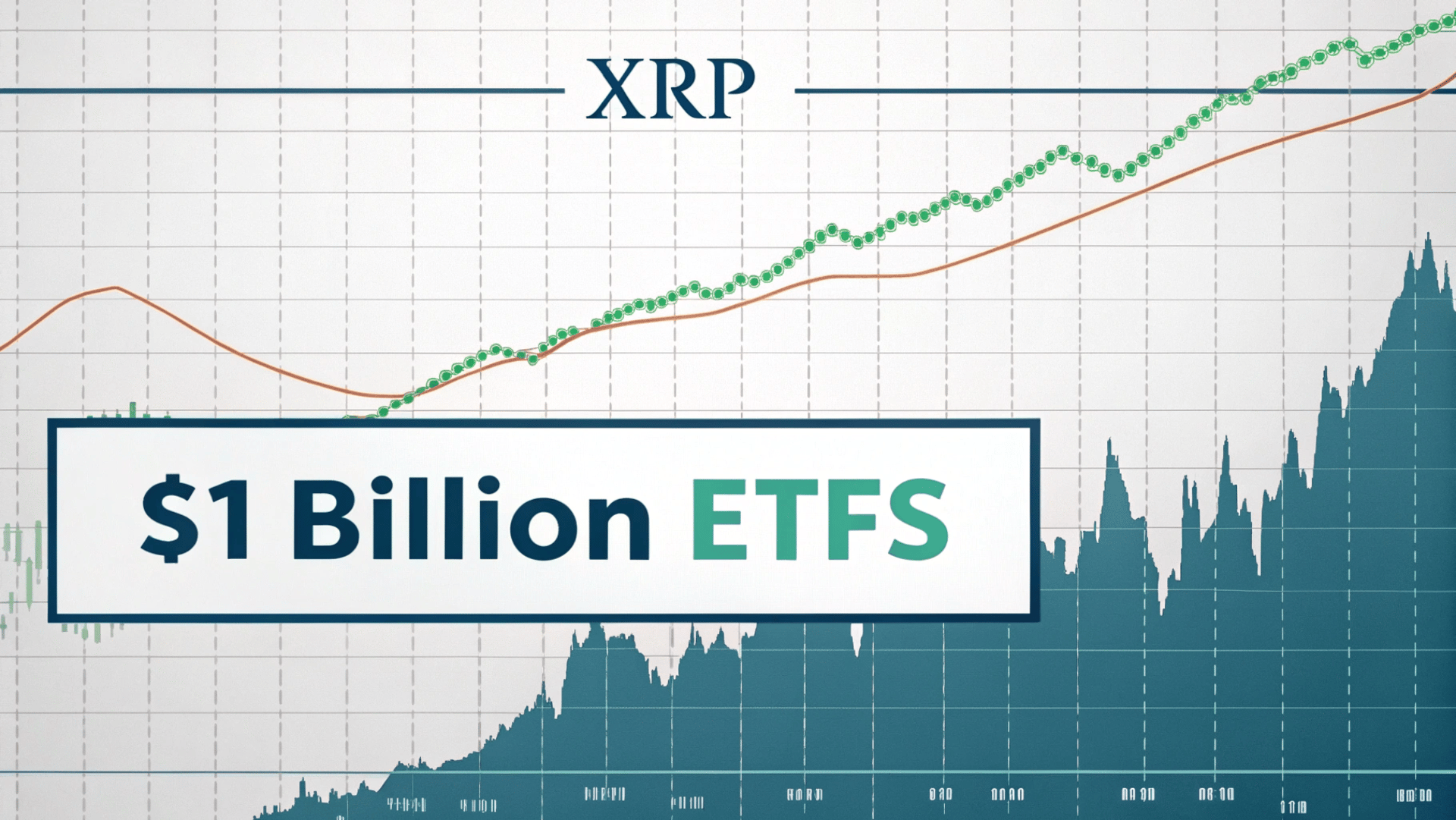
XRP's price disconnect deepens as spot ETF assets climb above $1B |
|
Key points: |
Institutional inflows into spot XRP ETFs continued uninterrupted, lifting total assets past the $1 billion mark while XRP price momentum weakened. XRP lost the $2 handle once more, with on-chain positioning suggesting limited buying conviction below current levels.
|
News - Institutional interest in XRP-linked investment products remained steady, with spot ETFs extending their inflow streak to 20 consecutive sessions. |
Cumulative inflows approached $1 billion, pushing total assets held by these funds above $1.2 billion, according to SoSoValue data. Franklin's XRP ETF accounted for the largest single-day contribution, while Bitwise and Canary products also recorded fresh additions. |
Yet the growing ETF footprint failed to translate into price stability. XRP slipped back below $2, marking another breakdown of a key psychological level and reinforcing a broader short-term downtrend that has persisted through December. |
ETF demand vs weak price structure - The gap between institutional flows and market performance has continued to widen. Spot XRP ETFs have now crossed the $1 billion threshold in assets, yet XRP's price action has remained under pressure, struggling to reclaim lost ground. |
On-chain data pointed to thinning support beneath current levels. XRP hovered near the $1.93 zone, an area identified as an order block with limited buyer density below $1.90. |
Glassnode data showed that meaningful accumulation does not reappear until closer to $1.78, where roughly 1.85 billion XRP were previously purchased. If that zone fails to attract demand, downside risk increases toward the $1.61 region referenced as a longer-term defensive level. |
Short-term inflection and broader context - While the broader structure remains fragile, short-term signals have introduced a narrow window for stabilization. |
On-chain cost basis data highlighted $1.97 as a key level, reinforced by approximately 1.79 billion XRP acquired in that range. As long as price remains above this area, the setup allows for a potential move toward $2.17, where heavy supply is clustered. |
At the same time, Ripple has continued expanding beyond price-driven narratives. The company recently began testing its RLUSD stablecoin across multiple Ethereum layer 2 networks using Wormhole's cross-chain framework. The move strengthens Ripple's multichain footprint and supports broader utility for XRP-related activity, even as spot market momentum remains subdued. |
From an institutional lens, ETF growth continues to underpin longer-term conviction. Analysts tracking flows have suggested that sustained weekly inflows could scale materially over time. For now, XRP remains caught between steady institutional participation, cautious on-chain positioning, and a market still searching for a decisive directional signal. |
Strategy doubles down on Bitcoin as macro warnings grow louder |
|
Key points: |
Strategy added nearly $1 billion worth of Bitcoin for a second straight week, pushing its total holdings above 671,000 BTC. The aggressive buying comes as macro analysts and veteran traders warn of rising downside risks for Bitcoin.
|
News - Strategy continued its aggressive Bitcoin accumulation, purchasing 10,645 BTC last week for $980.3 million at an average price of $92,098 per coin. The buy marked the company's second consecutive weekly acquisition of nearly $1 billion in Bitcoin, according to regulatory filings. |
The purchase lifted Strategy's total Bitcoin holdings to 671,268 BTC, acquired for $50.33 billion at an average price of $74,972. At current market prices, the stash is valued at roughly $60 billion. |
The acquisition was funded primarily through equity sales, including common stock and preferred shares, despite ongoing pressure on Strategy's share price, which has fallen 53% over the past six months. |
Buying the dip as confidence is tested - Strategy's renewed pace of accumulation stands out against a more cautious Bitcoin backdrop. Veteran trader Peter Brandt recently warned that Bitcoin's long standing parabolic growth structure has broken, raising the risk of a deeper correction following the pullback from highs near $126,000 to below $90,000. |
Brandt pointed to historical post halving cycles, which often ended with sharp drawdowns after exponential rallies lost momentum. His comments have added to broader concerns that Bitcoin may face extended volatility in the months ahead. |
Macro caution meets long-term conviction - Macro analyst Luke Gromen also turned more cautious in the near term, arguing that Bitcoin has struggled to outperform gold and has shown vulnerability amid shifting macro conditions. |
While still supportive of the long-term debasement thesis, Gromen suggested Bitcoin could remain tactically weak as narratives around risk, valuation, and emerging technological threats gain traction. |
Against that backdrop, Strategy's continued buying highlights a sharp divide between corporate conviction and growing macro skepticism, with Bitcoin once again sitting at the center of that debate. |
UK moves to bring crypto under full financial regulation by 2027 |
|
Key points: |
The UK plans to extend existing financial services laws to crypto firms by late 2027, placing them under full FCA oversight. Officials say the shift will provide clearer rules and stronger consumer protections, while industry voices warn against overregulation.
|
News - The UK government is preparing to bring cryptocurrency firms under its core financial regulatory framework from 2027, extending oversight beyond existing anti-money laundering rules. The Treasury published draft legislation in April outlining how crypto exchanges, dealers, and stablecoin issuers would be brought into the regulatory perimeter. |
Under the proposals, crypto companies would be regulated in a similar manner to traditional financial products, subject to standards around disclosures, governance, transparency, and consumer protection enforced by the Financial Conduct Authority. |
Officials have said the move is intended to close regulatory gaps as crypto activity becomes more embedded in the wider financial system. |
US-style approach, not a new crypto rulebook - Rather than creating a standalone crypto regime, the UK plans to apply existing financial services laws to digital assets. This approach mirrors the regulatory direction taken in the US and contrasts with the European Union's Markets in Crypto Assets framework, which was built specifically for the sector. |
Chancellor Rachel Reeves described the plan as a way to give firms clearer rules while preventing bad actors from operating in the UK market. The Treasury has said the legislation could be introduced as early as Monday, with implementation targeted for October 2027. |
Industry cautions on pace and proportionality - While many industry participants welcomed the promise of regulatory clarity, some warned that the transition could be challenging for startups. |
Legal and policy experts cautioned that imposing full financial regulation too quickly could raise costs, slow innovation, and discourage early-stage firms from launching in the UK. |
Officials have stressed that the rules will be proportionate and designed to support growth, but consultations on stablecoins and other crypto activities are expected to continue through 2026. For now, the proposals signal a structural shift that would place crypto firmly within the UK's mainstream financial system. |
JPMorgan brings tokenized money market fund to Ethereum |
|
Key points: |
JPMorgan has launched an Ethereum-based tokenized money market fund, seeding it with $100 million and targeting qualified investors. The move highlights growing institutional adoption of on-chain finance as Wall Street accelerates asset tokenization.
|
News - JPMorgan Chase has introduced its first tokenized money market fund on the public Ethereum blockchain, expanding its push into on-chain finance. The fund, called My OnChain Net Yield Fund and trading under the ticker MONY, will be available to qualified investors this week through the bank's Morgan Money platform. |
The private fund has been seeded with $100 million of JPMorgan capital and requires a minimum investment of $1 million. Access is limited to individuals with at least $5 million in assets or institutions holding $25 million or more. |
MONY was built using the bank's Kinexys Digital Assets platform and allows investors to earn yield while holding the fund's token directly on-chain. |
Following the tokenization playbook - JPMorgan said the launch reflects a broader shift toward tokenizing traditional financial products on public blockchains. Similar to BlackRock's BUIDL fund, MONY offers yield alongside liquidity and on-chain settlement, mirroring the core features of traditional money market funds with added blockchain functionality. |
The fund invests in US Treasury securities and fully collateralized repurchase agreements, and it supports daily dividend reinvestment. Investors can subscribe to or redeem the fund using cash or stablecoins via Morgan Money, although the bank has not disclosed which stablecoins will be supported. |
Wall Street moves further on-chain - The launch positions JPMorgan as the largest global systemically important bank to roll out a tokenized money market fund on a public blockchain. It also places the bank alongside firms such as BlackRock and Franklin Templeton, which have already brought similar products on-chain. |
JPMorgan's recent activity suggests a multi-chain strategy. Alongside MONY's Ethereum debut, the bank has recently facilitated tokenized debt issuance on Solana and proposed other blockchain based financial products, underscoring growing institutional confidence in on-chain infrastructure. |
The Headlines Traders Need Before the Bell |
|
Tired of missing the trades that actually move? |
In under five minutes, Elite Trade Club delivers the top stories, market-moving headlines, and stocks to watch — before the open. |
Join 200K+ traders who start with a plan, not a scroll. |
Get the Next Alert |
|
More stories from the crypto ecosystem |
|
Did you know? |
Blockchain adoption has quietly gone mainstream - As of 2025, around 283 million people, nearly 4% of the global population, are actively using blockchain technology in some form, far beyond just traders and speculators. Crypto regulation is accelerating worldwide - In 2025, governments across major economies are updating frameworks to regulate digital assets more like traditional finance, pulling exchanges and wallet providers closer to bank-style oversight. Pakistan has launched a dedicated crypto policy body - In March 2025, the government formed the Pakistan Crypto Council to shape national digital asset regulation and integrate blockchain into its financial system.
|
Fact-based news without bias awaits. Make 1440 your choice today. |
Overwhelmed by biased news? Cut through the clutter and get straight facts with your daily 1440 digest. From politics to sports, join millions who start their day informed. |
Sign up now! |
|
Top 3 coins of the day |
Arbitrum (ARB) |
|
Key points: |
ARB hovered near $0.21 after weeks of downside pressure, with price entering a narrow consolidation range rather than extending losses. CMF stayed slightly below zero and volume remained muted, showing limited conviction behind the recent bounce.
|
What you should know: |
Arbitrum spent the latest sessions moving sideways above the $0.20–$0.21 zone after a prolonged decline from September highs. The lack of follow-through selling suggested short-term exhaustion among bears, though price action still reflected consolidation rather than a trend reversal. From a structure standpoint, ARB remained below the full MA ribbon, keeping the broader trend bearish. The short-term averages continued to sit beneath the longer-term ones, and the ribbon maintained a downward slope, indicating that upside attempts were still being capped. Until price reclaims this zone, rallies remain corrective. Participation metrics stayed subdued. The CMF hovered just below the zero line, pointing to mild capital outflows, while recent candles formed on relatively light volume compared to October's sell-off. This reinforced the view of reduced market commitment on both sides. On the narrative side, Robinhood's expanding use of Arbitrum for tokenized stock products added a layer of ecosystem-driven support, helping stabilize price amid broader caution. For now, $0.20–$0.21 acts as support, while $0.23–$0.24 remains the immediate resistance area to watch. |
Ethereum (ETH) |
|
Key points: |
ETH rebounded toward $3,152 after defending the $2,900–$3,000 demand zone, marking a short-term recovery attempt from late-November lows. The EWO turned positive while price moved above the 20-day SMA, though ETH remained capped below the broader MA ribbon.
|
What you should know: |
Ethereum staged a modest recovery after buyers stepped in near the $2,900–$3,000 region, lifting price back above the 20-day SMA around $3,086. While this move reflected improving short-term momentum, ETH continued to trade below the 50-day and 200-day SMAs, keeping the broader trend under pressure. The EWO histogram flipped back into positive territory, signaling that bearish momentum had eased, though the shallow green bars suggested stabilization rather than a strong impulse move. Volume during the rebound remained moderate, indicating cautious participation rather than aggressive accumulation. Beyond the chart, sentiment improved following JPMorgan's launch of its tokenized money market fund on Ethereum and C1 Fund's investment in Consensys, both reinforcing Ethereum's institutional relevance. In parallel, expectations around a softer regulatory stance added support to short-term sentiment. ETH now watches resistance at the 50-day SMA near $3,250, while the $2,900–$3,000 zone remains the key support to monitor. |
TRON (TRX) |
|
Key points: |
TRX attempted a short-term recovery from the $0.27–$0.28 support zone, with momentum stabilizing near $0.28. Price approached the 20-day SMA while RSI stayed neutral, indicating easing selling pressure without a trend reversal.
|
What you should know: |
TRON showed signs of stabilization after defending the $0.27–$0.28 region, lifting price back toward the 20-day SMA near $0.285. While the bounce reflected short-term relief, TRX continued to trade below the broader MA ribbon, keeping the prevailing trend tilted to the downside. RSI hovered near the neutral 50 level, suggesting bearish momentum had cooled but buyers had not yet regained control. Volume during the rebound remained subdued compared with earlier sell-off phases, pointing to cautious dip-buying rather than strong accumulation. Sentiment around TRX was supported by stablecoin-related capital rotation and recent ecosystem integrations, including expanded staking access and cross-chain liquidity connections. These developments reinforced TRON's role as a payments-focused network and may have helped limit downside follow-through. Going forward, the $0.27–$0.28 zone remains the key support to watch, while a sustained move above the 20-day SMA is needed to improve short-term structure. |
How was today's newsletter? |
|




No comments:
Post a Comment