Sunday, June 1, 2025

Balance of Power: Hegseth's showdown at Shangri-La

Hegseth's showdown in Singapore
View in browser
Bloomberg

Welcome to a special edition of Balance of Power, focusing on the IISS Shangri-La Dialogue in Singapore. Each weekday we bring you the latest in global politics. If you haven't yet, sign up here.

America's partners in Asia were on edge ahead of this weekend's Shangri-La Dialogue defense conference in Singapore. It's a stressful time in geopolitics, with active conflicts in Europe and the Mideast, a recent flare-up between nuclear powers India and Pakistan, and rising frustration over President Donald Trump's tariff policies. 

That was all on top of the usual tensions between the US and China over Taiwan and the South China Sea.

But the biggest wildcard heading into the annual forum was over the message US Defense Secretary Pete Hegseth might bring. At an earlier gathering in Munich this past March, Vice President JD Vance set the room aflame with his accusation that European leaders were "running in fear from their own voters." Was Asia about to get the Vance treatment, but from the new Pentagon chief?
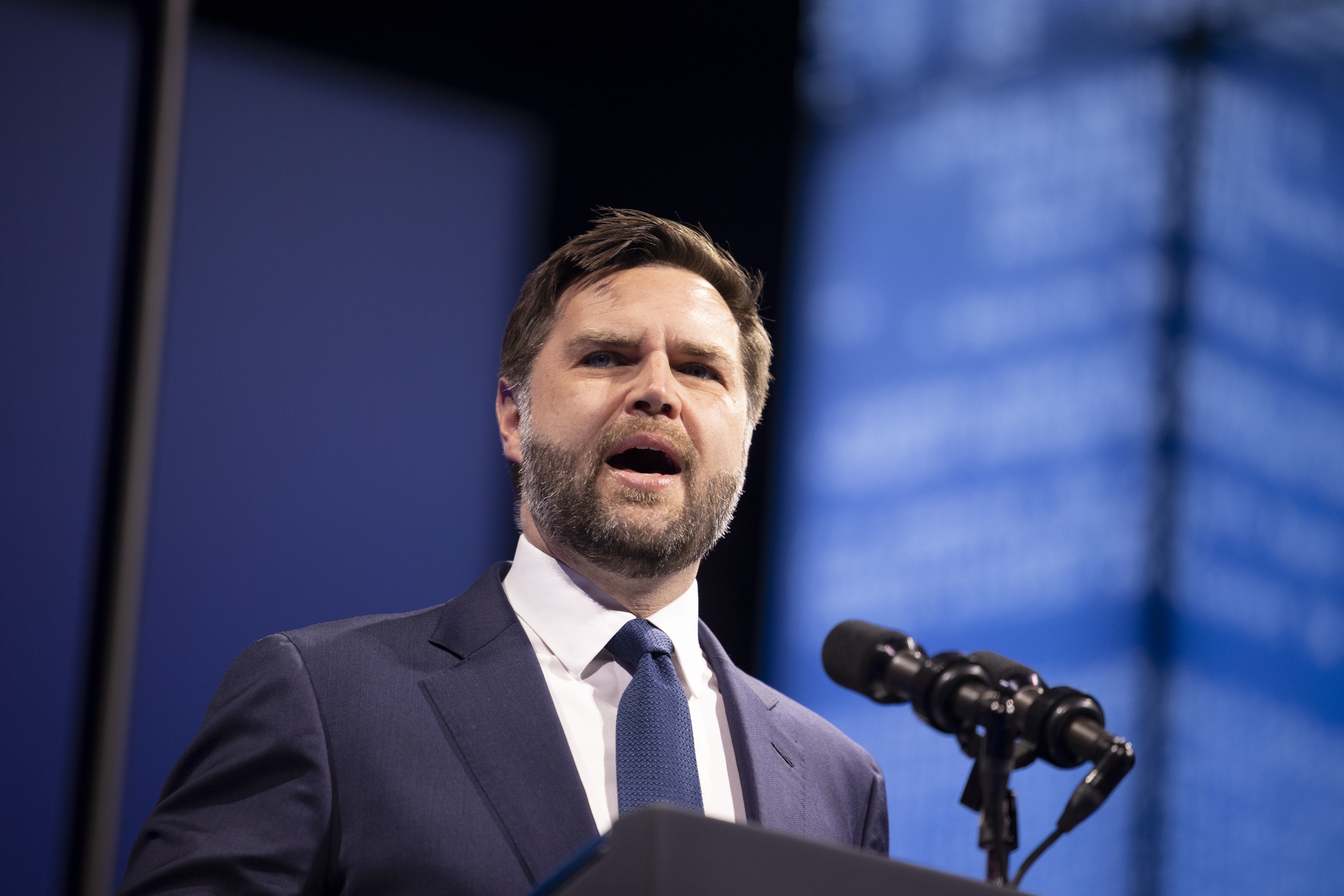
US Vice President JD Vance. Photographer: Ronda Churchill/Bloomberg

Not at all. Hegseth delivered a harsh (but not unexpected) assessment of China — saying it was preparing for an "imminent" invasion of Taiwan — and pressing nations to boost defense spending toward 5% of GDP. No bridges were burned. 

His diplomatic approach — even acknowledging that many nations have tight economic ties with Beijing — won plaudits. But if Washington's military message was clear, the economic one was far murkier. And that left America's partners nervous.

In hallway conversations, officials voiced concern that Washington's economic volatility could undermine its security promises. Even close allies signaled caution — Australia welcomed Hegseth's engagement, but warned of the damage from high tariffs. Malaysia, caught right between Beijing and Washington, was also cautious.

"Trade is not a soft power indulgence, it is part of our strategic architecture," Malaysia Prime Minister Anwar Ibrahim said. "It must be protected, not from competition, but from the onslaught of arbitrary imposition of trade restrictions." And leaders including France's Emmanuel Macron warned against the creation of "spheres of coercion." 

Hegseth punted when pressed on whether the administration's trade agenda might conflict with its security expectations, saying he is in the "business of tanks, not trade."

The absence of China's defense minister for the first time since 2019 gave the US more room to shape the agenda and countries like the Philippines more space to blast Beijing's policies. With China largely absent and Washington unpredictable, many nations looked to each other — and to Europe — to keep the balance. Swedish Defense Minister Pal Jonson said he's attended the conference for three straight years, and this one featured the biggest European presence yet.

"The message we're sending is that, if we want the partners in the Indo-Pacific to be interested in our security problems, we'd better be interested in theirs," Jonson said. — Alberto Nardelli and Philip Heijmans

Global Must Reads

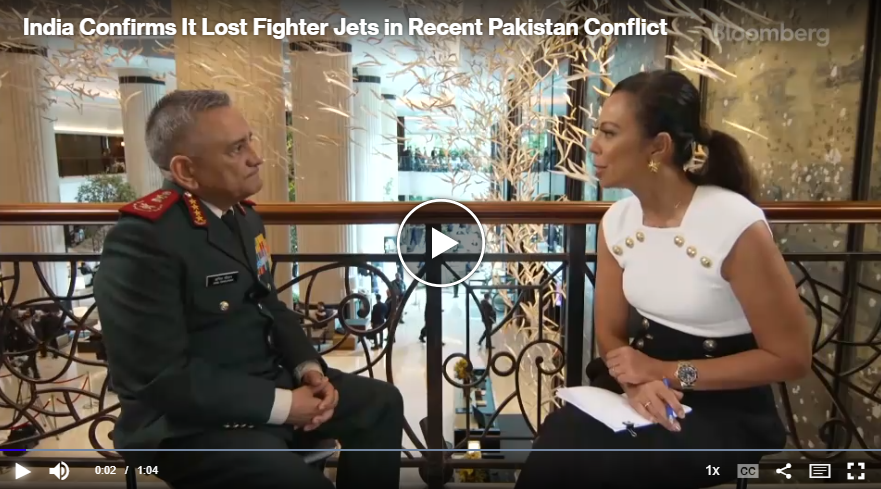
India's military confirmed for the first time that it lost an unspecified number of fighter jets in clashes with Pakistan in May, while saying the four-day conflict never came close to the point of nuclear war. Anil Chauhan, chief of defense staff of the Indian Armed Forces, told Bloomberg TV that it was more important to focus on why the jets went down and how India rectified the situation rather than the number of warplanes lost. 

China expressed "strong dissatisfaction" with Hegseth for his speech at the forum. One Chinese delegate at the event lamented how the nation was being "misinterpreted": "It seems that labeling China, blaming China and verbally attacking China are politically right here." 

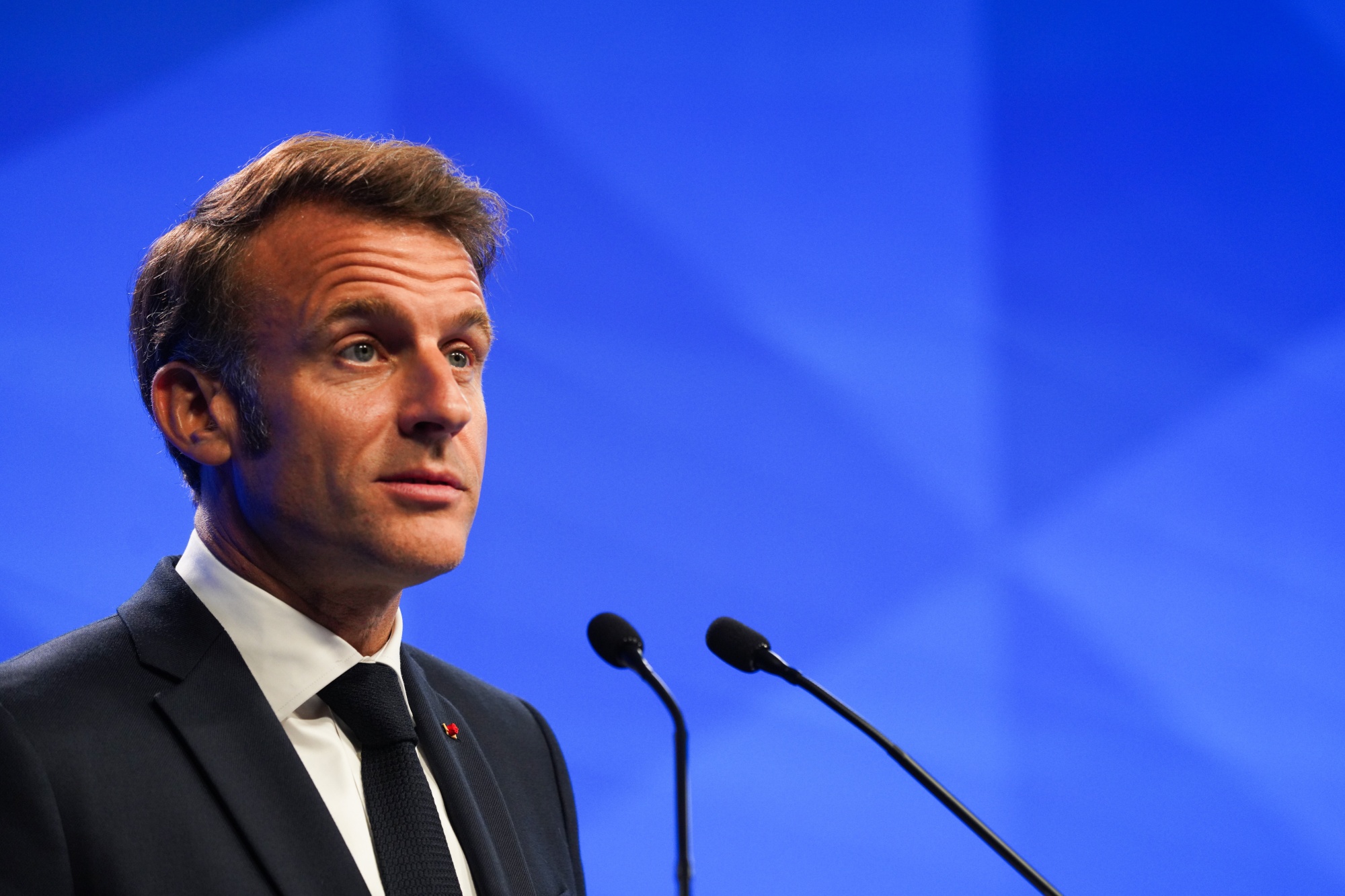
French President Emmanuel Macron opened the forum on Friday with tough messages for both the US and China, condemning "revisionist countries" that seek to impose "spheres of coercion." He urged Beijing to prevent its neighbor North Korea from joining Russia's war against Ukraine, while also calling on Europe and Asia to work together to preserve the rules-based order.

Emmanuel Macron, France's president. Photographer: Ore Huiying

The world should be "extremely worried" about deepening ties between China and Russia, according to Kaja Kallas, Europe's top diplomat. She also seized on Hegseth's remarks about China posing a threat to Asia. "If you are worried about China, you should be worried about Russia," Kallas said. 

The Philippines defense chief excoriated Chinese officials for "propaganda spiels disguised as questions" during one of the final panels. Gilberto Teodoro drew applause for that line, and then went on say a China-led international order would result in the kind of aggression the world already sees in the South China Sea, where Chinese and Philippine ships regularly clash over disputed islands and shoals. 

European and Asian officials spoke of the urgent need to better protect the global network of subsea cables, especially given a spike in damage to them in European waters. Singapore and Malaysia are becoming key hubs for the roughly 600 fiber-optic cables that carry nearly all the world's data.

Sign up for the Washington Edition newsletter for news from the US capital and watch Balance of Power at 1 and 5 p.m. ET weekdays on Bloomberg Television.

Chart of the Day

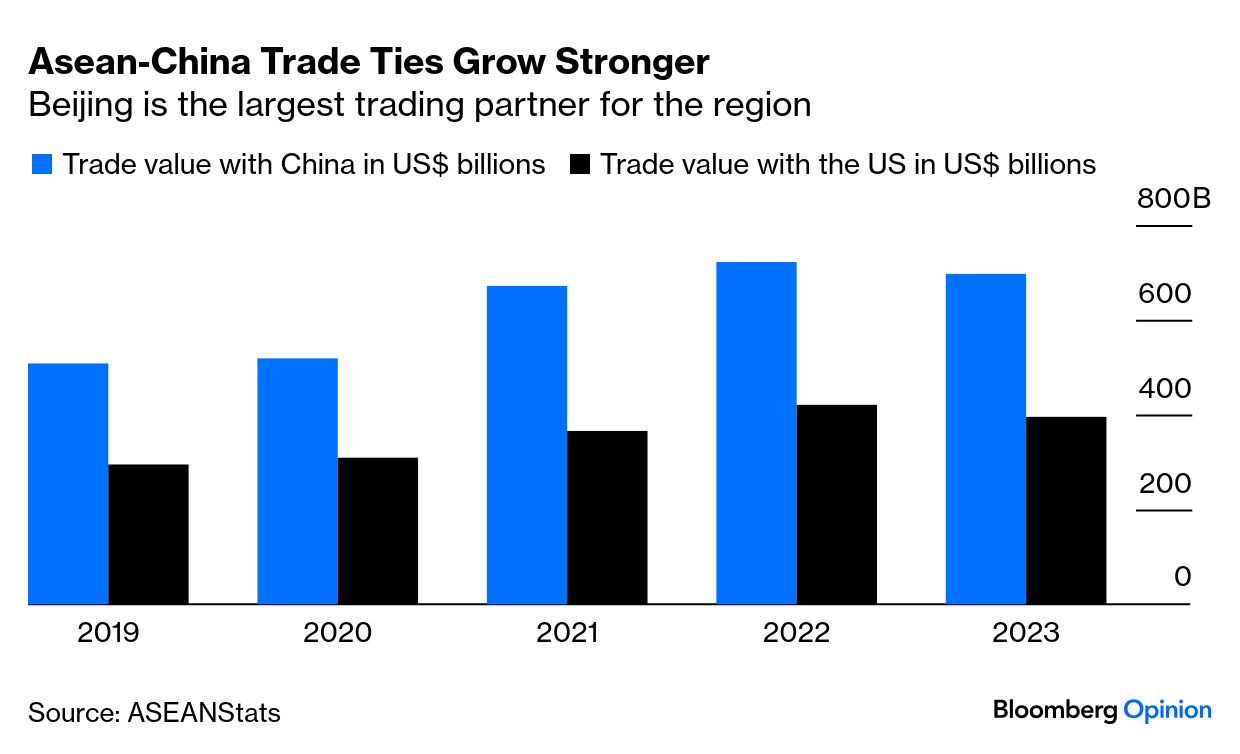
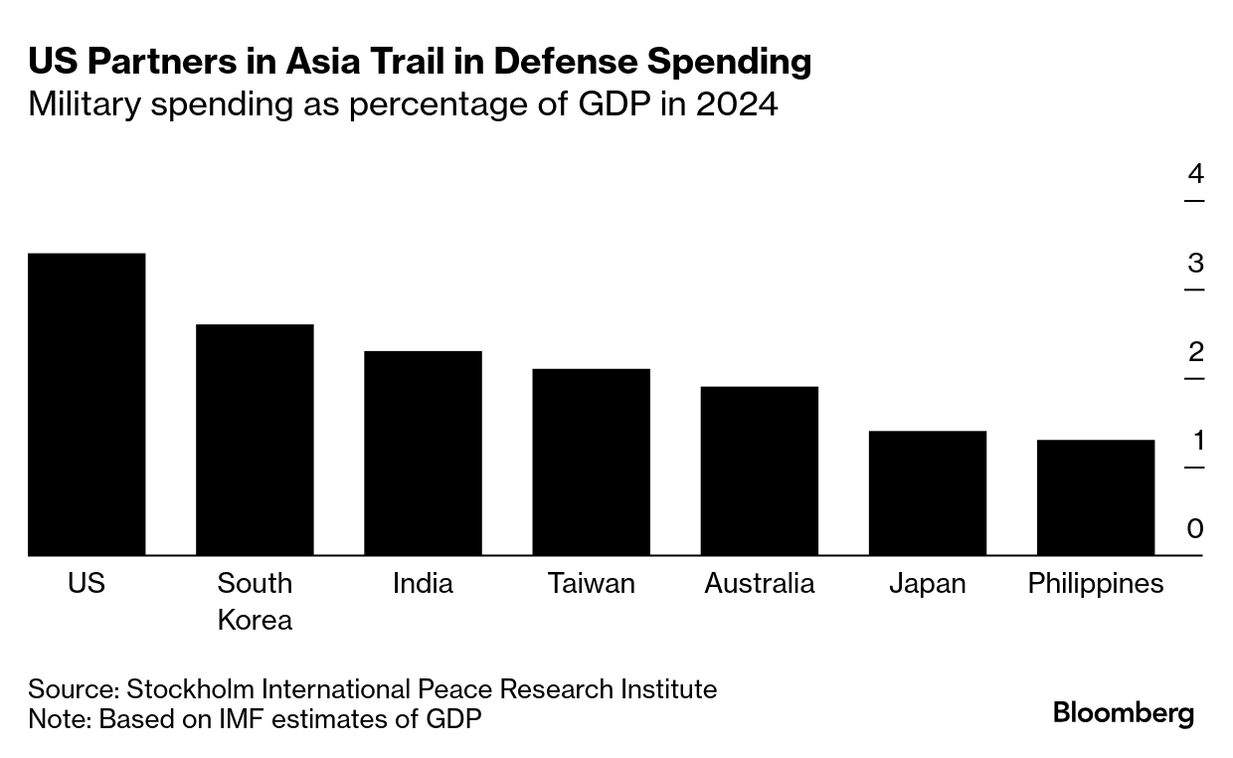
Hegseth pressed US partners in Asia to boost defense spending toward 5% of gross domestic product, warning that more urgency is needed to prepare for a potential Chinese invasion of Taiwan that could be "imminent." He said it doesn't make sense for key allies in Asia to spend less on defense than NATO members in Europe given China poses "an even more formidable threat." 

And Finally

Several European ministers took note of the fact that Hegseth spoke glowingly of higher NATO outlays while pressing Asian allies to also spend more. Ruben Brekelmans, the Dutch defense minister, said it was one of the first times he's heard the Trump administration explicitly acknowledge that Europe was stepping up. Kallas joked about Hegseth's comment that the US was giving "tough love" to its allies, saying it's "better than no love." 

More from Bloomberg

  • Check out our Bloomberg Investigates film series about untold stories and unraveled mysteries
  • Next China for dispatches from Beijing on where China stands now — and where it's going next
  • Next Africa, a twice-weekly newsletter on where the continent stands now — and where it's headed
  • Economics Daily for what the changing landscape means for policymakers, investors and you
  • Green Daily for the latest in climate news, zero-emission tech and green finance
  • Explore more newsletters at Bloomberg.com
Follow Us

Like getting this newsletter? Subscribe to Bloomberg.com for unlimited access to trusted, data-driven journalism and subscriber-only insights.

Want to sponsor this newsletter? Get in touch here.

You received this message because you are subscribed to Bloomberg's Balance of Power newsletter. If a friend forwarded you this message, sign up here to get it in your inbox.
Unsubscribe
Bloomberg.com
Contact Us
Bloomberg L.P.
731 Lexington Avenue,
New York, NY 10022
Ads Powered By Liveintent Ad Choices

No comments:

Post a Comment

You CAN Profit From This QQQ Signal

Remember: structure moves markets. Not opinions. ͏  ͏  ͏  ͏  ͏  ͏  ͏  ͏  ͏  ͏  ͏  ͏  ͏  ͏  ͏  ͏  ͏  ͏  ͏  ͏  ͏  ͏  ͏  ͏  ͏  ͏  ͏  ͏  ͏  ͏  ͏...