| I'm Chris Anstey, an economics editor in Boston, and today we're looking at the challenge of forecasting at a time of extreme policy volatility. Send us feedback and tips to ecodaily@bloomberg.net. And if you aren't yet signed up to receive this newsletter, you can do so here. - China's leaders will meet to discuss stimulus after a second month of deflation as higher tariffs cause a decoupling with the US.
- Read the Big Take for an account of how President Donald Trump hit the pause button on reciprocal levies for dozens of countries.
- Coming up: US inflation probably stepped down in March, and Peru may keep its interest rate unchanged.
After having ratcheted up its recession-risk estimate for the US in the wake of Trump's plans for steep "reciprocal" tariffs on major trading partners, Goldman Sachs economists on Wednesday took their calculation over the 50-50 line. The 104% surtax on China (later hiked to 125%) helped tip Jan Hatzius and his colleagues towards that call. "The White House is unlikely to quickly reverse most of the new tariffs, but our probability of recession would decline if it does," the team said. Indeed there had been no indication that Trump was ready to back off on the reciprocal levies, which he had characterized as "kind" because they were smaller than the administration's assessment of some true level of protection overseas economies had constructed against American products. And on Monday he'd pointedly denied speculation that he might adopt a 90-day pause. But reverse he did. Goldman took off its recession call before it had been public for much more than an hour. That was after Trump announced a 90-day pause on reciprocal tariffs for any country deemed not to have retaliated — that left out China, which as of Wednesday bore an enlarged 125% surtax. 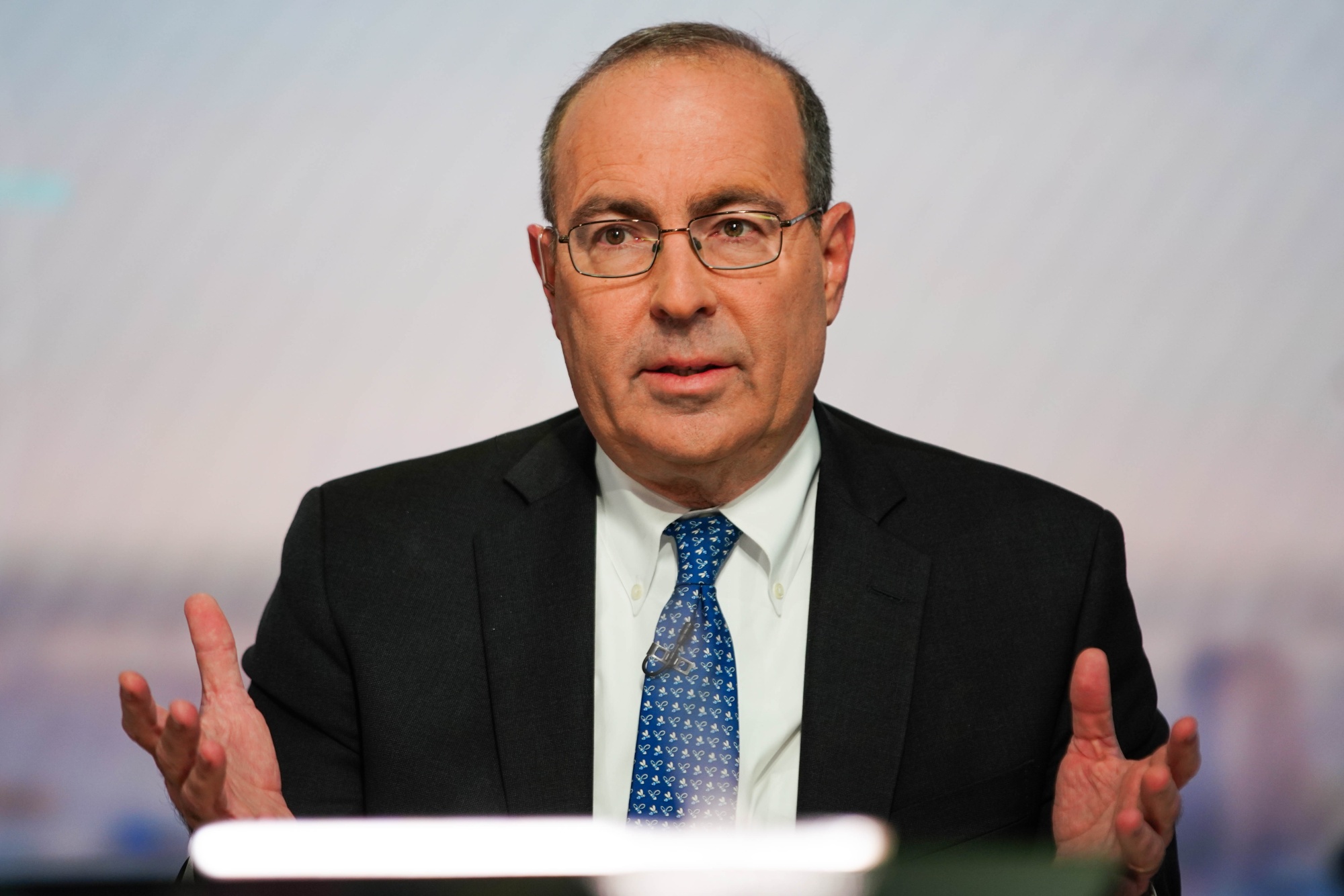 Richmond Fed President Tom Barkin. Photographer: Christopher Goodney/Bloomberg Federal Reserve Bank of Richmond President Tom Barkin told an audience Wednesday that with the tariffs, "you know what the direction is, you just don't know what the destination is." It's clear that the levies will boost inflation (the latest reading of which is due Thursday), and the 2018-19 tariff increases in Trump's first administration also indicated a "modest" detraction to growth. But that was with much smaller added import duties. "I think it's anybody's guess what it is today," Barkin said of the effects of the tariffs. As has been the case from the start of the year, it's unclear whether Trump is really seeking trade-liberating deals, or a new, higher level of restriction that forces a reshoring of manufacturing to the US. The coming months may show which the world's biggest economy is heading for. For now, Treasury Secretary Scott Bessent is holding out for some great set of deals with allies and partners, including those geographically surrounding China, that would then give the rest of the world dramatic leverage to force Beijing to curtail its overcapacity and allow better balance in global commerce. Don't Miss the Latest Trumponomics Podcast | Host Stephanie Flanders, Bloomberg's head of government and economics, is joined by senior editor Ed Harrison, author of Bloomberg's Everything Risk newsletter, and Bloomberg's senior national political correspondent, Nancy Cook. They discuss what the rollout of Trump's tariff war has revealed about the administration's economic strategy and the future of the US economy. Listen here and subscribe on Apple, Spotify, or wherever you get your podcasts. The Best of Bloomberg Economics | - The EU will pause metals counter tariffs, but a global trade chill is already emerging, and US retailers are suspending orders.
- For the man poised to become Germany's next finance minister, 9/11 is a pivotal moment as he rebuilds the country's defenses. Meanwhile, the country's 2025 growth outlook just was slashed.
- Egyptian inflation quickened but is probably still low enough to allow a rate cut. Norway's core inflation held steady.
- The Philippine central bank cut borrowing costs and signaled further easing this year, while Serbia held.
- The oil-price crash is set to have far-reaching consequences for Saudi Arabia's finances and vast economic ambitions.
Even after Trump's pause, American imports taxes are still at an historic high, with the average US tariff rate rising to 24%. "That means the overall impact on the US economy isn't expected to be much different from the earlier announcements," Rana Sajedi, Maeva Cousin and Tom Orlik of Bloomberg Economics wrote in a note. They cited estimates used by the Fed in 2018 to predict the increased tariffs may lower American growth by more than 3% and add almost 2% to core inflation — "a shock that will play out over two to three years." | 









No comments:
Post a Comment