Wednesday, April 9, 2025

A shared problem

Spanish Prime Minister Pedro Sánchez visits China this week
View in browser
Bloomberg

Welcome to Balance of Power, bringing you the latest in global politics. If you haven't yet, sign up here.

Looking back, the high point of Europe's recent relations with China was probably the signing of a comprehensive agreement on trade and investment in 2020.

Within months, the main thing being traded were tit-for-tat sanctions.

European capitals, angered by Beijing's aggressive diplomacy during the pandemic, rapidly soured on its human-rights record in Xinjiang, and the deal was put on ice.

US strains placed on the transatlantic bond are causing a rethink of those ties.

At least, that's what Spanish Prime Minister Pedro Sánchez is advocating.

Sánchez is due to meet with President Xi Jinping on Friday during his third China trip in two years. He'll be the first European Union leader in Beijing since President Donald Trump launched his barrage of tariffs on leading trading partners, notably China and the EU.
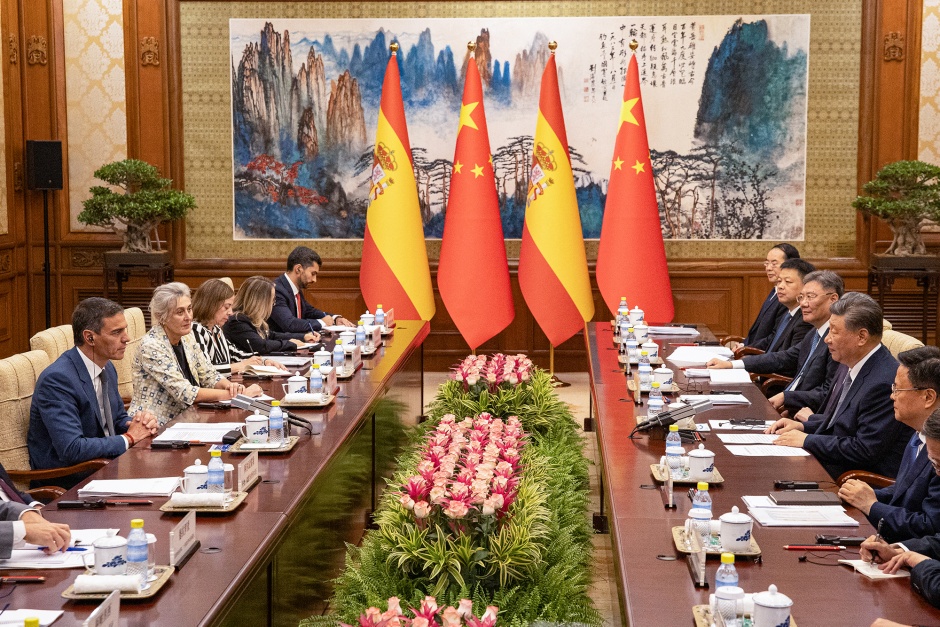
Sanchez, left, and Xi in Beijing, on Sept. 9. Photographer: Andres Martinez Casares/AFP/Getty Images

Sánchez says that what Trump is doing to global trade must push Europe to find alternative partners and new markets. That means changing its position toward China, but also Beijing revisiting its stance toward Europe.

It's not an undisputed message.

Spain has tangible benefits from Chinese investments, in electric vehicles, batteries and solar power.

Elsewhere, much of Europe is warier of Beijing, joining US-led tech curbs and sharing concerns over threats against Taiwan. Worried at a flood of imports, the EU imposed tariffs on Chinese EVs last year.

Most pointedly, China's alignment with Russia despite its invasion of Ukraine is beyond the pale for many capitals. Madrid, a defense spending laggard, is about as far from the war as you can get on the European mainland.

Sánchez may have broken ranks with the EU as a whole, but Xi is bound to roll out the red carpet regardless.

As Trump continues to upend the world, Spain's leader surely won't be the last to make the trip to Beijing. — Alan Crawford
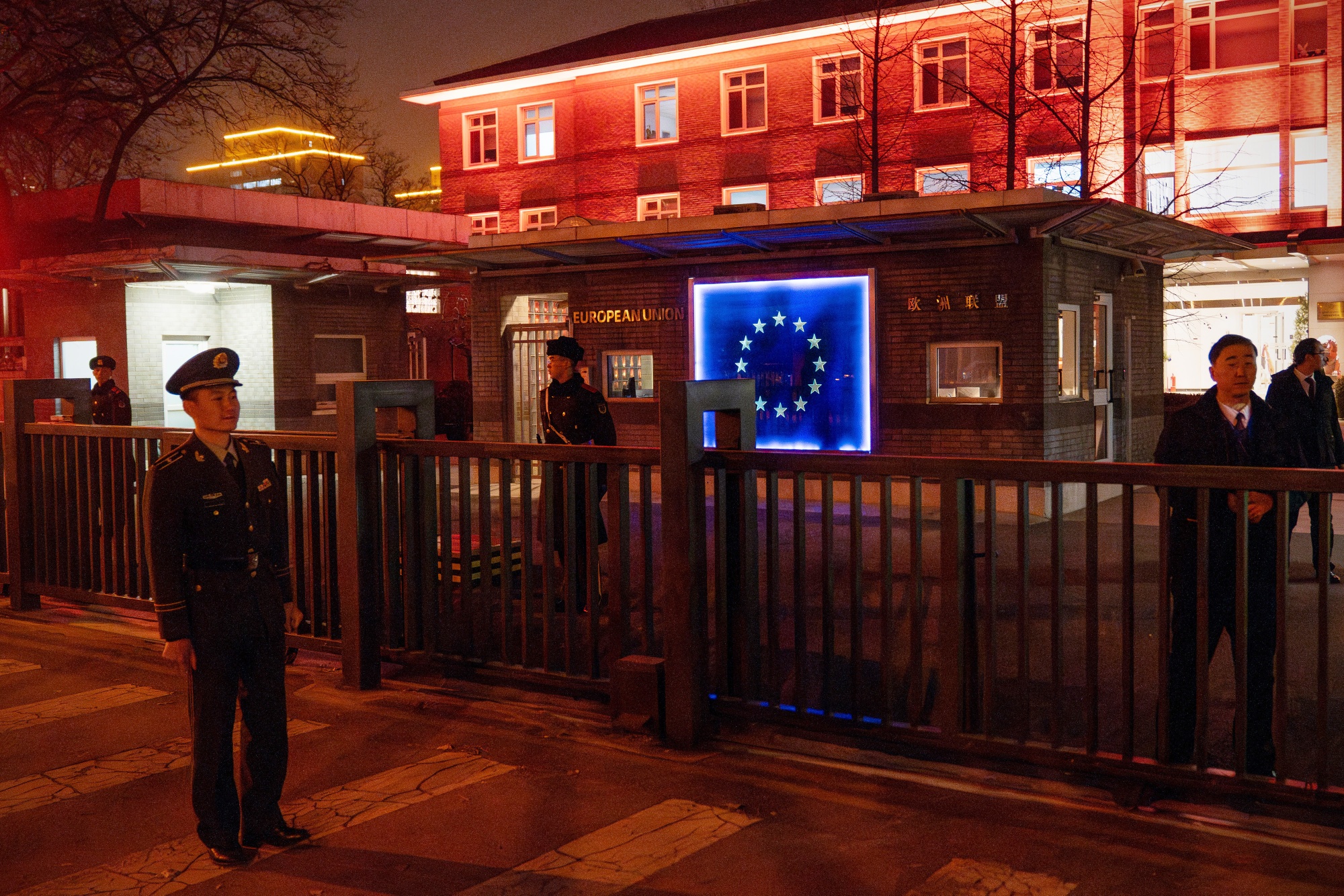
The venue of a news conference by EU officials in Beijing in December 2023. Photographer: Andrea Verdelli/Bloomberg

Global Must Reads

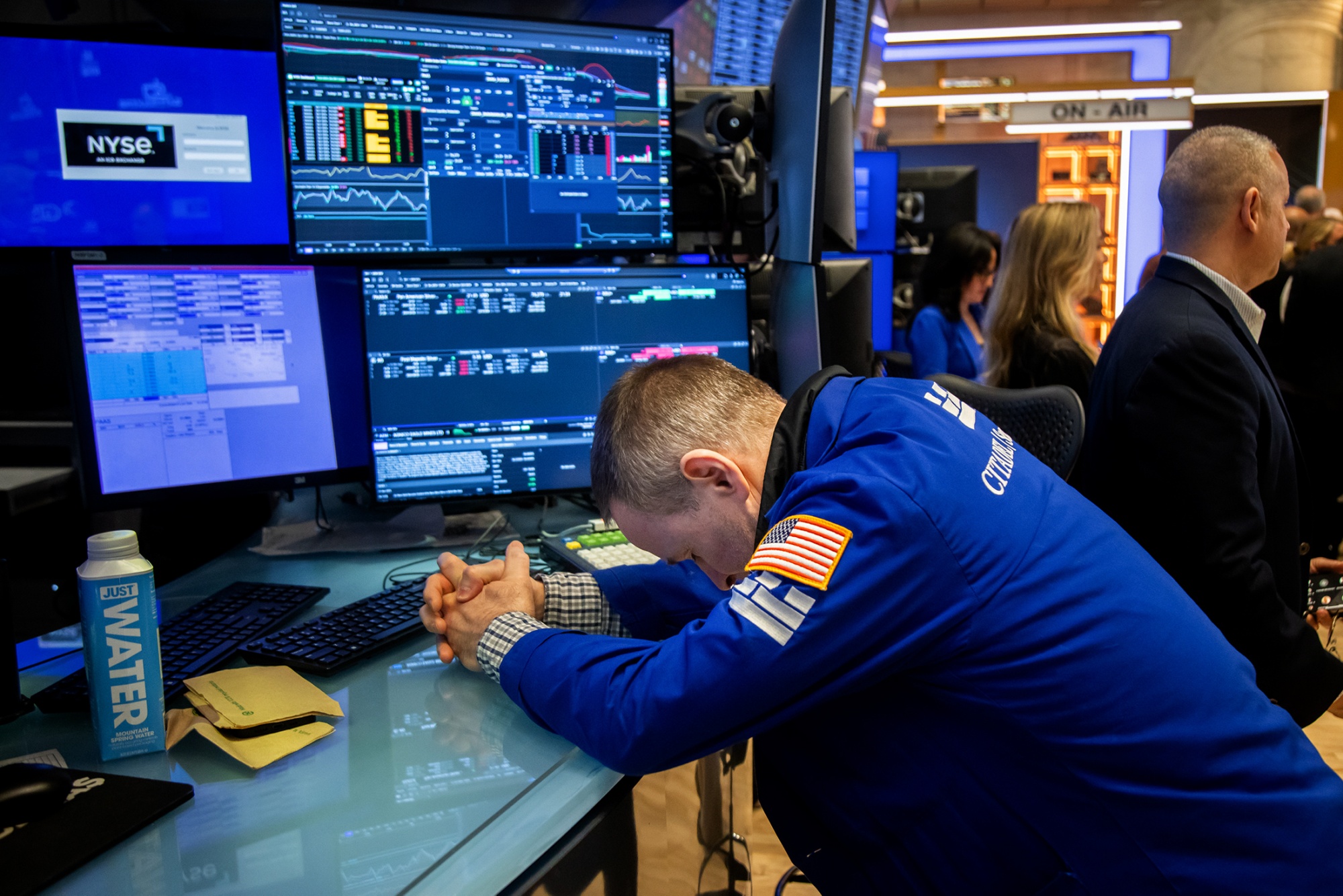
Trump's so-called reciprocal tariffs took effect today, pushing levies imposed on China this year to as high as 104% and dealing a further blow to the world economy as he pushes forward with a bid to reorder global trade. European stocks plunged and the exodus from longer-dated US Treasuries accelerated, fueling the biggest selloff since 2020 in what are supposed to be the world's safest assets.

WATCH: Brendan Murray reports on what comes next and the risk of a full-blown trade war on Bloomberg TV. Photographer: Michael Nagle/Bloomberg

Israeli Prime Minister Benjamin Netanyahu is starting to flex his muscles again after a recent run of adversity. Bolstered by a right-wing coalition that's held firm throughout the war in Gaza and simmering tensions with Iran, he's returned to an old quest to weaken the judiciary and moved to sideline top officials, including the attorney general and head of the domestic-security service.

German conservative leader Friedrich Merz and the Social Democrats formed a coalition to govern Europe's biggest economy, paving the way for Merz to take over as chancellor. While the alliance partners may not immediately confirm specific cabinet appointments, take a look at the frontrunners for the four most influential ministries here.

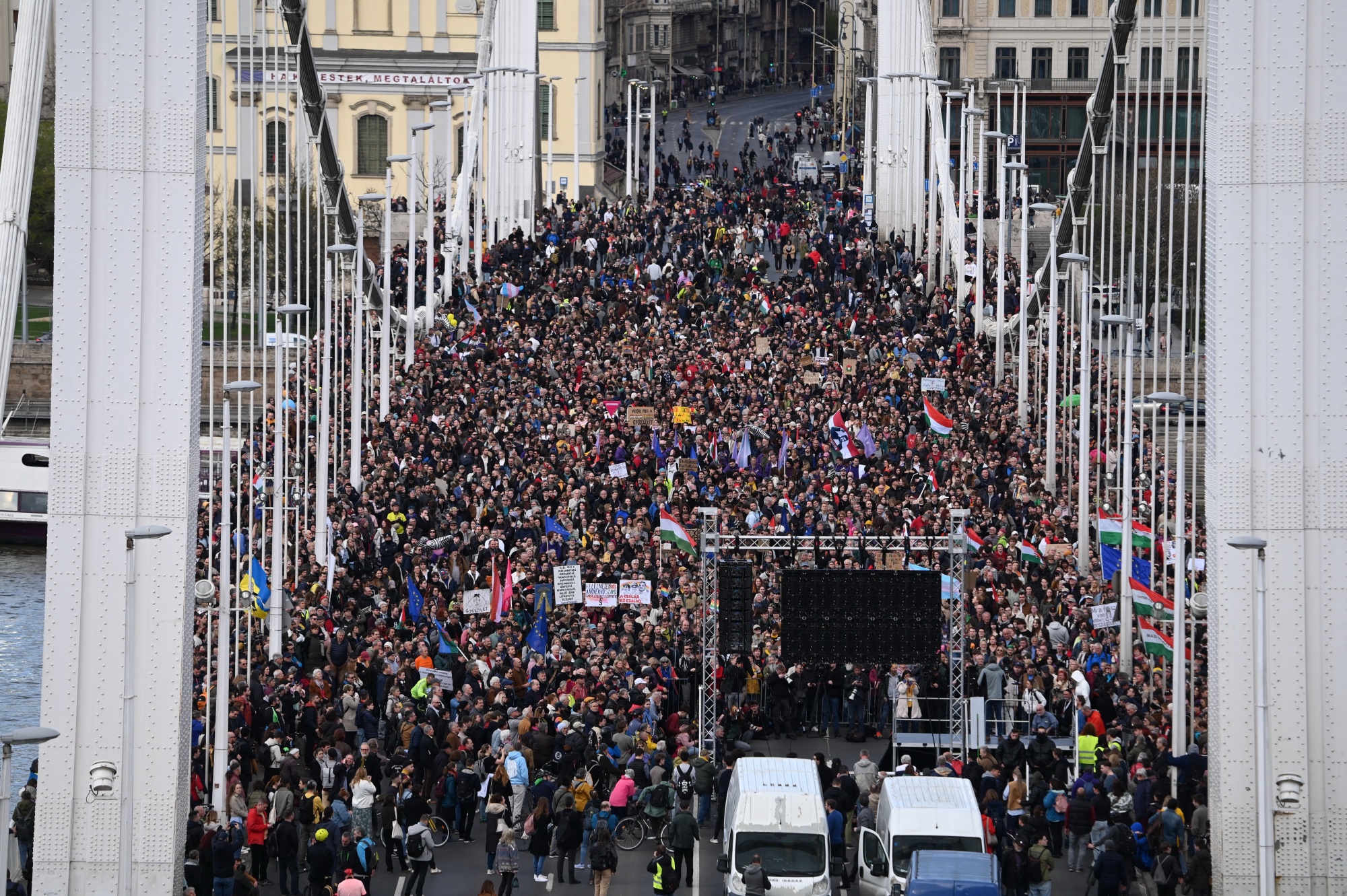
Hungary's opposition blocked main roads in central Budapest as protests intensify over Prime Minister Viktor Orbán's moves against civil society. The event marked the fourth consecutive Tuesday that groups led by the Momentum party stopped traffic on bridges over the Danube River in the capital, in demonstrations that began as a reaction to Orbán's move to ban the annual Pride parade.

A protest on the Erzsébet Bridge in Budapest on April 1. Photographer: Attila Kisbenedek/AFP/Getty Images

Argentina reached an agreement with International Monetary Fund staff, a major step before the lender officially votes on a new $20 billion deal for the crisis-prone nation. That's as President Javier Milei is suddenly caught between Trump and China after the US special envoy to Latin America criticized Beijing's $18 billion currency swap line with Argentina and said he wanted it to end.

Billionaire presidential adviser Elon Musk attacked White House trade counselor Peter Navarro, labelling him as "dumber than a sack of bricks" as a fight over Trump's tariff regime spilled onto social media.

Italian Prime Minister Giorgia Meloni will head to the US next week to negotiate tariff relief directly with Trump in a move coordinated with the EU. 

The IMF is anticipating an increase in funding-support requests from Africa as Trump's tariffs and aid cuts reduce options.

Iran's President Masoud Pezeshkian said his country will provide "any necessary guarantees" that it doesn't want to develop nuclear weapons as it prepares for talks with the US this weekend.

After the rollout of Trump's so-called reciprocal tariffs, what's the impact on global markets and economies? Join us for a Live Q&A today at 11 a.m. EDT.

Sign up for the Washington Edition newsletter for news from the US capital and watch Balance of Power at 1 and 5 p.m. ET weekdays on Bloomberg Television.

Chart of the Day

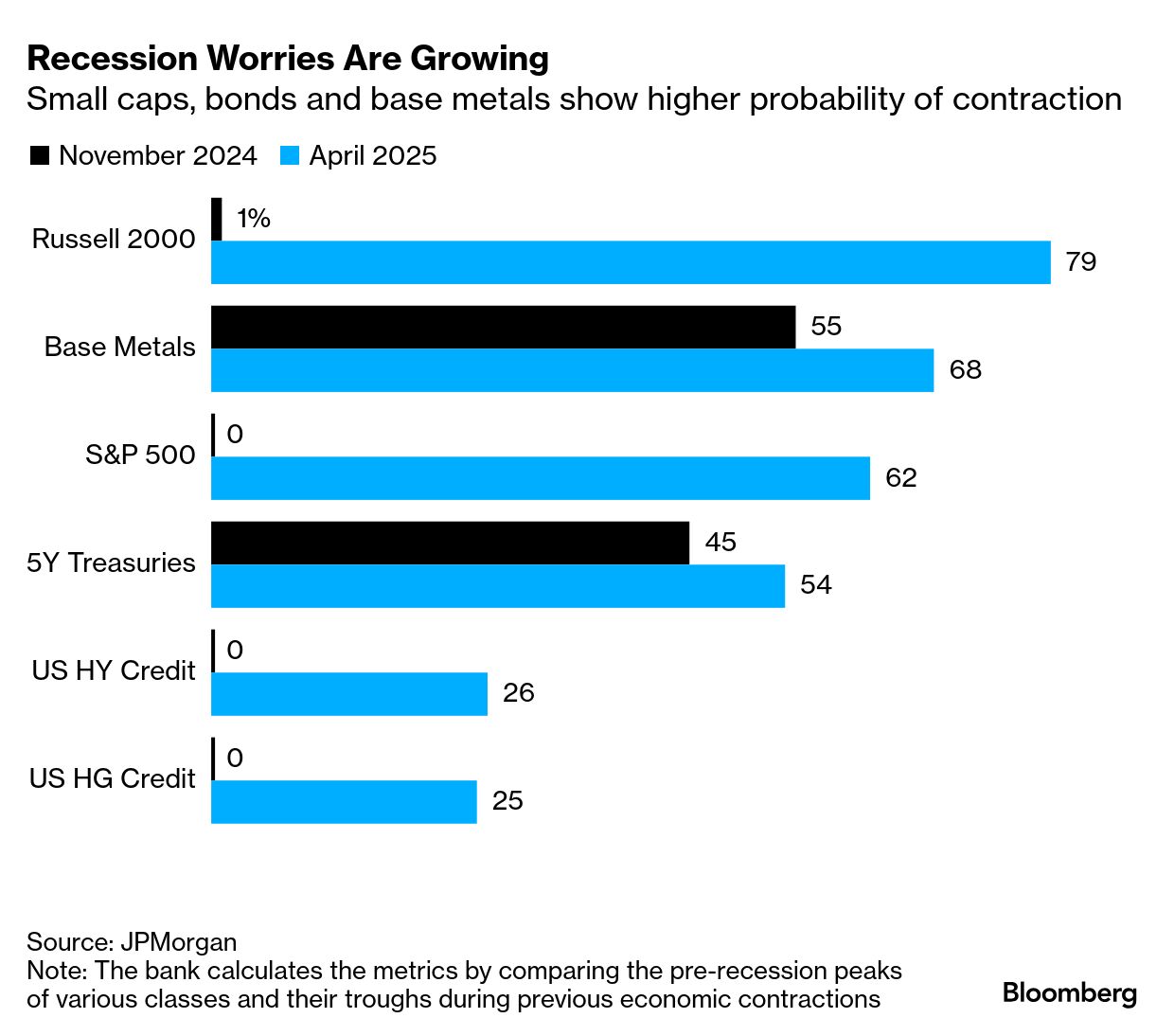
JPMorgan says recession fears in stocks acutely tied to the US economy have spiked to nearly 80%, while credit investors remain less concerned even as funding stress threatens to build. Economic sentiment is darkening as money managers and corporate executives struggle to cope with the volatility created by Trump's escalating trade war.

And Finally

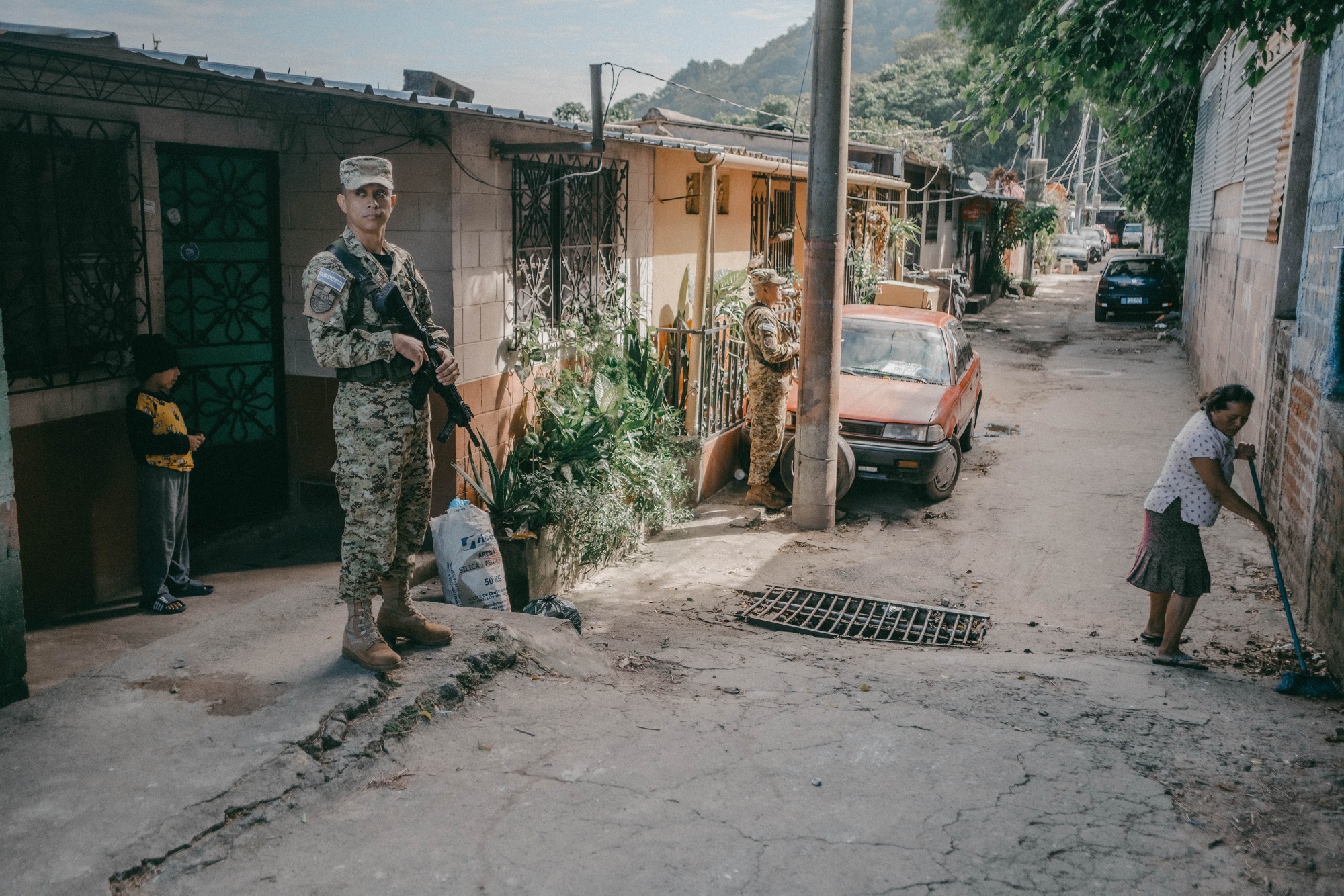
The US elevated El Salvador's travel-safety designation to the best possible, putting it above countries in Western Europe before President Nayib Bukele's visit to the White House next week. The nation was one of the deadliest globally before Trump ally Bukele took office in 2019. He's ridden a crime crackdown to a 90% approval rating and made the world's former murder capital less violent than Canada, spurring a boom in tourism.

Soldiers patrol a neighborhood in San Salvador in November. Photographer: Carlos Barrera/Bloomberg

More from Bloomberg

  • Check out our Bloomberg Investigates film series about untold stories and unraveled mysteries
  • Next China for dispatches from Beijing on where China stands now — and where it's going next
  • Next Africa, a twice-weekly newsletter on where the continent stands now — and where it's headed
  • Economics Daily for what the changing landscape means for policymakers, investors and you
  • Green Daily for the latest in climate news, zero-emission tech and green finance
  • Explore more newsletters at Bloomberg.com.
Follow Us

Like getting this newsletter? Subscribe to Bloomberg.com for unlimited access to trusted, data-driven journalism and subscriber-only insights.

Want to sponsor this newsletter? Get in touch here.

You received this message because you are subscribed to Bloomberg's Balance of Power newsletter. If a friend forwarded you this message, sign up here to get it in your inbox.
Unsubscribe
Bloomberg.com
Contact Us
Bloomberg L.P.
731 Lexington Avenue,
New York, NY 10022
Ads Powered By Liveintent Ad Choices

No comments:

Post a Comment

I’ll reveal my favorite daily trade for this year in the next few hours

Get your login link before then View in browser View in browser                   Happy Weekend! What will you be up to @1PM eastern tod...