| If you're reading this and don't know how much of your portfolio is allocated to international equities, let me give you three reasons to find out now: - The S&P 500 is down roughly 4% since the start of the year.
- An index tracking the infamous Mag 7 tech stocks has fallen nearly 16%.
- Meanwhile, Germany's main index, the DAX, is up 21%. Britain's is up over 10%. Hong Kong's, over 20%.
Investors without global exposure missed out on this growth. It's a change from the decade-plus period when the conventional wisdom in American investing was simply, "Buy and hold the S&P." This shift is happening for several reasons, ranging from the sky-high valuations of US stocks to fears about geopolitical uncertainty and a potential economic slowdown stateside. Meanwhile, European markets are riding a wave of newfound optimism over defense spending; and firms such as DeepSeek have pushed investors to ramp up bets on Asian technology. "Global equity diversification is back again," said Jason Kephart, a senior principal in multi-asset strategy ratings at Morningstar. Pay close attention to that word again. Investors would be shortsighted to forget that we have been here before. The analysts and advisers I called this week were quick to mention the period immediately following the dot-com bust of the early 2000s. Many called it the "lost decade," a time when global markets outperformed the US, and those with international diversification benefited greatly. Who Needs More? Here's the good news: You may have more global stock exposure than you think. Many Americans' retirement savings are in target-date funds and according to Morningstar Direct, US target-date mutual funds on average have almost 25% of their asset-weighted allocation to non-US equities. That's roughly in the ballpark of the 20%-40% advisers say they like clients to be invested in internationally. "But for people who are managing their own brokerage accounts or maybe picking individual stocks or index funds, it's really, really common for me to see with my clients that they're just in like the S&P 500," said Stacy Dervin, founder of Tailored Financial Planning in Eugene, Oregon. "It's what they've been told is the safest place to be." Such investors may have what's known as "recency bias," favoring stocks that performed well in the near past at the expense of others that may grow more in the future. It's also typical for people to have "home country bias," which makes them more comfortable investing in the domestic names they know well. But don't forget that you probably know foreign names just as well, if not better. Think Nestlé (Switzerland), AstraZeneca (UK) Louis Vuitton (France) and Toyota (Japan). How to Get Exposure "By no means should anyone with a day job be trying to buy foreign stocks," said Joseph Boughan of Parkmount Financial Partners in Scituate, Massachusetts. Instead, he and other planners prefer broader ETFs that can help you get global exposure, if you think you need it, without the risk of hanging all your bets on a single stock. The first step is to figure out how much of your portfolio is invested globally. Retirement savers with 401(k)s can generally figure this out by looking through fund factsheets on provider apps or websites. You likely have different fund options with varying degrees of geographic diversification. Meanwhile, those using brokerage accounts also have a lot of ETF options, including the Vanguard FTSE Developed Markets ETF (VEA) or the iShares Core MSCI EAFE ETF (IEFA), which include non-US stocks on major indices in developed countries. But you can get much more granular if you want, filtering down to everything from company size to industry to emerging versus developed. "Generally speaking, emerging markets are going to give you more potential for growth because they are smaller and they have more upside," said Johnson Rhett of Branning Wealth Management in Jackson, Mississippi. "But that also comes with much more volatility." Still, keep your emotions out of your global investing decisions. Ashlee deSteiger of Gunder Wealth Management in Birmingham, Michigan, says a lot of clients are nervous about market and political volatility in the US right at the moment. She says if you don't have global equities in your portfolio, now could be a good time to add them. But don't make any sudden moves. She's always had about 30%-35% international exposure and likes it as a diversification tool, but won't be making any imminent shifts. For those who do want to go global, she encourages people to "understand why are you making this switch and how long you are going to do it for." That's wise. — Charlie Wells P.S. Send questions about your own financial dilemmas to bbgwealth@bloomberg.net. We may get expert answers for you, and feature your question and the answer in an upcoming newsletter. Gold hit a fresh record. The yellow metal breached a new all-time high above $3,047 as US policymakers projected slower growth and higher inflation after holding interest rates steady for a second-straight meeting on Wednesday. Bullion has climbed 16% this year, extending last year's strong performance. Investors flock to the metal for safety amid gloomy outlook for both the US and global economy. Several major banks have raised price targets in recent weeks. EV stocks shifted gears. Shares of Tesla tumbled earlier this week while BYD shot to an all-time high after unveiling an electric car that can be charged as quickly as a gas vehicle is refueled. It's the latest blow for Tesla where a sky-high valuation is pinned on the company's ability to constantly innovate and stay ahead of rivals. Sentiment was already souring over the past month on reports that sales of its electric cars have plunged in key markets. And Musk's rising political prominence — that late last year was widely expected to provide a boost to Tesla's business — has instead become a problem for shares. Seattle's Selig Defaults on More Downtown Office Property Debt 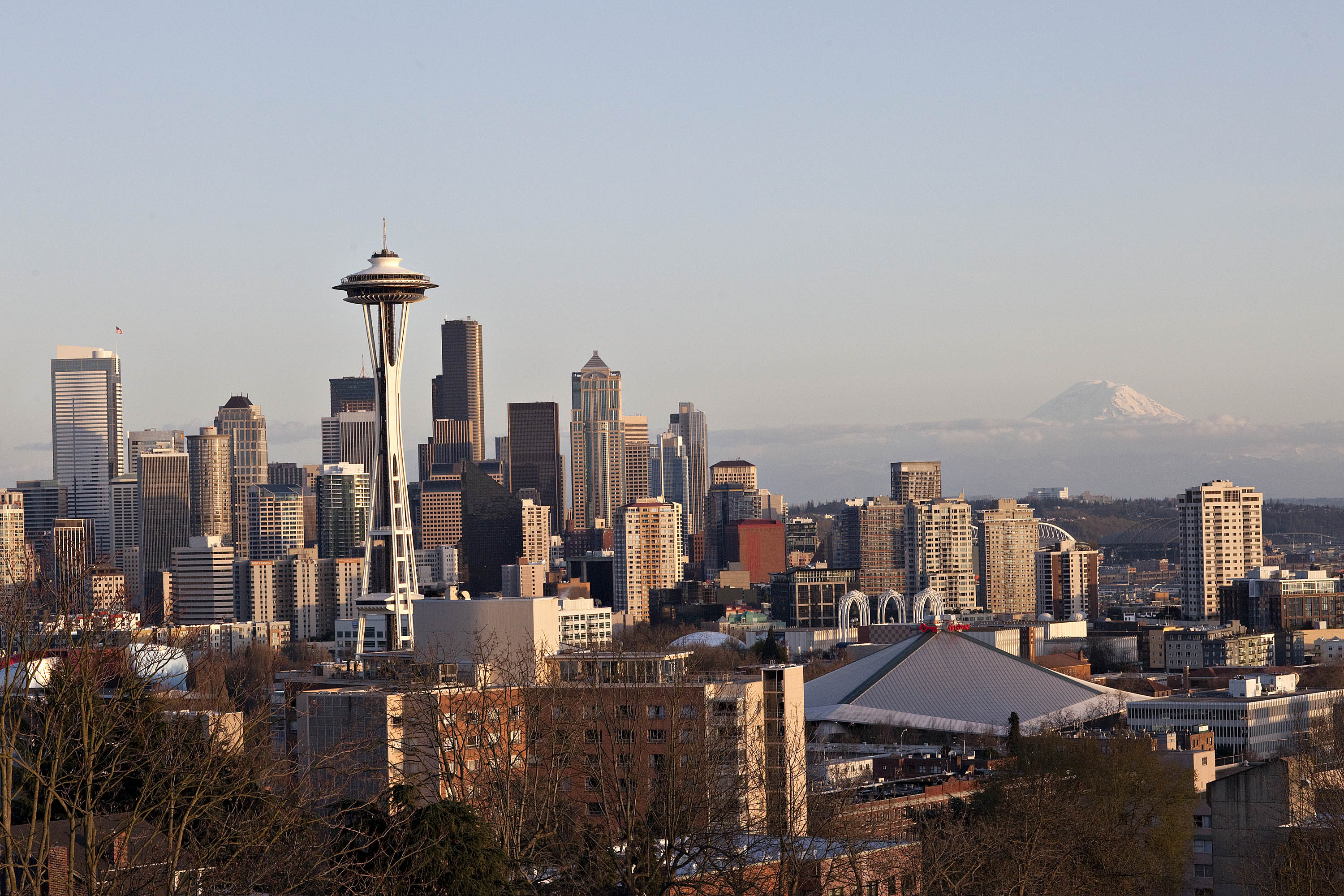 Photographer: Daniel Acker Martin Selig, the commercial property developer who at one point owned nearly a third of downtown Seattle office space, defaulted on debt backed by three buildings located near the iconic Space Needle. The $135 million debt has been transfered to a special servicer, according to monthly commentary. A spokesperson for the company, called Martin Selig Real Estate, said conversations regarding the debt are ongoing. Selig's business has been confronting the fallout from higher interest rates, which has made refinancing debt tougher. Office demand in the city is struggling to rebound as many companies still allow employees to work from home, even though Amazon.com Inc. workers are back five days a week. LA's Wildfire Recovery Shifts to Costly and Chaotic Rebuilding  Photographer: Mark Abramson/Bloomberg Two months after twin blazes destroyed more than 16,000 structures across Los Angeles, uncertainty is clouding almost every step in the rebuilding process. Slow permit approvals and labor shortages make it hard to judge just how quickly construction can even start. The Trump administration stands to roil prices for materials with tariffs and may slash Federal Emergency Management Agency funding. Meanwhile, the insurance market is wobbly and claim payouts may not be enough to cover costs. While the full extent of the damage remains uncertain, this much is clear: The disaster will be the most expensive in LA history and a painful process for people trying to rebuild. This week, we're looking for people who, in today's tough job market, are considering applying to graduate school — or who are the parents of current applicants. Is this you, your child, or someone you know? If so we would love to speak. Some of our best journalism at Bloomberg Wealth comes from your own stories and we'd love to hear from you, your friends or clients. Please email bbgwealth@bloomberg.net if you'd like to get in touch. Like Bloomberg Wealth? Here are a few other newsletters we think you might enjoy: - Pursuits for a guide to the best in travel, eating, drinking, fashion, driving, and living well
- Work Shift for exclusive insight and data on the future of work
- Money Distilled for John Stepek's daily newsletter on what market moves mean for your money
- Economics Daily for what the changing landscape means for policymakers, investors and you
- CFO Briefing for what finance leaders need to know
Explore all newsletters at Bloomberg.com. | 








No comments:
Post a Comment