| In recent months, South Koreans living in towns near the border with North Korea say they've been bombarded for hours a day by screeching, deafening noise blasted from North Korean loudspeakers. The sounds are macabre, ranging from clanging, metal screeching, sirens, gun shots and bombs to horror-movie style screaming or chilling music, media outlets have reported. The onslaught is taking a toll on health. A survey of more than 100 South Korean residents, conducted by the community health center in the border city of Gimpo, found that more than a quarter had mental health worries. Two people were classified at high risk of mental health problems, and nearly 30 placed in a "watch" category, an official at the center said.
The noise is going both ways. After political rancor caused the two Koreas this year to halt a deal to decrease tensions at the border, South Korea has periodically turned on loudspeakers that blast political messages and K-pop music into North Korea, which has also been floating balloons laden with trash toward the south. "It's not beautiful music, is it? It's sheer noise that's meant to vex you and get under your skin, so it can't be good," Hyo-Jeong Lee, a professor and chairperson of Hallym University Sacred Heart Hospital's otolaryngology department in South Korea, told me about the sound blasts coming from North Korea. Such noise is "linked to increased levels of anxiety and depression, plus you can't sleep at night because it's loud. Your chronic diseases may worsen, or the underlying symptoms of a pre-existing condition may manifest." 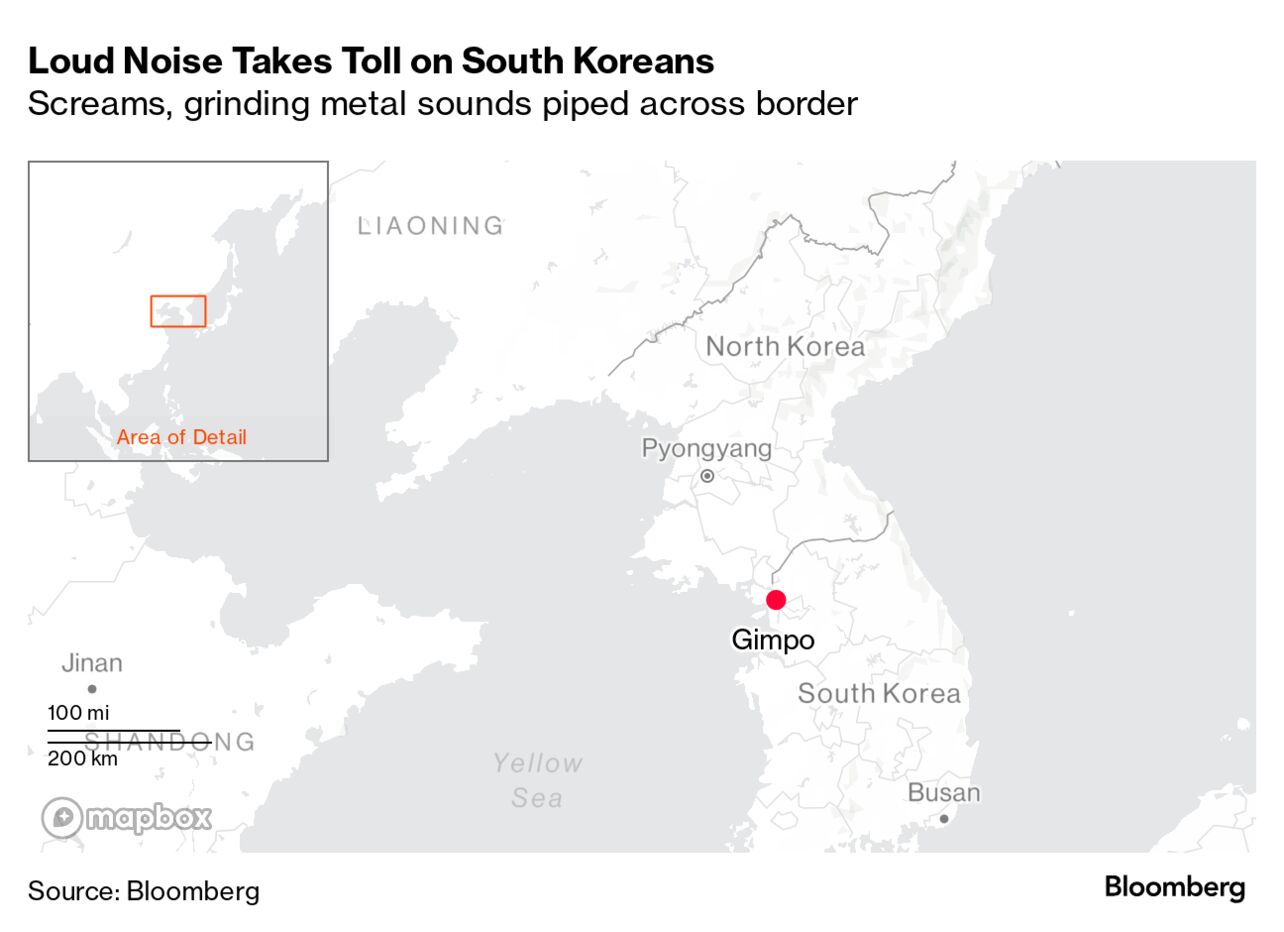 People can safely listen to sound levels of 80 decibels for up to 40 hours a week, the World Health Organization says. Once the levels hit 90 decibels, the safe listening time reduces to four hours weekly to avoid hearing loss. The noise wafting over South Korea's border areas is between 60-90 decibels, the Chosun Ilbo newspaper reported.
It doesn't take much to reach those numbers: vacuum cleaners, busy city streets and welding tools can hit 80-89. Excessive noise can cause problems that go well beyond anxiety and stress, and harm both mental and physical well-being. Sensory overload, like loud music and other constant noise, is well documented in its use as a torture device. This bombarding of the senses, from strobe lights to screaming noises similar to those being reported by South Koreans, is "used to inflict extreme physical and mental pain," the Center for Victims of Torture says, causing physiological distress or even a withdrawal from reality. It's also deployed to deprive prisoners of sleep. And noise doesn't have to be that drastic to take its toll. Everyday sound pollution — think airplanes overhead, leaf blowers and barking dogs — can drive issues from hearing loss and tinnitus to type 2 diabetes and cardiovascular disease, according to Harvard Medical School. Cognition problems, childhood learning delays and even low birth weights can also result from exposure, it adds. In the meantime, Gimpo's mental health center is letting impacted residents know they can drop in for in-person consultations, or dial a 24/7 phone number to speak with someone if they're in distress. —Sangmi Cha | 







No comments:
Post a Comment