| The health effects of drinking wine have been widely covered and often debated. But a new study from a team of chemical engineers at Monash University (in Melbourne, my hometown) went one step further: finding uses for the waste from winemaking. As Bloomberg's resident Aussie agriculture reporter, I wanted to know how these remnants could be recycled and used productively. After all, how many of us have been lured in by a click-bait headline espousing wine's heart benefits? The added environmental angle was just a fun bonus. The research, published in the international journal Cleaner Waste Systems, found significant levels of two compounds in red grapes called polyphenols and anthocyanins could be used in a number of ways — from supplements to ingredients to food coloring — even after they'd been processed to make wine. It was the first study to examine what happens to these compounds during the commercial winemaking process. "Our study introduces a novel approach to evaluate the most efficient method of extraction to produce the most valuable by-products," said Xueqing Liu, one of the researchers and a PhD student at Monash. "By undertaking this research, we open doors for optimizing the manufacturing process and food waste valorization." 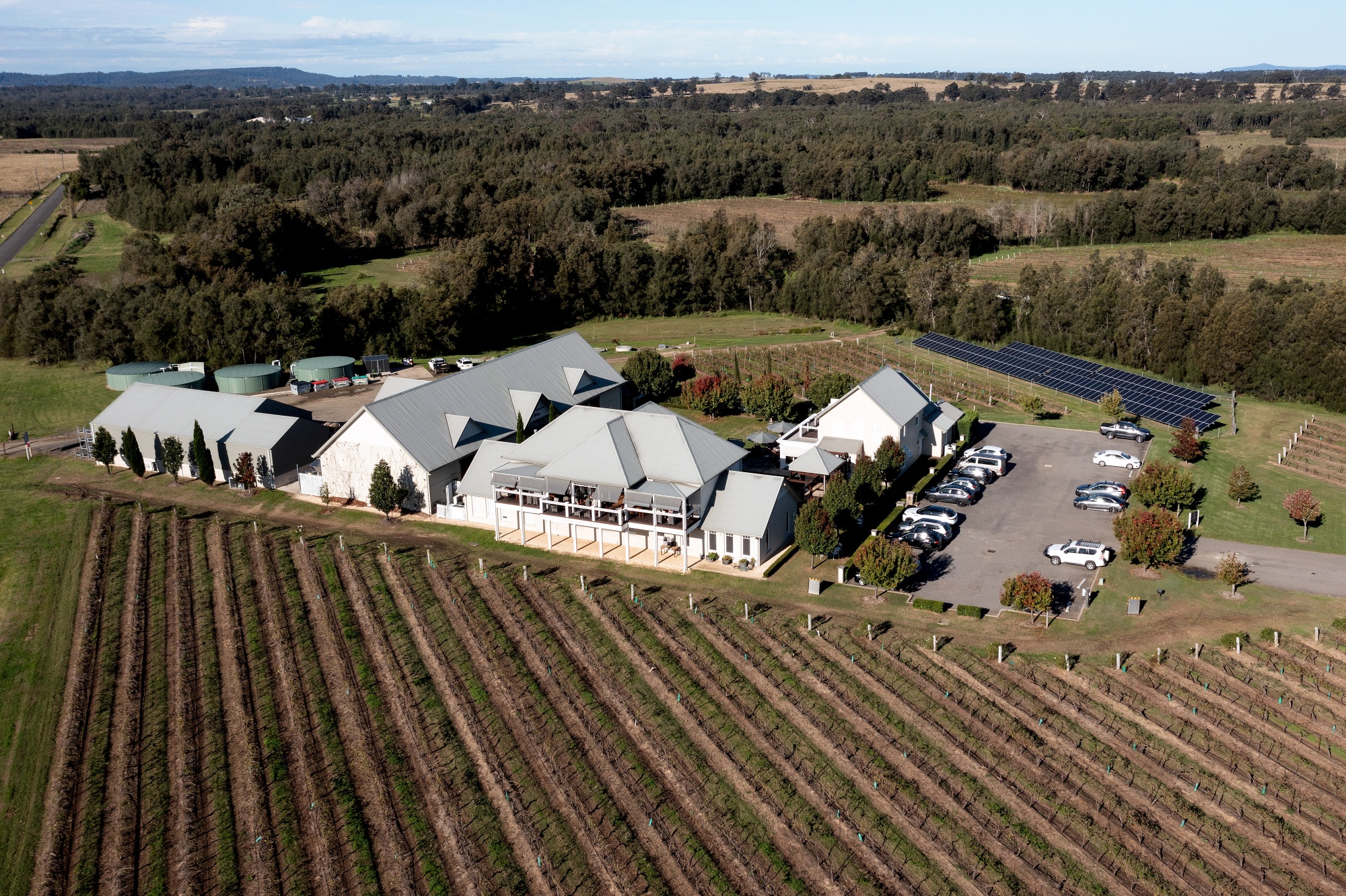 Solar panels at a vineyard in New South Wales state. Photographer: Brendon Thorne/Bloomberg The team used waste from a Coldstream Hills 2019 vintage wine, collecting samples during every step of the process, from harvesting to fermentation to maturation. Subsequent work yielded similar results across a range of different red grape varieties, including those used in a handful of independent batches to commercial production. They said that means the findings aren't limited to easily-controlled laboratory conditions, and may offer real-world options. The researchers found the compounds can be made into a liquid that tastes and smells like a weak grape juice, and may have some health benefits. Both polyphenols, which include things like resveratrol, and anthocyanins, which are the pigments responsible for the colors red, purple and blue in many fruits and vegetables, have been associated with protecting against health issues ranging from cancer to cardiovascular diseases and diabetes in some preliminary studies. Considering about 20% of the 2 million tons of grapes that Australia crushes every year end up as waste, there is much that could be gained from this discovery. The researchers said their next steps are to figure out how specifically to extract the compounds and look into other potential uses - including non-alcoholic beverages. Eventually food processors may be able to use these products, and further study how bioactive polyphenols naturally found in other ingredients are altered during food production. It's too soon to say whether wine waste can be put to better use, but at least researchers are on it. — Keira Wright | 







No comments:
Post a Comment