| It seemed like the dawn of a new era when then-President Donald Trump unveiled the Abraham Accords at a White House ceremony in September 2020 to normalize ties between Bahrain, the United Arab Emirates and Israel. Trump's successor, Joe Biden, set a goal of extending the rapprochement to the region's main power, Saudi Arabia, custodian of Islam's two holiest sites. Key Reading:
Arab States Sour on Israel in Blow to US Aim of Saudi Peace Pact
Israel Aims at More Targets as West Bank Fighting Persists
Israel's Political Deadlock Threatens Economic Growth, S&P Says
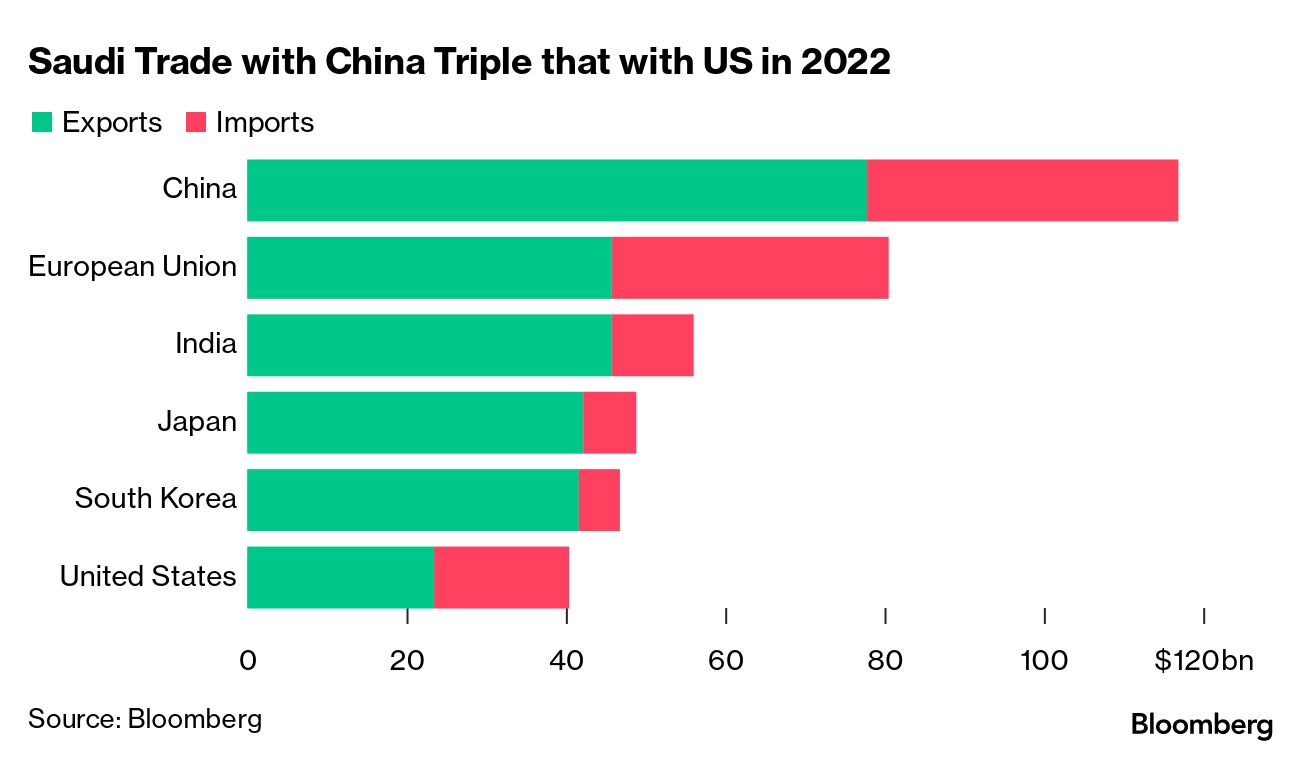
Israeli Supreme Court Won't Immediately Block Judicial Law But fast forward three years, and the hardline policies of Israeli Prime Minister Benjamin Netanyahu's religious-leaning government toward the Palestinians have stoked increasing tensions with the two Gulf states and Morocco, which also recognized Israel that same year. That's dampened hopes of a deal with Riyadh, which instead restored relations with Israel's arch-rival Iran under an agreement brokered by China. The recent deadly raid on a West Bank refugee camp in the city of Jenin that Israeli officials said was needed to flush out militants is the latest incident to inflame Arab public opinion, exposing the UAE and Bahrain to a backlash for their recognition of Israel. Netanyahu, who's yet to secure an invitation to the White House since being reelected amid criticism of his campaign to weaken Israel's judiciary, has also not been able to visit the UAE, though he'll probably attend the COP28 climate conference later this year in Dubai. Yet trade ties between the UAE and Israel are still expanding, from a few tens of millions of dollars before 2020 to a predicted $3 billion this year. And more than a million Israelis have visited the UAE since the two countries established ties — though few Emiratis have traveled the other way. For its part, Saudi Arabia is putting forward strict conditions for a pact with Israel, including defense guarantees from the US, access to top-notch American weaponry and a green light for its nuclear program including domestic uranium enrichment. For now, Washington's dream of orchestrating a region-wide detente looks more distant than ever. —Henry Meyer | 








No comments:
Post a Comment