| Welcome to Next Africa, a twice-weekly newsletter on where the continent stands now — and where it's headed. Surrounded by thick forest about 260 miles northeast of the Central African Republic's capital Bangui, the Ndassima gold mine was until two years ago a small-scale artisanal operation. Today, the Wagner Group, the Russian paramilitary organization whose founder Yevgeny Prigozhin had close ties to the Kremlin until last weekend's mutiny, is turning it into a major industrial site capable of producing $300 million in gold a year. 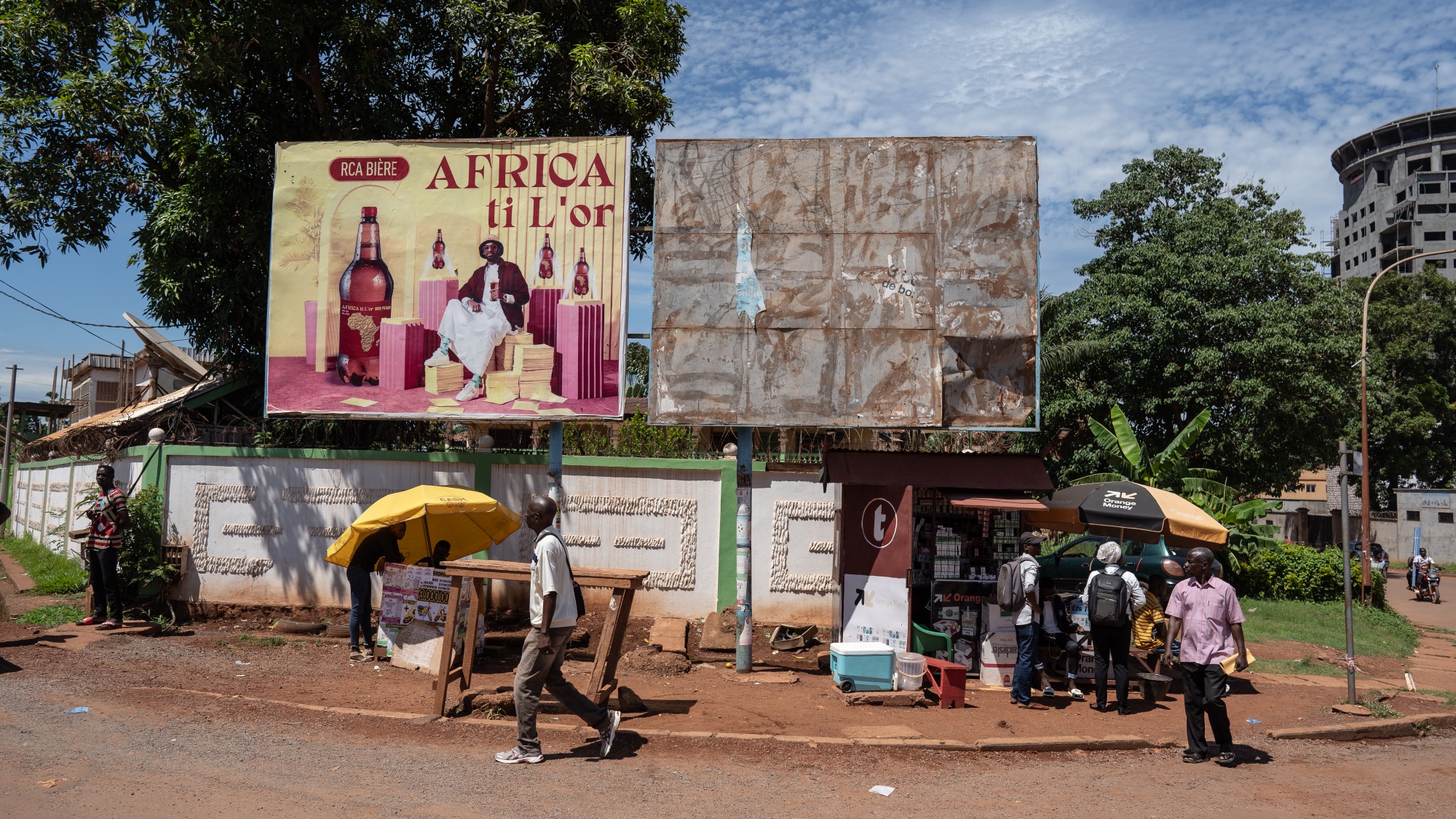 An advertisement for Africa Ti L'Or, a beer company with links to Wagner, in Bangui on May 31. Photographer: Simon Marks/Bloomberg What happens to Wagner in the aftermath of the insurrection is a matter of fierce debate — the Kremlin may reduce resources for the mercenary group after folding it into the Ministry of Defense or change its leadership structure across the continent. But our investigation into Wagner's activities in CAR — that drew on trade data, satellite imagery, and interviews with dozens of people familiar with the situation — reveals how its reach has extended into almost every sector of the economy. A spokesperson for Concord Group, a St. Petersburg-based company controlled by Prigozhin, declined an interview request with the Wagner leader and didn't respond to questions about the group's presence in CAR. Wagner controls the African nation's biggest gold mine as well as a timber concession twice the size of New York City. It has access to diamonds, produces cheap vodka and beer, and government officials say Russian companies have begun producing fruit juice and have invested in a 200,000 hectare project to grow tropical wheat. The investigation shows how Wagner and Russia built its presence by capturing the nation's state institutions, usurping original colonizer, France. — Simon Marks London judges ruled that UK Prime Minister Rishi Sunak's attempt to deport asylum seekers to Rwanda is unlawful. Sending the refugees to the East African nation would violate the European Convention on Human Rights, which the government must comply with, the judges said in a split decision. They criticized the British government for not taking steps to ensure that the Rwandan immigration and judicial system is compliant with conditions necessary to make it a "safe third country." 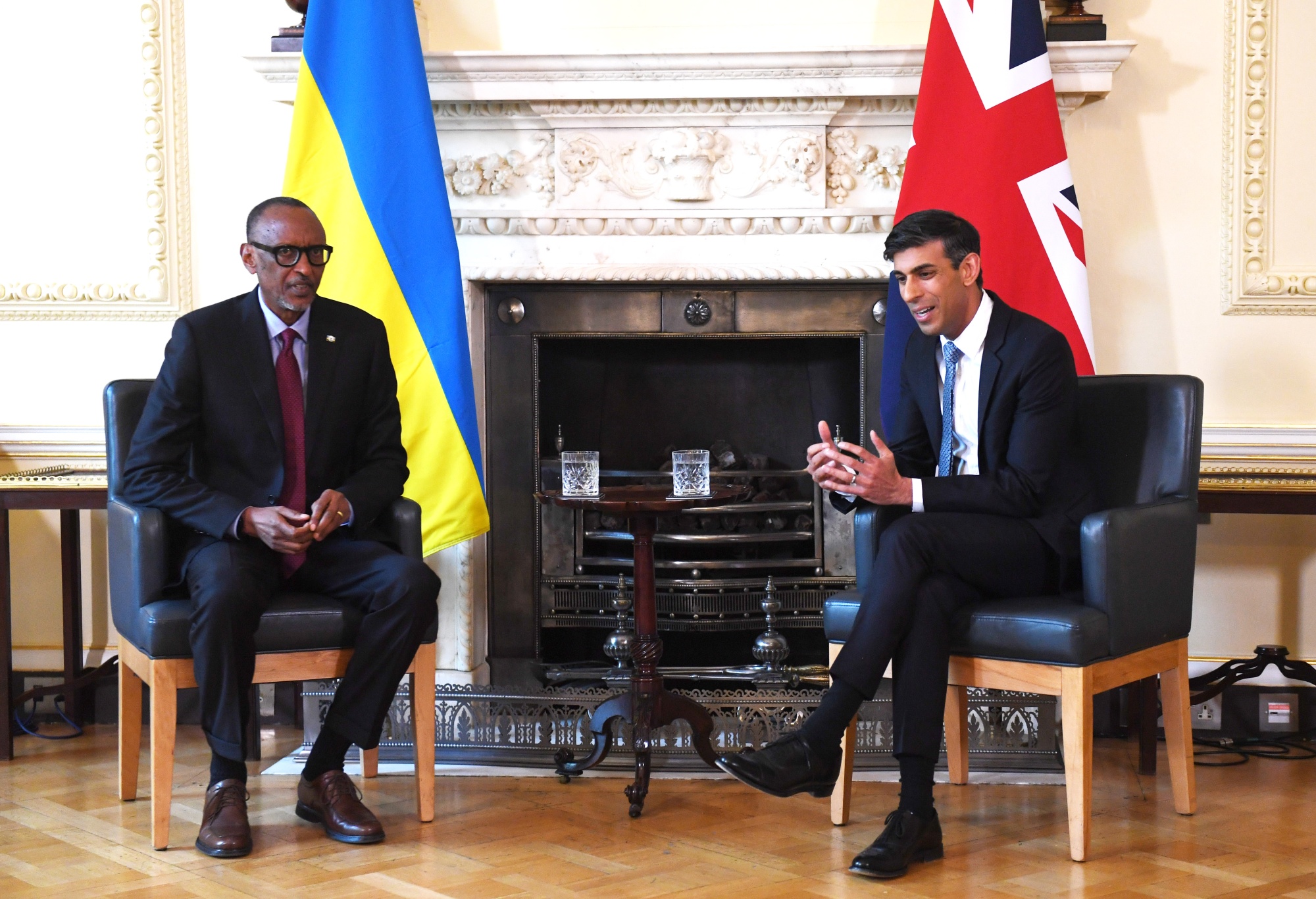 Rwandan President Paul Kagame and Sunak in London on May 4. Photographer: Neil Hall/EPA/Getty Images Nigeria's elections this year were marred by problems that undermined public trust in democracy, European Union observers said. Bola Tinubu won the presidential ballot in February — a result that the two runners up are disputing in court. Voters elected federal lawmakers on the same day and chose state governors and legislators three weeks later. The report singled out shortcomings including widespread vote-buying by candidates, targeted political violence and a failure to upload individual polling-unit result sheets to an online portal in real time. A hacking group responsible for a series of outages at Microsoft had previously attacked targets in Israel, Sweden and other nations, part of an expanding campaign that some cybersecurity researchers have tied to Russia. "Anonymous Sudan" describes itself as a hacktivist group and says it's waging cyber strikes out of Africa on behalf of oppressed Muslims worldwide. But some experts have concluded it actually operates from Russia and seeks to advance Moscow's objectives. 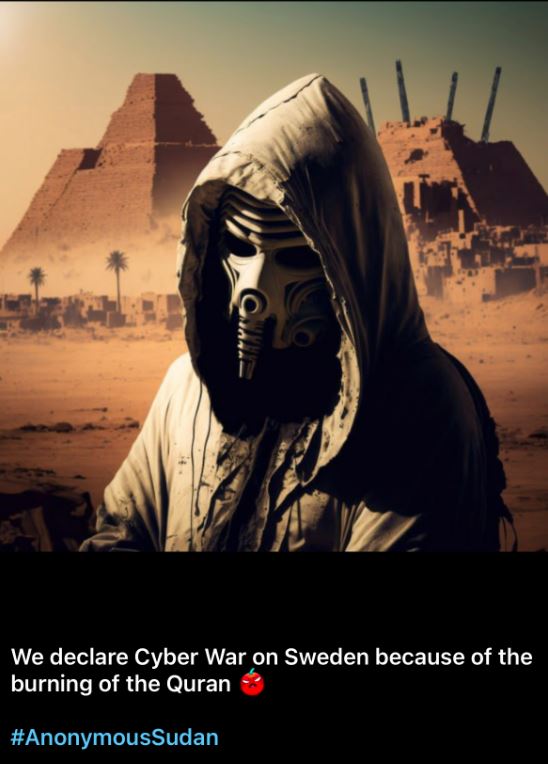 A social media post from the Anonymous Sudan Telegram page dated Feb. 3. Source: Telegram Frontier nations will need to go further in devaluing their currencies even after a cascade of adjustments carried out already this year, according to Goldman Sachs. Egypt, Pakistan and Lebanon led the way early in 2023 in letting their currencies slide, with Zimbabwe, Nigeria and Angola following suit this quarter amid an erosion of foreign exchange reserves. Few except for Nigeria have gone far enough. Read this take on managed currencies in frontier nations, including Burundi and Malawi. Meanwhile, Madagascar is looking to gold to boost its official reserves as its currency, the ariary, slides. The world lost 11 soccer fields' worth of tropical forest per minute in 2022 — a total area about the size of Switzerland and 10% more tropical forest than was lost in 2021. The carbon emissions associated with that disappearance were equivalent to all of India's fossil-fuel emissions. Brazil, the Democratic Republic of Congo and Bolivia, countries with large tropical rainforests, lost the most acreage last year. Forests are vital to sequestering carbon and maintaining Earth's biodiversity, and millions of people depend on them for their livelihoods. 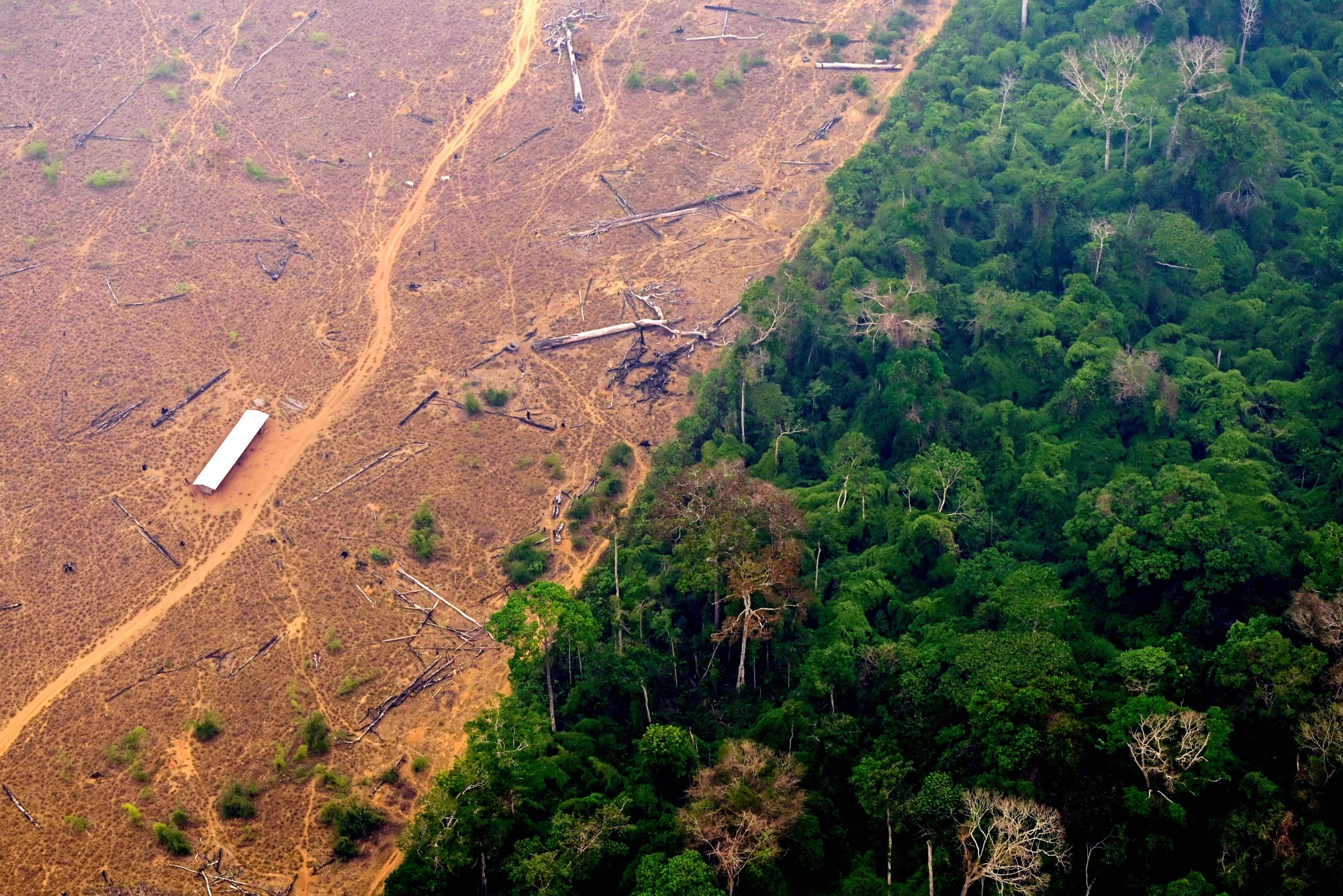 A deforested area of the Amazon in northern Brazil. Photographer: Douglas Magno/AFP/Getty Images Zambia's deal with a group of creditors led by China and France to restructure $6.3 billion in bilateral debt has cleared the way to an accord, possibly within weeks, over some $3 billion of eurobonds in default for almost three years. The agreement has consequences that reach beyond its investors. It sets a template for how coordination between China — now the biggest bilateral creditor to developing countries — the Paris Club and bondholders can work. The accord may mean others that follow, like Ghana and Ethiopia, could enjoy quicker conclusions. As Russian President Vladimir Putin figures out what to do with Prigozhin and the mutinous legions of the Wagner Group, his foreign minister is keen to reassure client nations of the mercenary organization that they can expect business as usual. Read this opinion piece by columnist Bobby Ghosh on what the tumultuous week for the mercenary group may mean for Mali. Data Watch - Zambia's economic growth slowed to 2.3% in the first quarter compared with a revised 4.4% in the previous three months. Its inflation rate fell slightly to 9.8% for June, and is set to decline further when the impact of a recent rally in the kwacha seeps through.
- About 178,000 Zimbabweans living in South Africa were given a reprieve after a Pretoria court barred the government from deporting them.
- Senegal's dollar bonds rallied after the International Monetary Fund approved about $1.8 billion in loans to support the nation's recovery and protect it from future shocks.
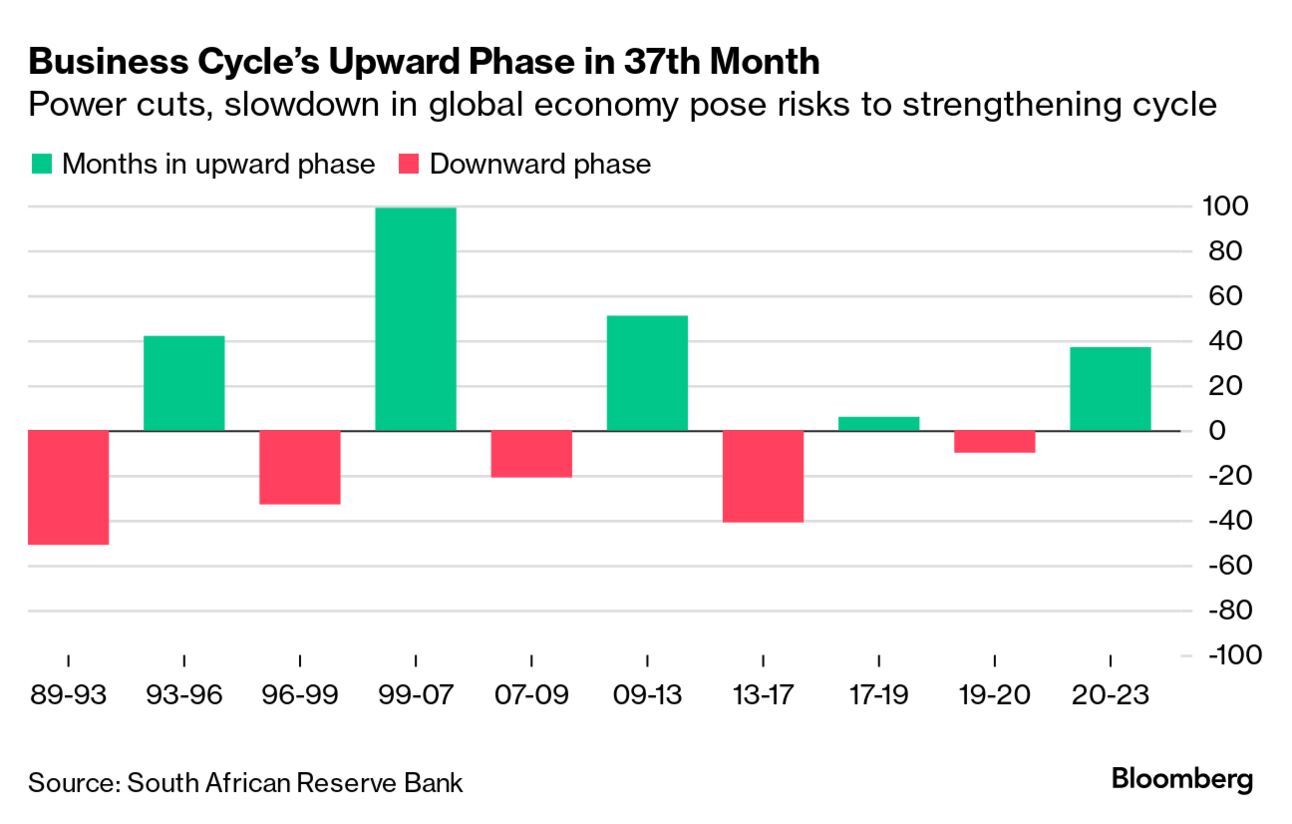
South Africa's economy entered the 37th month of a strengthening cycle in June, according to the central bank, as it continues to recover from the harshest phase of the nation's coronavirus lockdown, which included restrictions on all but essential activity and mobility. An electricity crisis and weaker global growth are the main threats to the cycle. Coming Up - July 3 Sierra Leone interest-rate decision, Nigeria PMI report for June, South Africa manufacturing PMI and new-vehicle sales data for June, Angola reserves
- July 5 Monthly PMI releases for Ghana, Kenya, Mozambique, South Africa and Uganda, Zimbabwe hosts the African Voluntary Carbon Credits Market forum
- July 6 South Africa inflation-expectations survey
- July 7 Zambia PMI, South African reserves data, Mauritius reserves & inflation, and Seychelles inflation data — all for June
Russia "built a monster for geostrategic expansion but also for economic gain," Nathalia Dukhan, a senior investigator for investigative agency The Sentry, said in an interview. "It's very likely that this monster will evolve and will survive." 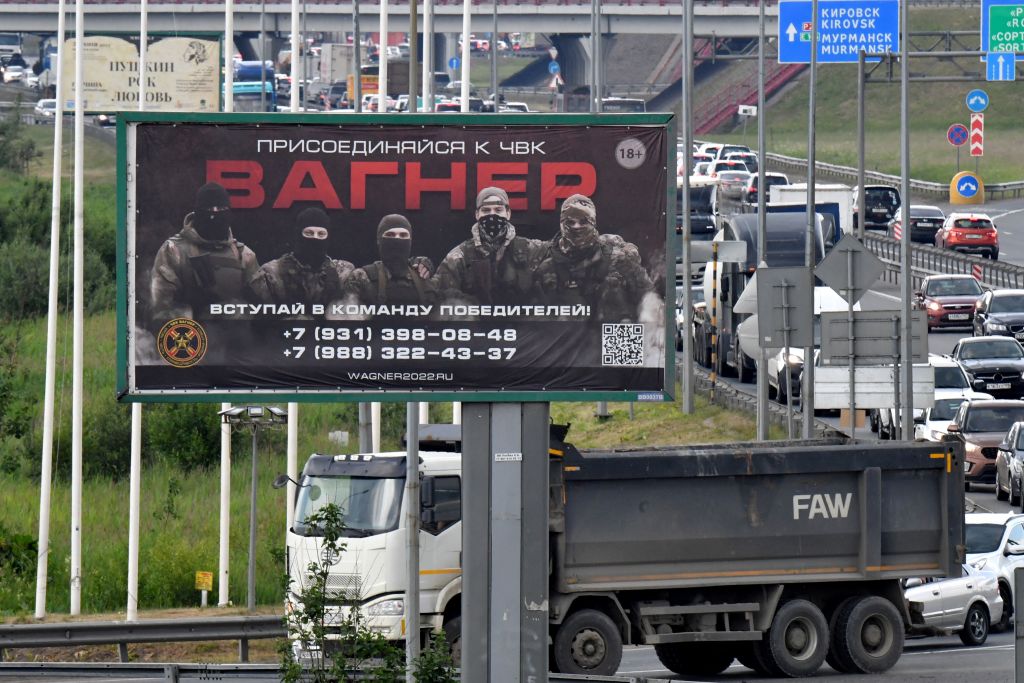 An advertising board of the Wagner group in St. Petersburg, Russia, on June 24. Photographer: Olga Maltseva/AFP/Getty Images With the black market price for a rhino horn topping $40,000, there's no shortage of poachers willing to traffic one of the animal kingdom's most sought after commodities. That in part explains why an estimated three-quarters of the wild rhinos in South Africa have been killed in less than a decade. And why poachers might risk a 25-year jail sentence for a night spent evading lions and leopards. Now teams across South Africa are combining the skills of experienced bush pilots and frontline veterinarians, fighting to slow the killings of rhinos and the theft of their horns. In the latest twist in the illegal rhino horn trade, those lopping off the horns in South Africa's Kruger National Park with chainsaws are the good guys. The animals are darted with an opiate. Once they are down, a veterinarian pours artificial tears into their eyes, then blindfolds them, trying to minimize their distress as their horns are taken. That leaves nothing for poachers to steal and in reserves were the rhinos are dehorned, the animals are left alone. 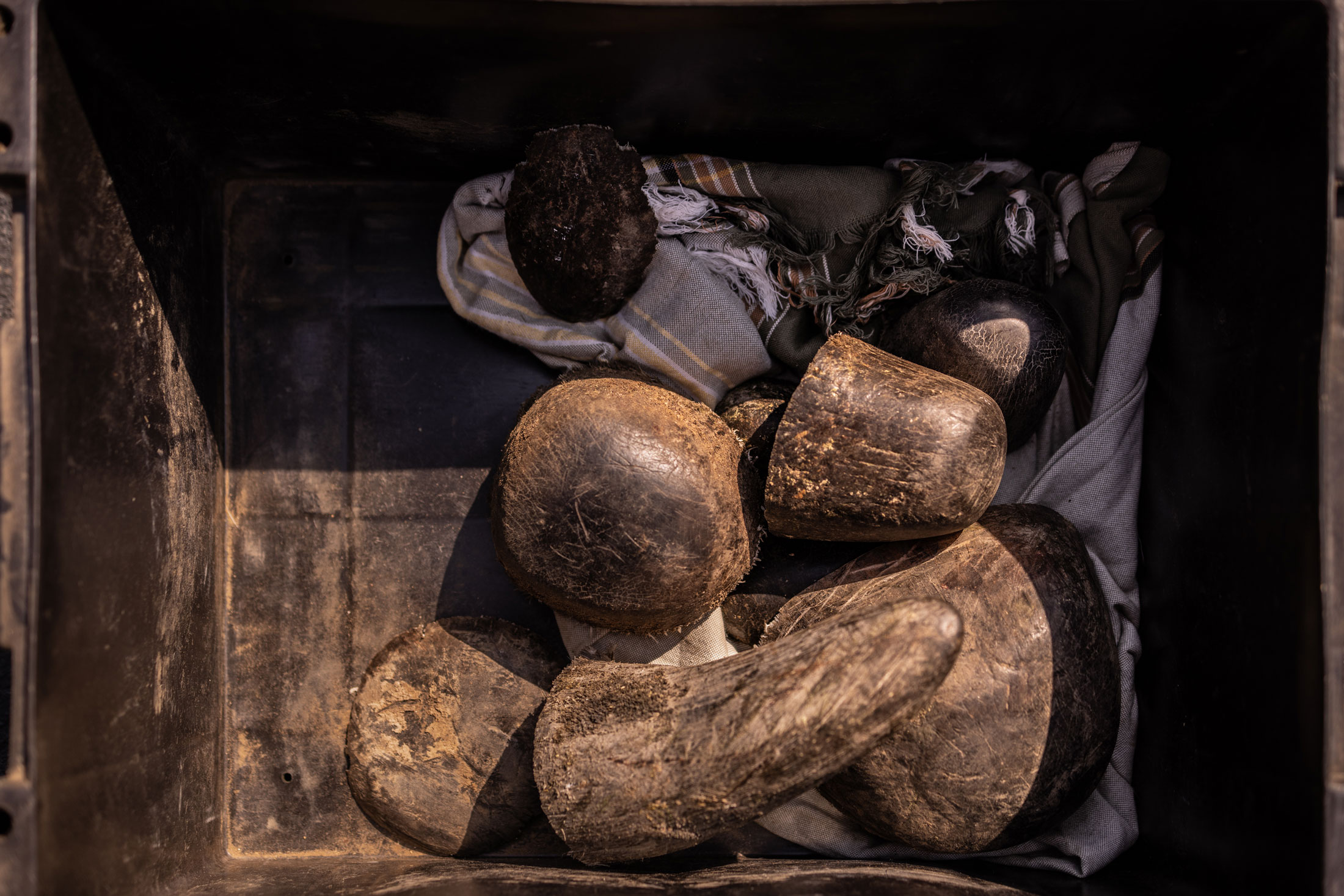 Horns harvested over two days of dehorning. Photographer: Gulshan Khan for Bloomberg Businessweek Thanks for reading. We'll be back in your inbox with the next edition on Tuesday. Send any feedback to us at gbell16@bloomberg.net. | 







No comments:
Post a Comment