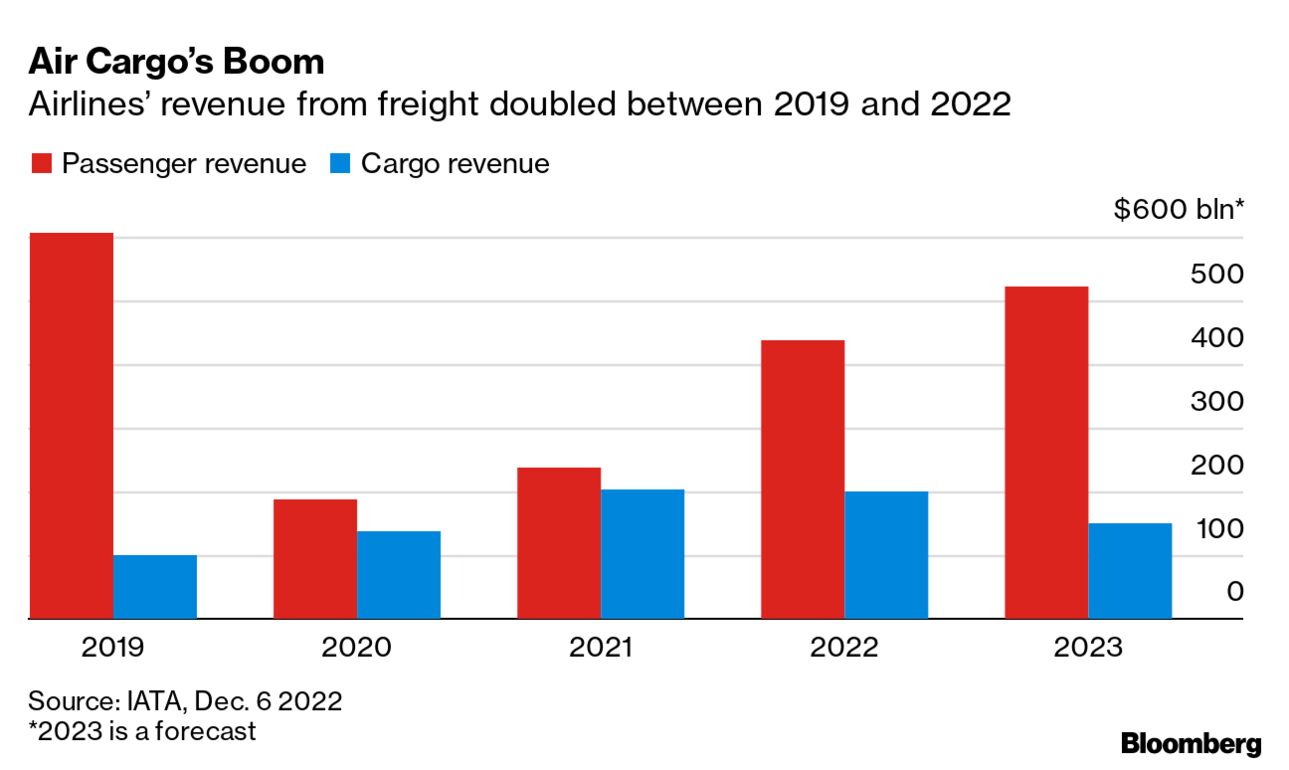
| Half of the world's air cargo capacity is now available for pricing and booking in one digital marketplace. That's one of the milestones reached after it was announced Tuesday that China Southern Airlines is linking up with WebCargo, a unit of Freightos that has more than 30 airlines offering their services for air freight globally. (Read the full story here.) China Southern is the first Chinese carrier on WebCargo and helps shippers access more capacity in Asia on a platform that already has some of the top carriers based in Europe, the US and the Persian Gulf region. "China up to now has been the exception to the whole air-cargo revolution," Freightos CEO Zvi Schreiber said. Asia Inroads WebCargo works like Travelocity or Expedia, but instead of entering passenger information, you search for the quantity and type of cargo, the departure and arrival airport, and the dates for shipping. Hit enter, and options ranging from the carrier and price appear. It also shows a carbon emission estimate. Europe is WebCargo's best-covered market with carriers such as Lufthansa and Turkish Cargo. In the US, American Airlines and Delta are signed up, but "Asia is still very poorly covered," Schreiber said. That may be about to change. Chengqing Tao, executive vice president of China Southern Air Logistics, said the digital shift for air freight will continue even if the market hits headwinds in 2023. "I'm still cautiously positive on the growth outlook of the air cargo market between China and the world, since China will continue to play an integral role as the world's manufacturing hub and one of the largest consumer markets," he said. "Digitization has become a key business and practice enabler in air cargo industry that will surely continue," Tao said. "We are now speeding up our pace to embrace digital transformation." Separately on Tuesday, industry group IATA said the world's airlines will collectively turn a small profit next year, ending a three-year stretch of losses. That's despite expectations for air-cargo revenue to fall to $149.4 billion in 2023, which would be $52 billion less than the expected total for this year, IATA said. —Brendan Murray in London | 







No comments:
Post a Comment