| Hello. Today we look at the outlook for emerging market economies, the cost of going to the World Cup and what Bloomberg Economics thinks about 2023. It used to be said that when the US sneezed, the rest of the world caught a cold. These days, for many members of the global economy, things might be different. Even if the US does fall into a recession, as many analysts have penciled in, there are three favorable developments for big emerging markets as they look out to 2023: - Long-term US bond yields appear to have peaked, thanks to already-evident signs that inflation will see a sustained slowdown as American growth weakens. Ten-year Treasuries yielded about 3.6% Monday, almost three quarters of a percentage point lower than a late-October high.
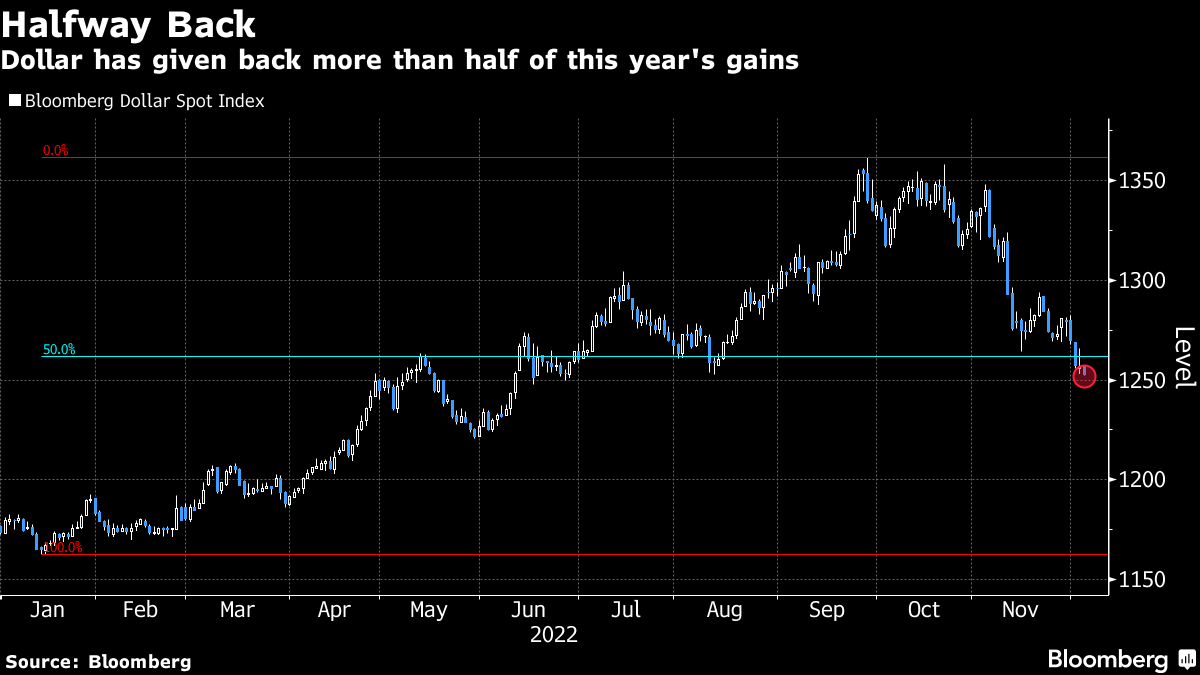
- The dollar also appears to have peaked, thanks to those falling US yields. The turn saw China's yuan climbing past 7 per dollar on Monday, for the first time since September.
- The other factor behind that yuan move is a third "peak" — China's Covid Zero stance. On an almost daily basis now, further signs are evident that authorities are steadily easing measures that had the effect of hammering growth in the world's No. 2 economy this year.
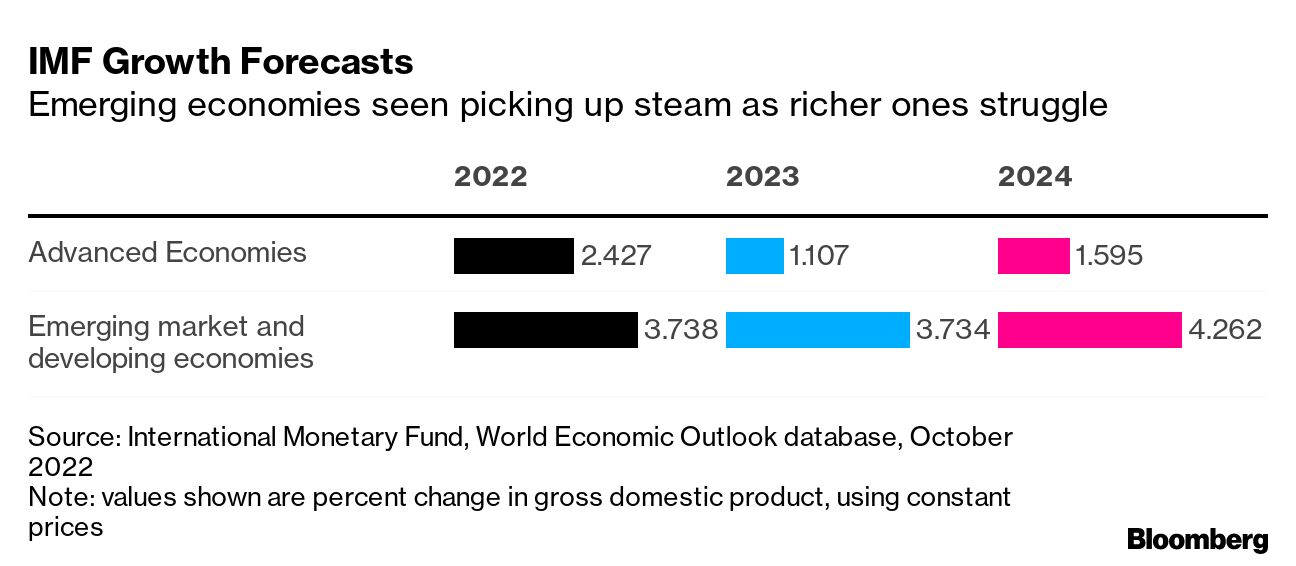
For developing nations that have already fallen into debt distress — such as Sri Lanka, Pakistan and a number of African economies — this turn is of limited help. But for others, the pullback in the dollar and in long-term rates will create at least some space to slow their interest-rate hikes, or finish them off at lower levels. JPMorgan Chase economists recently revised down their call for the peak in the Bank of Korea's key rate to 3.5% from 3.75%, and the Reserve Bank of India's to 6.25% from 6.75%. Far from falling into distress, Indonesia — the No. 3 emerging market by population, after China and India — can even look forward to a sovereign credit rating upgrade next year, if Citigroup proves right. The Southeast Asian nation's strengthening export picture, along with domestic reforms that are boosting its tax collection, could lead one of the major ratings agencies to bump Indonesia up to three notches from junk, instead of just two now, Citigroup economist Helmi Arman wrote Monday. Meantime, China's reopening means consumer spending there is expected to jump by 7% next year, from just 0.2% this year, Standard Chartered economists said on Monday. That kind of base case reinforces expectations for emerging nations to handily outperform developed ones next year, in a reversion to pre-Covid form. Developing countries were hit harder by the pandemic and the global supply-chain woes exacerbated by Russia's invasion of Ukraine. Next year they're likely to see greater resilience, IMF forecasts show: "The latest manufacturing PMIs suggest that industrial activity in developed markets is sharply plunging into contractionary territory. In contrast, industrial activity in emerging markets has been broadly stable and range-bound, currently hovering near the expansion threshold," Societe Generale economists wrote in their 2023 EM outlook in late November.
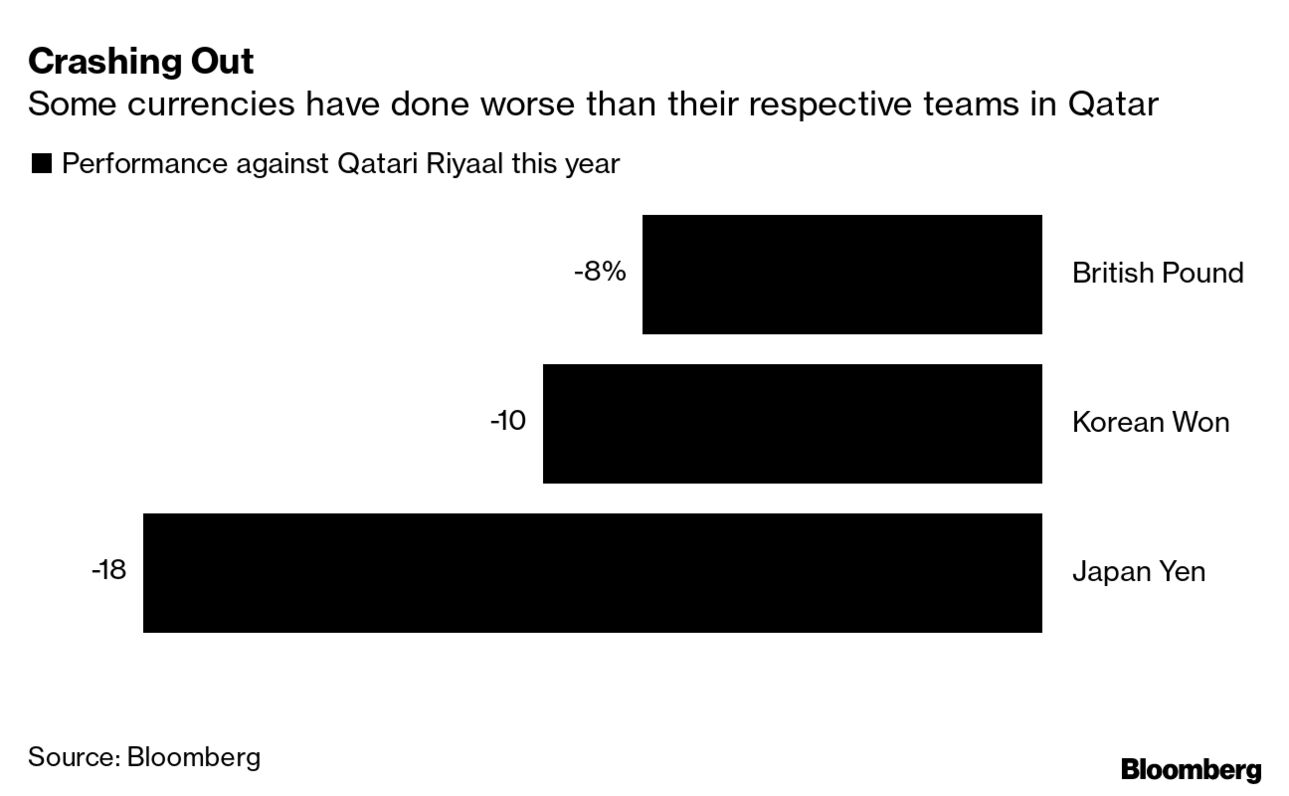
—Chris Anstey Football fans who traveled to Qatar knew the World Cup experience wouldn't come cheap, but the resilience of the Gulf nation's currency — which is pegged to the US dollar — is making the trip particularly painful for travelers from South Korea, Japan and England. Everything from hotels bills to Coca-Cola at the stadium are pinching tourists. The Qatari riyal has strengthened almost 9% against the Korean won this year, 17% against the yen and nearly 10% versus the pound. For England fans, those lofty bills are the last thing on fans' minds after their thumping win over Senegal. Japanese and South Korean supporters can now cut their losses after both were bounced from the round of 16.  | - Trade tracker | The year-end holidays are failing to lift the glum outlook for trade as conditions continue to deteriorate across the world's factories and ports.
- Chile rates | The central bank will likely hold its benchmark interest rate at 11.25% after its president, Rosanna Costa, cautioned it was too early to say that consumer price trends have improved.
- China Covid | China is reporting fewer Covid-19 cases as a wave that started to accelerate last month appears to be tailing off. Analysts are also looking for signs of a turnaround in the property market.
- Australia hikes | Australia's central bank raised its key interest rate for an eighth consecutive month and said it expects to tighten further as policy makers combat the hottest inflation in three decades.
- Japan spending | Japan's households boosted spending in October for a second straight month despite accelerating inflation and falling real wages, marking a better-than-expected start to the final quarter.
- Uruguay pressured | South America's largest economies warned that Uruguay's move to chase trade deals without their agreement risks undermining a three-decade-old customs union.
- To the brink | Hungary's central bank chief issued a withering rebuke of Prime Minister Viktor Orban's economic policy, saying mistakes under the premier's stewardship have driven the economy to the brink.
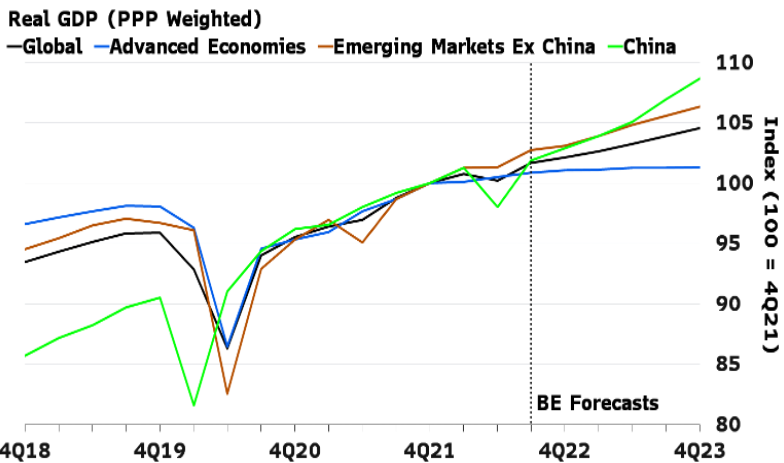
Bloomberg Economics has published its 2023 outlook, with a base case for global growth at a meager 2.4%, down from 3.2% in 2022 and the lowest — leaving aside the crisis years of 2009 and 2020 — since 1993. - The euro area is set to start the year in recession, with output flat for 2023 overall as high energy prices and tighter financial conditions drag.
- The US will see a contraction starting in the third quarter with Fed hikes hitting rate-sensitive sectors and unemployment climbing to 4.5%.
- In China, a faster-than-expected exit from Covid Zero, combined with property support, and a low base should be enough to push growth in 2023 up to 5.1%.
Read more reactions on Twitter | 







No comments:
Post a Comment