| Welcome to the Hyperdrive daily briefing on what's reshaping the auto world. Read the story featured in today's newsletter on the web here, and sign up if you're not already subscribed. - Renault and Airbus partner on advanced battery technology.
- VW may tap Foxconn to make electric trucks and SUVs in US.
- Faraday's head of product leaves after ouster of CEO.
When Tesla moved its headquarters to Texas a year ago, the former head of the powerful California Air Resources Board said Elon Musk lacked gratitude for the role the state played in the carmaker's rise. California's zero-emission vehicle mandate required automakers that didn't sell enough electric vehicles to buy credits from Musk's company before it was making any money. Tesla has grown to where it can now stand on its own two feet, but it still has reasons to be thankful for its former home state. This week's Semi delivery event is a perfect example: Five years after Musk rode on stage in a prototype during an unveiling event, some of his first production trucks will go to a project CARB supported with $15.4 million in funding. 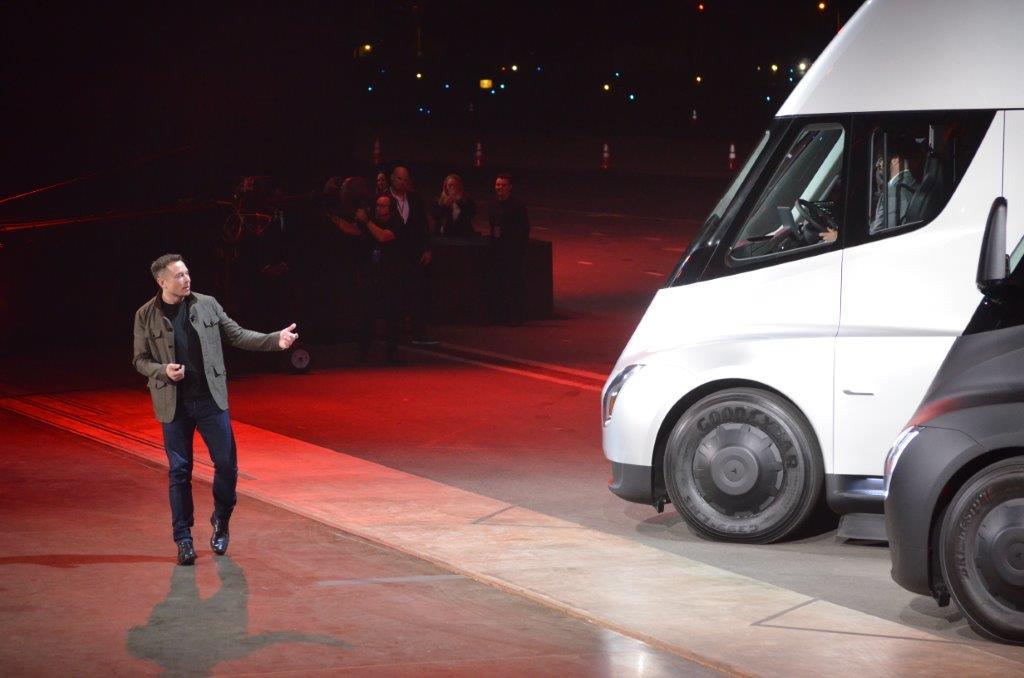 Elon Musk unveiling the Tesla Semi in November 2017. Photographer: Veronique Dupont/AFP/Getty Images CARB awarded the grant in September 2018 to an air district in California's Central Valley that partnered with PepsiCo's Frito-Lay to transform its manufacturing site in Modesto, California. The company wanted to replace all of its diesel-powered freight equipment with zero-emission trucks and install solar panels and energy-storage systems. The $30.8 million project — half of which CARB paid for — includes 15 Tesla Semi trucks, six Peterbilt electric trucks, three BYD electric yard trucks, 12 electric forklifts and 38 low-emission Volvo tractors. Tesla's Semis were the last piece of the project. PepsiCo will host an event to showcase the Modesto facility's transformation on Jan. 18. But rather than hold court where its customer will be the first to operate a commercial fleet of Semis, Tesla will stage its event Thursday at its massive factory near Reno, Nevada. Tesla may now be headquartered in Austin, but it still has a formidable presence in California, where public policy and funding has paved the way for electric passenger cars, and now, electric big rigs. The company bills the Semi as nothing less than the future of trucking, but that may prove to be as overly optimistic as its initial plan to start production in 2019. For one, truck stops aren't ready to deliver the huge amounts of power big rigs and their giant batteries will require. One recent study found the projected power needs for a big truck stop will equal that of a small town by 2035. Musk said during Tesla's last earnings call that the company is tentatively aiming to produce 50,000 Semis for North America in 2024. He appears to have taken the product off the back burner after the passing of the Inflation Reduction Act, which makes up to $40,000 tax credits available to commercial vehicles. For all the help truck manufacturers and their customers are getting from governments, the transition to cleaner commercial vehicles also will be dictated by tougher emissions rules forcing the issue. "Trucking will always be driven by cost per mile and total cost of ownership," said Mike Roeth, executive director of the North American Council for Freight Efficiency. "But we're moving into a world where diesel is no longer an option because of changing regulations. The game has changed, and fleets are leaning into zero-emission options, whether its electric or hydrogen." 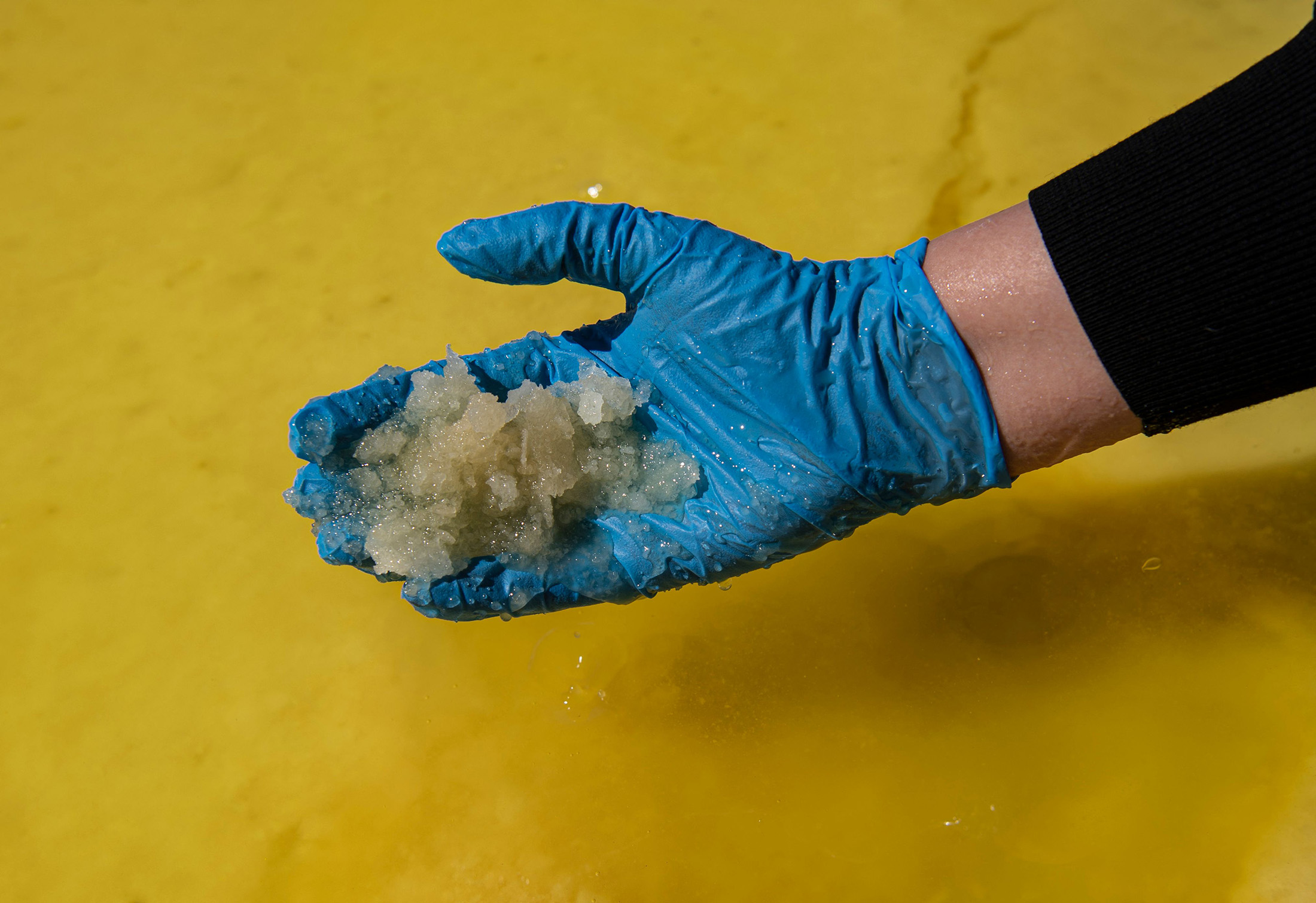 A lithium sample at Chilean company SQM's mine in the Atacama Desert. Photographer: Martin Bernetti/Getty Images For years, one customer mattered most in the market for lithium and other metals used in electric vehicle batteries: Tesla. The prospect that a new mine might end up feeding Elon Musk's automaker was enough to sway cautious lenders or convince investors. And as the biggest buyer in a sector full of startup miners, Tesla wielded unusual power to dictate terms, typically locking in agreements for supplies for years at fixed prices. An aggressive push into EVs by legacy car manufacturers and worries over tight markets for lithium and other key materials such as nickel and graphite is upending those dynamics. Ford and General Motors have roiled the industry by striking generous pacts with prospective suppliers that include commitments to pay upfront for future deliveries or offer cheap loans to build new mines. Like getting this newsletter? Subscribe to Bloomberg.com for unlimited access to trusted, data-driven journalism and subscriber-only insights. | 







No comments:
Post a Comment