| Frustration with China's Covid Zero policy is coming to a head, as lockdowns, testing and other restrictions spur historic protests across the country. On the ground, the country's strict Covid controls are also playing out in another realm: grinding some grassroots climate action to a halt. Environmentalists in and outside China say Covid Zero has made them extremely wary of travel, cutting off much-needed in-person interaction and, in one case, hamstringing a crucial international negotiation on biodiversity. With researchers and scientists stranded at home, many climate projects are on pause, potentially slowing the country's ability to reduce greenhouse gas emissions and move forward on adaptation. Advocates worry that as urgency increases and climate conversations progress around the world, China risks being left out — or even left behind. "It's a scary time when you think about concerns over decarbonization," said Jennifer Turner, director of the China Environment Forum at Washington DC-based think tank Wilson Center. "Climate action needs to be much bigger now. The world can't wait." To hear Beijing tell it, all is well on China's climate front. At COP27, the country said it had developed a draft plan to curb methane emissions; that same week, Chinese president Xi Jinping and US president Joe Biden had their first in-person meeting since Biden took office, after which the two countries confirmed a return to climate collaboration. China has also publicly reaffirmed its pledges to reach peak domestic greenhouse gas emissions by 2030 and become carbon-neutral by 2060. 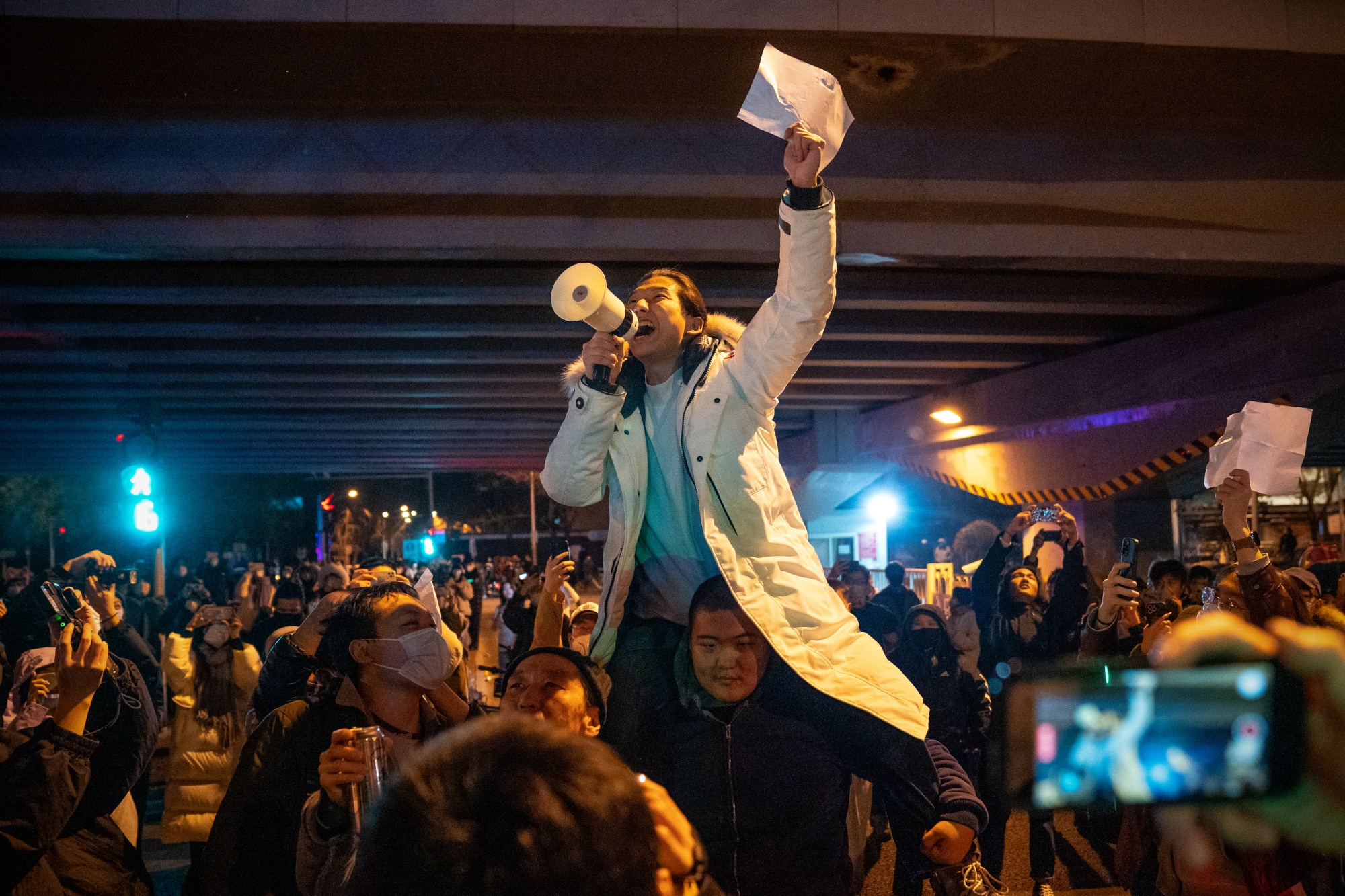 A demonstrator holds a blank sign, a common act of defiance, during a protest in Beijing on Nov. 28. Source: Bloomberg But strain was clear at Sharm El-Sheikh, too. China's COP27 pavilion handed out Covid face masks at its entrance (alongside copies of Xi's books on governance and diplomacy), and was among the only pavilions to refuse un-masked visitors entry. While the country sent an official delegation of more than 50 people to Egypt, Chinese climate advocates looking to travel to COP27 on their own faced a gauntlet of logistics and expenses. While delegates across the planet reported high costs and logistics challenges to attend COP27, Chinese activists had it worse. One Beijing-based environmentalist rushed to fundraise ahead of her trip: China's tight travel controls and days-long hotel quarantine requirements had made the cost of attending exorbitant. "Many Chinese NGOs wanted to attend COP but they couldn't afford it," she said. The environmentalist, like many others interviewed for the story, spoke on the condition of anonymity to avoid repercussions from criticizing the Chinese government. The cost and complexity of travel is also hurting more routine knowledge-sharing. A scientist who works at a university near Shanghai said he used to travel abroad as frequently as 14 times a year: brainstorming with international experts, visiting state-of-the-art emissions reduction projects and bringing the best climate-friendly practices back to his country. Now he hasn't made a single trip out of China since 2020. Worse, the scientist said, is that at least five climate-mitigation projects he is involved in have been delayed or scrapped due to Covid restrictions. One such project, a partnership with researchers in Europe, aimed to test different solutions for soil degradation on Chinese farmland. But after three years, their experiments still haven't started because no one is able to access the research site. "We simply can't do our field work on Zoom," the scientist said. Beijing, once a popular destination for hosting environmental workshops, is also losing its allure for global climate experts, said one researcher who works at an international NGO in the city. In the pre-pandemic era, at least one climate dialogue took place in the Chinese capital in any given quarter, he said; this year, no international forums were hosted in-person. Indeed, the UN Biodiversity Conference — a global summit aimed at striking a deal to safeguard nature amid a changing climate — had to change its venue from China to Canada after repeated delays, citing the "pandemic control situation in and outside the country." 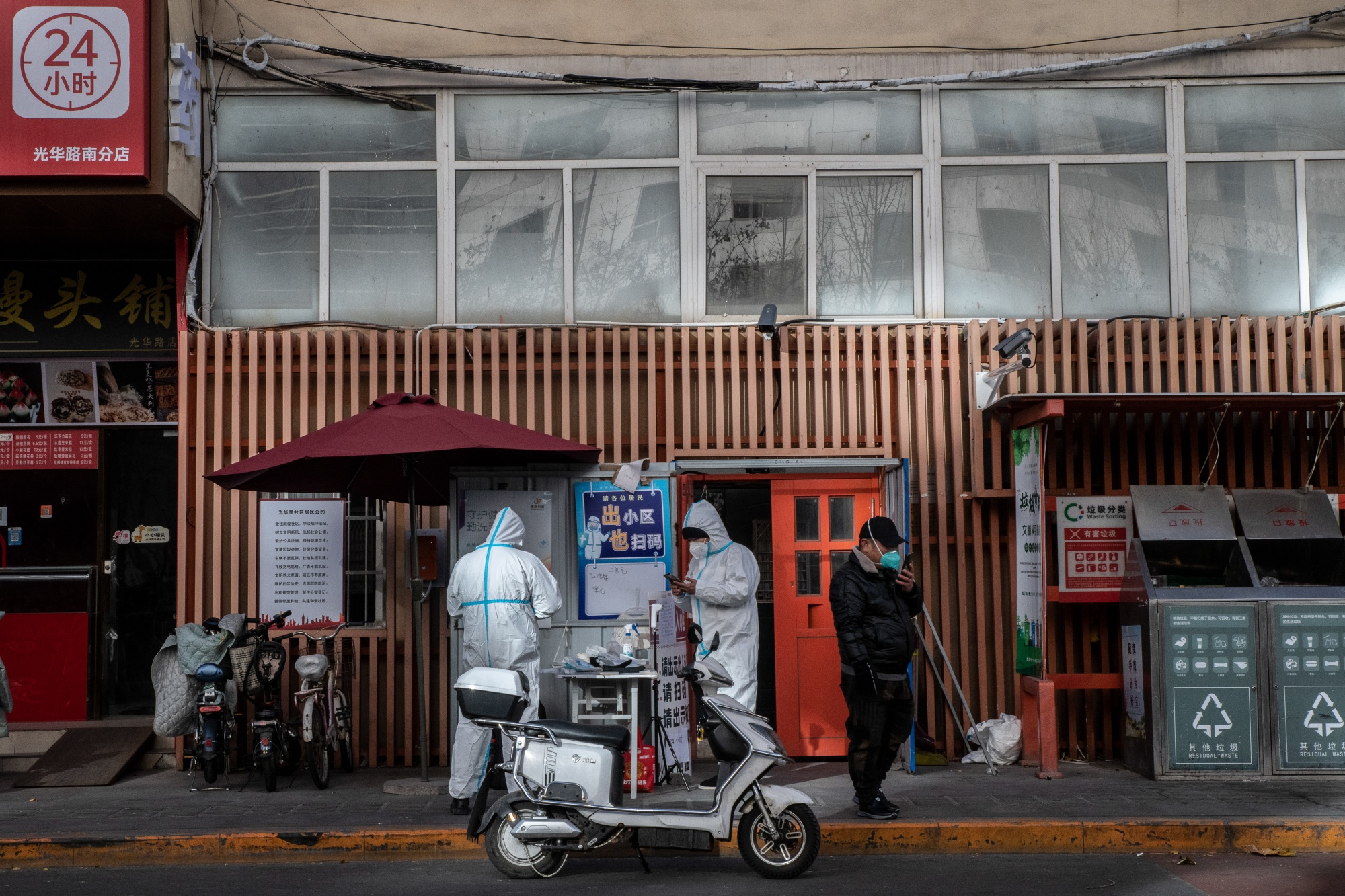 Covid-prevention workers guard the entrance of a residential building placed under lockdown in Beijing on Nov. 26. Source: Bloomberg Climate advocates are far from the only critics of China's adherence to Covid Zero; others point to its impact on the country's economy, and its use as a tool of social control. But the climate considerations are taking on increased urgency as current plans to cut greenhouse gas emissions prove insufficient to halt warming at 1.5C above pre-industrial levels. There's also a substantial risk that economic recovery will take precedence over climate ambitions even if China does loosen restrictions. "China's Zero Covid policy is a disruption of the whole economy," said Turner at the Wilson Center. "As the economy worsens, decarbonization starts looking really impossible." Click here to see the online version of this story. Like getting the Green Daily? Subscribe to Bloomberg.com for unlimited access to breaking news on climate and energy, data-driven reporting and graphics and Bloomberg Green magazine. | 









No comments:
Post a Comment