| Undermining effort | Hundreds of diplomats and health-security experts are gathering in Geneva to grapple with the increasing risk that viruses, bacteria and other pathogens could be used as weapons. But the presence of Russia, whose disinformation campaign alleging that the US has supported secret biological weapons laboratories in Ukraine, is likely to undermine the effort to ban the entire category of weapons. - Read our latest coverage of Russia's war in Ukraine here.
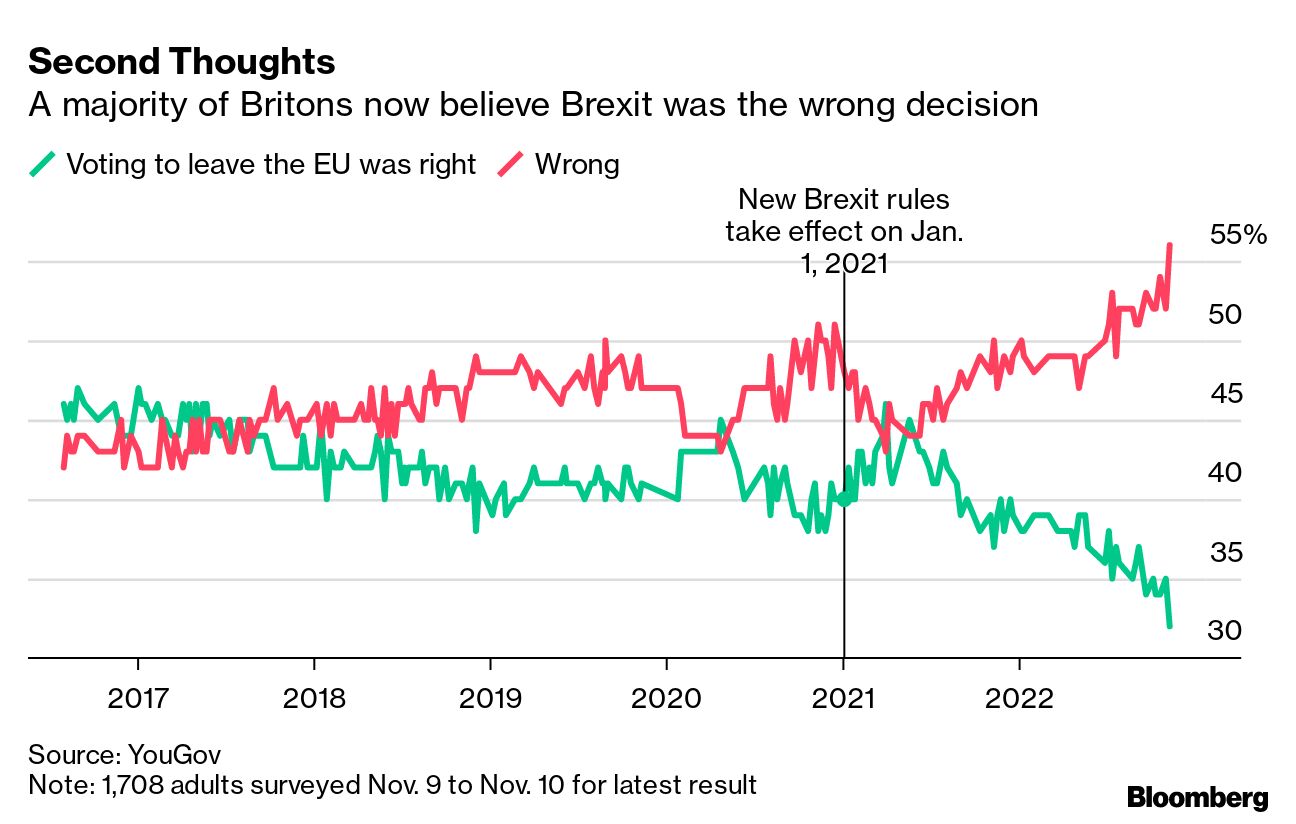
Business crackdown | The incoming Republican majority in the US House plans to put pressure on companies for their stances on immigration, equality and climate change that key leaders of the party are assailing as "woke capitalism." Top GOP members are already bearing down on the US Chamber of Commerce after the nation's biggest business lobby backed some Democratic candidates in the midterm elections. Brexit barged its way back onto the UK political agenda this month, with a report that Rishi Sunak's government might seek closer ties with the European Union. Polling reveals mounting regret among the British people who voted to leave the EU in 2016. In recent days, a former Bank of England rate setter and the government's own forecaster warned of a permanent hit to economic growth. Tory rebellion | Sunak is under pressure from more than 20 of his ruling Conservative Party lawmakers including his two predecessors to drop a ban on new onshore wind farms. It's the second rebellion on the same legislation in less than a week, after Sunak pulled a vote on his housebuilding plans as dozens of Tories threatened to defy him. Indo-Pacific tilt | Canadian Prime Minister Justin Trudeau's government is boosting military spending and expanding trade ties in the Indo-Pacific region to counter China's influence. Almost $1.7 billion will be used for more navy patrols in the region, better intelligence and cybersecurity measures, and increased cooperation with partners in the East and South China Seas. Democracy test | Taiwan is set for a contentious presidential race in 2024 focused on rising tensions with China, after low turnout in local elections handed President Tsai Ing-wen's party historic losses. The opposition Kuomintang, which favors eventual unification with China, gained power in both the capital, Taipei, and export hub Taoyuan. The results will ignite internal jockeying in the presidential race that is typically dominated by voter views on how the island democracy should handle relations with Beijing. 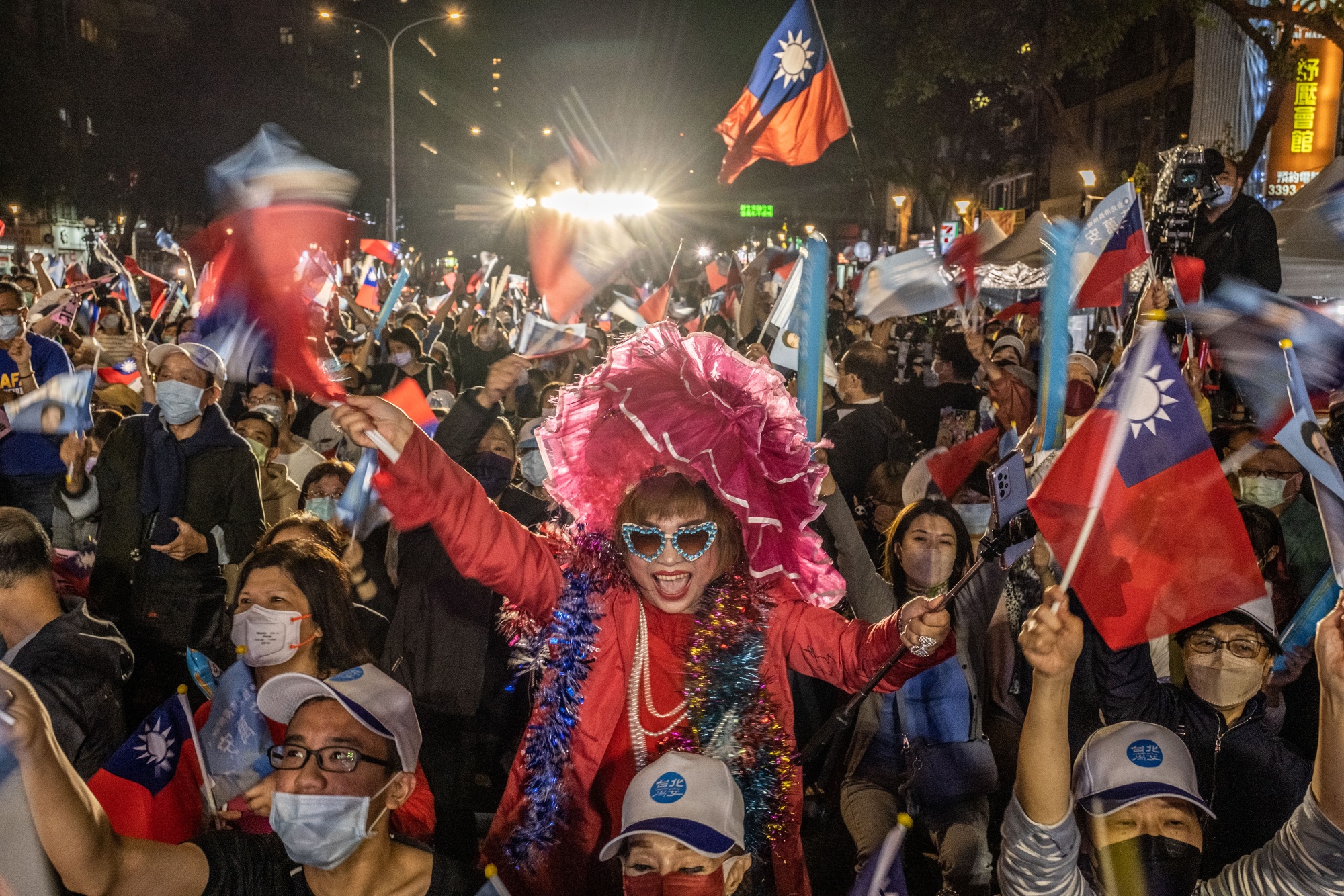 Supporters of the Kuomintang opposition party celebrate preliminary results. Photographer: Lam Yik Fei/Bloomberg Bloomberg TV and Radio air Balance of Power with David Westin on weekdays from 12 to 1pm ET, with a second hour on Bloomberg Radio from 1 to 2pm ET. You can watch and listen on Bloomberg channels and online here. - Many of Donald Trump's potential 2024 election rivals and some top Republicans have fallen silent on the former US president's dinner with a notorious white supremacist, illustrating the party's continuing struggle to escape his grasp.
- Huawei and ZTE were banned from selling electronics in the US by regulators who say they pose a security risk, continuing a years-long effort to limit the reach of Chinese telecommunications companies into US networks.
- Andres Manuel Lopez Obrador marched with thousands of supporters in downtown Mexico City to celebrate the upcoming fourth anniversary of his ascending to the presidency.
- Indonesian President Joko Widodo urged his supporters to vote for a "fully white-haired" leader, his most upfront show of support yet for a presidential hopeful — seen as Central Java Governor Ganjar Pranowo.
- Venezuela's battling political factions restarted negotiations on Saturday in Mexico, signing a rare deal to work together on a humanitarian spending plan and setting the stage for the US to ease restrictions on Chevron to operate in the country.
Thanks to the 49 people who answered Friday's quiz and congratulations to Agung Prasetia, who was the first to name Malaysia as the country in which a veteran opposition politician who spent years in prison became the leader of the government last week. And finally ... Polish women are planning to take to the streets to protest against the nation's conservative government after its most powerful politician accused them of drinking too much and keeping the birth rate low. Reminiscent of the march by hundreds of thousands of women to oppose a near-total ban on legal abortions two years ago, the rally is ramping up pressure on the ruling nationalists as the country gears up for next year's elections.  Protesters mark the first anniversary of a Constitutional Court ruling that imposed a near-total ban on abortion, in 2021. Photographer: Wojtek Radwanski/AFP/Getty Images | 








No comments:
Post a Comment