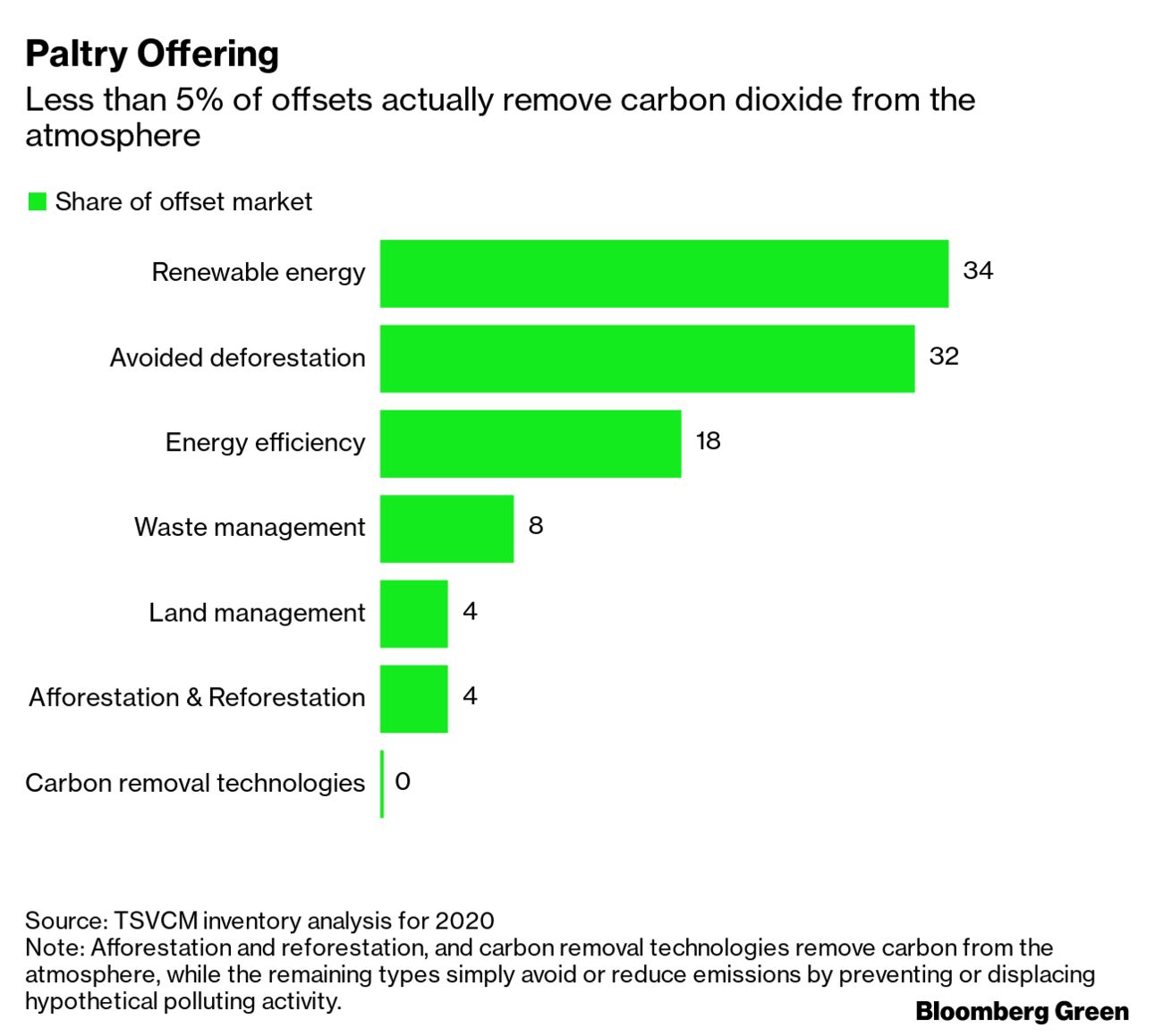
| Imagine a financial tool that solves three problems at once — it lowers greenhouse gases, rejuvenates forests and improves the lives of the poor. That's the promise of carbon offsets, and it's rarely been met. Carbon offsets offer companies a cheap and easy way to buff their green credentials. In 2021, more than $1 billion worth of offsets were sold, and supporters want to grow the market 50-fold by the end of the decade. But that can only happen if offsets are seen as credible tender. Last week, the Integrity Council for the Voluntary Carbon Market (ICVCM) released long-awaited guidance intended to clean up the unregulated market. It's now seeking the public's views to ensure offsets can live up to their true potential. You have until Sept. 27 to be heard. It won't be easy. The watchdog is walking a fine line "between ambition and staying relevant," said Gilles Dufrasne, policy officer at Carbon Market Watch and a member of ICVCM's expert panel. If strict criteria were applied, "no single carbon credit" would meet the Core Carbon Principles (CCPs) that the ICVCM has published. The ICVCM's ten principles each address a point of contention, from accounting concerns to longevity and transparency. Their launch has been stymied by false starts, as participants argued over the criteria for inclusion and how high to set the bar. An offset is a promissory note that, in theory, represents a ton of carbon dioxide emissions removed, or not added, to the atmosphere in return for a payment. Companies often use them to scrub emissions off their carbon ledgers. Since the first offset project was created in 1988 in a Guatemalan forest to compensate for emissions from a US coal power plant, offsets have been derived from hundreds of different project types — from wind farms to the destruction of refrigerants. The Paris Agreement in 2015 made them even more popular. You can find them on everything from an exchange-traded fund to an investment hedge. Some underpin cryptocurrencies. Others are used to make speculative bets. The experimentation has led to market abuses. Major companies have claimed offsets based on forests that were at no risk of deforestation. Crypto initiatives aimed at absorbing bad offsets have ended up creating more bad offsets. The goal of transferring wealth to poor countries has instead helped middlemen in rich countries keep most of the spoils. The CCPs are designed to tackle these issues, but there are worrisome gaps. ICVCM takes no clear stance on one of the hottest points of contention in voluntary carbon markets today: how to prevent entities using the same offset twice, or what's known as double counting. While United Nations rules will prevent two countries using the same units, there's nothing to prevent a country and a company doubling up; the Council plans to do little about this. "It's disappointing to see yet another organization punting the issue of whether or not companies can offset their emissions with reductions already being counted by countries," said Dufrasne. Nor will ICVCM regulate who can make claims based on approved credits, deferring instead to a sister initiative, VCMI, which faces its own set of limitations. In effect, this means "one can use an ICVCM-approved credit for a purpose expressly rejected by the ICVCM," said Danny Cullenward, policy director at US-based nonprofit CarbonPlan. Even before the guidance was released, some offset trading platforms were promoting CCP-aligned products. "We will exercise our power to name and shame," ICVCM chair Annette Nazareth said in April, in response to questions. The watchdog hasn't yet named any entity for misusing the label. The guidance also doesn't make it easy to assess whether an offset is really achieving its purpose, experts say. A key test is a concept called additionality — did the project contribute to reducing emissions specifically because of the money that the offsets provided? This measure is easy to fudge — and hard to verify — because the offset creator and other parties have varying levels of information available to them, the council itself writes. It's currently unclear how ICVCM will handle this issue, said Cullenward, highlighting the risk that it'll rely on old and largely discredited methods. Another test is about permanence — can the offset outlive the effects of CO2 emissions, which typically linger in the atmosphere for hundreds of years? The timeframes are simply unfeasible, according to Dufrasne. For example, no one can reasonably promise that trees in a forestry offsets project won't be burned down in the next 100 years, even though they'll need to be around longer than that to have the impact needed. That's why many participants would prefer the offsets market to be regulated instead of voluntary. "The best place for [these rules] is governments," said ICVCM's Nazareth, a former commissioner at the US Securities and Exchange Commission. But until governments step up, "we're doing our level best to mimic what a government authority could do here." Written with Natasha White. Akshat Rathi writes the Net Zero newsletter, which examines the world's race to cut emissions through the lens of business, science, and technology. You can email him with feedback. Satellites are revealing the climate impact of methane-spewing landfills in South Asia. Find out what's driving these climate hotspots and how to fix them. Join Bloomberg Green for a live conversation on Twitter Spaces this Wednesday, Aug. 3 at 7 p.m. Delhi / 2:30 p.m. London / 9:30 a.m. New York. Click here to set a reminder. Like getting the Green Daily newsletter? Subscribe to Bloomberg.com for unlimited access to breaking news on climate and energy, data-driven reporting and graphics, Bloomberg Green magazine and more. You can read today's newsletter on the web here. | 










No comments:
Post a Comment