| Alcohol has long been the dominant social lubricant — but the growing cannabis industry wants to offer a replacement. The market for beverages made with THC, marijuana's psychoactive ingredient, is growing. Smaller players are looking to do more than just get people high — they're positioning their beverages as more sophisticated and wellness-oriented. Specific niches the products seek to fill include relaxation, socializing with friends or improved sleep. The dosage of THC per serving is often as low as 2.5 milligrams, a far cry from the "small, but mighty" bottle of Orange Mango offered by Major or Keef's Fruit Punch Xtreme. Brands can appeal to a wider audience with drinks that can be sipped without getting people too high, said David Weiner, co-founder of Gossamer, a cannabis lifestyle and media company. Improvements in technology have translated into shorter waits for the buzz to hit, too. "You're seeing dosages go down per drink," Weiner said. New drinks have "higher design, less focus on THC, less focus on cannabis, and more focus on other ingredients." Artet makes "cannabis products for cocktail moments," said co-founder Xander Shepherd. He highlights his aperitifs' and spritzes' "floral" flavors with potencies meant to "keep you satisfied over the course of a conversation or meal." Blue Moon founder Keith Villa says cannabis beers like he makes at Ceria Brewing could help "bring cannabis to the masses in low-dose formats." The website for Pamos Beverage Co., which makes cannabis-infused spirits and cocktails, evokes a relaxing Caribbean vacation. It sells products that come in both micro- and low-dose formats for what Chief Executive Officer David Mukpo describes as a "gentle high" that's felt within 15 minutes of consumption. Drinkers who want a stronger effect can simply pour themselves another glass, just as they would with a bottle of wine. Lisa Hurwitz, president of cannabis-infused seltzer maker Happi, says beverages are the "most inviting and easy format" for cannabis — especially for those new to cannabis or for anyone looking for an alternative to alcohol. The drinks, she said, can be enjoyed during the day to help with anxiety or at night to help with sleep. 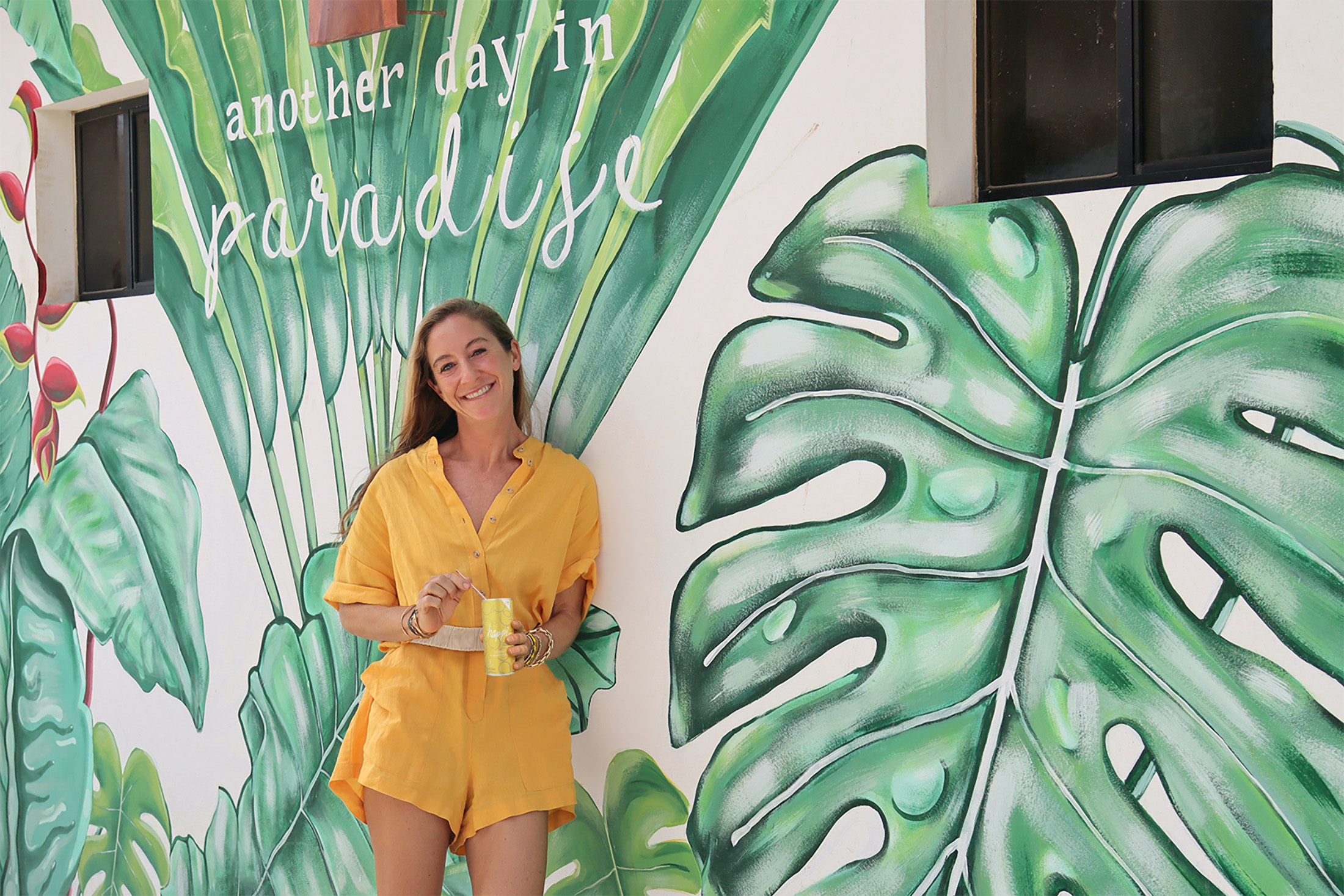 Lisa Hurwitz Source: Happi For now, the beverage sector is just a small piece of the overall cannabis market, making up less than 1% of all sales on cannabis wholesaler LeafLink's platform. But it has grown at an average rate of 5% each month in 2021 and 2022, according to its data. Some states are seeing significantly higher growth: In Michigan, the cannabis-beverage market grew 247% in the second quarter of 2022 from a year earlier, hitting $2.2 million, according to cannabis data and analytics firm Headset. Cannabis beverages face the same challenge as the rest of the industry: Without federal legislation, products can't be sold over state lines. Another barrier is convincing dispensaries to install refrigerators and give up precious display space. Of course, companies making the beverages say the investment is well worth it. "It's so hard to get your elbow in the door, but if you have a product that has repeat purchase or loyalty, within two to three months, the retailer gets it," said Luke Anderson, co-founder of Cann, a California-based maker of drinks like the seasonal Pineapple Jalapeño social tonic. But to really compete with alcohol, as many of these beverage makers say they aim to do, federal legislation is necessary. Mark Crockett, CEO of CannaNectar Canning and the Maine retail chain Cannabis Cured, has an optimistic target for how much the industry can capture from alcoholic drinks within a few years of legalization. "When the laws change, I believe we'll take 20%," Crockett said. | 







No comments:
Post a Comment